Anyone who has finished a K-drama on Netflix and gone looking for Running Man or Knowing Bros in the same place usually hits a wall.
Korean variety shows — unscripted or lightly-scripted programs built around games, talk segments and celebrity guests, called yeneung (예능) in Korean — are far less likely to sit on the same global platforms as dramas. That is not an accident or an oversight.
It comes from how these two kinds of Korean television are actually owned, produced and sold. This is a standing guide to where variety shows are legally available with English subtitles, and to the licensing structure that explains why the options look so different from drama streaming.
The short version
- KOCOWA+, Viki, Netflix, and YouTube cover most legal variety show streaming abroad.
- Dramas sell as one clean package; variety shows require dozens of separate rights deals.
- KOCOWA launched in 2017, letting broadcasters subtitle episodes within hours instead of months.
It depends on who owns the show
Nothing broke this week; this is an evergreen situation, not a news event, but the landscape has genuine current shape worth mapping.
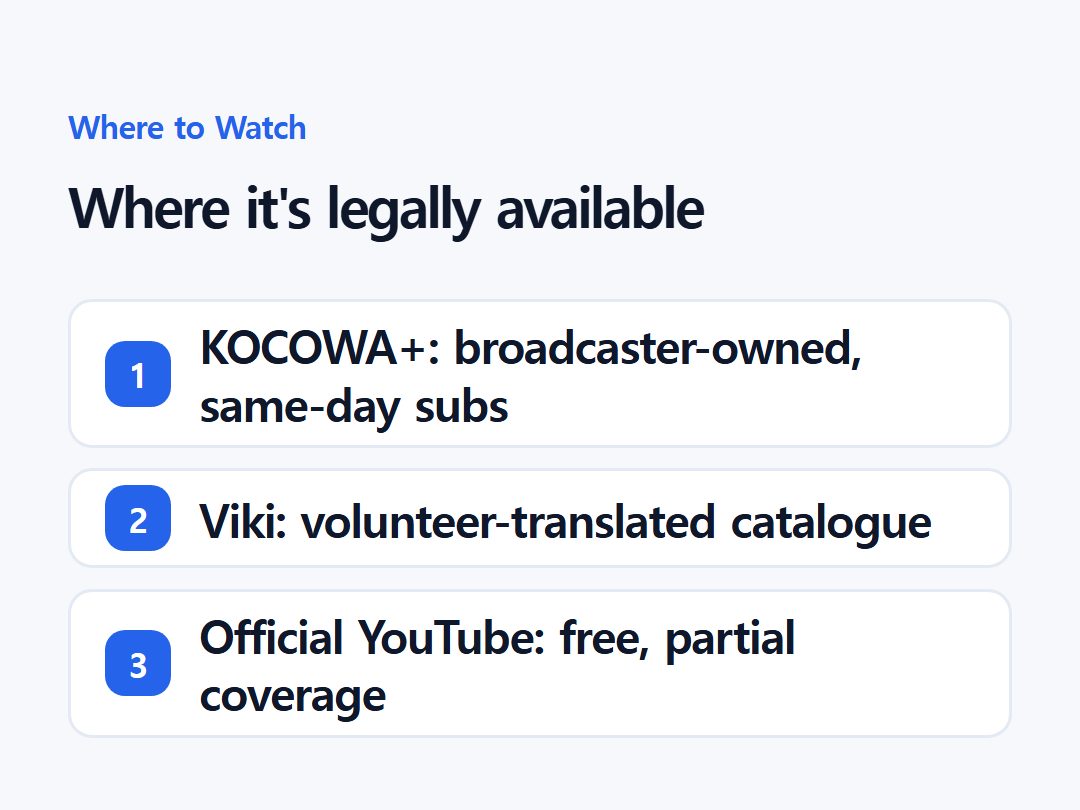
For international viewers today, four types of legal source cover most of what airs in Korea. KOCOWA+, a streaming service jointly owned by South Korea's three terrestrial broadcasters KBS, MBC and SBS together with SK Telecom, carries same-day or next-day English-subtitled episodes of shows like Running Man and Home Alone, and is available across the Americas, Europe, Australia and New Zealand. Rakuten Viki licenses a smaller but long-running catalogue — including Running Man — and relies on a volunteer community to translate it into more than 150 languages. Netflix streams a growing slate of Korean variety originals, such as Single's Inferno, produced or co-produced for Netflix itself rather than licensed after the fact from a Korean broadcaster.
And the broadcasters' own official YouTube channels — KBS Entertain, MBCentertainment, SBS Catch and others — upload full episodes or heavily-subtitled clips for free, with coverage that varies show by show.
There is no single app that carries everything; which of these four applies depends entirely on who owns the show.
Why isn't Korean variety on Netflix like dramas?
The reason variety shows scatter across so many separate doors, while dramas mostly funnel through Netflix, comes down to a difference in how the two formats are made and who holds the rights to sell them abroad.
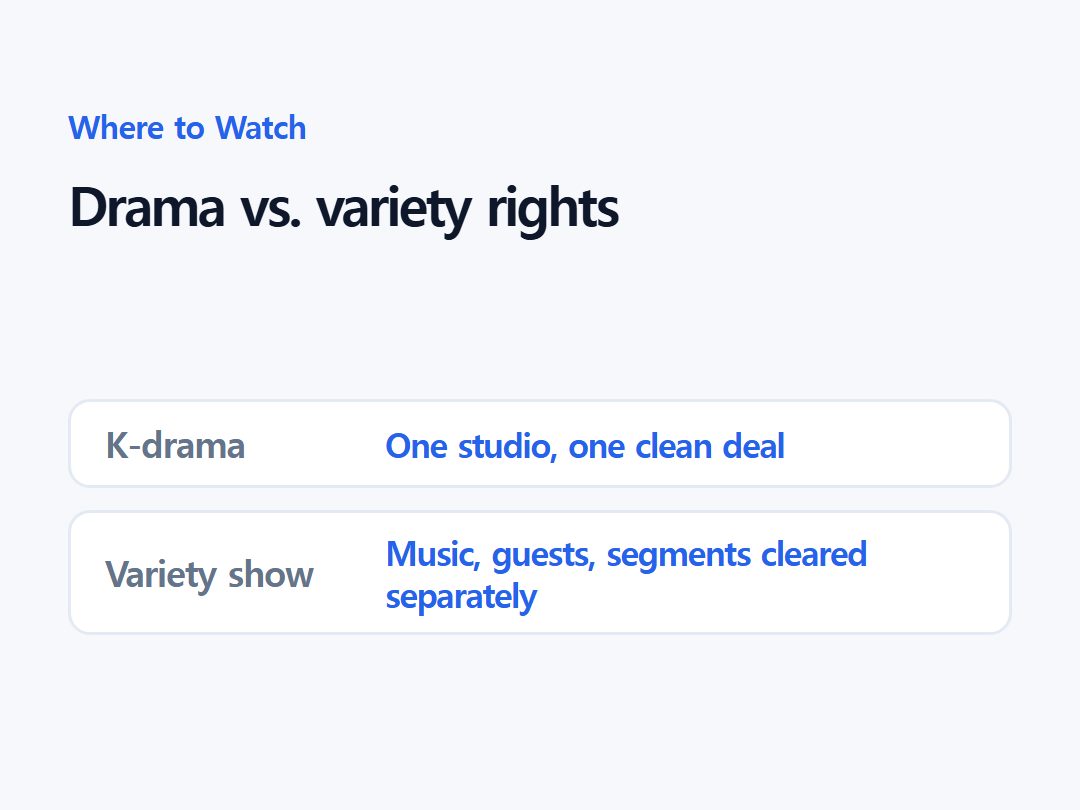
Korean dramas increasingly come from production studios — companies like Studio Dragon, a CJ ENM subsidiary — that are built to sell a finished, self-contained series to global streamers as a single package.
A studio negotiates one deal covering an entire show, delivers professional subtitles, and the series appears on Netflix worldwide within days of its Korean broadcast, sometimes on the same day. The rights are relatively clean: one story, one cast contracted for that production, one music score licensed for the show.
Variety shows are built differently. Most long-running ones are produced in-house by the terrestrial broadcasters themselves — KBS, MBC, SBS — not sold to a studio for resale, and each episode is a patchwork of separately licensed pieces rather than one clean work.
A single episode of a game-based variety show can include commercial pop songs used as background music, individual appearance agreements with each celebrity guest (who may belong to different management agencies, the companies that handle a Korean entertainer's contracts, schedule and public image), and segments built around brands or other broadcasters' footage.
Clearing all of that for international streaming is not one negotiation but potentially dozens, repeated for every guest and every episode of a show that may already run into the hundreds.
For a platform like Netflix, buying the international rights to a 600-episode variety show is a far riskier and slower proposition than buying a 16-episode drama, so most global streamers simply don't try, and instead commission their own variety originals from scratch, which they own outright and can subtitle and release however they like.
This is also why KOCOWA exists as a separate product from Netflix in the first place.
Because it is co-owned by the broadcasters that make the shows, it does not need to negotiate variety rights the way an outside platform would — it already holds them, which is why it can turn around English subtitles within hours of a Korean broadcast for shows that would otherwise take months, if they were licensed abroad at all.
Viki's volunteer-subtitling model solves the same cost problem from a different angle: rather than a broadcaster absorbing subtitling costs itself, fans do the translation, which is how older or lower-profile variety shows that would never justify a commercial subtitling budget still end up watchable internationally.
Understanding this distinction changes what an international viewer should expect. A drama's absence from Netflix in a given country is usually a licensing-window issue that will likely resolve.
A variety show's absence from Netflix is often structural: the show was never for sale that way, and the closest a viewer will get is a broadcaster-owned app, a fan-subtitled community platform, or an official YouTube channel with partial coverage.
How piracy fixes became legal platforms
The infrastructure now used to watch Korean variety shows abroad legally was built in stages, largely in response to the piracy and fan-subtitling communities that filled the gap left by the licensing problem described above.
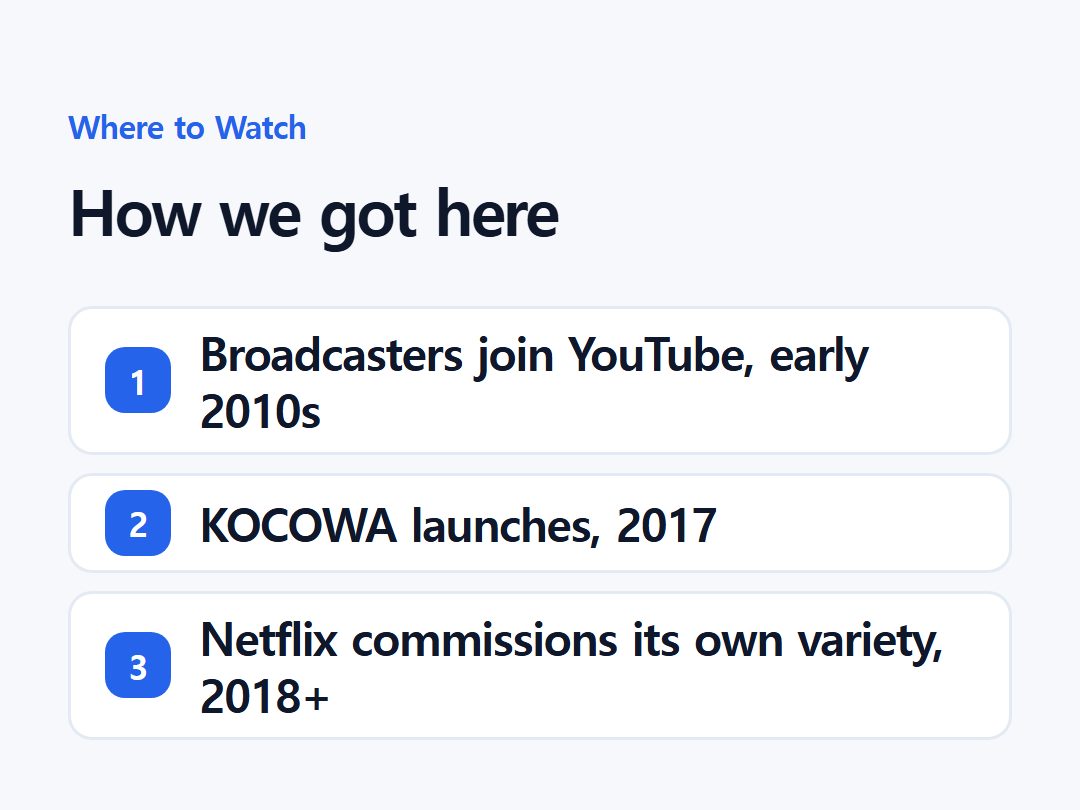
Korean broadcasters began posting official content to YouTube in the early 2010s as the Hallyu wave (the international spread of Korean pop culture) grew, giving international fans a free, if incomplete, legal option for the first time.
Viki built its business earlier still around volunteer-translated Asian content, and became one of the few platforms where fans could watch a long-running variety show like Running Man with community-produced subtitles rather than relying on unofficial reuploads.
KOCOWA was created specifically to close the gap those two options left. The service launched in mid-2017, founded by KBS, MBC and SBS with SK Telecom taking an equity stake, under the joint venture name Korea Content Platform.
Its pitch to broadcasters was straightforward: pool the three networks' catalogues into one subscription service so their own dramas and variety shows could be sold internationally with professional subtitles, rather than left to circulate on unlicensed streaming sites.
In December 2022, Wavve — the domestic Korean streaming platform also jointly run by the three broadcasters and SK Telecom — formally acquired KOCOWA, folding it into the same corporate family that already ran the shows' domestic streaming rights.
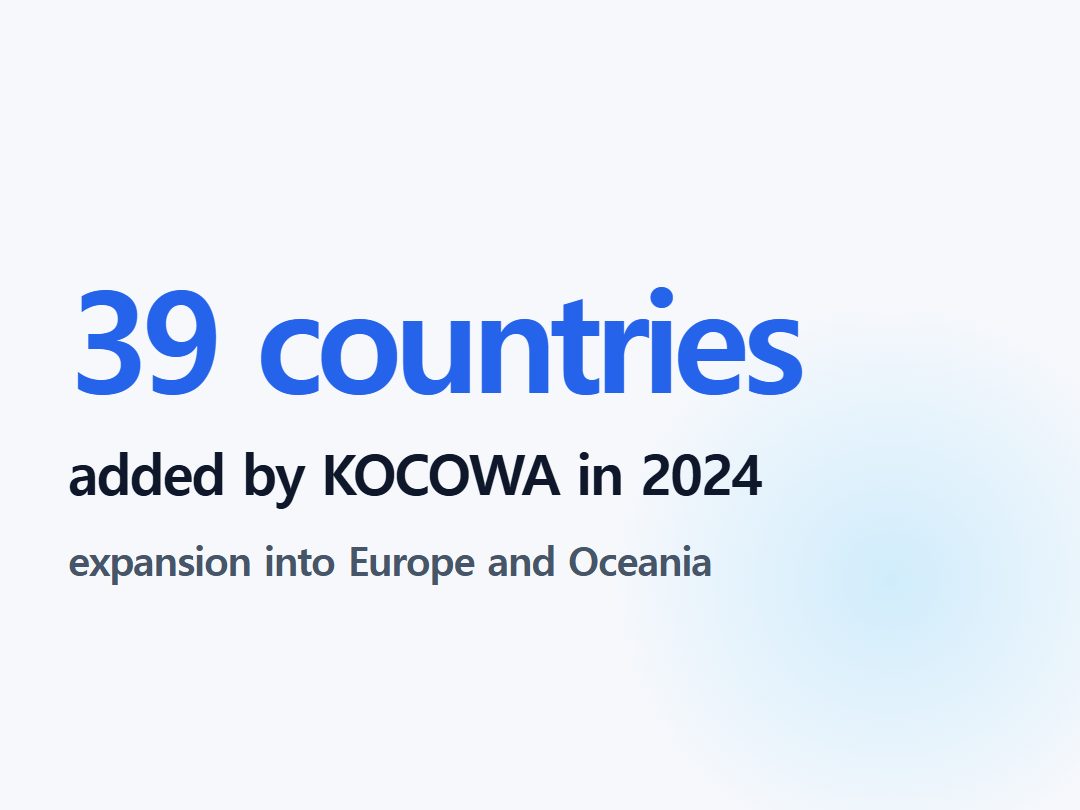
In 2024, KOCOWA expanded into roughly 39 additional countries across Europe and Oceania, on top of its original footprint across North, Central and South America.
Netflix's role has grown on a separate track.
Rather than licensing existing broadcaster variety shows, it has increasingly commissioned its own, starting with early entries like Busted! in 2018 and expanding steadily since, with reality format Single's Inferno becoming one of its most-watched non-English titles and a fifth season confirmed as part of Netflix's announced 2026 Korean content lineup.
Because Netflix owns these shows outright as originals, it can add subtitles in dozens of languages by default, in a way it generally cannot for a broadcaster-owned variety show it does not control.
Where legal access still falls short
The gap between drama and variety availability is narrowing, but it is not closing evenly.
Netflix's variety investment is real but still limited to a small number of original formats it commissions itself; it is not expanding into subtitling the broadcasters' existing catalogues, and there is no indication that will change, given the rights problem described above.
KOCOWA's regional expansion has been steady but remains deliberately excluded from most of Asia, where the three broadcasters license their content through separate regional deals rather than through KOCOWA directly, so its 2024 growth into Europe and Oceania does not necessarily signal a move toward true worldwide access.
For viewers outside KOCOWA's covered regions, official YouTube channels and Viki's volunteer community remain the most realistic legal options, and coverage on those platforms still depends on which shows individual broadcasters choose to upload, rather than any guaranteed baseline.
Anyone trying to watch a specific Korean variety show abroad is better served checking which of these structures applies to that particular show than assuming any single platform will have it.
A platform-by-platform breakdown of subtitle coverage
| Platform | Owned/Licensed By | Subtitle Model | Coverage |
|---|---|---|---|
| KOCOWA+ | KBS, MBC, SBS + SK Telecom | Official, same-day or next-day English subtitles | Americas, Europe, Australia, New Zealand |
| Rakuten Viki | Licensed catalogue | Volunteer fan subtitles in 150+ languages | Smaller but long-running, including Running Man |
| Netflix | Netflix-owned originals | Professional subtitles by default | Worldwide, but originals only (e.g. Single's Inferno) |
| YouTube channels | KBS, MBC, SBS and other broadcasters | Official uploads, coverage varies by show | Free, but partial and show-by-show |
Frequently asked
Where can I watch Running Man with English subtitles?
KOCOWA+ offers same-day or next-day English-subtitled episodes, and Rakuten Viki also carries Running Man with volunteer-translated subtitles.
Why isn't Running Man on Netflix?
Most variety shows are produced in-house by Korean broadcasters and each episode bundles dozens of separately licensed pieces, making them far harder to sell internationally than a single drama package.
What is KOCOWA+?
KOCOWA+ is a streaming service jointly owned by KBS, MBC, SBS and SK Telecom that launched in mid-2017 to sell the broadcasters' dramas and variety shows abroad with professional subtitles.
Sources
Every factual claim above is traceable. We do not translate articles — we gather facts from multiple outlets and write them ourselves.
- KOCOWA+: Stream & Watch Korean TV Shows Online — KOCOWA
- KOCOWA corporate overview — Wavve Americas
- Kocowa — Wikipedia
- K-content streaming service Kocowa to launch services in Europe, Oceania — The Korea Herald
- Korean streamer Kocowa on partnerships, K-pop, K-drama, Europe expansion — Deadline
- Running Man | Watch with English Subtitles — Rakuten Viki
- Watch: Netflix Teases 2026 K-Drama, Film, And Variety Show Lineup — Soompi
- KBS World (TV channel) — Wikipedia