
Why Jo Kwon's Solo Comeback Took Eight Years
Jo Kwon's first solo single in eight years traces back to a contract he didn't leave until 2017, two years of mandatory military duty, and a group that never technically disbanded.
29 stories
Jo Kwon's first solo single in eight years traces back to a contract he didn't leave until 2017, two years of mandatory military duty, and a group that never technically disbanded.

ALLDAY PROJECT's Tarzzan went from fashion runways and dance podiums straight to a K-pop debut with no trainee period at all, a path that reveals how rigid the industry's usual pipeline really is.

Jo Aram left K-pop group Gugudan in 2018 and returned four years later to win Best New Actress at two separate Korean television ceremonies, a rare feat that exposes how deep the industry's bias against idol-actors still runs.

Apink's Jung Eun-ji released her first mini-album in six years, and the delay traces back to a K-pop contract structure that split her five-member group across two separate agencies.

School bullying allegations against Korean celebrities rarely reach a court that can close the case, which is why so many accused stars resurface years later through a lawsuit ruling, a foreign market, or a quieter project instead of a mainstream comeback.

Hani did nothing that made headlines on its own, yet her acting career froze for three years because of a scandal at her fiancé's hospital — a pattern in Korean entertainment rooted in an old idea about how far guilt travels through a family.

Lee Jun-young didn't just quietly stop releasing music before enlisting — he said out loud that he's done singing for good, which is rarer than it sounds in K-pop.

Irene's sudden burst of relaxed, unscripted TV appearances in 2026 is the final step of a six-year, carefully staged effort to rebuild trust after a 2020 staff-mistreatment scandal.

The 2009 JYJ-SM Entertainment lawsuit never reached a final verdict, but the regulatory reform it triggered capped K-pop contracts at seven years — a rule that still shapes the industry today.

Wanna One's 2026 reunion left out two of its eleven members, and the reasons why show how little control a K-pop project group actually has over its own comeback.

An official K-pop hiatus is a management agency's public statement that pauses an idol's activities without ending their contract or membership — a legally and logistically different thing from an idol simply going silent.

Wonyoung and Yujin never auditioned for SM, YG, JYP, or HYBE — their route to IVE ran through street casting, a survival show, and a project group whose contract quietly expired.

International readers often assume idol-actors just need to prove they can act — but in Korea, the bigger hurdle is erasing the word 'idol' before anyone judges the performance at all.

Former CNBLUE guitarist Lee Jong-hyun broke an eight-year social media silence on Aug. 10, 2026, then deleted the return in under 48 hours — a case study in how unforgiving Korea's scandal-recovery etiquette still is.

Behind every multi-year gap between a K-pop scandal and a solo comeback is the same industry arithmetic: a terminated contract, an unwritten broadcast ban, and a legal case that has to close first.

A pay dispute that started with one member in 2021 split into four separate lawsuits against Blockberry Creative, and two former LOONA members are still waiting for a final ruling in 2026.

Korean actor fan meetings look like casual meet-and-greets but are actually ticketed, tiered-price events that management agencies run as a standalone revenue line.

K-pop idols keep their masks on at airports and on the street year-round because masks are a low-cost defense against stalker fans and paparazzi, not a health precaution.

Korean actors marry later than the national average, and the gap traces back to how agencies manage image and how casting quietly punishes actresses who marry or become mothers.

A small surname pool, agency-run branding, and fortune-telling naming traditions explain why so many Korean actors perform under names that aren't on their ID.
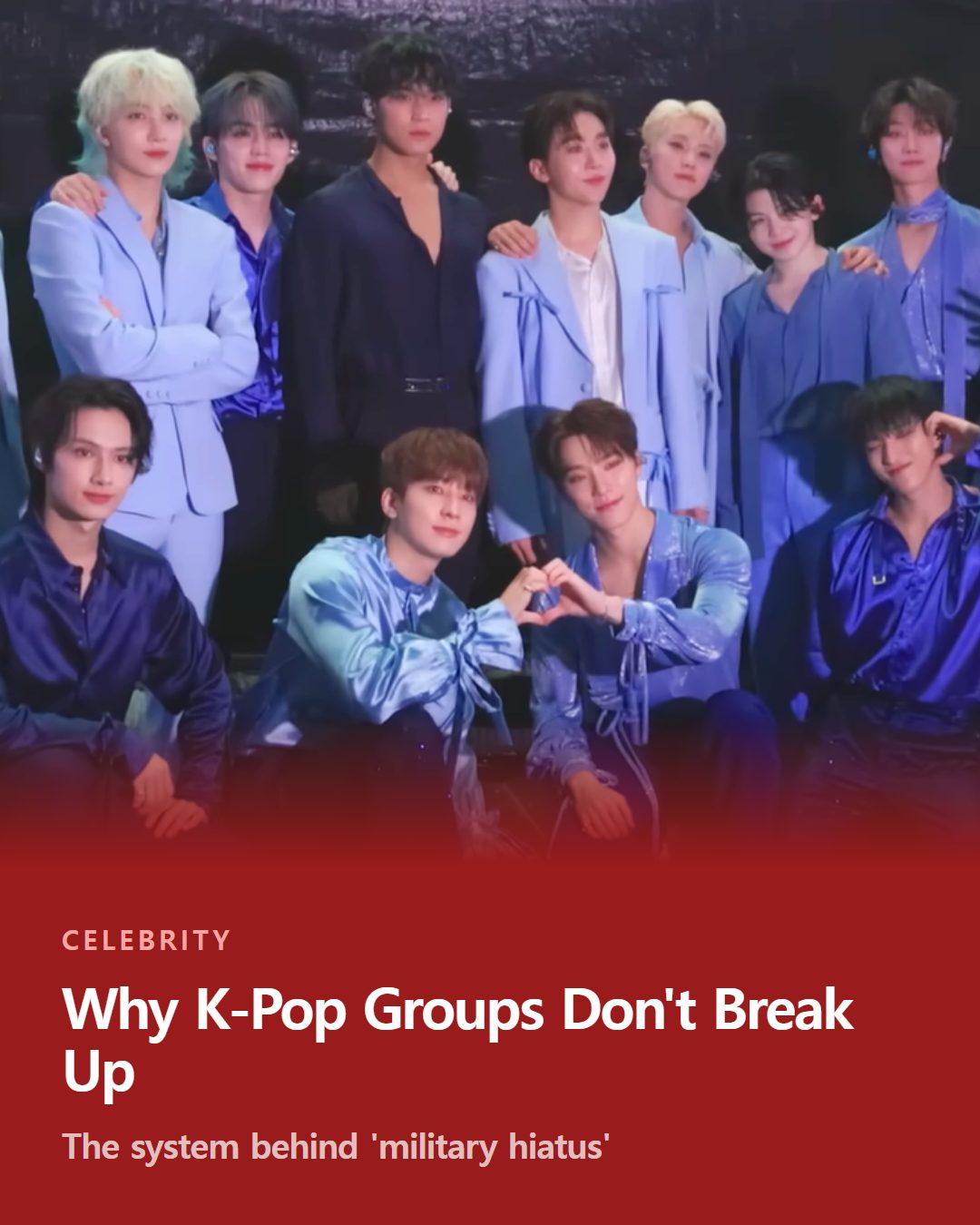
South Korean law requires nearly all male citizens to serve 18 to 21 months in the military, so K-pop groups have built a standard playbook of sub-units, solo work and staggered enlistment to keep operating instead of disbanding.

In South Korea, a mandatory physical exam — not personal choice or celebrity status — decides whether a man serves as an active-duty soldier or as a social service worker, and understanding that legal grading system explains a controversy that resurfaces every time a star is assigned to it.

In Korea, an idol's group name and even their personal stage name are usually trademarks owned by the agency, not the performer — so leaving the company can mean losing the name too.

Long, unexplained breaks by Korean stars are usually driven by contract disputes, agency-confirmed health rest, or mandatory military service, not hidden scandals.

International fans often read a K-pop re-debut as a comeback from failure, but in Korea it usually just means a fixed-term contract ran out.

International fans see the apology letters go viral; they rarely see the agency-run vetting process, the self-reflection hiatus, and the harsher, more permanent consequences that make Korean celebrity apologies look so different from Western ones.

South Korean law requires almost every able-bodied man, famous or not, to serve 18 to 21 months in the military, and the country treats attempts by celebrities to avoid it as a serious offense rather than a private choice.

A guide to the years-long, unpaid, and legally fraught process that turns a teenager into a K-pop idol — and why most trainees never make it to debut.
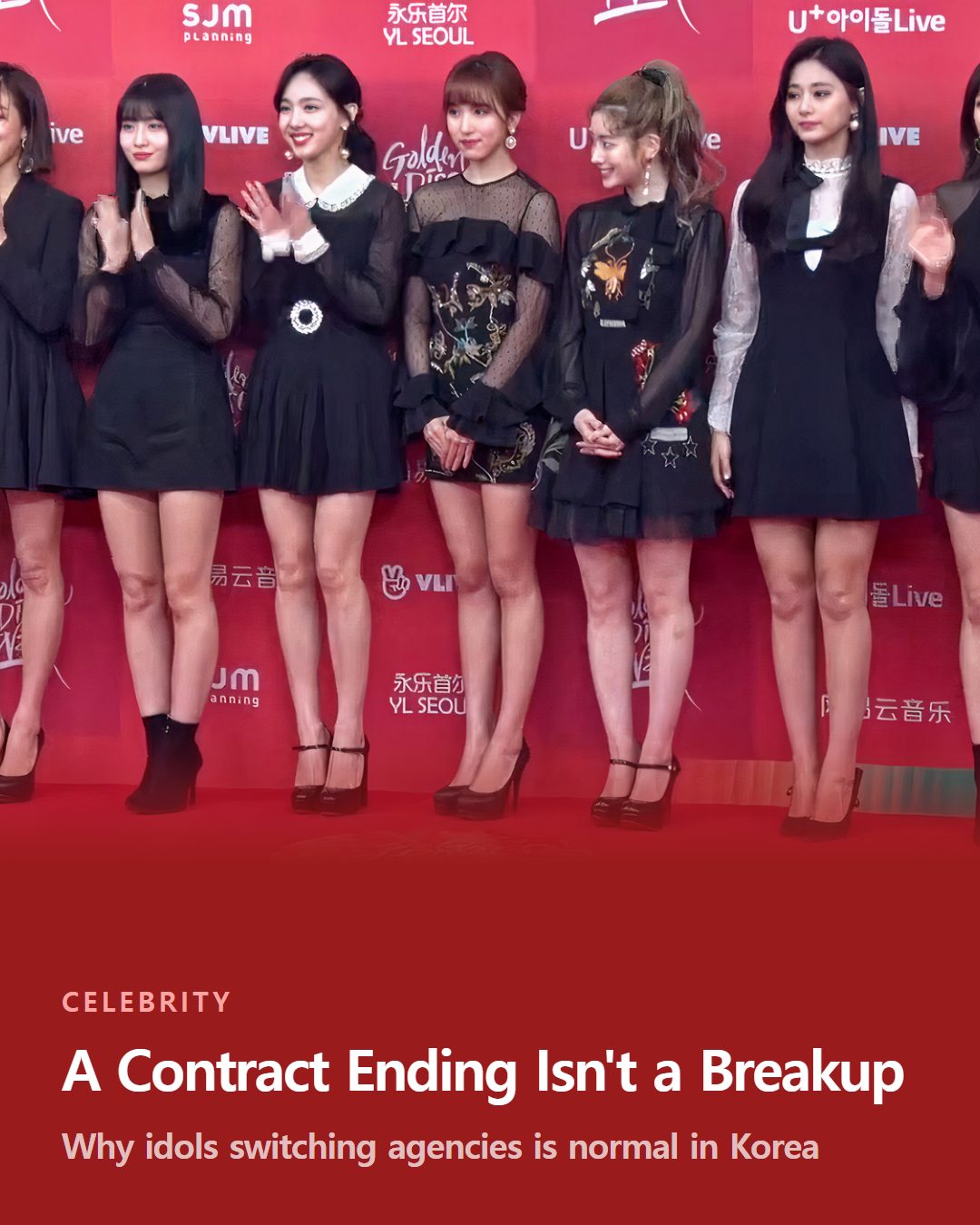
International fans often read a K-pop idol's agency change as a scandal, but in Korea it's usually just a fixed-term contract reaching the date it was always going to reach.
What Korea is talking about today — with the context that does not make it into the English headlines.