Mukbang, Chimaek, Daebak: How Korean Words Entered English
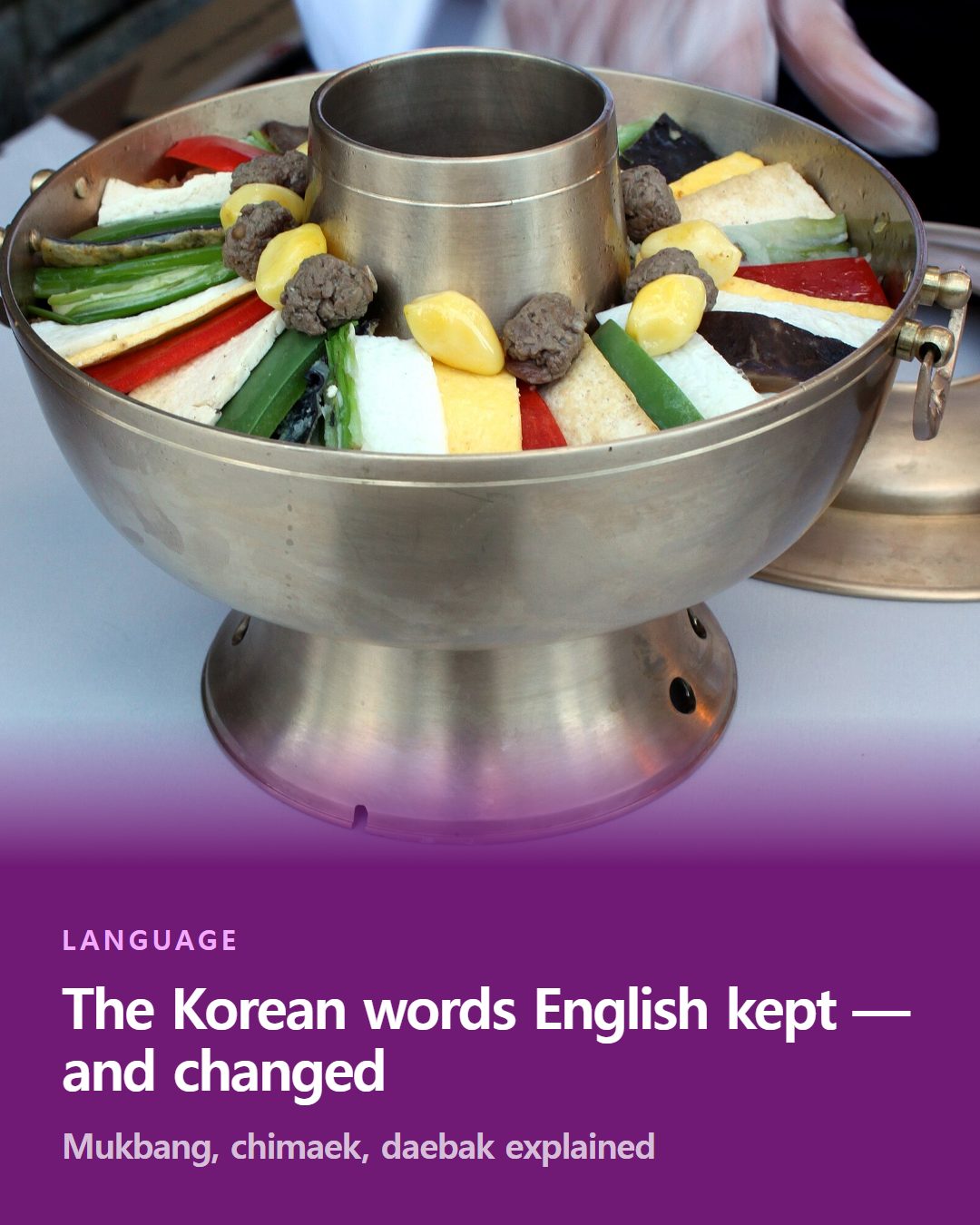
Mukbang, chimaek and daebak now sit in English dictionaries, but the meanings that crossed over are narrower — and sometimes newer — than the Korean originals.
6 stories
Mukbang, chimaek and daebak now sit in English dictionaries, but the meanings that crossed over are narrower — and sometimes newer — than the Korean originals.
Nunchi is the Korean word for reading unspoken social cues and hierarchy at once — a single word English has never managed to produce.
Aegyo is not a synonym for 'cute' — it is a codified, teachable performance with its own songbook, grammar, and gender politics that international fans usually see only as a cringe-inducing variety show ritual.
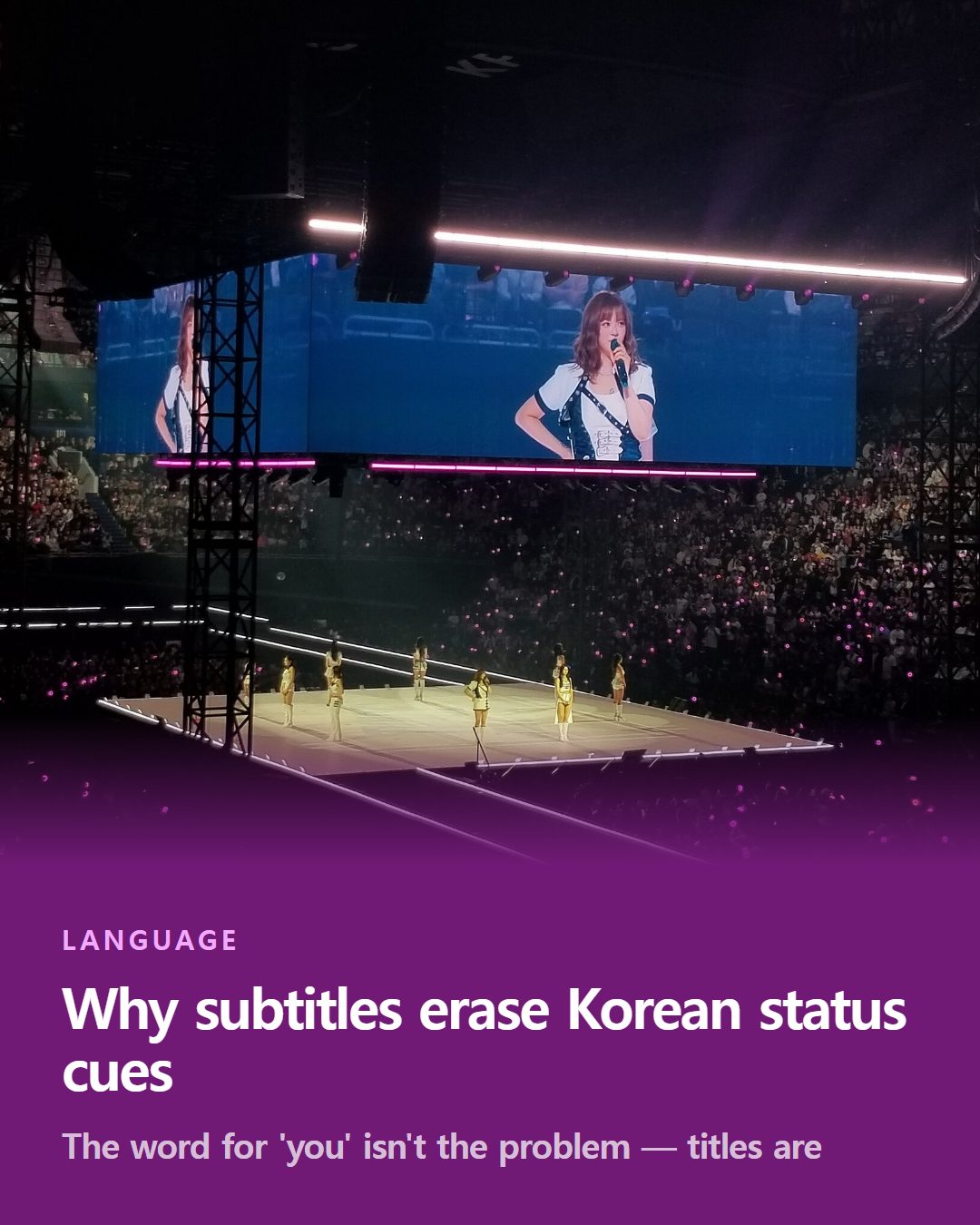
Korean has four different words for an older sibling depending on who is speaking, and English subtitles usually erase the distinction into a first name.
In Korea, 'sunbae' and 'hoobae' rank people by when they joined a school, company, or group — not by age, which is why a K-pop idol can be years older than their own senior.
In Korean, politeness isn't a tone of voice — it's built into the grammar, which is why a single verb ending can mark the exact moment a relationship changes.
What Korea is talking about today — with the context that does not make it into the English headlines.