Watch enough Korean drama and you will eventually notice a strange kind of gasp moment: two characters who have spoken politely for episodes suddenly start talking to each other differently, and everyone on screen reacts as if something important just happened. Nothing was said about love, or trust, or rank.
And yet the room changes.
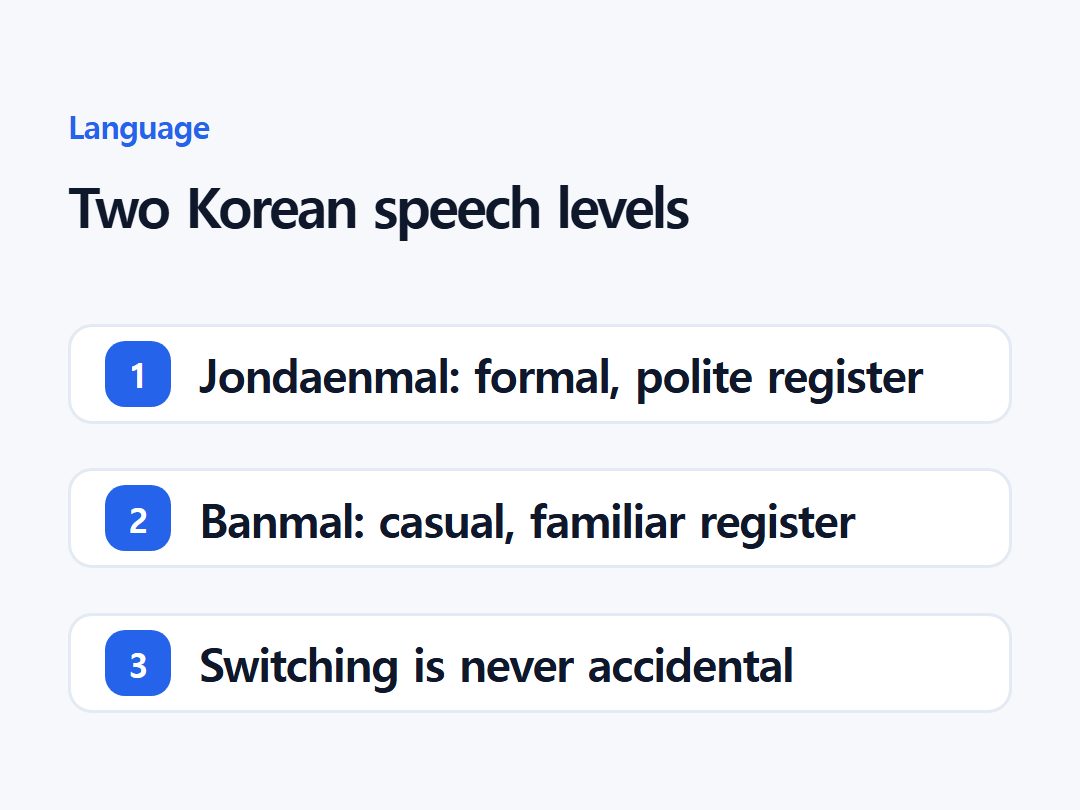
That shift is a switch between two Korean speech levels — jondaenmal (존대말), the formal, polite register used with strangers, elders, or anyone outranking the speaker, and banmal (반말), the casual register used with close friends, children, or people clearly below the speaker in age or status.
Korean drama recap site Dramabeans has run standing glossary entries for both terms for over a decade, because the distinction comes up in almost every show and rarely gets explained on screen — it is assumed knowledge for a Korean audience.
The short version
- Banmal is casual Korean speech; jondaenmal is the formal, polite register.
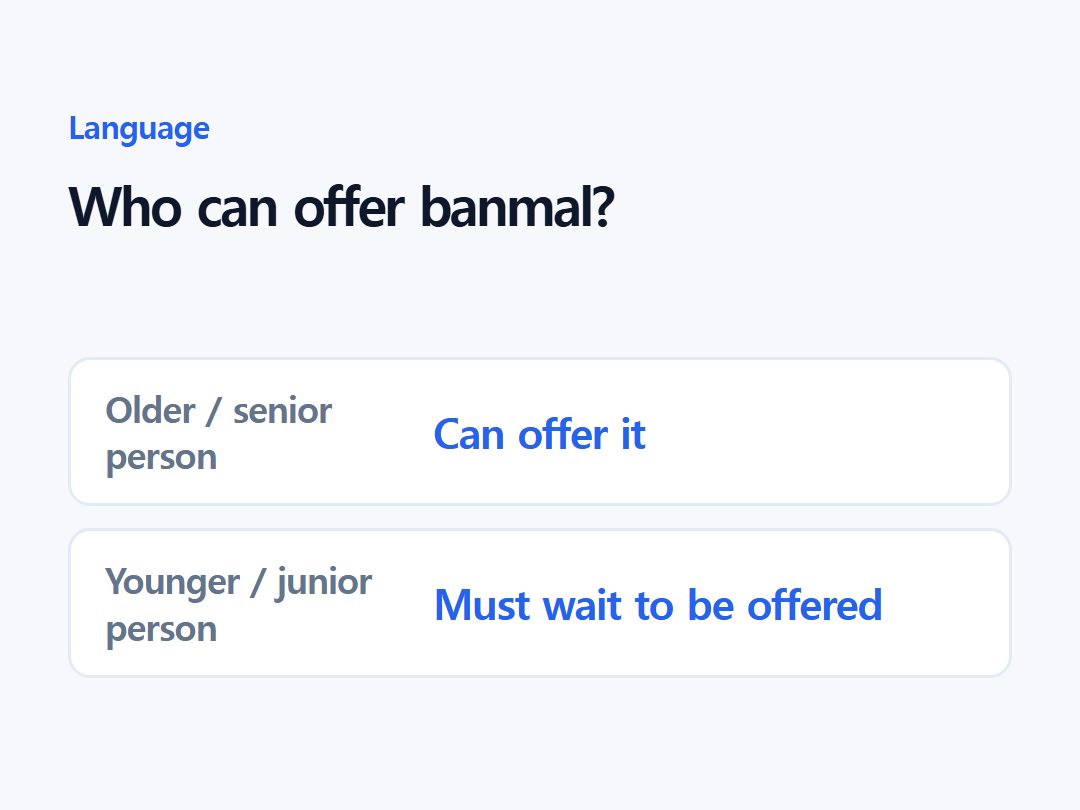
- Only the higher-status person can offer to switch to banmal, never the reverse.
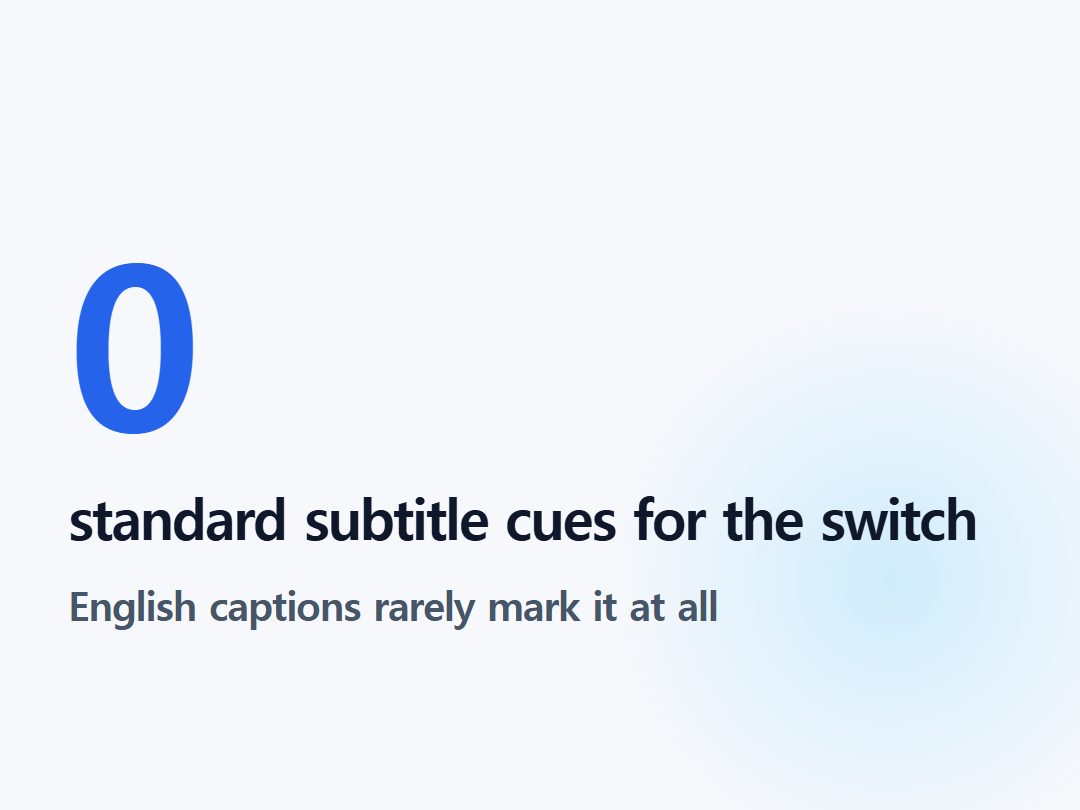
- English subtitles rarely mark the shift, so international viewers miss the drama.
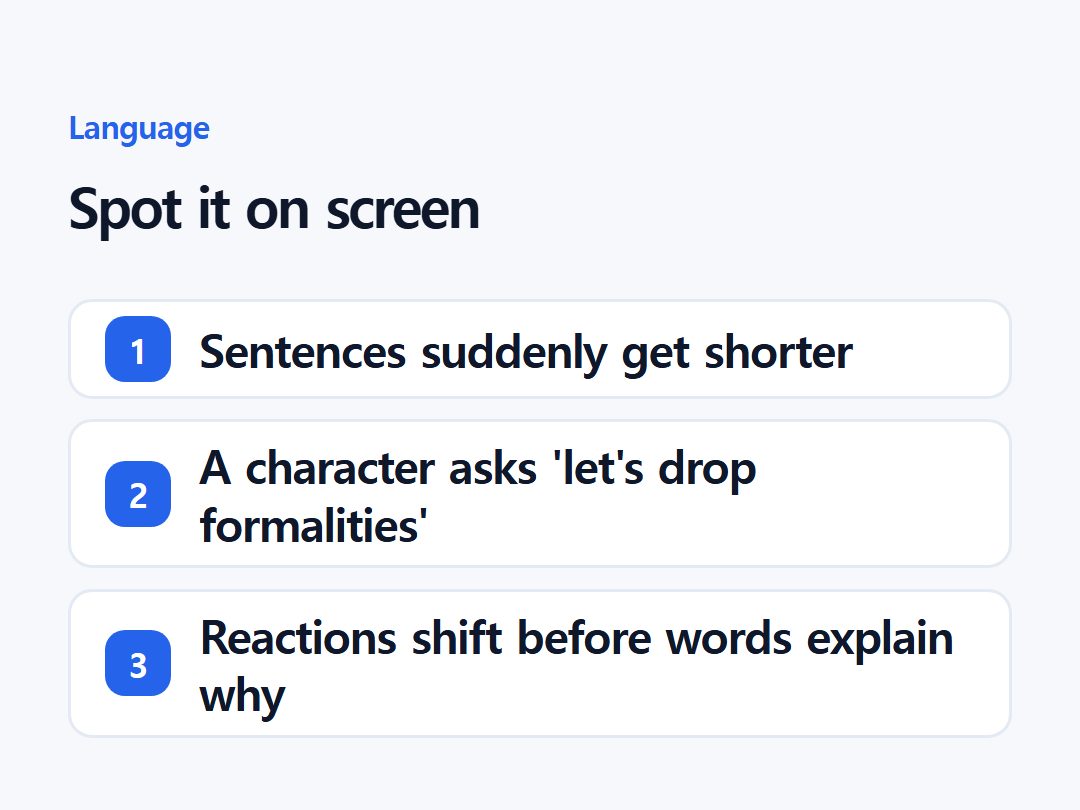
For international viewers reading subtitles, the switch is nearly invisible. The words on screen might change from something like "Have you eaten?" to a shorter, blunter version of the same sentence, but English does not mark politeness through grammar the way Korean does, so the subtitle rarely signals that anything shifted at all.
How dramas use banmal to signal closeness or disrespect
Korean grammar encodes social distance directly into verb endings. A sentence spoken to a boss, a sentence spoken to a same-age friend, and a sentence spoken to a stranger on the street can all mean the same thing while ending in completely different suffixes.
Jondaenmal is not one fixed style either — Korean has multiple formal registers stacked by degree of deference — but the practical divide viewers need to track is formal versus banmal, because crossing that line is rarely accidental in a drama script.
Crucially, in real Korean social practice, the switch to banmal is not something either party can just decide to do on their own. It is negotiated, and almost always initiated by whoever holds the higher position in the relationship — the older person, the senior, the one being courted.
The common phrases for this are 우리 말 놓자 ("let's drop the formalities") or 말 편하게 해요 ("speak comfortably with me"), and offering that permission is itself a small act of intimacy. Refusing it, or using banmal before it is offered, reads as presumptuous or even insulting.
This is why a banmal switch in a drama script is never just a style note for the actors — it is a plot beat, functioning the way a change in eye contact or physical distance might in a Western script.
The device shows up across genres in ways that are easy to spot once you know what to listen for.
In the hit romance Crash Landing on You, a recap of episode 11 on Dramabeans describes a group of North Korean soldiers deciding that, now that they are living undercover in South Korea, they need to sound like locals — which means one of them formally grants a younger comrade permission to call him "hyung" (an informal, familiar term for an older brother figure) and to use banmal with him instead of the stiffer, rank-based speech of their unit.
The scene plays as comic bonding, but it is built entirely on the mechanics of who gets to grant informal speech to whom.
The device also works in reverse, as a marker of disrespect rather than closeness.
In Itaewon Class, a Dramabeans recap of episode 3 covers a bar scene in which a customer barks rude, informal orders at a part-time staff member he has no relationship with; the male lead intervenes specifically because the customer is speaking down to an employee using banmal that has not been earned, treating the wrong speech level as its own form of provocation, distinct from the insult in what is actually said.
A viewer relying only on English subtitles is likely to register the scene as "rude customer yells at waiter" and miss that the specific grammar of the yelling is what triggers the confrontation.
This is a known, named problem in subtitling and fan-translation circles. A 2020 study published in the Journal of Pragmatics, examining English fan translations of Korean television drama, looked specifically at how translators handle these moments of what researchers call "relational work" — the interpersonal signaling carried by speech-level shifts — and found that fan subtitlers use inconsistent, ad hoc strategies to compensate, from added bracketed notes to shifts in English register that only approximate the original cue.
There is no standard solution, because English politeness is not organized the same way Korean politeness is; English speakers signal distance through word choice and tone rather than grammatical suffixes, so there is no single English structure that can carry the same weight a Korean verb ending carries.
Why does Korean have two speech levels?
Korean's speech-level system is often traced to the language's roots in a strongly age- and status-ordered Confucian social structure, where a person's place in the family and community hierarchy was reflected directly in how they were expected to speak and be spoken to.
The Korea Herald has noted that Korean formally divides into seven verb paradigms, which most learners simplify into the two broad categories of jondaenmal and banmal, and that the hierarchy runs deep enough that even basic vocabulary changes by the age of the listener — the word for "meal" itself shifts from the everyday bap to the more deferential jinji when addressing an elder.
Modern Korean society has loosened plenty of older social hierarchies, but the linguistic infrastructure built to express them is still fully intact and used every day, which is exactly why scriptwriters can rely on it as shorthand: any Korean viewer instantly clocks a banmal switch as meaningful, without a single line of exposition, because the grammar itself is doing the narrative work.
K-drama, as a genre, leans on this constantly because it is an efficient way to show a relationship changing without spelling it out in dialogue.
Romance dramas in particular use the negotiation over banmal as a milestone beat — often more charged on screen than an actual confession — precisely because asking for it, granting it, or refusing it all carry distinct emotional weight that a Korean audience reads instantly.
How can viewers spot a banmal switch?
There is no fix on the horizon for the subtitle problem itself. Streaming platforms have not adopted any standard way to flag a speech-level shift in English captions, and doing so without over-explaining or breaking immersion is a genuinely hard design problem, not a simple oversight.
What has changed is the workaround: English-language recap sites and fan communities have effectively become the annotation layer that subtitles cannot be, routinely flagging banmal switches and explaining what they signal, and that explanatory habit has spread as K-drama's international audience has grown.
Whether any streaming service eventually builds a lighter-touch way to mark the shift — a bracketed cue, a translator's note, a change in subtitle styling — remains an open question.
For now, the reliable workaround for an international viewer is simply knowing to watch for it: a sentence getting shorter, blunter, and less formal is rarely just a stylistic choice by the actor. It is usually the clearest signal in the scene.
The two registers compared side by side
| Register | Korean | Used with |
|---|---|---|
| Jondaenmal | 존대말 | Strangers, elders, or anyone outranking the speaker |
| Banmal | 반말 | Close friends, children, or people below in age or status |
Frequently asked
What is the difference between banmal and jondaenmal in Korean?
Jondaenmal is the formal, polite register used with strangers, elders, or superiors, while banmal is the casual register used with close friends, children, or those clearly below the speaker in age or status.
Why do K-drama characters suddenly start speaking banmal to each other?
The switch marks a real shift in the relationship, since banmal must be formally offered, usually by the older or higher-status person, so a drama uses the moment as a plot beat signaling new closeness or, in other scenes, disrespect.
Can you just decide to use banmal with someone in Korean?
No, the switch to banmal is negotiated and almost always initiated by whoever holds the higher position in the relationship; using it before it's offered reads as presumptuous or even insulting.
Sources
Every factual claim above is traceable. We do not translate articles — we gather facts from multiple outlets and write them ourselves.
- Glossary: Jondaemal — Dramabeans
- Glossary: Banmal — Dramabeans
- Crash Landing on You: Episode 11 — Dramabeans
- Itaewon Class: Episode 3 — Dramabeans
- Moments of relational work in English fan translations of Korean TV drama — Journal of Pragmatics (ScienceDirect)
- Cultural emphasis on age reflected in Korean language — The Korea Herald