WEBTOON's Vertical Dramas: Why Creators and Fans Are Wary
WEBTOON turned six hit webcomics into one-minute vertical dramas, and the launch lands amid falling comics revenue and years of unresolved creator-pay disputes.
17 stories
WEBTOON turned six hit webcomics into one-minute vertical dramas, and the launch lands amid falling comics revenue and years of unresolved creator-pay disputes.
The Sweet Home webtoon ends with one boy's personal redemption, but the Netflix series rewrote the last two seasons around a different question: how humans and monsters build a society together.
The 'demonic cult' that shows up as the villain in nearly every murim webtoon traces back to a real 14th-century rebellion and a genre formula Jin Yong locked in more than sixty years ago.
Korean webtoon plagiarism scandals keep recurring not because artists keep making the same mistake, but because weekly deadlines, thin pay, and a review system built for content ratings — not originality — make copying structurally hard to catch.
The Korean webtoon Villains Are Destined to Die finished its 214-chapter run and got a TV anime greenlight in the same breath, showing why a finished source story is now a selling point rather than a risk.
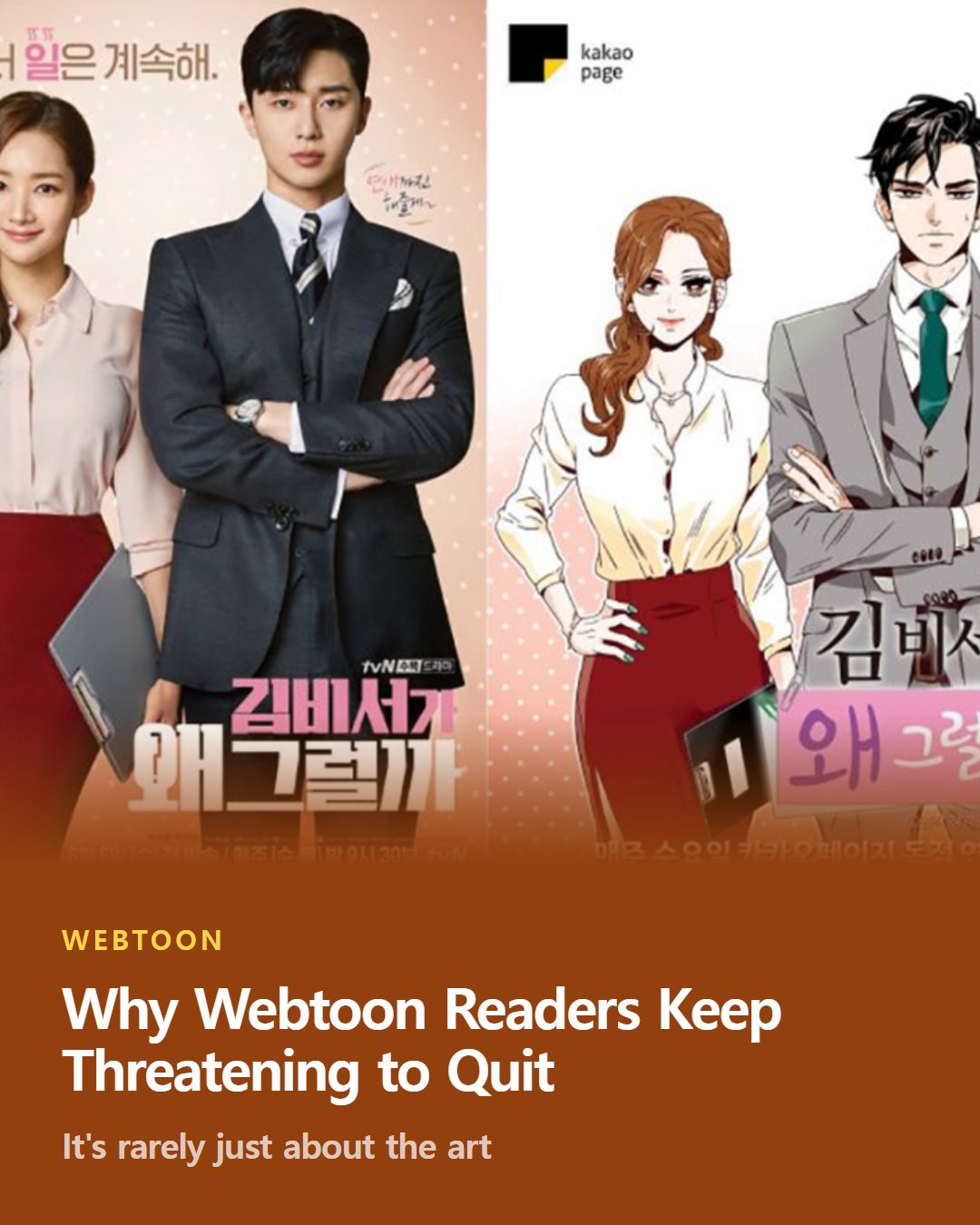
Korean webtoon readers' fury over AI-generated art traces back to years of paywall changes and refund battles that had already worn down their trust in the platforms hosting their favorite series.
The reader learns where the 'Heavenly Demon' character came from, why Korean web fiction reuses it as shorthand for unbeatable power, and how it slipped out of martial-arts novels into everyday internet slang.
Lookism has absorbed a decade of setting-collapse complaints, genre-drift jokes, and a resurfaced 2026 controversy, and Naver's own chapter-by-chapter rating system explains why none of it has driven readers away.
A theatrical animation of Korea's founding VRMMORPG web novel has been 'in development' since 2022 with no release date — here is why a franchise this big took almost 20 years to reach a screen.
A guide to the officially licensed apps for reading Korean webtoons in English, and why choosing them over pirate sites actually changes what gets made.
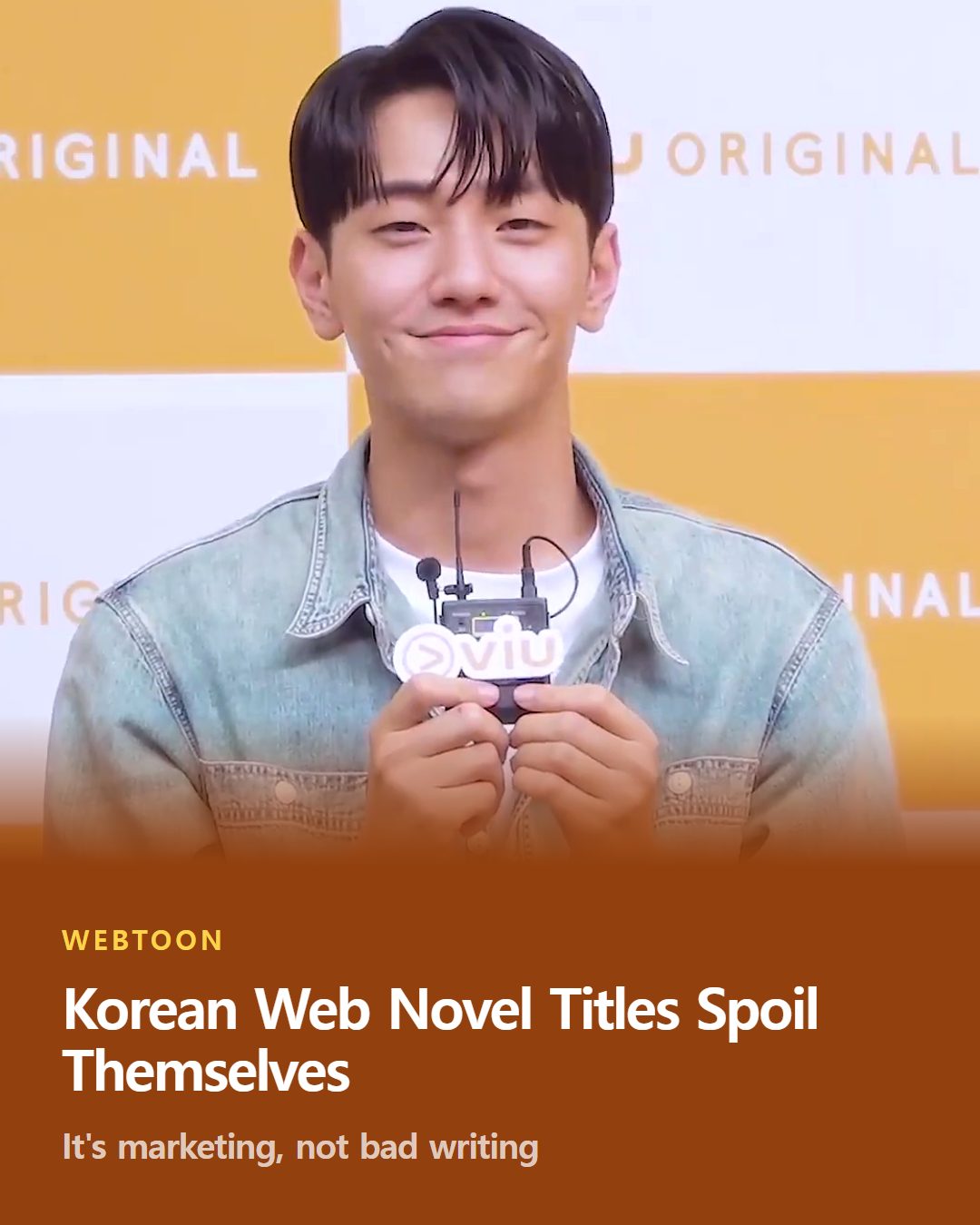
Korean web novel titles like 'The Reason Why Raeliana Ended Up at the Duke's Mansion' spoil the plot on purpose, because in a market of thousands of serialized titles, giving away the ending is what gets a story clicked, read, and adapted into a webtoon.
Naver Webtoon and Kakao Webtoon run on different creator-payment structures, overseas strategies, and recommendation algorithms — differences that can decide whether the same series becomes a global hit or stalls at home.
In Korea, a webtoon's sudden multi-week pause is usually not a scandal or a cancellation — it is 휴재, a formalized hiatus system built to protect creators from an unusually punishing weekly production schedule.
Korea's webtoon boom runs on flat per-episode fees, recoupable advances, and pay-to-skip-the-wait coins — a system that explains why hit series and struggling artists can exist on the same platform.
Korea's biggest webtoon hits usually started life as plain text — a two-stage system where novels prove a story works before anyone spends money drawing it.
The vertical-scroll webtoon format was set in the early 2000s on Korean PC web portals, years before smartphones existed — and it happened because Korea, unlike Japan, had no entrenched print comics industry to protect.
The reader learns why 'regression' and reincarnation became the default engine of Korean web fiction, and what it reveals about Korean readers' relationship to control, revenge, and a competitive society.
What Korea is talking about today — with the context that does not make it into the English headlines.