An international reader opens their webtoon app expecting the usual Tuesday update. Instead: nothing. No new episode, no dated return, sometimes just a one-line notice buried in the comments. To someone used to monthly comic schedules or seasonal TV drops, this reads like a red flag — is the series cancelled?
Did something happen to the creator? In Korea, the reaction is usually much calmer. Readers recognize it immediately as 휴재 (hyu-jae), literally "rest from serialization," a routine and in many cases contractually protected part of how webtoons are made.
The short version
- Korean webtoon hiatuses are routine, often contractual — not signs of cancellation.
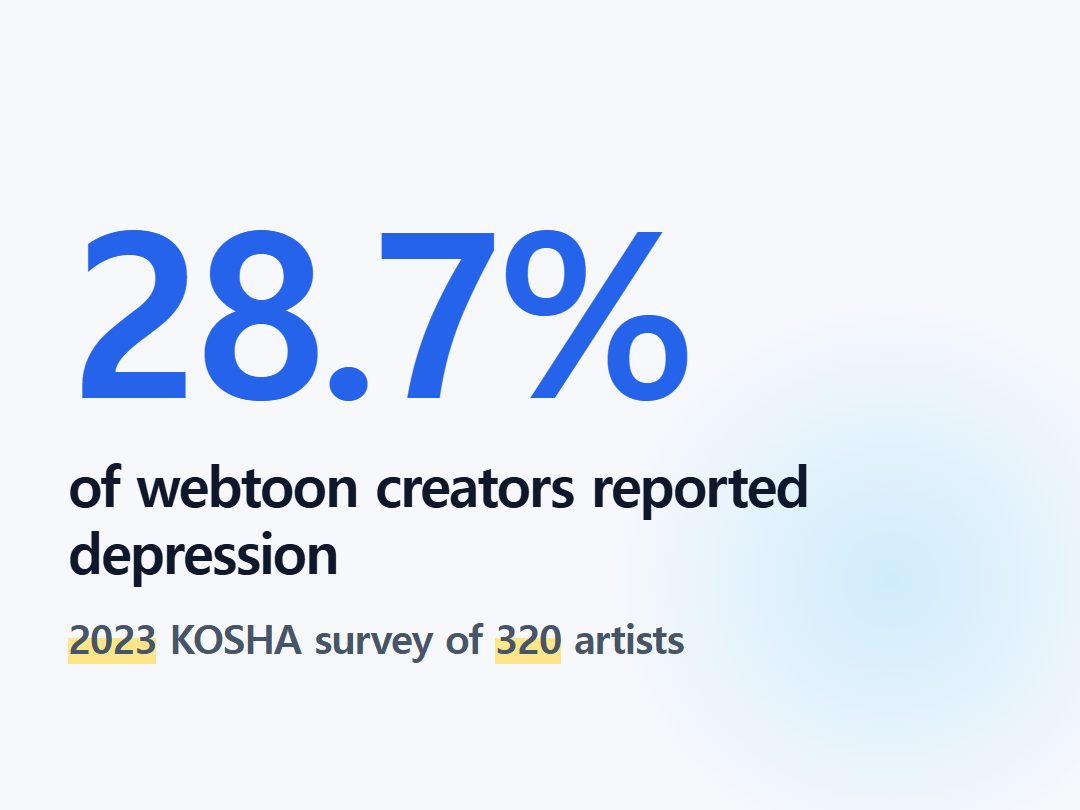
- A 2023 survey found 28.7% of creators showed depression symptoms, far above average.
- Naver and Kakao now guarantee paid breaks after Dubu's 2022 overwork-related death.
Real hiatuses, from health issues to season breaks
휴재 is not a single event tied to one series — it is a standing industry practice. Nearly every long-running Korean webtoon takes at least one hiatus during its run, and platforms treat it as normal enough that they rarely publish a detailed explanation.
Some cases are well documented: the long-running action webtoon Tower of God has paused multiple times over the years, with creator SIU citing health problems, including a back injury, and directly telling readers in 2022, "I am sorry that my personal reasons as a writer have affected the serialization." The horror-fantasy series Noblesse stopped updating for weeks over the author's health.
More recently, Omniscient Reader's Viewpoint paused after its Chapter 311 to mark the transition into a second season — its first break in six years of weekly serialization. Three different webtoons, three different reasons, and in each case the platform's public explanation was minimal at most.
That gap between "why it actually happened" and "what readers were told" is where most of the confusion for international fans comes from.
Why are Korean webtoon creators so overworked?
To understand why Korean readers shrug off a hiatus notice that alarms international fans, you need to understand what weekly webtoon production actually demands.
Unlike a monthly print comic or an artist working at their own pace, most Naver Webtoon and Kakao Entertainment series are contracted to release a new episode every single week, sometimes twice a week, for a run that can last a year or longer.
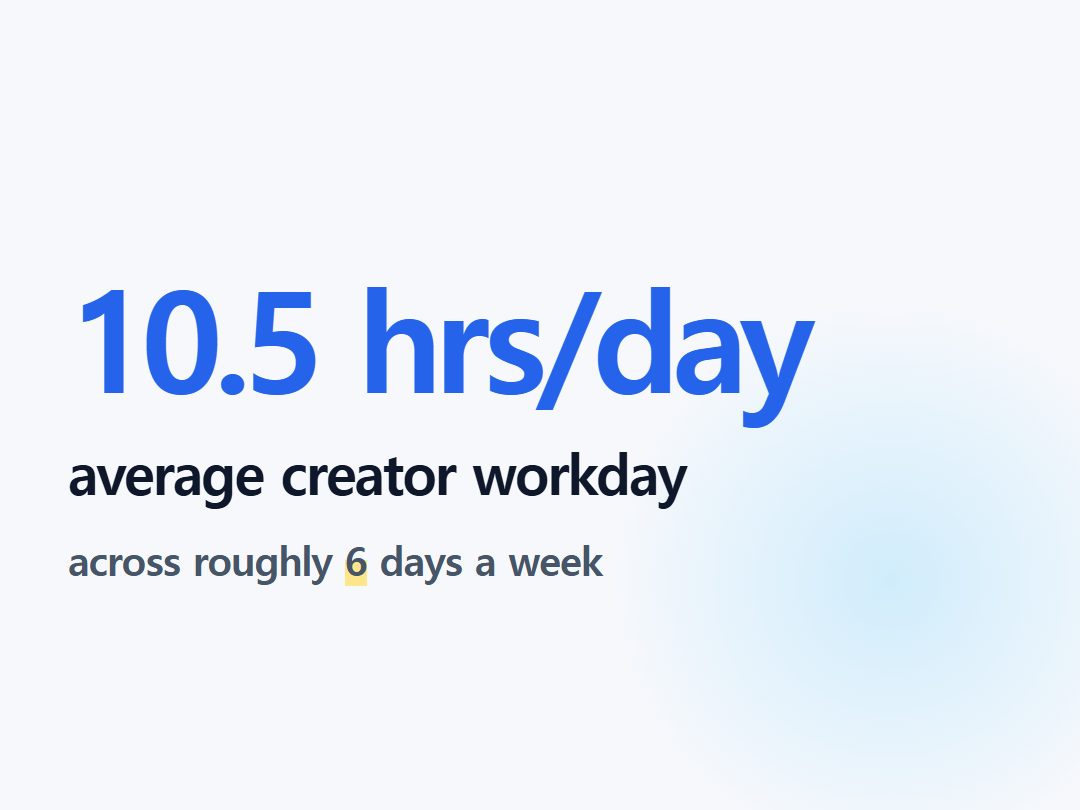
A 2023 survey by the Korea Occupational Safety and Health Agency (KOSHA), covering 320 full-time webtoon creators, found they worked an average of 10.5 hours a day across roughly six days a week, with 17% saying they had worked 14 or more hours in a single day.
The same survey found 28.7% of respondents reported symptoms of depression — nearly four times the national average — and 17.3% said they had considered suicide, compared with a national average of 10.7%.
These are not fringe cases: the survey pointed to the 2022 death of Dubu, the artist behind the hit series Solo Leveling, who died of a brain hemorrhage linked to chronic overwork at age 40, and to the case of artist Juniljus, who suffered a miscarriage in 2022 after a break request was reportedly denied.
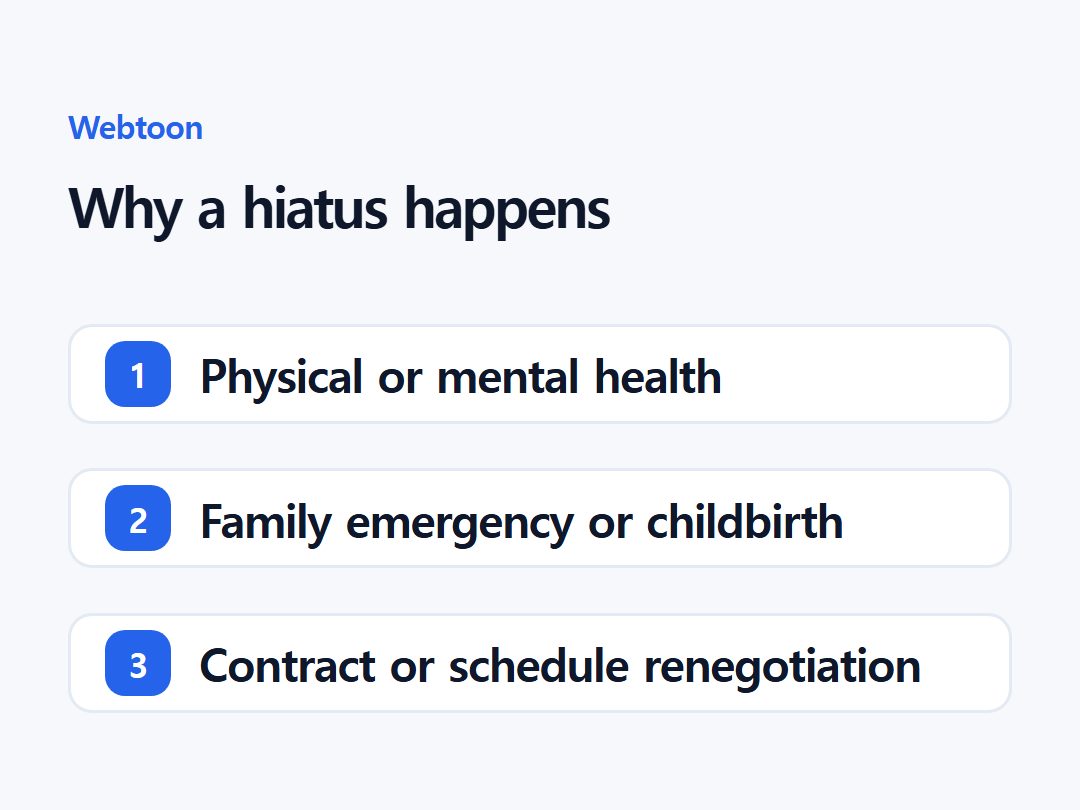
Against that backdrop, a hiatus is less a disruption than a release valve. Health problems — physical, from years of sitting and drawing under deadline pressure, or mental, from isolation and public comment sections — are the single most cited reason for an unannounced pause.
But 휴재 also covers a range of less dramatic situations that Korean fans intuitively read into a vague notice: a creator adjusting their schedule around childbirth or a family emergency, a studio renegotiating episode volume or payment terms with a platform, or, as with Omniscient Reader's Viewpoint, a planned structural break between story arcs that has nothing to do with any crisis at all.
Because these categories are so well understood inside Korea's webtoon fan culture, platforms rarely feel obligated to specify which one applies — readers already know hiatus is the system working as intended, not breaking down.
International readers, without that shared context, tend to default to the explanation their home industries have trained them to expect: a hiatus notice usually means something has gone seriously wrong.
There is also a structural reason platforms stay vague: many hiatuses are now a formal, negotiated right rather than an emergency exception.
That distinction — between a creator quietly falling ill and a creator exercising a scheduled break they are contractually owed — is exactly the kind of nuance that gets lost when a hiatus is simply translated as "the webtoon stopped." It also explains why fan communities in Korea rarely demand an explanation the way international forums sometimes do: pressing a creator for the specific reason behind a break is broadly considered inappropriate, since resting without justification is the entire point of the policy.
How Dubu's death forced platforms to change
Korea's webtoon industry grew up inside the portal system, where Naver and Daum (now Kakao) began hosting free, mobile-friendly comics in the early 2000s and built their platforms around a relentless weekly release cadence to keep readers coming back daily.
For years, that pace was sustained with almost no formal labor protections. The government introduced a standard webtoon contract in 2015, but it was criticized by creators and researchers as too vague on revenue sharing and rest provisions to be widely adopted in practice.
The pressure to change came from a wave of documented harm. The KOSHA survey and Dubu's death in 2022 forced both major platforms to act.
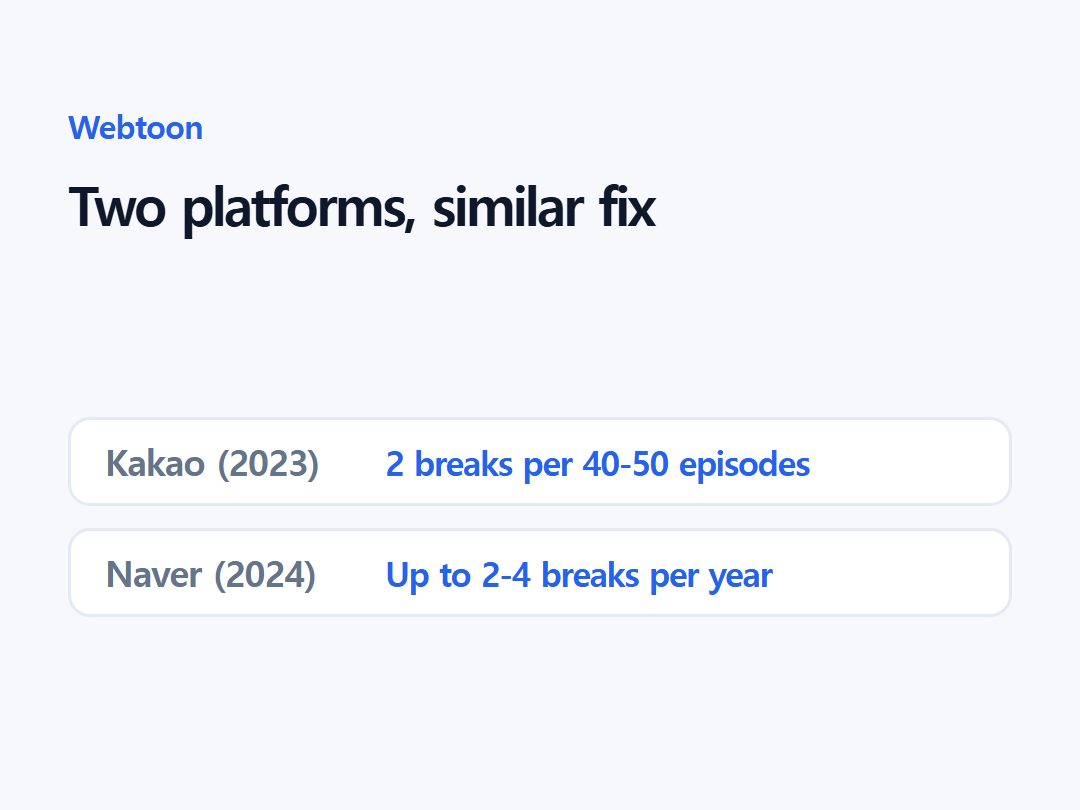
In February 2023, Kakao Entertainment revised its standard contract to guarantee creators at least two breaks per 40 to 50 episodes, cut the minimum panel count per episode from 60 to 50, and added a clause committing to "promote writers' welfare." Naver Webtoon followed in 2024, formalizing a break right that had previously existed only as an annual "anniversary break" unrelated to how often a series updated.
Under the new rule, any creator serializing weekly can take up to two breaks a year, and those serializing twice weekly can take up to four, with the right guaranteed automatically rather than requiring a separate negotiation.
South Korea's Ministry of Culture, Sports and Tourism has also signaled plans for an updated standard contract mandating two breaks per 50 episodes across the industry.
Naver has since layered on softer measures too, including a 2025 two-day "WEBTOON With" wellness program for creators who had just finished long-running series, offering counseling and rest support after the emotional toll of ending a project.
Will platforms ever explain hiatuses clearly?
The formal break-right systems at Naver and Kakao are still new enough that it is unclear how consistently they will be honored across every contract tier, particularly for creators working through smaller studios or on platforms outside the two majors.
The Ministry of Culture's proposed government-wide standard contract, which would apply the two-breaks-per-50-episodes rule more broadly, had not been finalized as of the most recent reporting.
There is also an unresolved communication problem: critics of the current system note that platforms still give readers little more than a vague in-app notice when a series pauses, with no standard label distinguishing a short scheduled break from an indefinite or health-related hiatus, or from a series that has effectively been discontinued.
As Korea's webtoon industry increasingly splits story writing and illustration between separate collaborators in a studio model, the meaning of a hiatus may also shift — a pause caused by an illustrator's departure is a different kind of disruption than an author needing a week to recover, but both currently show up to readers as the same brief, unexplained notice.
For now, the practical takeaway for international readers is simple: a hiatus notice on a Korean webtoon is far more likely to mean a creator is resting, recovering, or renegotiating than that the series has been abandoned.
Korea's webtoon break-right timeline
| Year | Change |
|---|---|
| 2015 | Government introduces a standard webtoon contract, criticized as too vague on rest provisions |
| 2023 | Kakao Entertainment guarantees at least two breaks per 40–50 episodes and cuts minimum panel count from 60 to 50 |
| 2024 | Naver Webtoon formalizes a break right: up to 2 breaks/year for weekly series, up to 4 for twice-weekly series |
| 2025 | Naver launches "WEBTOON With," a two-day wellness program for creators after long-running series end |
| Pending | Ministry of Culture proposes an industry-wide standard contract mandating two breaks per 50 episodes |
Frequently asked
Why do Korean webtoons go on hiatus without explanation?
Most hiatuses (휴재) are routine breaks for creator health, family reasons, or contract-negotiated rest, and platforms rarely specify which reason applies because Korean readers already understand the practice.
Is a webtoon hiatus a sign it's been cancelled?
Usually not — a hiatus notice is far more likely to mean the creator is resting, recovering, or renegotiating terms than that the series has been abandoned.
How many breaks are Korean webtoon creators allowed each year?
Under Naver's 2024 policy, creators serializing weekly can take up to two breaks a year, and those publishing twice weekly can take up to four.
Sources
Every factual claim above is traceable. We do not translate articles — we gather facts from multiple outlets and write them ourselves.
- Webtoon Art Style Changes and Hiatus Communication Context — Asia Economy (아시아경제)
- Naver WEBTOON Holds 2-Day Wellness Program for Creators — Anime News Network
- Kakao Announces Contract Updates to Protect Webcomic Creators — CBR
- Korea Occupational Agency Report Paints Tragic Picture for the Health of Webcomic Artists — CBR
- Webtoon writers' working conditions (2022) — Korea Institute of Labor Safety and Health
- Work Environment and Depressive Symptoms of Webtoon Writers — PMC / peer-reviewed study
- Tower of God Ends Hiatus With Surprise Comeback — ComicBook.com
- Tower of God Webtoon To Go on New Hiatus Due to Author's Health — Anime Corner