Sweet Home's webtoon and its Netflix adaptation reach the same starting point — a monster apocalypse that begins inside an apartment building called Green Home — and then walk away from each other. The webtoon, written by Kim Carnby and drawn by Hwang Young-chan, ran on Naver Webtoon from 2017 to 2020 and closed with a quiet, one-boy epilogue.
The short version
- Netflix kept Kim Carnby on as consultant, so the split was deliberate, not accidental.
- Webtoon ends with one boy reunited; Netflix ends with a whole society at peace.
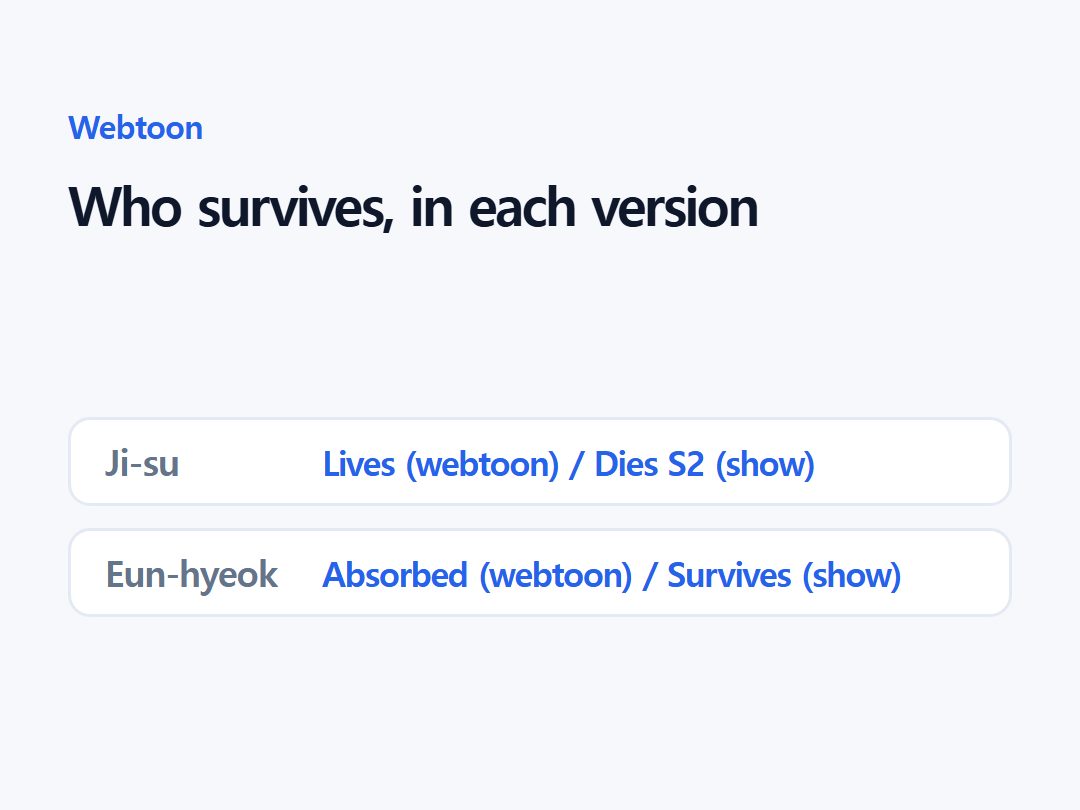
- Yoon Ji-su dies in season 2 of the show but survives in the webtoon.
The Netflix series kept going. Season 1 adapted that story fairly closely in December 2020, but seasons 2 and 3, released in December 2023 and July 2024, moved past the webtoon's plot entirely. By its last episode, the show was answering a completely different question than the comic it came from.
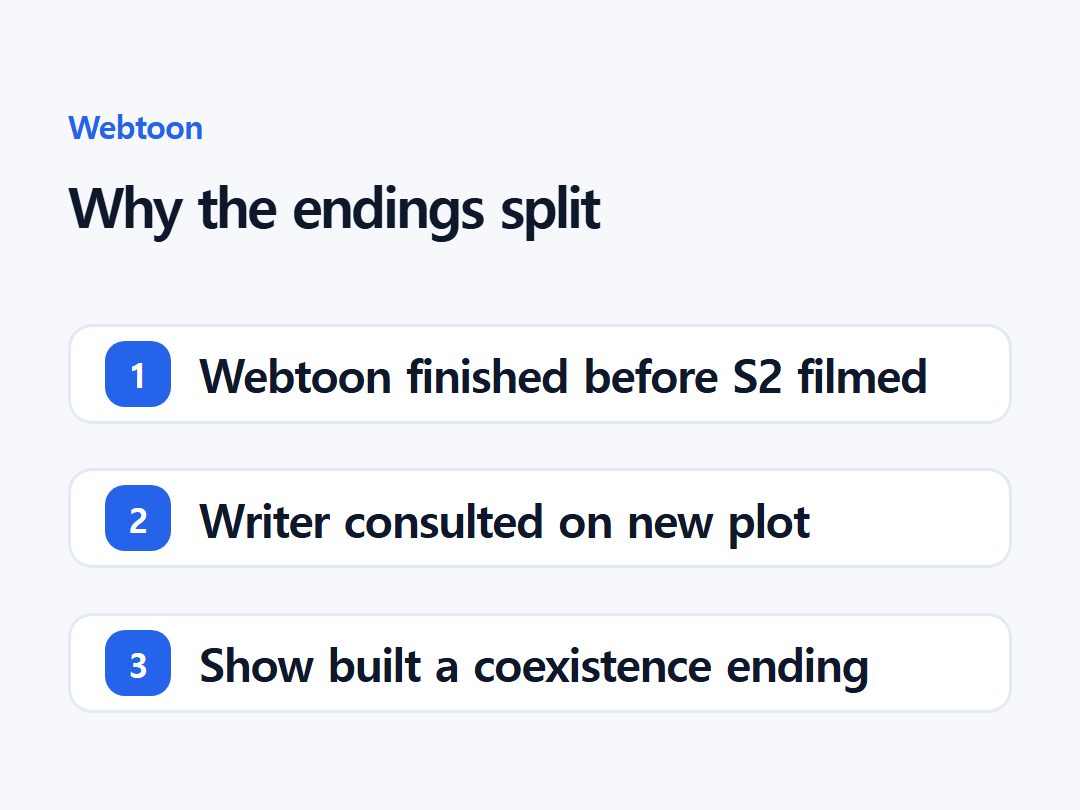
That gap is not a case of a studio botching the source material. Original writer Kim Carnby stayed on as the drama's story consultant for the new seasons, which makes the divergence a deliberate rewrite rather than an accident of adaptation.
Two survival stories end in different rooms
The webtoon's final chapter, chapter 140, is small on purpose. It jumps forward in time to a snow-covered military camp where the Green Home survivors have resettled and rebuilt an ordinary, unglamorous life.
It closes on Ji-su, who has taken up songwriting, spotting a barefoot figure walking toward the camp gate — Cha Hyun-su, alive and human again. There is no battle in this final chapter, only a reunion.
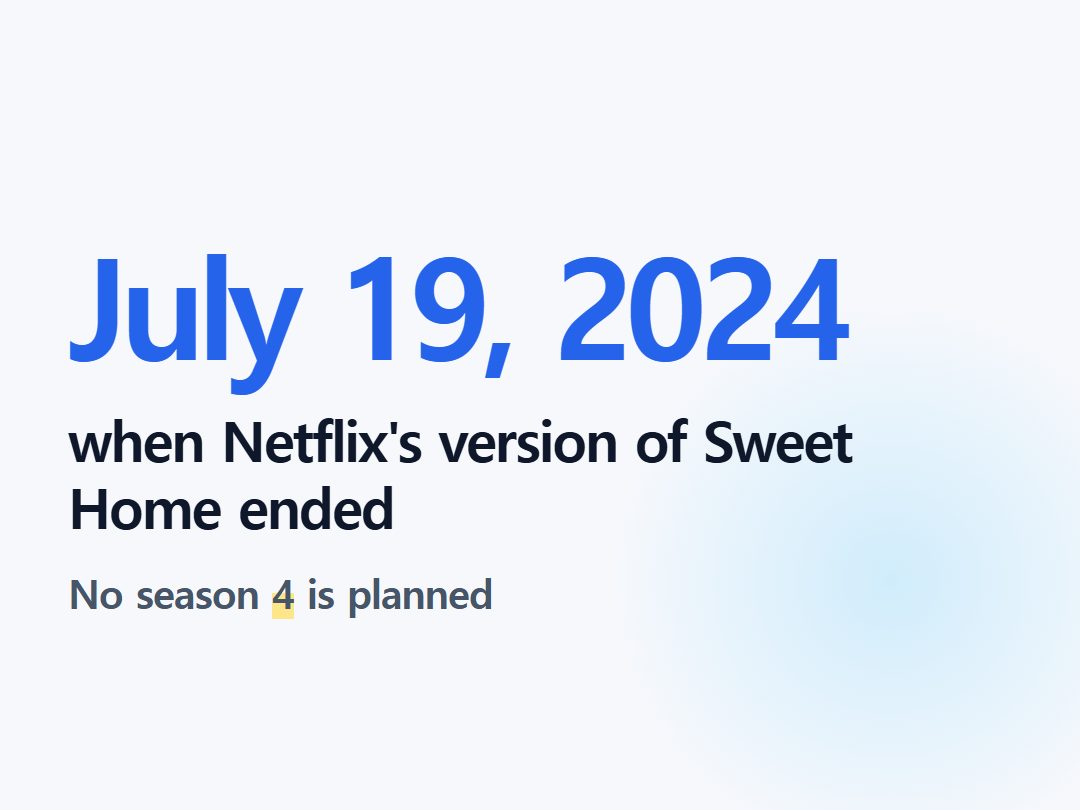
The Netflix finale, released July 19, 2024, ends somewhere far larger in scope: a rooftop overlooking a city where humans and "neohumans" have just stopped fighting after years of war. Hyun-su calls it the start of a new era and names that era Sweet Home, turning the title into a description of the whole rebuilt world rather than one apartment building.
Why Cha Hyun-su's fate splits into two versions
In the webtoon, Hyun-su spends most of the story actively resisting his own monsterization, treating every use of his power as a step toward losing himself. In its climax, he finally gives in completely, using the monster's full strength to kill the story's final threat.
He is not shown paying for that with his life. The epilogue finds him restored to human form, suggesting the transformation was survivable rather than a permanent trade.
The Netflix version never pushes him that far. Hyun-su remains recognizably himself through the season 3 finale, fighting alongside his neohuman ally Eun-hyeok rather than sacrificing his humanity to win the last battle. The show removes the one moment of genuine doubt the webtoon built its entire ending around.
The show stopped following the webtoon after season one
Season 1 tracked the webtoon closely because that made practical sense at the time filming began — the webtoon itself was still being serialized, so there was no finished ending yet for the production to adapt.
By the time season 2 arrived three years later, the webtoon had already finished its run. Director Lee Eung-bok has said the writers consulted extensively with Kim Carnby about the story's unstated premises and used those conversations to build a much larger world, rather than simply filming what the comic had already drawn.
The production timeline itself explains part of the split:
- Season 1: three years before a sequel was even confirmed
- Season 2: filmed back to back with season 3, after the webtoon had ended
- Season 3: arrived only seven months after season 2, with Netflix confirming no season 4 is planned
An individual's rescue, not a society's redesign
This is the part international viewers most often miss: the two endings aren't just different plots, they're answering entirely different problems.
The webtoon is built around one teenager's arc — a suicidal boy who resists infection, nearly loses himself to it, and is ultimately restored to a family and a purpose he didn't have at the start. It's a story about whether one person can be saved, and it ends the moment that person is.
The Netflix ending reframes the same apocalypse as a political problem instead of a personal one. Its final season is not really asking whether Hyun-su survives — by that point the show has already made clear he will.
Instead it asks whether an entire class of infected people, the neohumans, can be accepted into human society rather than hunted down. The finale answers that with tentative coexistence rather than individual rescue.
That shift explains why the Netflix finale spends its closing minutes on a crowd of neohumans being allowed to stay, rather than on Hyun-su alone. The unit the story is trying to save changed between mediums, from one boy to one society.
What a neohuman is, and why the webtoon never needed the word
"Neohuman" is a term the Netflix scripts introduce in season 2 for infectees who reach a stable balance between monster and human — they gain the monster's physical power but keep their memories and personality, instead of losing themselves entirely to the infection.
The webtoon has no equivalent category. Its infected characters are either still human, fully monster, or briefly caught between the two states before the story resolves them one way or the other within a few chapters.
Inventing a permanent third state is itself evidence of where the drama was heading. A story only needs a word for a population once it plans to let that population stay — the vocabulary is a small but direct clue that the writers were building toward coexistence, not a single hero's rescue.
Two characters who don't make it to the finale in one version
Several major characters live or die depending on which ending you're watching, which is part of why fans still argue about which version feels more "real." Yoon Ji-su's storyline is the sharpest example: actress Park Gyu-young did not return for season 3 because her character was already killed off in season 2, episode 3, cutting an arc the webtoon had carried all the way to its final chapter.
| Character | Webtoon ending | Netflix ending |
|---|---|---|
| Cha Hyun-su | Restored to human form, reunites with survivors at the camp | Remains himself throughout, helps negotiate the new coexistence |
| Yoon Ji-su | Survives to the epilogue and reunites with Hyun-su | Killed in season 2, episode 3 |
| Eun-hyeok | Transforms into a mass creature that absorbs Hyun-su; fate left open | Becomes a neohuman, survives as Hyun-su's closest ally to the end |
| Eun-yoo | Survives and is shown living at the military camp | Becomes a neohuman; her final fate is left ambiguous on the rooftop |
The cast talked openly about leaving the source material behind
Cast and crew were candid about the break while season 2 was still in production. Actor Lee Jin-uk described the new season as presenting "a world that diverges from the original webtoon," and Lee Eung-bok framed the shift as a change in scale — season 1's confined apartment tension giving way to an open, apocalypse-wide story once the show moved past its source.
That openness matters for how the ending should be read. This wasn't a case of writers quietly abandoning a comic they couldn't finish adapting; it was a public, coordinated decision to keep Kim Carnby involved while building an ending the webtoon never contained.
What's still unresolved
The webtoon and the show now sit as two separate, completed canons that share the same opening chapters, and neither publisher treats one as overwriting the other. Kim Carnby's continued involvement in the drama means the Netflix ending carries the original creator's blessing, even though it is not the ending he originally drew.
That leaves an open question for readers deciding where to start: the webtoon gives you a tighter, bleaker story about one survivor's return to being human, while the show spends three seasons building toward a wider argument about who gets to belong in a broken world.
How each character's fate differs between the webtoon and the Netflix show
| Character | Webtoon ending | Netflix ending |
|---|---|---|
| Cha Hyun-su | Restored to human form, reunites with survivors at the camp | Remains himself throughout, helps negotiate the new coexistence |
| Yoon Ji-su | Survives to the epilogue and reunites with Hyun-su | Killed in season 2, episode 3 |
| Eun-hyeok | Transforms into a mass creature that absorbs Hyun-su; fate left open | Becomes a neohuman, survives as Hyun-su's closest ally to the end |
| Eun-yoo | Survives and is shown living at the military camp | Becomes a neohuman; her final fate is left ambiguous on the rooftop |
Frequently asked
Does the Sweet Home webtoon end the same way as the Netflix show?
No — the webtoon ends with Cha Hyun-su restored to human form and reunited with survivors at a camp, while the Netflix finale ends with humans and neohumans reaching tentative coexistence across an entire society.
Is Yoon Ji-su alive in the Sweet Home webtoon?
Yes, Ji-su survives to the webtoon's epilogue and reunites with Hyun-su, but in the Netflix series she is killed in season 2, episode 3.
What is a neohuman in Sweet Home?
Neohuman is a term the Netflix seasons introduce for infected people who reach a stable balance between monster and human, keeping their memories and personality while gaining monster strength — a category the webtoon never needed.
Sources
Every factual claim above is traceable. We do not translate articles — we gather facts from multiple outlets and write them ourselves.
- Sweet Home Season 3 Ending & Webtoon Ending: Are They Similar or Different? — Yahoo Entertainment
- Sweet Home Season 3 Ending Explained: What Happens To Cha Hyun-su — ScreenRant
- Sweet Home: 5 key differences between the webtoon & Netflix series — Sportskeeda
- Sweet Home (webtoon) — Wikipedia
- Monstrous Desires and New Horrors Await: 'Sweet Home' Season 2 Premieres December 1 — About Netflix
- 'Sweet Home' Season 3 Arrives July 19 in Fitting Finale to Epic Series — About Netflix
- Sweet Home Webtoon Ending Explained — ComingSoon