Netflix's Korean thriller "Somebody" ended in November 2022, and international viewers are still arguing about it. Not the plot mechanics — those are settled. What splits audiences is whether the woman at the center of the story should be read as a survivor, a hero, or something closer to the killer she hunts.
The short version
- Sum kills serial killer Yun-o herself instead of turning him over to police.
- It's her third kill; recaps read the cat and attacker as setup.
- Show has not been renewed — the ambiguous ending is final, not a cliffhanger.
That disagreement isn't a translation problem or a plot hole. It comes from genre assumptions Korean viewers bring to the screen automatically, and international viewers usually don't.
What happens in the final episode
"Somebody" follows Kim Sum (Kang Hae-lim), a programmer who builds a dating app called Somebody with her mentor Samantha. The app becomes a hit — and a hunting ground for Seong Yun-o (Kim Young-kwang), a serial killer who uses it to find and murder women he matches with.
Sum identifies Yun-o's pattern of victims before the police do, but instead of reporting him immediately, she draws closer to him. In the finale, Sum and Samantha use deepfake video calls built from footage of his dead victims to psychologically unravel Yun-o. Cornered and breaking down, he confesses his murders to Sum directly.
Rather than hand him to the detectives closing in — including her own best friend, Gi-eun — Sum kills him herself.
A dating app built by the one person hunting a killer on it
The premise only works because of who Sum is. Years before the app existed, Samantha recruited her for a one-of-a-kind AI chatbot Sum had built alone. Somebody grew out of that same instinct: a way to engineer connection for people who, like Sum, find ordinary intimacy difficult.
That backstory matters for the ending. Sum isn't a detective or a vigilante by profession. She is the app's own architect, which is why she has access to the matching data no police warrant could easily get — and why the killer's crimes feel, to her, like a personal failure of something she built.
The detail most recaps skip: this isn't Sum's first kill
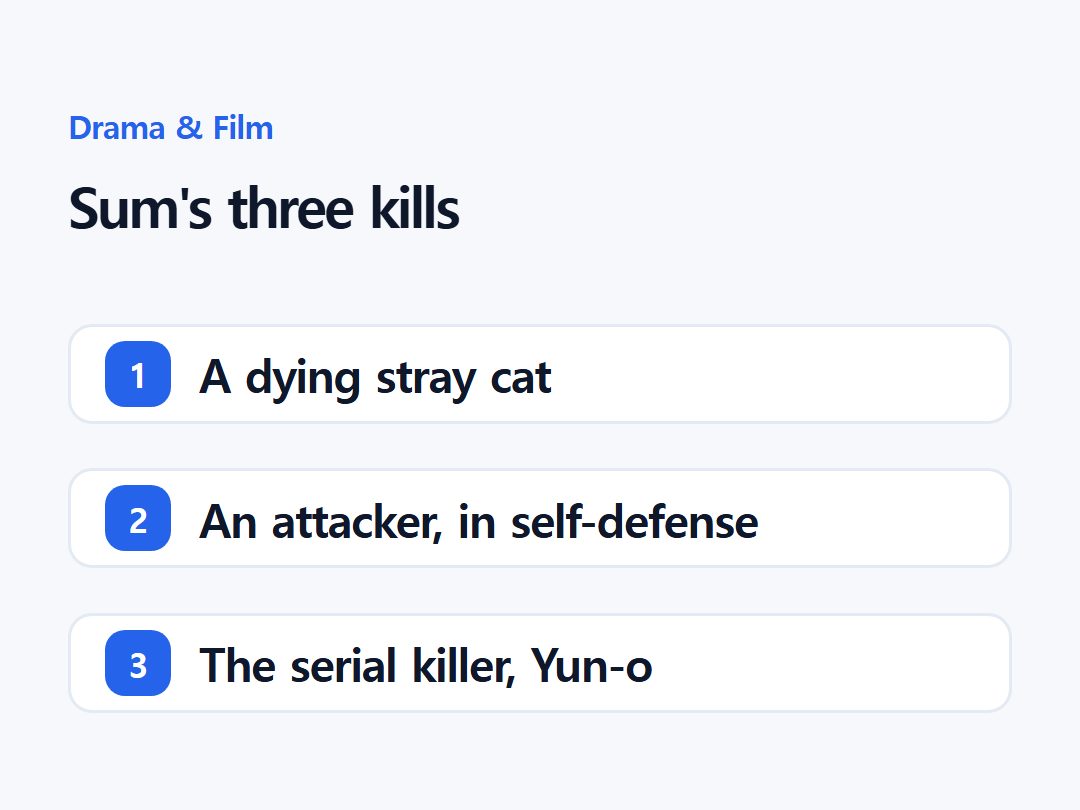
Viewers who find the ending abrupt have often missed two earlier scenes. Before Yun-o, Sum euthanizes a badly injured stray cat out of mercy, and later kills a man attacking her in self-defense.
Korean recap sites treat this as a deliberate pattern, not three unrelated incidents:
- The cat: an act of mercy toward suffering she can end
- The attacker: a kill made under direct threat to her own life
- Yun-o: framed by the show as both — ending a man beyond redemption, on her own terms
The show is asking viewers to read the finale through that lineage. Whether it succeeds is exactly where critics split.

Why a Korean thriller lets its heroine become judge and executioner
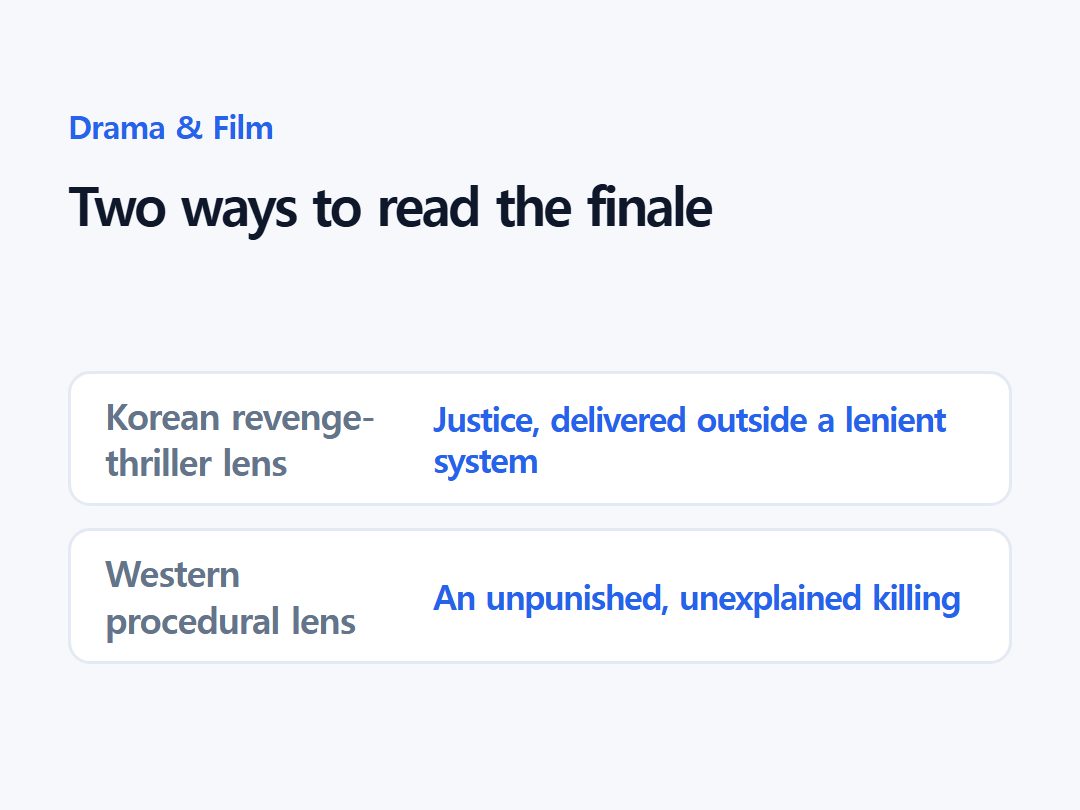
To an international audience raised on procedurals where the killer gets arrested and tried, Sum's choice can look like the show simply running out of ideas. Korean thriller cinema has a much longer, more comfortable relationship with a hero who steps outside the law entirely.
Films like Kim Jee-woon's I Saw the Devil and Park Chan-wook's revenge trilogy built an entire genre around protagonists who conclude that the justice system will not deliver a punishment that fits the crime — so they deliver it themselves. That convention reflects a real, recurring frustration in Korean public life with sentences for violent crime that are widely seen as too lenient relative to the harm done.
Read inside that tradition, Sum killing Yun-o isn't a shock ending. It's the genre doing what it always does: treating vigilante justice as a fantasy the story indulges, then asks the viewer to sit with. What's unusual is that "Somebody" hands that role to a woman who spends the rest of the series coded as anything but a warrior.
The Asperger's diagnosis complicates the reading further
Sum tells another character she has Asperger's syndrome — an older clinical term, now generally folded into autism spectrum diagnoses — near the end of the first episode, and the show returns to it repeatedly. It's a rare choice for a K-drama to make a neurodivergent woman its romantic and criminal lead simultaneously.
Critics disagree sharply on what the show does with that choice. One review praised it for giving "a voice to individuals who are often marginalized" in Korean television. Others were harsher, arguing the diagnosis functions mainly to explain away Sum's flat affect after violence — implying, without evidence, that autism and an absence of visible remorse go together.
That critique matters for the ending specifically. Sum shows almost no outward distress after killing Yun-o. Viewers who read her Asperger's as simply a different, valid way of processing emotion see restraint, not coldness. Viewers who read the show's writing as sloppier see a shortcut — using a real diagnosis to avoid answering whether Sum has become a killer in her own right.
The finale grew out of a show that avoided easy comfort all along
The ending isn't the only place "Somebody" declines a tidy read. Across its eight episodes, the series also writes in a physically disabled character who is targeted for abuse, a same-sex relationship treated matter-of-factly rather than as a plot twist, and sexual content unusually frank for the genre.
Yun-o himself gets a backstory of childhood abandonment by his mother, which the show uses to raise an uncomfortable question rather than answer it: would he have become a killer at all if someone had loved him first. None of this excuses what he does in the finale — but it fits a show that keeps refusing to hand viewers a clean villain or a clean heroine.
Critics were split before the ending even aired
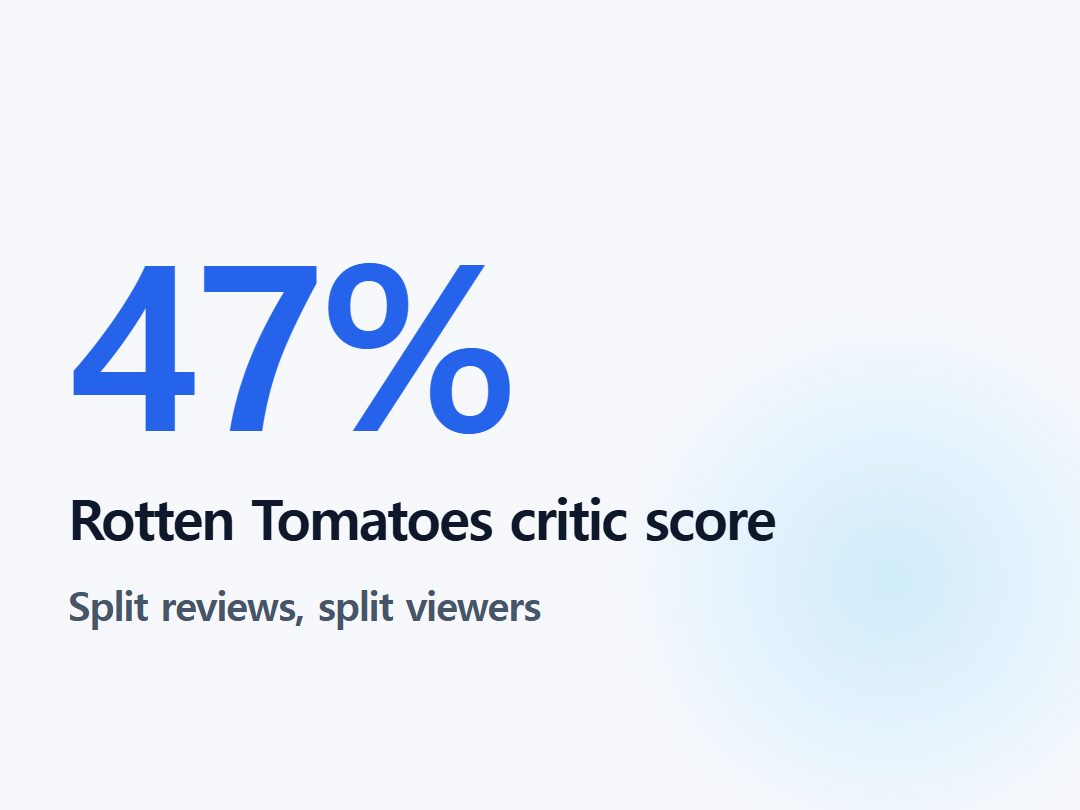
The finale's ambiguity is part of a wider pattern in how "Somebody" was reviewed. It holds a 47% critic score on Rotten Tomatoes, with reactions clustering at two extremes rather than settling in the middle.
The South China Morning Post called it a show that favors "sex and violence over logic," and Decider described it more simply as "a quiet, slow-moving thriller that's a little weird." On the other side, the outlet But Why Tho? named it one of the best series of its year, pointing to performances it called "deeply unsettling."
That split isn't a case of some critics being right and others wrong. It reflects the same fault line as the ending itself: whether the show's refusal to resolve Sum's morality reads as ambition or as a failure to commit.
One season, and no sequel to resolve anything
Unlike most Western prestige thrillers, Korean drama is written almost entirely as closed, single-season stories regardless of how a show performs. "Somebody" has not been renewed, and there is no indication a second season is coming.
That structural fact shapes how the ending should be read. This was never a cliffhanger built to sell a Season 2 — it's the complete statement the writers intended. The ambiguity is the ending, not a placeholder for one.
What the finale leaves unresolved
The show closes with Sum back at her office, playing a game and laughing for what the story frames as the first time. It plays as calm rather than triumphant or guilty, and the show declines to clarify which it means.
Three questions remain genuinely open, by design rather than oversight:
- Whether Sum ever loved Yun-o, or engineered the relationship purely to expose him
- Whether Gi-eun, as the detective and her closest friend, will ever learn what Sum did
- Whether the show wants viewers to see Sum as healed by the ordeal, or quietly changed by it in a darker direction
None of the three has a single accepted answer among fans online, which is exactly the point: viewers who accept the revenge-thriller framing tend to find the ending satisfying, while viewers looking for a clearer verdict on Sum's morality are the ones still debating it years after release.
Sum's three kills, according to Korean recap sites
| Target | Circumstance |
|---|---|
| Injured stray cat | Act of mercy to end suffering |
| Attacker | Self-defense under direct threat to her life |
| Seong Yun-o | Ending a man beyond redemption, on her own terms |
Frequently asked
Does Sum kill Yun-o at the end of Somebody?
Yes — after cornering him with deepfake calls built from his victims' footage, Sum kills him herself instead of handing him to the detectives closing in.
Is there a Somebody season 2?
No. Somebody has not been renewed, and Korean dramas are typically written as closed, single-season stories, so the ambiguous ending is meant to be final.
Why does Sum have Asperger's in Somebody?
The show gives Sum an Asperger's syndrome diagnosis to explain her flat affect after violence, though critics are split on whether this humanizes her or sidesteps the question of remorse.
Sources
Every factual claim above is traceable. We do not translate articles — we gather facts from multiple outlets and write them ourselves.
- Somebody (TV series) — Wikipedia
- Netflix K-drama review: Somebody – sex and violence favoured over logic in intriguing yet perplexing serial killer romance — South China Morning Post
- Netflix's Somebody Ending, Explained — The Cinemaholic
- Somebody | Rotten Tomatoes — Rotten Tomatoes
- Somebody: A Bold Take on Taboo Topics in K-Dramas — The Kraze Magazine
- I Saw the Devil (2010) Explained: Korean Revenge Masterpiece & Cultural Shock — Annyeong K-Pop
- Has Somebody been renewed for Season 2? Here's what we know — The Review Geek
- "Somebody" (썸바디) — Jae-Ha Kim