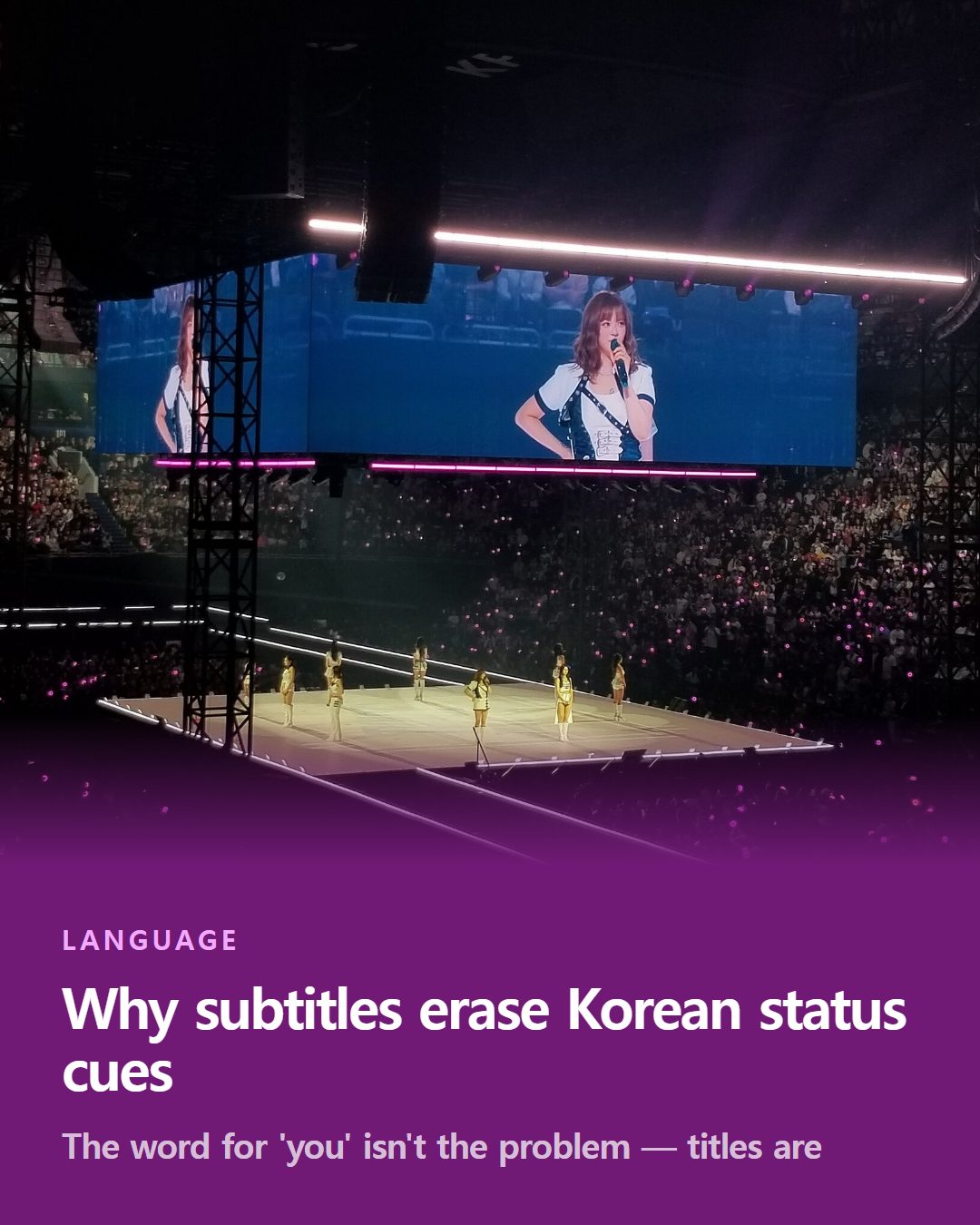
Watch a Korean variety show or drama with English subtitles and you will see characters addressed by first name, or by "you." Listen to the original audio and you will hear something different: almost no one is called by name alone. A contestant on a survival show says PD-nim to the person running the cameras.
A junior employee says sunbae-nim to a colleague who joined the company three years earlier. A woman calls her boyfriend's older brother oppa, not his name. English subtitles routinely flatten all of this into a name or a pronoun — and with it, a whole layer of information about rank and closeness disappears.
The short version
- English subtitles often flatten Korean honorifics into plain names or 'you.'
- Titles like PD-nim and sunbae-nim signal rank; kinship terms like oppa signal closeness.
- Netflix favors readability while fan-made Viki subtitles often keep honorific titles intact.
Squid Game made viewers notice the gap
This is not a single incident but a recurring translation problem that keeps resurfacing as Korean content reaches wider international audiences.
It became most visible in 2021, when Netflix's Squid Game became the platform's most-watched non-English series and viewers who understood Korean began pointing out gaps between the dialogue and the English subtitles.
Multiple translators interviewed at the time noted that terms of address — not just slang — were among the hardest things to carry across, because a single Korean title can simultaneously signal someone's job, their authority over the speaker, and how emotionally close the two people are.
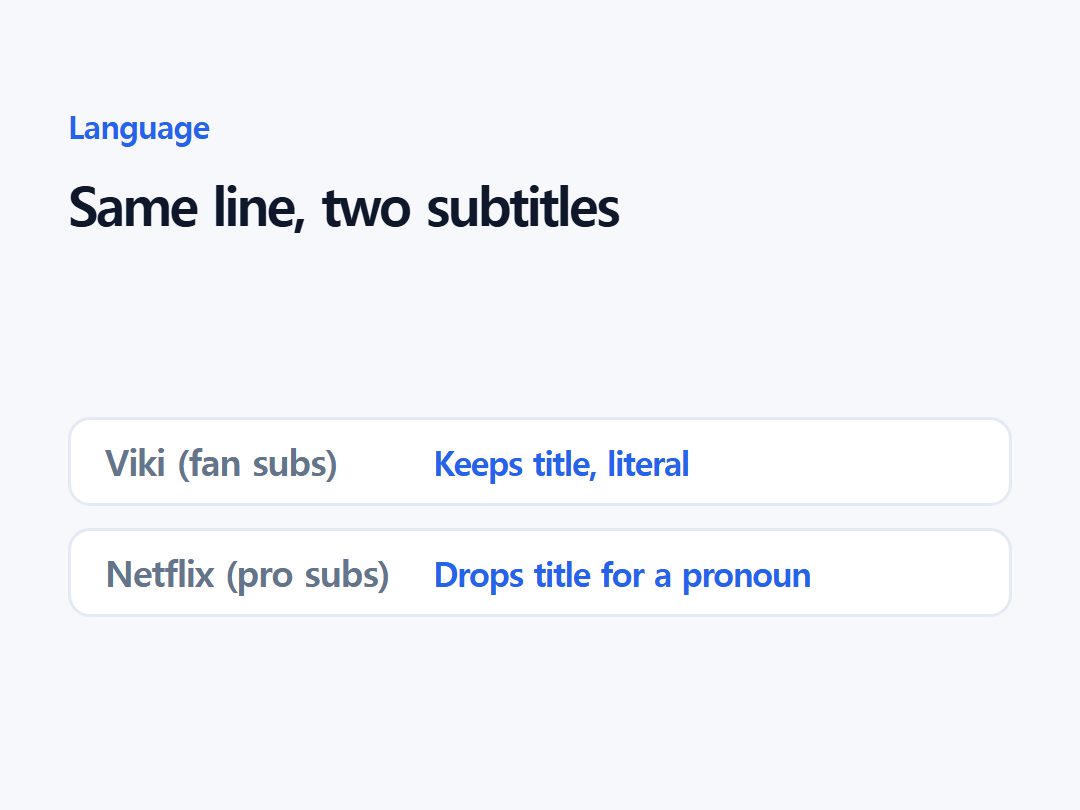
A separate academic comparison of professional Netflix subtitles against fan-made Viki subtitles for several Korean dramas found the same pattern in less high-profile shows: where the original Korean marked a character's rank with an honorific title, Viki's volunteer translators tended to keep the title or render it literally, while Netflix's professional translators more often simplified it into a plain pronoun or name for readability.
Neither choice is "wrong" — but they produce different viewing experiences, and most viewers never see the original to know which version they got.
Why don't Korean speakers just say 'you'?
To understand why this loss matters, it helps to know that Korean largely avoids the second-person pronoun "you" in conversation.
Directly saying "you" to someone — even the textbook word dangshin — can sound confrontational or oddly formal depending on context, and Korean speakers rarely use it with people they actually know.
Instead, Korean substitutes a name, a kinship term, or a title plus the honorific suffix -nim every time someone is addressed. That substitution is doing real grammatical work: it tells the listener, in real time, exactly where the speaker believes they stand relative to the person they're talking to.
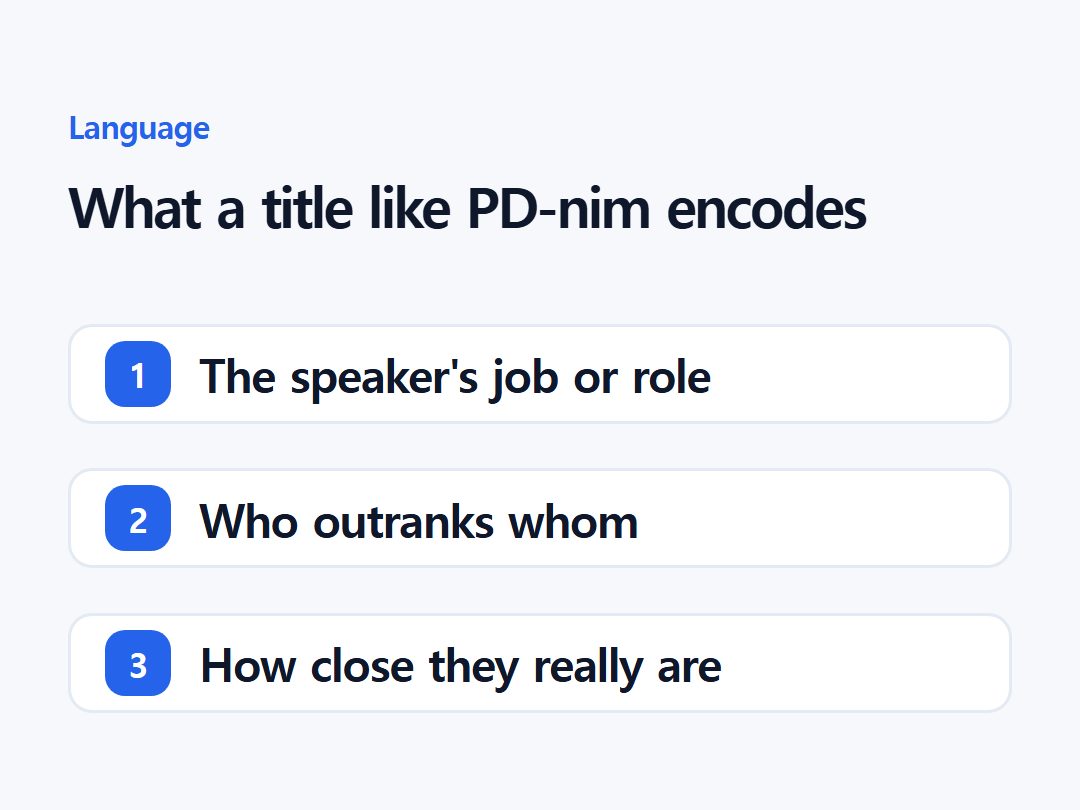
Job titles are one branch of this system. PD stands for producer-director, the person who designs missions and calls the shots on a variety show; add -nim and a cast member addressing them as "PD-nim" is doing two things at once — naming their job and marking that the PD outranks them on set. Sajang-nim (company president), gyosu-nim (professor), and sunbae-nim (senior — a person who joined a school, company, or group earlier, regardless of age) work the same way.
Using someone's bare name instead, without a title or the honorific suffix -ssi, can come across as too familiar or even disrespectful in a professional setting — the equivalent of a new hire calling the CEO by their first name unprompted.
A second branch runs through family vocabulary. Oppa (a woman's older brother or older male friend), hyung (a man's older brother or older male friend), unnie (a woman's older sister or older female friend), and noona (a man's older sister or older female friend) are used constantly for people who are not blood relatives at all.
Extending a family word to a friend signals warmth and closeness the way a first name might in English — except it also encodes relative age, something English terms of address don't track at all.
When subtitles collapse both systems into names or "you," two different kinds of information vanish at once: the power structure in the scene (who has to defer to whom) and the emotional temperature of the relationship (strangers, colleagues, or found family).
A scene where a rookie idol nervously calls a veteran co-star sunbae-nim reads, in the original, as a junior person carefully managing a status gap.
In flattened subtitles, it can read as two peers just talking — which changes how an international viewer interprets tension, comedy, or affection that Korean audiences pick up on instantly and without translation.
Netflix's own internal Korean Timed Text Style Guide, used by its contracted translators, instructs subtitlers to weigh "context, relationship, era" when deciding how formal a line should sound, and warns against arbitrary mismatches — such as a wife using formal speech when her husband speaks informally to her — because that would misrepresent the power dynamic.
But the guide has no equivalent rule dedicated specifically to translating job-title honorifics like PD-nim or sunbae-nim, which is one reason handling of these terms varies from show to show and even scene to scene, depending on the individual translator's judgment and the space available on screen.
How fan translators kept honorifics that studios cut
Korea's title-and-kinship address system has deep roots in a social structure that has historically emphasized a person's place within a group — family, school cohort, or workplace — over their identity as an individual speaking to another individual.
Linguists studying Korean note that this shows up across the language, not just in vocabulary: separate systems govern how formal a sentence sounds, how a verb honors its subject, and how a speaker addresses the listener, and all three layer on top of each other in ordinary conversation.
Titles and kinship terms are the address layer, and because Korean avoids direct pronouns, they end up carrying weight that English puts almost entirely on tone of voice or body language instead.
The translation side of this story is more recent. Long before Netflix or other major platforms invested in Korean content, English-speaking fans watched Korean dramas through fan-run streaming sites like Viki, subtitled for free by volunteer fan communities already steeped in the culture.
Because that early audience already knew what oppa or sunbae meant, volunteer subtitlers had less incentive to translate the terms away — many fansub communities kept honorifics untranslated on purpose, the same way some English-language anime subtitles keep -san or -chan intact for a fan base fluent in the convention.
As Korean shows moved onto mainstream global platforms and reached audiences with no prior exposure to the terms, professional localization shifted toward what translation scholars call "domestication" — adapting content to sound natural in the target language rather than preserving foreign-sounding structures, which linguists call "foreignization." That shift brought Korean content to far larger audiences, but it also meant translators, working under strict subtitle character limits and tight deadlines, increasingly had to choose between explaining a title's social weight or just cutting it. Most of the time, given the space, they cut it.
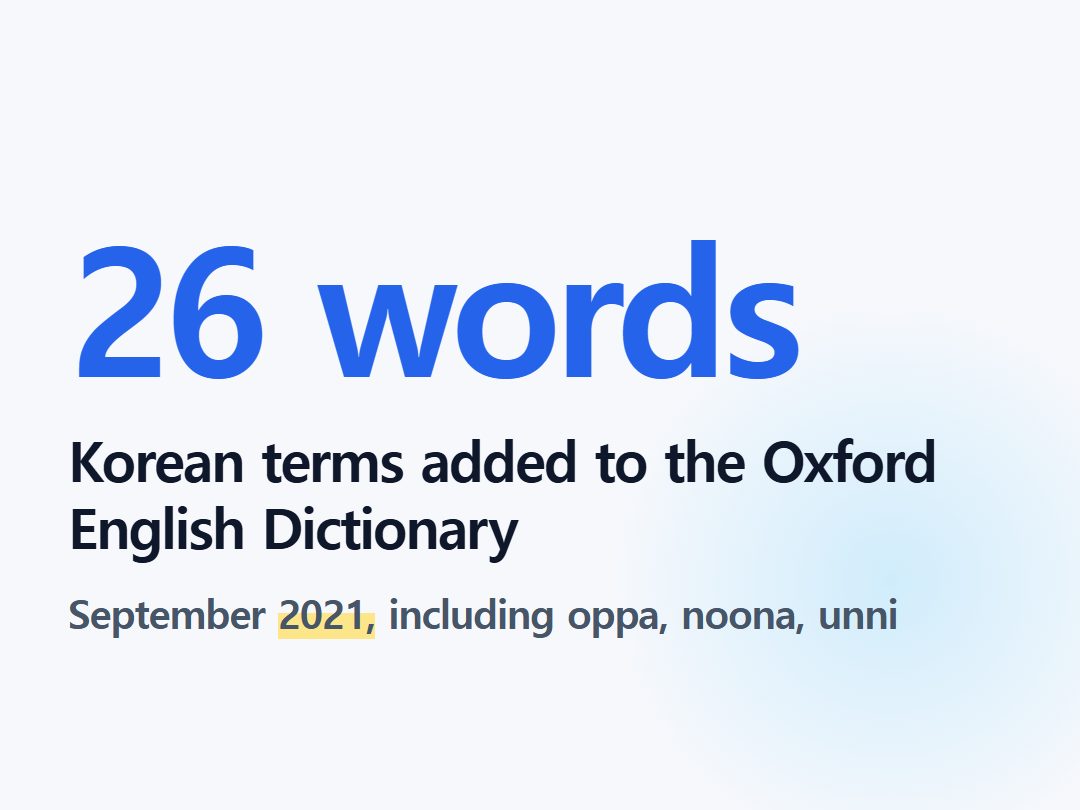
One sign of the culture partially catching up: in September 2021, the Oxford English Dictionary added 26 Korean-origin words to its pages, including the address terms oppa, noona, and unni (though notably not hyung).
That the dictionary considers these terms of address worth defining for English readers shows the vocabulary is becoming more familiar — but professional job titles like PD-nim or sunbae-nim have not made a similar crossover, so translators still have to solve the same problem episode by episode with no dictionary shortcut to lean on.

Will English subtitles start keeping honorifics?
There is no single body setting subtitle policy across the industry, and no indication one is coming. Individual streaming platforms set their own house style, individual translators still make judgment calls line by line, and the character-count limits that make subtitles readable on screen are not going away.
That means the same show can treat honorific titles inconsistently within a single season, let alone across different platforms streaming the same series.
What is more likely to shift is audience literacy rather than any formal rule. Anime fandom already normalized keeping -san and -chan untranslated in official English releases once enough viewers understood them; Korean content's fan base is younger and still growing into that same familiarity.
Continued dictionary additions, wider use of terms like oppa and unnie in English-language pop culture writing, and viewer feedback on platforms like Netflix could all push future subtitles toward keeping more of the original address terms intact — or at least toward footnote-style on-screen glosses, which some platforms already use for other untranslatable cultural terms.
Until then, the gap between what is said in Korean and what appears in English subtitles remains something international viewers should simply know to expect.
Korean address terms and what English subtitles usually drop
| Term | Literal meaning | What it signals |
|---|---|---|
| PD-nim | Producer-director + honorific suffix | Job role and authority on set |
| Sajang-nim | Company president + honorific suffix | Rank in a workplace |
| Gyosu-nim | Professor + honorific suffix | Rank in academia |
| Sunbae-nim | Senior who joined earlier, regardless of age | Seniority within a group |
| Oppa | Woman's older brother or older male friend | Closeness and relative age |
| Hyung | Man's older brother or older male friend | Closeness and relative age |
| Unnie | Woman's older sister or older female friend | Closeness and relative age |
| Noona | Man's older sister or older female friend | Closeness and relative age |
Frequently asked
What does PD-nim mean in Korean variety shows?
PD-nim combines the job title PD (producer-director) with the honorific suffix -nim, marking both the person's role and their authority over the speaker on set.
Why don't Korean speakers say 'you' to each other?
Korean largely avoids the second-person pronoun 'you' because even the textbook word dangshin can sound confrontational or oddly formal, so speakers substitute a name, title, or kinship term instead.
Why do Netflix and Viki subtitles translate Korean honorifics differently?
An academic comparison found Netflix's professional translators tend to simplify honorific titles into a plain name or pronoun for readability, while Viki's volunteer fansub translators more often keep the original title or render it literally.
Sources
Every factual claim above is traceable. We do not translate articles — we gather facts from multiple outlets and write them ourselves.
- Squid Game and the 'untranslatable': the debate around subtitles explained — The Conversation
- Translators, experts weigh in on 'Squid Game' subtitle debate — NBC News
- Korean Timed Text Style Guide — Netflix Partner Help Center
- PROFESSIONAL VS NON-PROFESSIONAL TRANSLATION OF KOREAN TV DRAMAS — Victoria University of Wellington (New Voices in Translation Studies)
- 'Oppa', 'Bulgogi' & 'Mukbang' among 26 Korean words added to Oxford English Dictionary — Mothership
- Why Koreans Don't Use Names Often – Understanding Titles Like "Sunbae" and "Sajangnim" — Everyday Korea
- Korean honorifics — Wikipedia