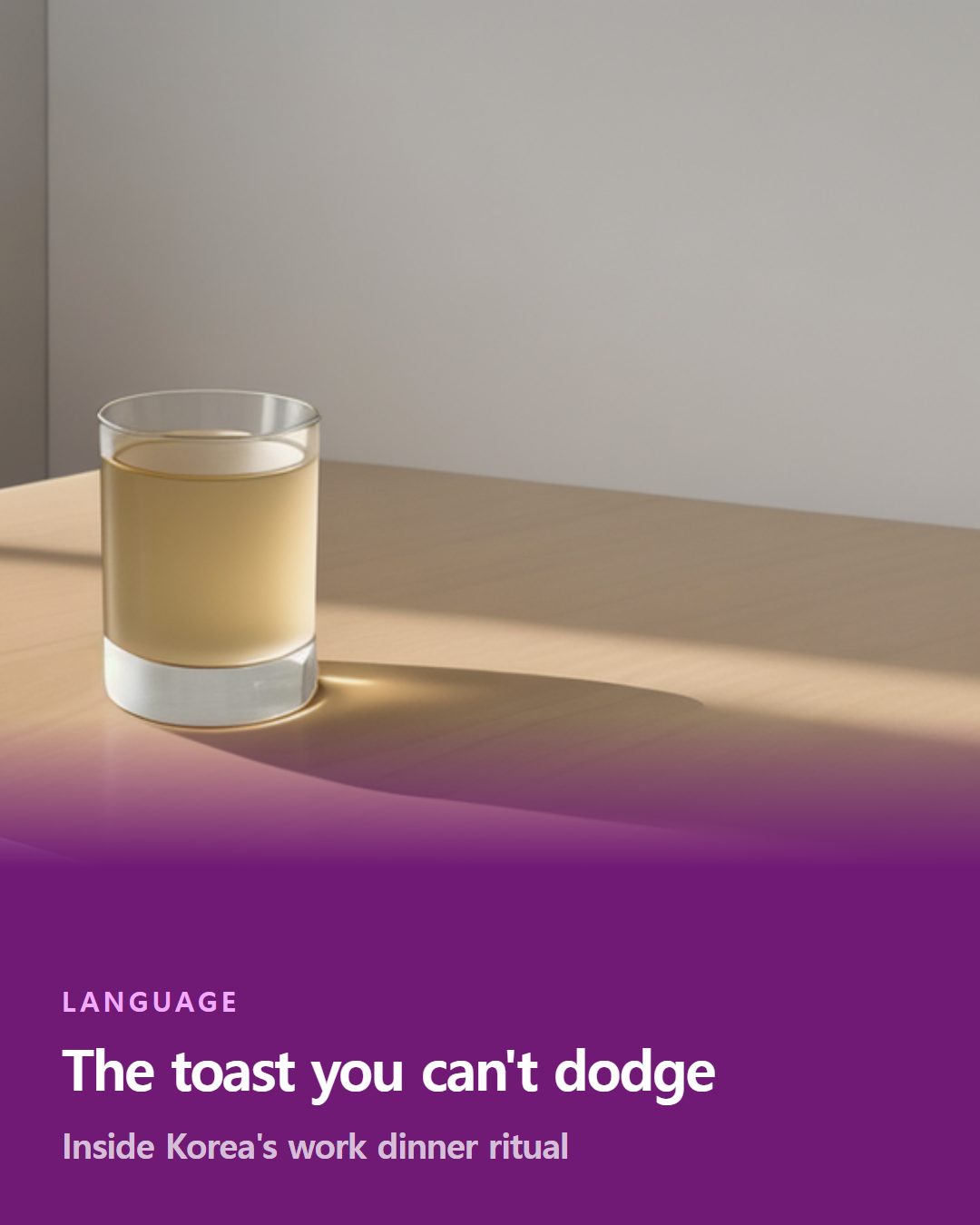
At a Korean office dinner, someone eventually taps a glass and says a name. That person has to stand up, hold their glass, and deliver a few lines that end in a shouted call-and-response line before anyone can drink. This is a geonbaesa (건배사) — literally a "toast speech" — and it is a routine, almost dreaded part of Korean work life.
The short version
- A geonbaesa is a short toast speech, not just "cheers."
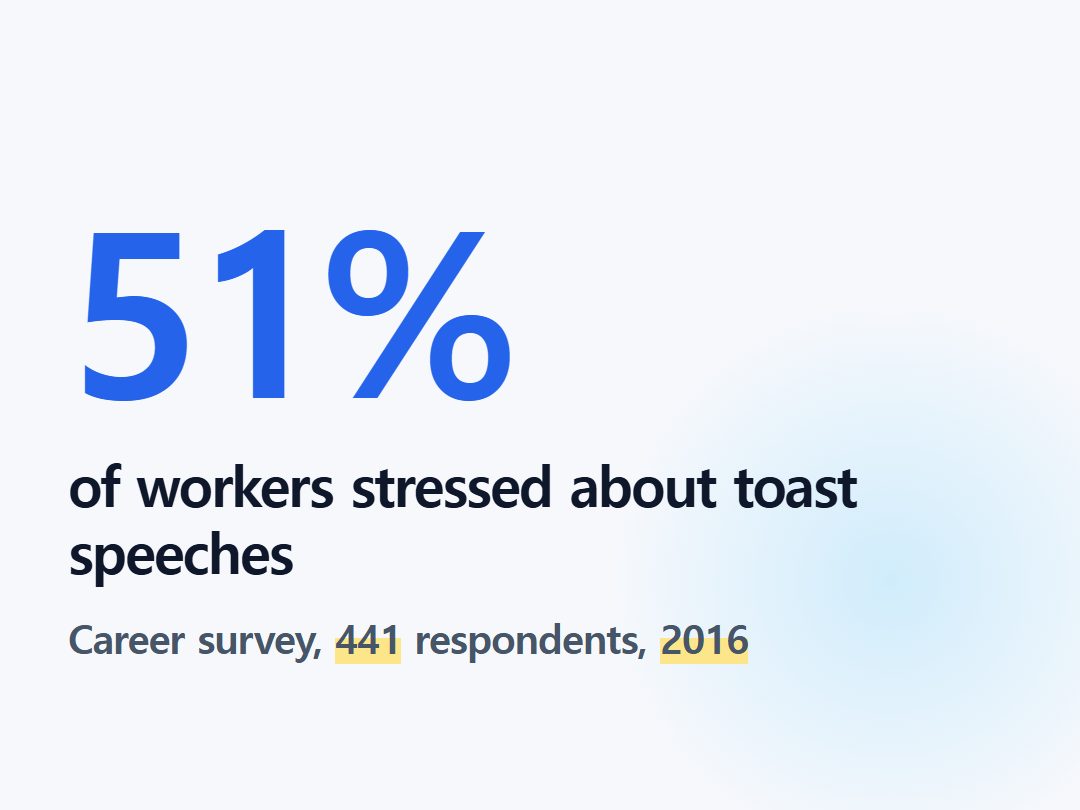
- 51% of workers feel stressed about being asked to give one.
- Samsung's "1-1-9" rule now limits dinners to one venue, drink, by 9pm.
It is easy to mistranslate. Geonbae (건배) alone just means "cheers." A geonbaesa is the short speech that comes before it — equal parts pep talk, wordplay, and public performance, aimed at whoever is sitting around the table that night.
A toast speech, not just a clink of glasses
In English, someone might tap a fork on a glass and say "cheers" without much thought. In Korea, the same moment usually opens with a name being called, a pause while that person stands, and then a short address — sometimes a lesson, sometimes a joke, sometimes a wish for the coming year — that ends in a chant everyone repeats together.
The custom is most visible at hoesik (회식), the Korean term for a company dinner that functions as an informal extension of the workday. Hoesik are not officially mandatory, but in many offices, skipping one carries a social cost.
Every seat at the table becomes a stage
What makes a geonbaesa stressful is that it is rarely planned in advance for most guests. The senior-most person present — a team leader, an executive, sometimes a client — decides who speaks, often by pointing across the table mid-meal.
Being picked is not really optional. Refusing, or freezing without a decent line, reads as awkward in a culture where hoesik doubles as a test of how well someone reads a room. A 2016 survey by the job portal Career found that 51% of Korean office workers had felt stressed specifically about being asked to give a toast speech, out of 441 respondents surveyed.
Newer hires tend to get picked more often than veterans. It works as a low-stakes way for a team to see how someone handles sudden attention — a senior manager fumbling a toast is shrugged off, but a new employee fumbling one becomes office small talk the next morning.
The three-syllable trick that saves a nervous speaker
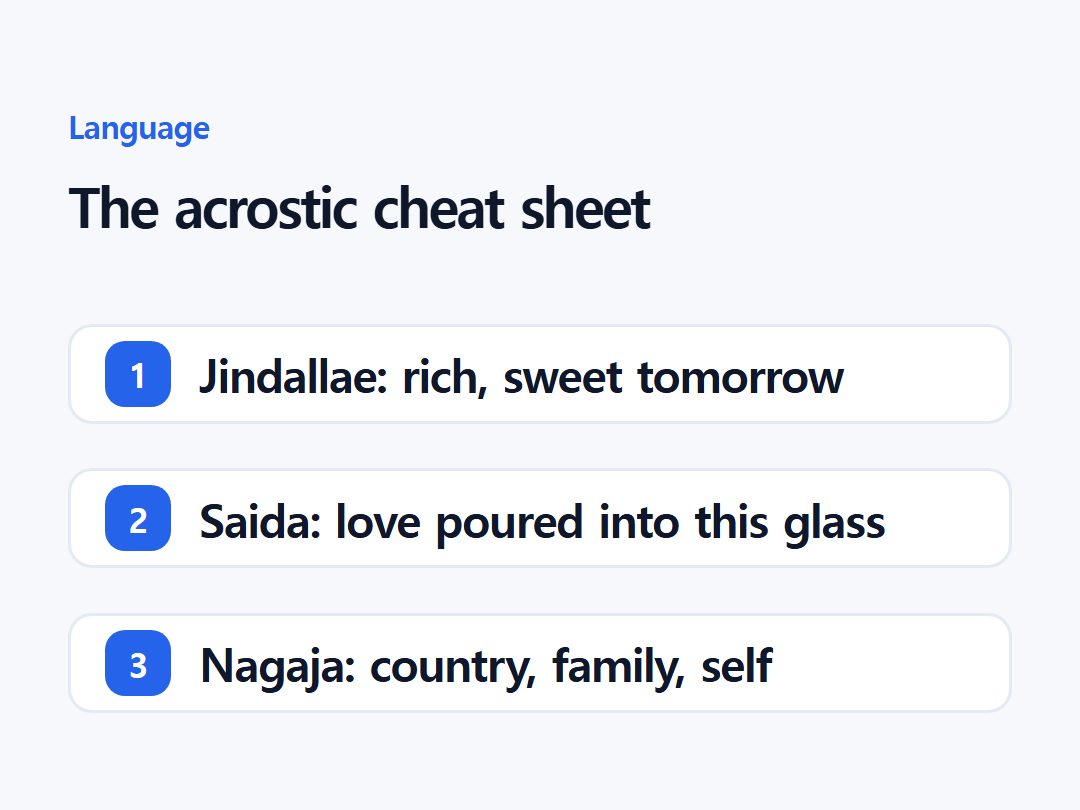
Because most people are caught off guard, a whole genre of ready-made geonbaesa has developed around a simple trick: take a short word, and turn each syllable into the first word of a phrase — an acrostic built for speaking out loud, not writing down.
- 진달래 (jindallae, "azalea") — "진하고 달콤한 내일을 위하여" ("for a rich and sweet tomorrow")
- 사이다 (saida, "cider") — "사랑합니다, 이 술잔에, 다 바쳐" ("I love you — into this glass, all of it")
- 나가자 (nagaja, "let's go") — "나라를, 가정을, 자신을 위하여" ("for the country, the family, and ourselves")
These formulas exist precisely because improvising from nothing is hard under pressure. Memorizing two or three of them is a genuinely common piece of Korean office survival knowledge, closer to knowing a few icebreaker jokes than to formal public speaking.
Why the youngest person can't just say no
The toast speech sits inside a larger set of drinking manners that run on seniority. Junior employees are expected to hold their glass with both hands when a senior pours for them, and to angle their body slightly away when they drink in front of an elder — a gesture that visibly obscures the act of swallowing.
Glass height matters too: a junior colleague's glass is conventionally held a little lower than a senior's during a toast. None of this is written down anywhere. It is absorbed the way table manners are, by watching what happens when someone gets it wrong.
- Pour for seniors before pouring your own glass
- Hold the glass with both hands when a senior fills it
- Turn slightly away from an elder while drinking
The toast speech is the loudest, most public piece of this etiquette, because unlike a quiet hand gesture, it cannot be done halfway. Everyone at the table is listening.
Where "geonbae" actually comes from
The word predates the English "cheers" by a wide margin. It comes from the Sino-Korean characters 乾 (geon, "dry" or "empty") and 杯 (bae, "cup"), a phrase that circulated in classical Chinese drinking poetry long before it entered Korean. The literal meaning is close to "empty the cup."
Japan and China use closely related terms — kanpai and ganbei — that share the same root characters, a reminder that the custom of a shared toast phrase is older and wider than any one country's office culture. What is distinctly Korean is the speech that got attached in front of it.
One dinner, three rounds
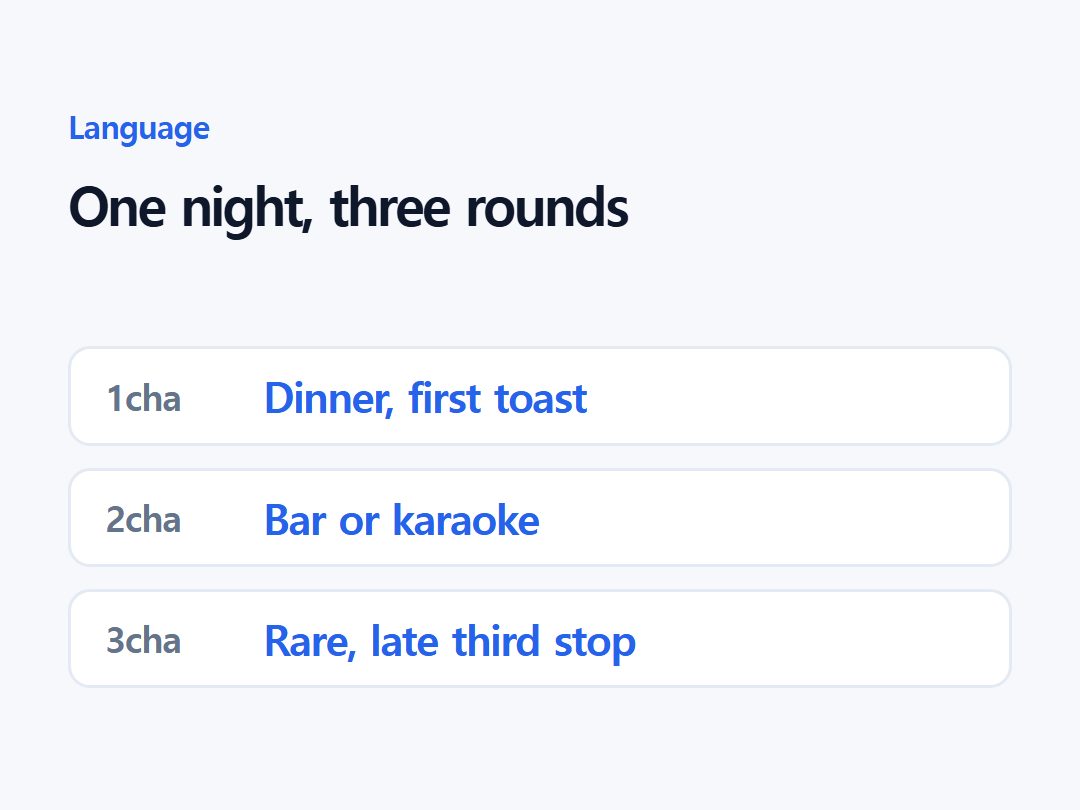
A geonbaesa rarely happens just once in a night. Korean hoesik traditionally unfold in stages called cha (차, "round"), and a fresh toast often opens each one.
- 1차 (ilcha): the main dinner, usually with soju or beer — where the first, most formal toast speech happens
- 2차 (icha): a second venue, often a beer hall or noraebang (karaoke room)
- 3차 (samcha): a rarer, later third stop — historically the classic ending to a long night
Each new round can bring its own round of toasts, which is part of why the custom feels less like a one-off ritual and more like a recurring obligation across an evening.
More than half of office workers dread this moment
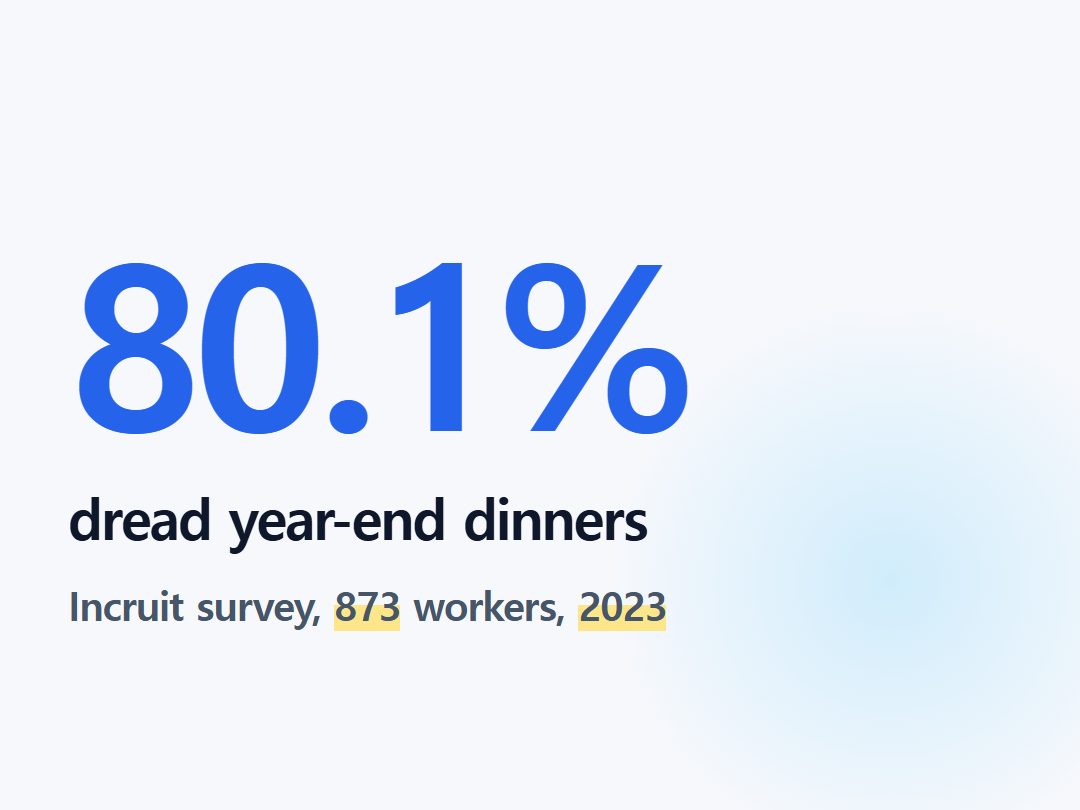
The discomfort shows up consistently in workplace surveys, not just around toasts but around hoesik itself. A December 2023 survey of 873 office workers by the job portal Incruit found that 80.1% felt stressed about year-end company dinners, with workers in their 20s and 30s reporting the highest discomfort.
Separately, research firm Embrain Trend Monitor has found that roughly half of Korean office workers say hoesik participation causes them stress, with younger employees more likely to see it as an intrusion on personal time. The toast speech is one concentrated moment inside that broader discomfort — the part where the pressure becomes visible and personal.
Companies are rewriting the rules
The culture is shifting, partly through legal pressure and partly through corporate policy. A 2007 Seoul High Court ruling found that forcing a subordinate to drink alcohol against their will could constitute an offense, giving employees legal grounds to refuse.
Some companies have gone further with explicit guidelines. Samsung introduced an internal "1-1-9" rule for company dinners: one venue instead of bar-hopping across multiple rounds, one type of alcohol instead of mixing drinks, and home by 9 p.m.
Surveys suggest the softer tone is landing: in one Trend Monitor poll of 1,000 office workers, 46.7% approved of a workplace atmosphere where drinking is no longer pushed on people who don't want it.
What hasn't changed
Even as heavy, multi-round drinking declines, the toast speech itself has proven sticky. Hoesik are shrinking — shorter, lighter, sometimes alcohol-free — but when a group does gather, someone is still usually asked to stand and say a few words before the first round of drinks.
What has changed is the acceptable content: overt pressure to drink, personal comments, and generational digs are now widely seen as bad form in a toast, replaced by lighter, more considerate lines. The format has outlasted the drinking culture that originally demanded it.
For a foreign guest invited to a Korean work dinner, that is the practical takeaway: no one expects a flawless speech, but standing up and saying a short line is treated as basic participation, a small sign of being part of the room rather than a spectator at the table.
The three rounds of a Korean hoesik
| Round | Term | What happens |
|---|---|---|
| 1차 | ilcha | Main dinner with soju or beer — the first, most formal toast speech |
| 2차 | icha | Second venue, often a beer hall or noraebang (karaoke room) |
| 3차 | samcha | Rarer, later third stop — historically the classic ending to a long night |
Frequently asked
What does geonbaesa mean?
It's the short toast speech given before drinking at a Korean work dinner, separate from geonbae, which just means "cheers."
What is Samsung's "1-1-9" rule for company dinners?
It limits dinners to one venue, one type of alcohol, and going home by 9 p.m.
Where does the word geonbae come from?
It comes from the Sino-Korean characters 乾 ("dry/empty") and 杯 ("cup"), literally meaning "empty the cup."
Sources
Every factual claim above is traceable. We do not translate articles — we gather facts from multiple outlets and write them ourselves.
- The Toast That Predates the Word 'Cheers' — Joo Bar
- 직장인 송년회 추천 건배사 1위는 '박보검' — Asia Economy (아시아경제)
- 직장인 과반수 "연말 회식 때문에 스트레스 받는다" — Incruit News
- 직장인을 위한 송년회 건배사 모음 — Hyosung Blog
- Korean Drinking Culture: How to Say Cheers (Jjan vs Geonbae) — DailyHangul (Medium)
- Understanding Hweshiks: Drinks and Dinner with Co-Workers in Korea — Expat Guide Korea
- Samsung forbids employees from drinking after 9pm — PhoneArena