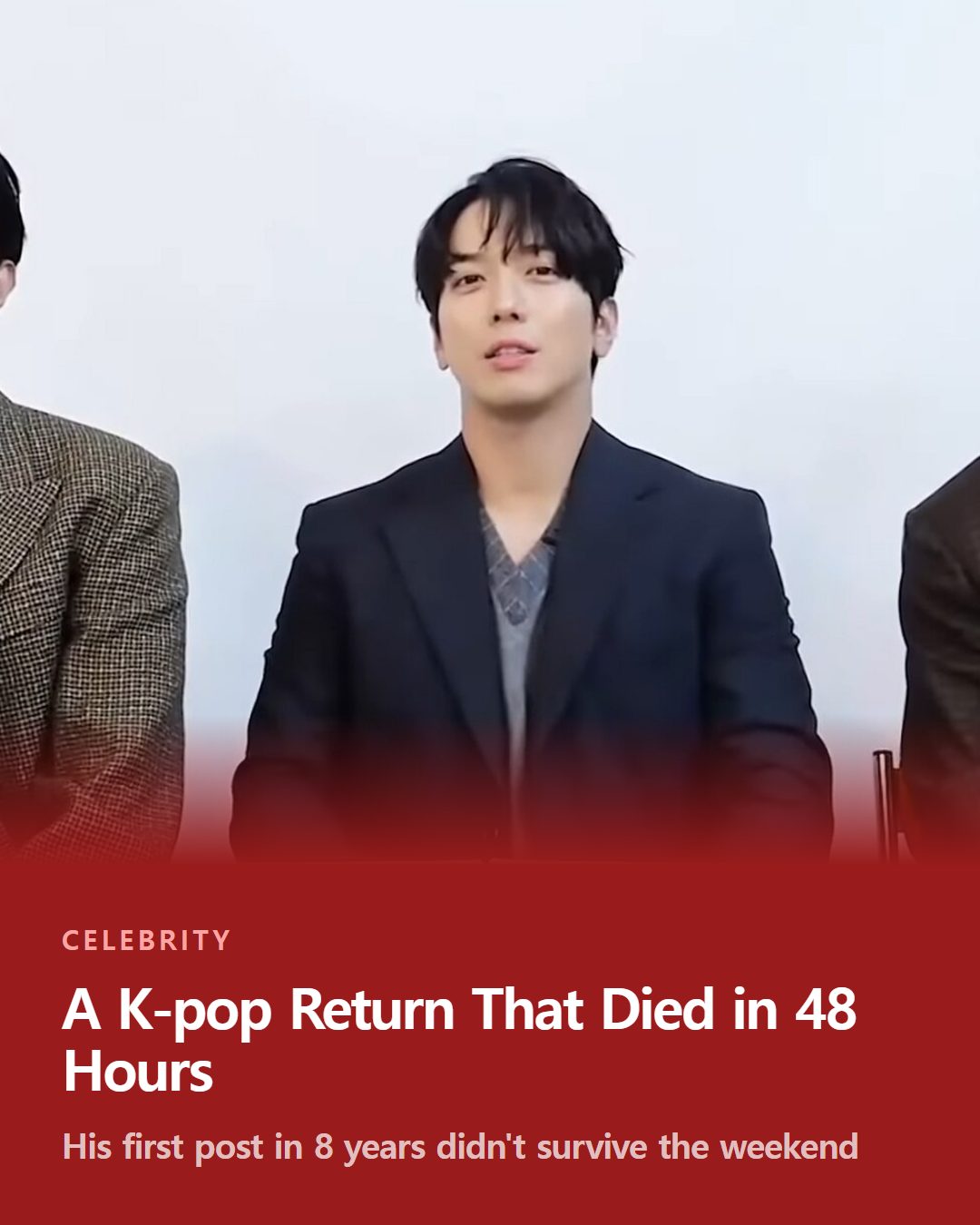
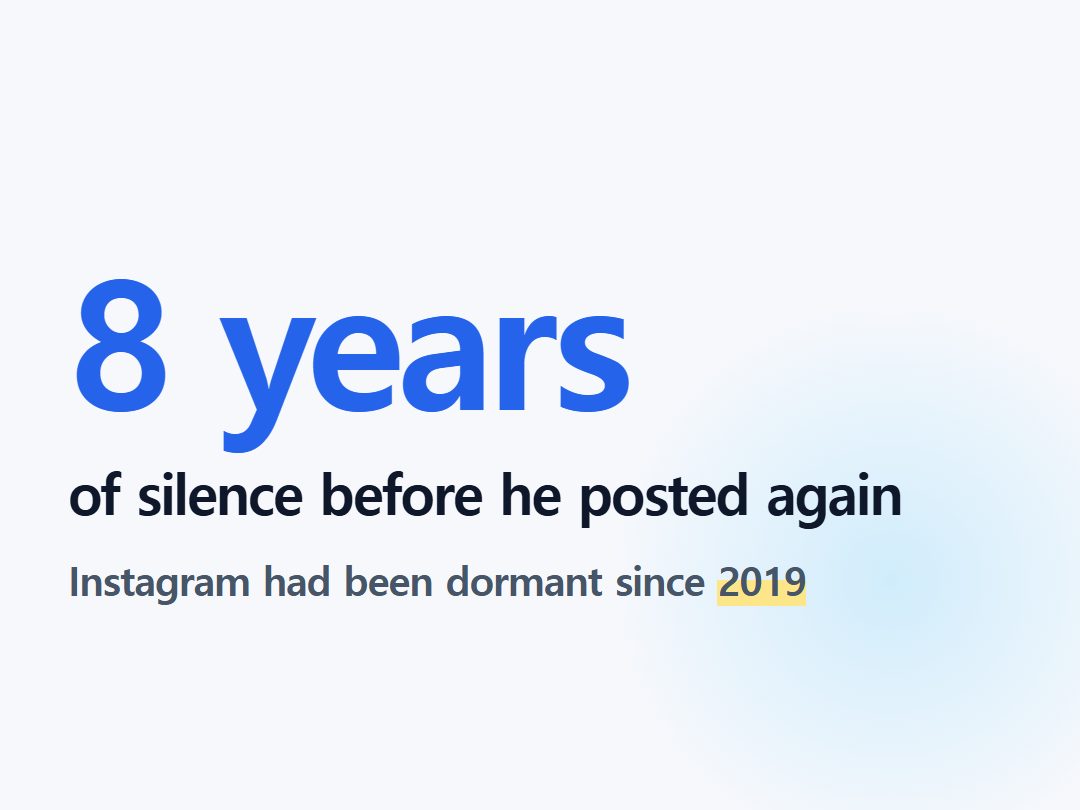
On Aug. 10, 2026, an Instagram account that had been dark for eight years posted again. It belonged to Lee Jong-hyun, once the guitarist of CNBLUE, a band that continues to tour and release music without him. By Aug. 12, he had declared the return over.
The short version
- His Instagram return lasted less than 48 hours before he declared it over.
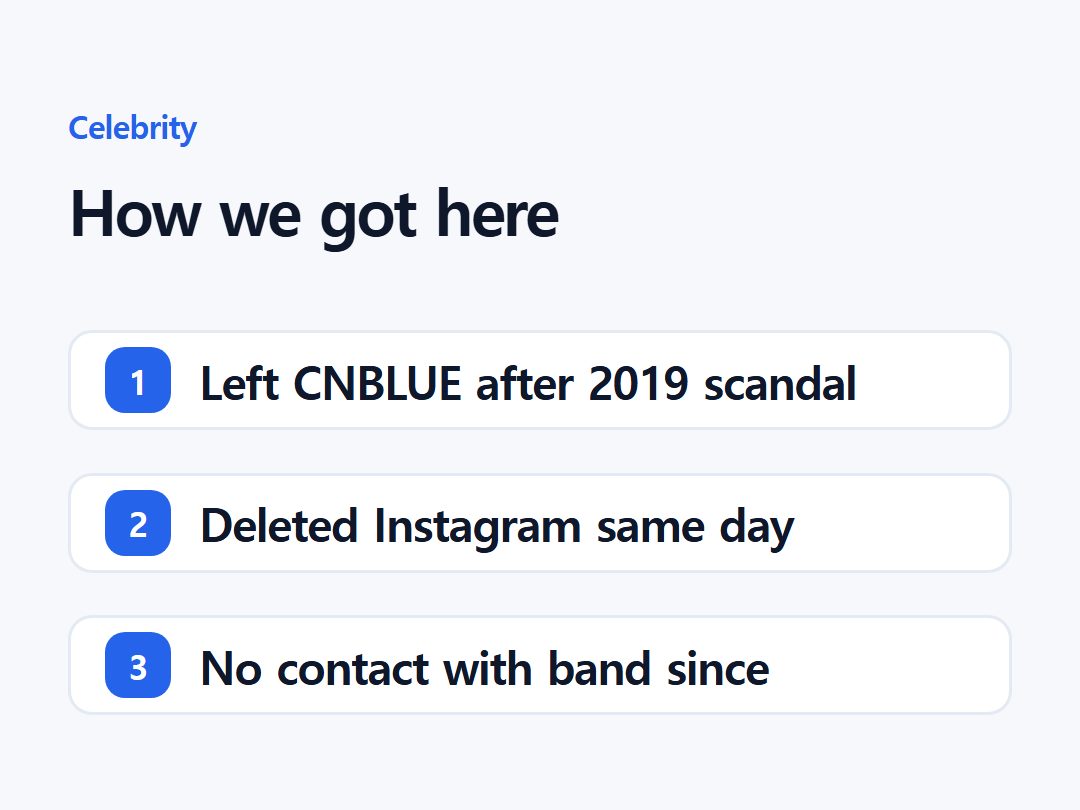
- He left CNBLUE in 2019 over a DM scandal tied to Jung Joon-young's chatroom case.
- Leftover CNBLUE branding and contradictory posts made the comeback look opportunistic, not genuine.
CNBLUE debuted in 2010 as a four-member rock band under FNC Entertainment and built an international fanbase, especially across Japan and Southeast Asia, on the strength of members who wrote and played their own instruments rather than following the more common vocal-and-dance idol format.
The gap between those two dates — less than 48 hours — is the actual story. It is a compact demonstration of how little room a scandal-linked celebrity has to test the water in Korea, even eight years later.
What happened, in order
On Monday, Lee posted a long message saying he had left the account untouched for eight years and that it had recently been hacked, which was why he was asking followers to bear with a pending username change. He wrote that he had spent years "turned away from the world" before learning, slowly, how to hold down an ordinary job.
He described his current work in beauty marketing — meetings, product testing, a routine of leaving in the morning and coming home at night — and said he now understood "how difficult it is for everyone just to live normally."
Two days later, on Wednesday, he posted again. This time the message said the opposite of what many readers had assumed: this was not a bid to return to entertainment. He wrote that leaving CNBLUE had been "entirely my own fault and my own choice," not a decision forced on him by the band, and that he intended to go back to living as a private, non-celebrity individual.
The detail that undercut his own message
Before the second post, commenters had already noticed something specific: Lee's account name and bio still carried a reference to CNBLUE, the group he left in 2019. For a man insisting he wanted to be treated as an ordinary private citizen, keeping the old band tag attached to his profile read to many Korean commenters as contradictory.
Overseas commenters — a visible number writing in Japanese and Indonesian — mostly welcomed the post at face value, glad to see him alive and well. That split in reaction is itself a clue to what international readers usually miss about stories like this one.
Why one direct message ended his music career
Lee's exit from CNBLUE traces to August 2019. A YouTuber, Park Min-jung, posted a screenshot of a direct message from Lee that she found inappropriate; he had complimented her looks in a way she read as unwelcome. She later apologized for publishing a private conversation, saying she acted out of concern that he might message other women the same way.
The message went out while Lee was completing South Korea's mandatory military service, which every able-bodied Korean man must serve, typically for around 18 months to two years, and which idols usually complete mid-career rather than skip. The timing meant he could not manage the fallout in person, and the backlash reached him while he was still in uniform.
Lee's Instagram account was deleted the same day the screenshot went public. Weeks later, he left CNBLUE. The group — Jung Yong-hwa, Lee Jung-shin, and Kang Min-hyuk — has continued as a three-member act ever since, and Lee has said he has had no contact with his former bandmates since he left.
The chatroom scandal that made the DM unforgivable
The DM alone might have blown over as an isolated misjudgment. It didn't, because it landed on top of a much larger story: Lee had already been named earlier in 2019 as a participant in group chats connected to singer Jung Joon-young, in which illegally filmed sexual videos and degrading comments about women were circulated among a circle of male entertainers.
Jung was later convicted and served a prison sentence.
Lee was not charged criminally, but his agency at the time, FNC Entertainment, publicly acknowledged his involvement in the chats and said he was "deeply regretful." That context is why a single flirtatious DM three months later was treated not as a minor lapse but as confirmation of a pattern — and why FNC and Lee moved quickly to have him leave the group rather than wait it out.
Leaving "on his own" still runs through the agency system
Korean idol groups operate under Korea's agency system: a company — in CNBLUE's case, FNC Entertainment — recruits, trains, and holds contracts with every member, and any change to a group's lineup is negotiated through that company rather than decided by the members alone.
Lee's departure was framed publicly as a voluntary withdrawal rather than a firing, a distinction Korean agencies and stars generally prefer because it lets the outgoing member describe the exit as his own decision. Lee repeated that framing in his Aug. 12 post, explicitly stating the choice to leave was his, not the group's.
Korea's unwritten waiting period for scandal recovery
This is the piece most international readers are missing: in Korea, a celebrity involved in a scandal is expected to observe an extended, undefined period of public withdrawal — no media appearances, no social posts, no hint of promotional activity — before any return is considered acceptable at all.
There is no fixed length for this period and no official body that clears someone to come back. The public, and especially the segment of it still angry about the original scandal, effectively decides in real time whether a return looks earned or opportunistic.
Three things tend to sink a comeback attempt under that informal test:
- Any sign the return doubles as self-promotion
- Leftover branding tying the person back to the old group
- Statements that contradict each other within days
Lee's return hit all three: he revealed a beauty marketing career in the same post that discussed his past, kept CNBLUE in his account name, and then reversed his own framing two days later.
Why the reaction split by audience, not just by opinion
International fans who saw the Aug. 10 post without the surrounding history read it as good news — a familiar face resurfacing, healthy and employed. Korean commenters, many of whom lived through the extensive 2019 coverage of the Jung Joon-young chatroom case, read the same words as a test of whether the public would let the association slide.
Note also what the post was not: in K-pop, a comeback specifically means a new single, album, or promotional cycle, not simply reappearing online. Lee never used that word, and his Aug. 12 post explicitly denied any entertainment-industry intent — a denial he likely felt necessary precisely because so many readers, especially those less familiar with the term, assumed otherwise.
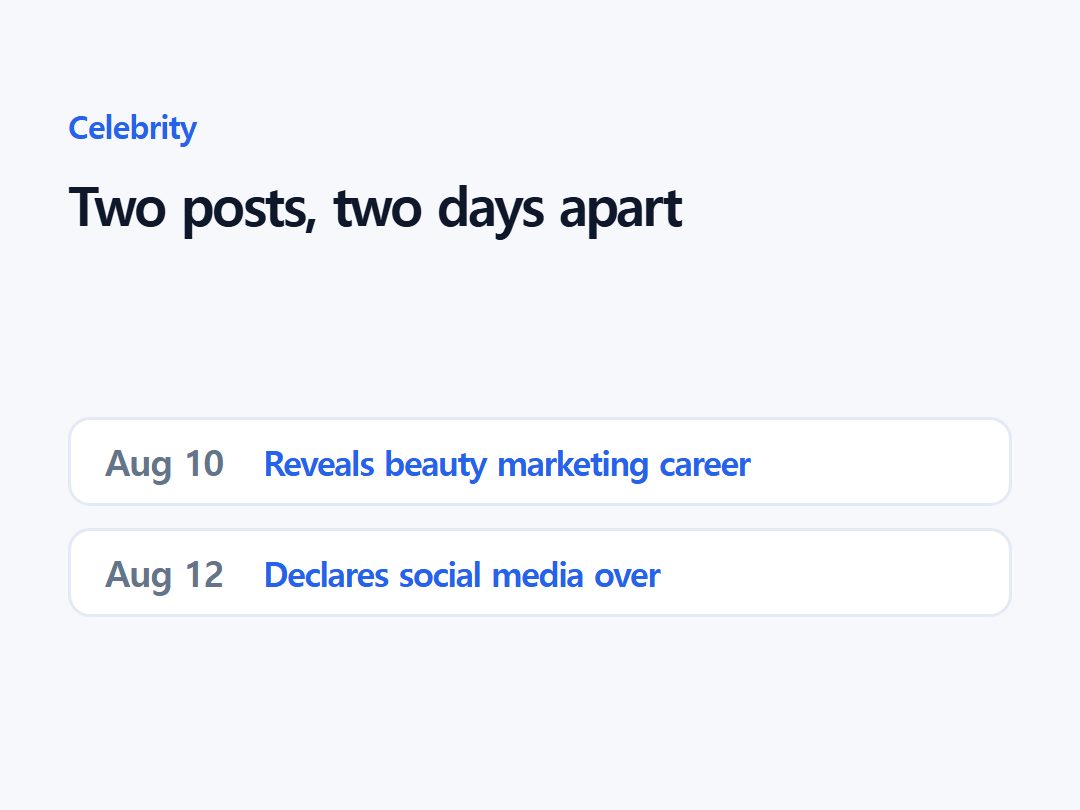
Two posts, two days apart
| Aug. 10 post | Aug. 12 post |
|---|---|
| Reveals 8 years in beauty marketing | Declares social media activity over |
| Says he'll connect with people "as a person" | Says he'll return to complete anonymity |
| Frames the message as a life update | Denies any entertainment comeback intent |
What is still unresolved
Lee has not said whether the account will stay deleted permanently, and there has been no independent confirmation from his former bandmates or FNC Entertainment about the state of their relationship. He is not currently signed to any entertainment agency, so no company statement has accompanied either post.
What is confirmed, across Korean and English-language outlets alike, is the sequence: an eight-year silence, one detailed post, immediate scrutiny over leftover branding and personal disclosures, and a retraction inside two days. Whether that counts as a closed chapter or simply a pause is, for now, unresolved.
Two Instagram posts, two days apart
| Aug. 10 post | Aug. 12 post |
|---|---|
| Reveals 8 years in beauty marketing | Declares social media activity over |
| Says he'll connect with people "as a person" | Says he'll return to complete anonymity |
| Frames the message as a life update | Denies any entertainment comeback intent |
Frequently asked
Why did Lee Jong-hyun leave CNBLUE?
He left in 2019 after a private DM he sent was published online, which landed on top of his earlier involvement in Jung Joon-young's group chats where illegally filmed videos were shared.
Is Lee Jong-hyun making a music comeback?
No — his Aug. 12 post explicitly said this was not a bid to return to entertainment and that he intended to go back to living as a private citizen.
What does Lee Jong-hyun do now?
He works in beauty marketing, describing a routine of meetings, product testing, and leaving for an ordinary job in the morning and returning home at night.
Sources
Every factual claim above is traceable. We do not translate articles — we gather facts from multiple outlets and write them ourselves.
- Ex-CN Blue member Lee Jong-hyun halts SNS return after one day following 8-year hiatus — The Korea Herald
- Update: CNBLUE's Lee Jong Hyun Reportedly Deletes Instagram Account Following Backlash For Message He Sent To Youtuber — Soompi
- Ex-CNBLUE member Lee Jong-hyun resurfaces after years away, now works in beauty marketing — The Herald Business
- Ex-CNBLUE Lee Jong-hyun returns to social media — Manila Bulletin
- 이종현, '정준영 단톡방' 논란 후 8년.."평범하게 살기 어려워"[스타이슈] — StarNews
- '정준영 단톡방→씨엔블루 탈퇴' 이종현, 뷰티 마케터 됐다…"살아보려 일 배워" — Sports Khan