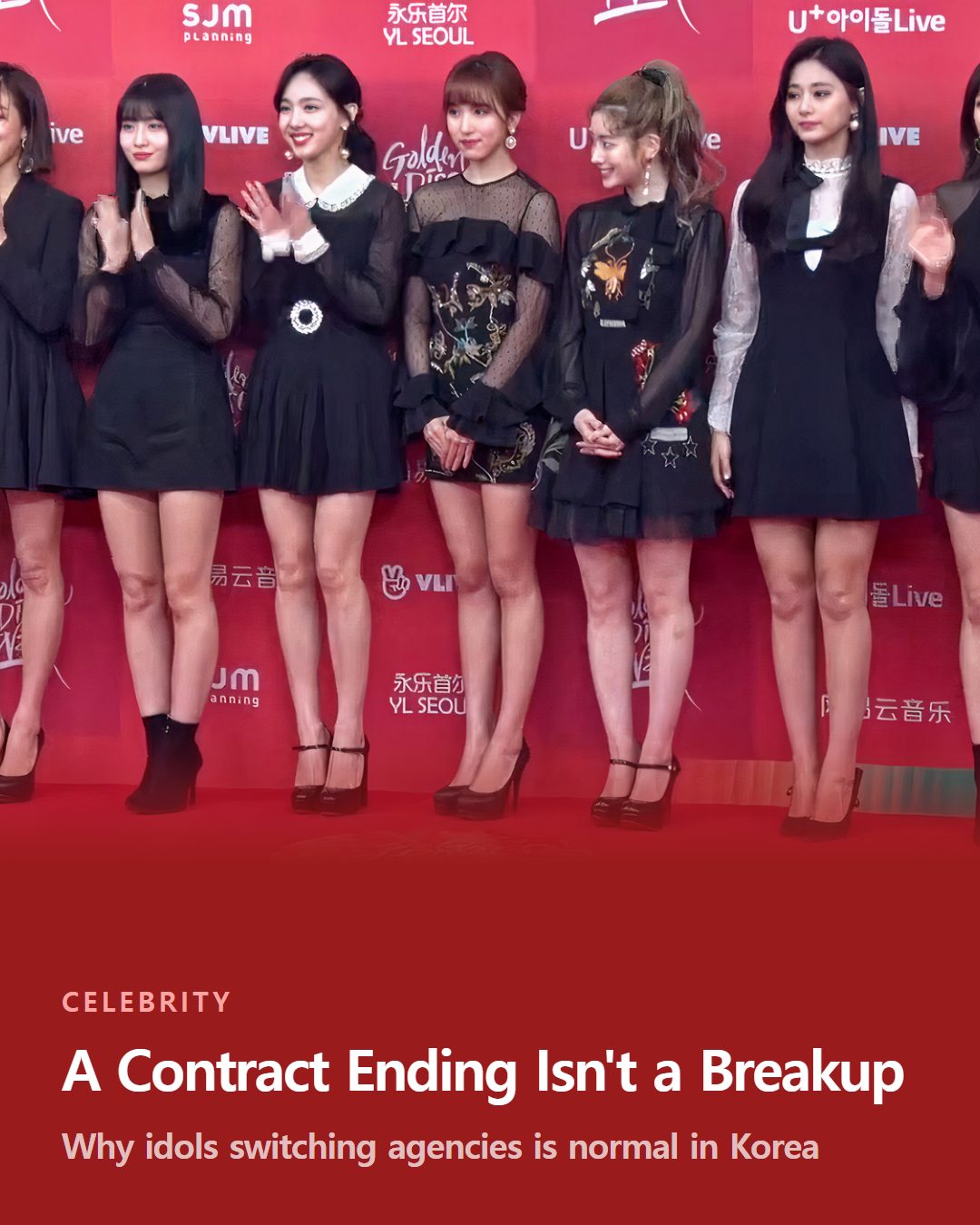
In July 2026, the label ATRP announced that its exclusive contract with singer Chuu, a former member of the girl group Loona, had run its course.
"We are letting you know that our exclusive contract with our artist Chuu has expired as of July 10, 2026," the company said in a statement, adding that the two sides were parting on good terms after three years together. Chuu thanked the agency in return and said she planned to keep moving forward.
The short version
- South Korea capped K-pop exclusive contracts at seven years after 2009's TVXQ lawsuit.
- Chuu's contract with ATRP simply expired on July 10, 2026 — no scandal involved.
- Group and solo contracts often differ, so leaving one deal doesn't mean leaving the group.
No scandal, no lawsuit, no dramatic falling-out — just a business contract reaching its end date. Cases like this happen regularly in the K-pop industry, and international fans often read them as a rupture: an idol "leaving" or "abandoning" an agency. In Korea, the more common reaction is closer to a shrug. A contract ended because contracts end. What comes next is simply what comes next.

Why are K-pop contracts capped at seven years?
To understand why this is treated so matter-of-factly, it helps to understand what a K-pop "exclusive contract" (전속계약, jeonsok gyeyak) actually is.
Under Korea's agency system, a trainee typically signs one contract with one company that covers everything — training, housing, image-building, music production, scheduling, and revenue collection — rather than working with a separate manager, label, and booking agent the way many Western artists do.
The agency invests years, and often hundreds of millions of won, in an unproven trainee before that person ever debuts. In exchange, agencies have historically asked for long, restrictive contracts.
That arrangement produced real abuses. The best-known case involved TVXQ, one of the biggest boy groups of the 2000s.
In 2009, three of its five members sued SM Entertainment to void their contract, which ran 13 years, long enough, they argued in court filings, to effectively bind them until retirement once mandatory military service was factored in.
A Seoul court sided with the members on procedural grounds, and the fallout pushed Korea's Fair Trade Commission to formally cap future exclusive contracts at seven years.
The lawsuit itself dragged on for three more years before both sides withdrew their claims in 2012, but the regulatory reform it triggered had already reshaped the industry. That seven-year cap is now standard, built into the model contract most agencies use as a template.
English-language coverage sometimes imports the vocabulary of scandal into what Korean outlets describe in far more neutral terms.
Korean entertainment reporting typically uses words like transfer or contract expiration, the same terms used for a footballer moving clubs at the end of a season, rather than language implying disloyalty.
That word choice reflects the underlying legal reality: once a fixed term ends, there is no contract left to breach.
This is the piece of context international fans usually miss: a Korean idol's agency contract is a fixed-term legal document with a built-in expiration date, not an open-ended pledge of loyalty.
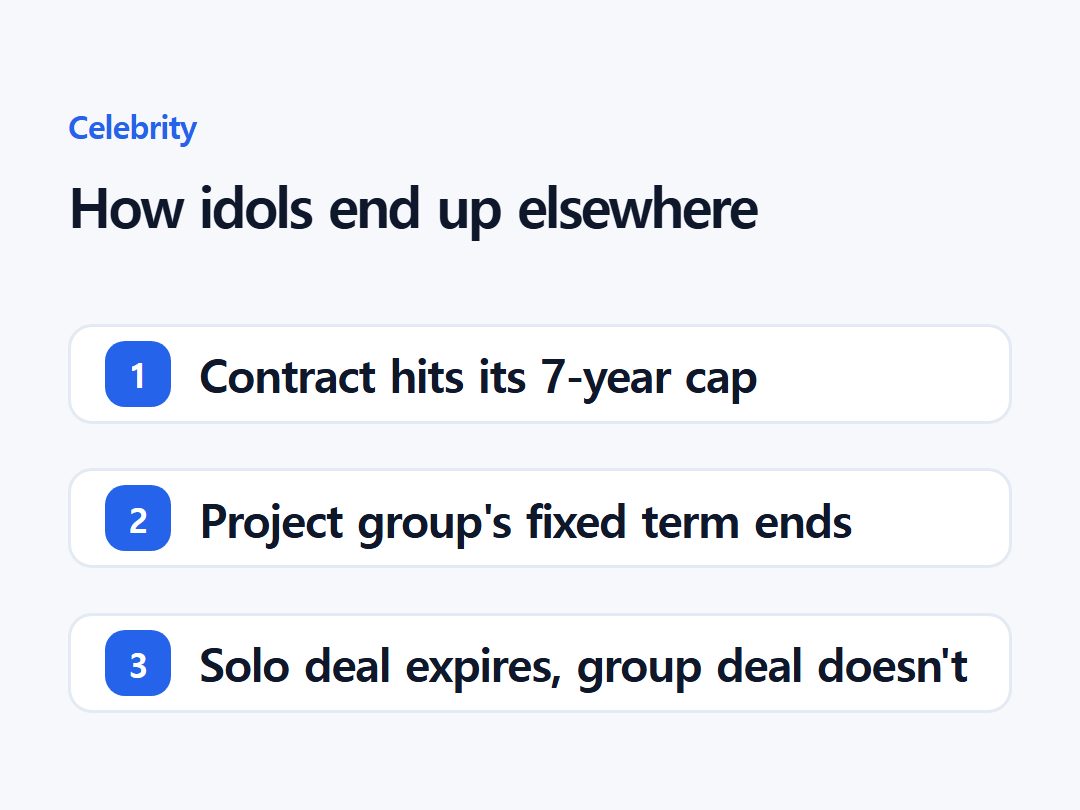
When it ends — after the full seven years, after a shorter renewal term, or on a date written into the contract from the start — the idol owes the company nothing further.
Signing with a different agency afterward is not a betrayal of the old one, any more than an employee changing jobs when a fixed-term contract lapses is betraying a former employer.
Agencies themselves usually frame it this way in public statements, thanking the artist and wishing them well, because there is no wrongdoing to explain away.
It also helps to know that "the agency" and "the group" are not always covered by the same contract.
As idols take on more solo work, many now hold two separate deals: one with the label that manages their group, and a second one — sometimes with the same company, sometimes with a different one — for individual activities.
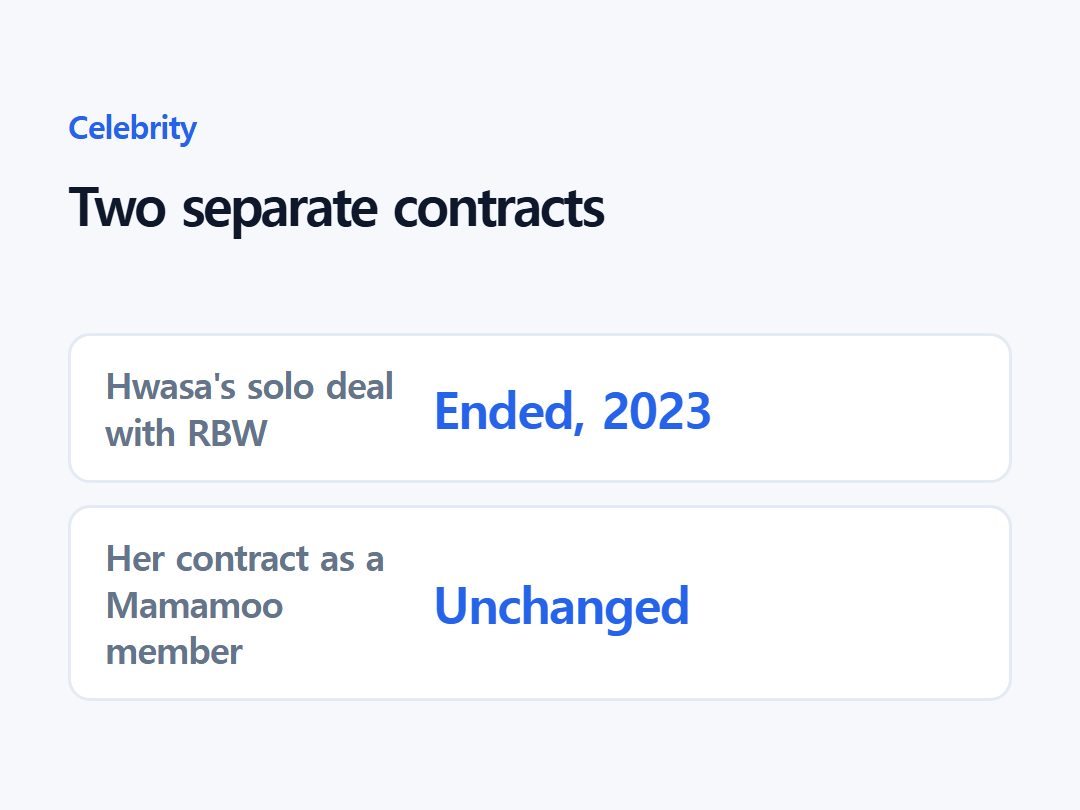
When Mamamoo's Hwasa left her longtime label RBW in June 2023, it was only her personal contract with RBW that expired; her membership in Mamamoo, governed by the group's own separate contract, was untouched.
She signed with Psy's label P Nation for solo work — memorably, on stage at one of Psy's concerts — while continuing to release music and tour with Mamamoo as normal. RBW's official statement described it as "wrapping up our beautiful journey together" and pledged continued support for her group activities.
Why do K-pop groups disband right on schedule?
The seven-year rule is the direct legacy of the TVXQ case. After the FTC's 2009 reform, roughly ten major agencies revised their contract templates industry-wide, and a seven-year exclusive term became the default for nearly every group that has debuted since.
It is common enough that fans now talk about a group's seventh anniversary as a milestone almost as significant as its debut anniversary — the point at which every member's original contract can legally end, whether or not it actually does.
A second, less-discussed pattern comes from Korea's project groups — temporary lineups assembled from trainees at different agencies for survival shows such as Produce 101. These groups sign a single collective contract with a pre-agreed end date, publicized from day one.
When Wanna One's contract expired on December 31, 2018, the group didn't break up over conflict; the contract simply reached the date it was always going to reach. Member Kang Daniel then found that his individual, pre-Wanna One contract with his original agency, MMO Entertainment, also lapsed within weeks.
Free of any exclusive deal for the first time, he briefly signed with LM Entertainment; a subsequent legal dispute over that contract was settled in his favor, after which he founded his own company, Konnect Entertainment, in June 2019 — a path that would have been legally impossible while any of his earlier contracts were still active.
The same mechanism played out with IZ*ONE, a 12-member project group formed from two separate survival shows. Its contract was written in 2018 to run only until April 2021, a date publicized well in advance.
When that date arrived, the group's collective deal simply concluded, and each member returned to the individual agency she had been signed to before joining the project — among them Woollim, Starship, Yuehua and WM Entertainment.
Several of those members changed agencies again later, once their new individual contracts, in turn, ran their course. None of it required a scandal; the calendar did the work.
Where Chuu goes next, and what idols want
Chuu's next agency is still unannounced as of this writing, and industry watchers are waiting to see where she signs following ATRP's confirmation that her contract had ended. Her case is a useful reminder that a contract ending is rarely the real story — what happens afterward usually is.
More broadly, the standard contract system itself is facing new scrutiny. In 2025, a group of current and former idols — led by former Teen Top member Bang Min-su, known by his stage name C.A.P — began the formal process of registering Korea's first idol labor union, with singer Ailee among the early public supporters.
The union is seeking recognition of idols as workers under Korean labor law and has raised concerns that go beyond contract length, including working conditions, mental health support, and protection from online harassment.
Whether that effort reshapes the standard contract, or simply gives idols a stronger voice within the existing seven-year framework, is one of the more consequential questions facing the industry's next generation of trainees.
Contract endings are routine, not scandals
| Case | Contract Type | End Date | Outcome |
|---|---|---|---|
| TVXQ | Individual exclusive contract | Ran 13 years; challenged in 2009 lawsuit | FTC capped future exclusive contracts at seven years |
| Wanna One | Project group collective contract | December 31, 2018 | Group disbanded; members returned to original agencies |
| IZ*ONE | Project group collective contract | April 2021 | Members returned to Woollim, Starship, Yuehua, WM |
| Chuu | Individual exclusive contract with ATRP | July 10, 2026 | Contract ended; next agency unannounced |
Frequently asked
Why did Chuu leave her agency ATRP?
Her exclusive contract with ATRP simply reached its end date on July 10, 2026; both sides said they parted on good terms.
How long can a K-pop exclusive contract last?
Since a 2009 Fair Trade Commission reform prompted by the TVXQ lawsuit, Korean agencies typically cap exclusive contracts at seven years.
Does leaving a label mean an idol is leaving their group?
Not necessarily — idols often hold separate contracts for group and solo work, so ending one doesn't affect membership in the other, as with Hwasa and Mamamoo.
Sources
Every factual claim above is traceable. We do not translate articles — we gather facts from multiple outlets and write them ourselves.
- Chuu Parts Ways With Agency After 3 Years — Soompi
- Chuu to leave agency ATRP as exclusive contract concludes — allkpop
- Singer Chuu parts ways with ATRP after contract expires — Korea JoongAng Daily
- K-pop stars punished by unfair contracts — The Korea Times
- Is the '7-year itch' a thing of the past? — The Korea Herald
- MAMAMOO's Hwasa Signs With P NATION On Stage During Surprise Appearance At PSY's Concert — Soompi
- MAMAMOO's Hwasa officially signs with Psy's P Nation — NME
- Kang Daniel's entertainment company Konnect Entertainment heads towards closure — allkpop
- IZ*ONE Officially Disbands — allkpop
- K-pop idols to form Korea's first labor union, could launch by end of year — The Korea Times