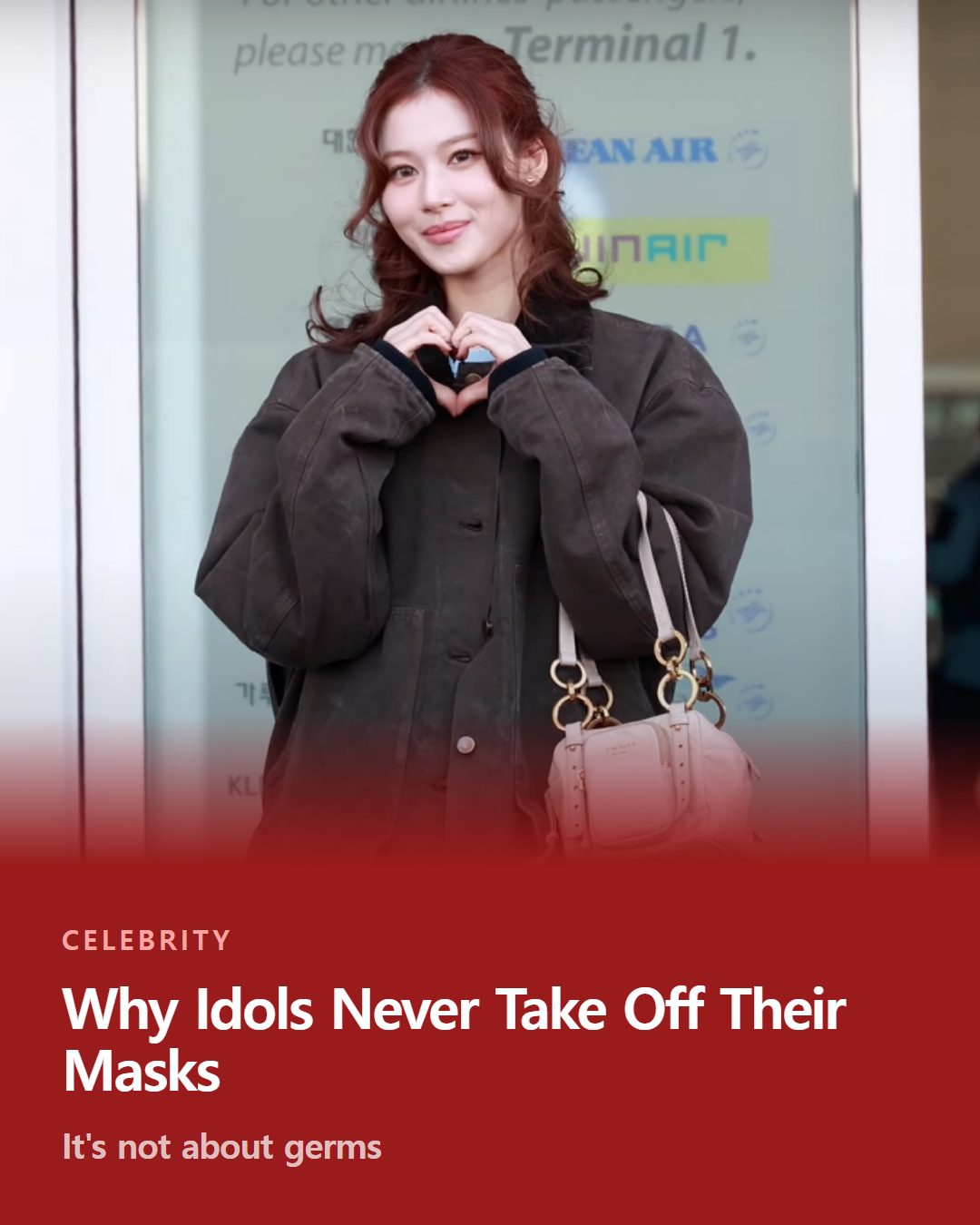
Walk through Incheon International Airport on any given day and you will see K-pop idols in surgical masks, sunglasses, and caps — even in midsummer, even when they are visibly healthy. International fans often assume this is a leftover pandemic habit or simple street style.
The short version
- Masks block paparazzi and sasaeng stalkers, not illness or fashion.
- Sasaeng fans buy leaked flight and seat data for idols.
- Korea criminalized stalking in 2021, but airport photography stays legal.
It is neither. For most working idols, the mask is a cheap, effective way to stay unidentifiable in a media environment built to identify them — specifically to blunt two threats Korean fans already take for granted: 사생팬 (sasaeng fans), obsessive stalkers who track idols' real-time movements, and paparazzi outlets that profit from unguarded, off-duty photos.
The habit outlasted the reason people assume
South Korea lifted its indoor mask mandate in early 2023, and outdoor masking had already become optional well before that. Idols kept wearing them anyway, on flights, at fan-meeting arrivals, and walking into broadcast stations.
That timing is the tell. If masks were only about illness, idol mask use should have dropped once the mandate ended. It did not, because the mandate was never the real reason idols started covering their faces in the first place.
The habit also predates the pandemic by years. Airport photos of idols in masks and oversized coats circulated as a recognizable genre — sometimes nicknamed "airport fashion" — well before 2020, which is a separate clue that health was never the primary driver.
Sasaeng fans built a logistics network around finding idols
The word sasaeng comes from the Korean for "private" and "life" — it describes a fan who crosses from admiration into surveillance of a celebrity's personal movements. The behavior dates back to the earliest idol groups of the 1990s, such as H.O.T. and g.o.d, but it scaled up dramatically once smartphones and social media made real-time tracking easy.
Sasaeng activity is not casual fandom. Documented cases include:
- Hiring taxis, known as 사생택시 ("sasaeng taxis"), to chase an idol's car between schedules
- Camping outside dorms and hotel rooms for hours or days at a time
- Hiding cameras inside hotel rooms and stealing personal items such as underwear
- Following idols onto commercial flights and sitting in nearby seats
One self-described NCT sasaeng told reporters she spent roughly 300,000 won (about $217) on taxis in a single stretch just to follow the group's schedule — money spent specifically to be near idols who had not agreed to be found.
A market exists for idols' flight seat numbers
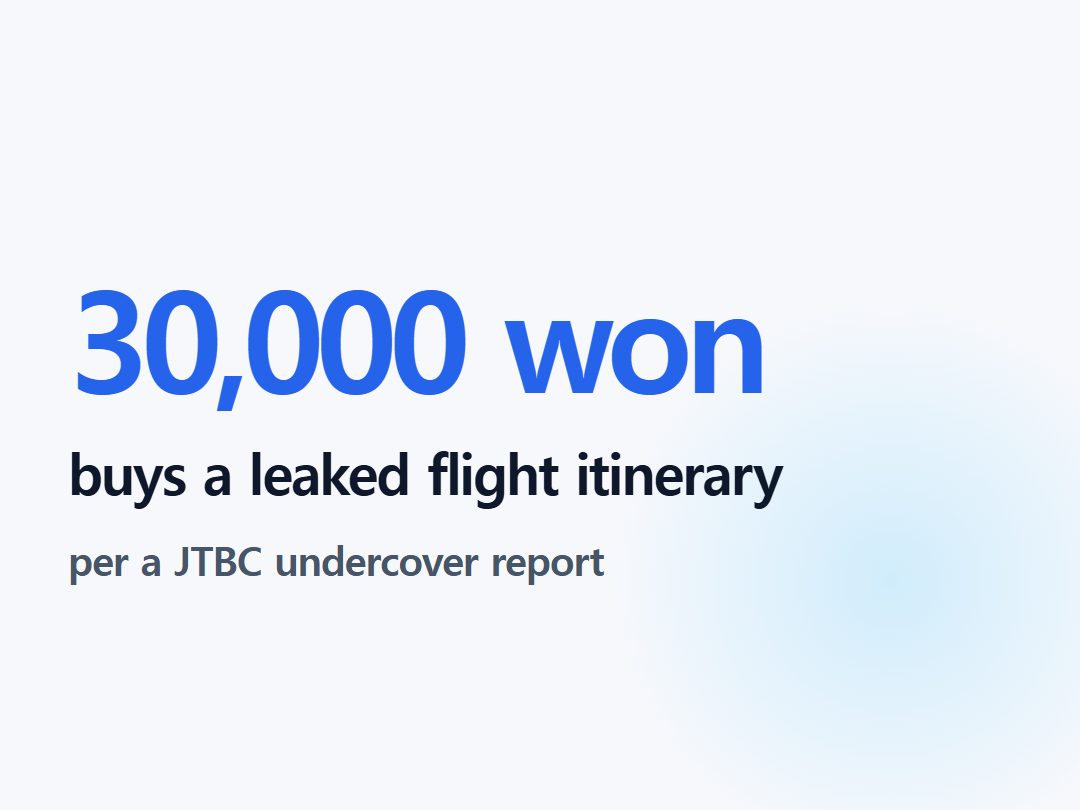
Sasaeng fans do not simply get lucky at the airport. A JTBC investigation found that flight and seat information was being sold openly online — around 30,000 won for a flight itinerary and 20,000 won per member for a seat number, delivered within the hour of payment.
The pattern keeps repeating with newer groups. In 2024, agency Belift Lab confirmed that ENHYPEN's flight ticket details had leaked, allowing sasaengs to book seats beside members; in a separate 2025 case, two fans reportedly used leaked bookings to sit next to members Jake and Jay and photograph them mid-flight.
When the leak comes from inside the airline
Former sasaeng fans have told reporters that some of this data comes from airline staff who sell passenger information, including seat numbers tied to an idol's resident registration number. Airport representatives have publicly denied that such data could be accessed, a denial that sits uneasily against multiple reporter tests confirming the leaks actually work.
This is the backdrop that makes a mask rational rather than paranoid: idols regularly cannot be sure who around them already knows their flight, their seat, or their next stop before they arrive.
A mask does not hide a face — it slows down a usable photo
No mask fully disguises a well-known face, and idols know this. What a mask, cap, and sunglasses combination does is deny photographers and stalkers the one thing they actually need: a clean, identifiable shot that can be published, sold, or used to confirm exactly where someone is standing.
A blurred or partially obscured photo is far less valuable to a tabloid outlet and far less useful to a stalker cross-checking sightings. The mask is less a disguise than a way to lower the resolution of whatever gets captured.
Dispatch and the payoff for catching a bare face
South Korea's best-known entertainment outlet for this kind of photo is Dispatch, which built its reputation on paparazzi-style stakeouts rather than press releases. Since its first major exposé in 2008 — a celebrity couple photographed in a parked car — Dispatch has made an annual tradition of publishing a "New Year's couple" story built on months of covert surveillance outside homes, restaurants, and cars.
The outlet's methods have drawn sustained criticism inside Korea. In 2018, more than 200,000 people signed a petition asking the government to shut Dispatch down over its surveillance tactics. That controversy has not stopped the model: a clear, unguarded photo of a celebrity's face remains commercially valuable, which is exactly the value a mask is designed to remove.
The 2021 law changed the penalties, not the daily habits
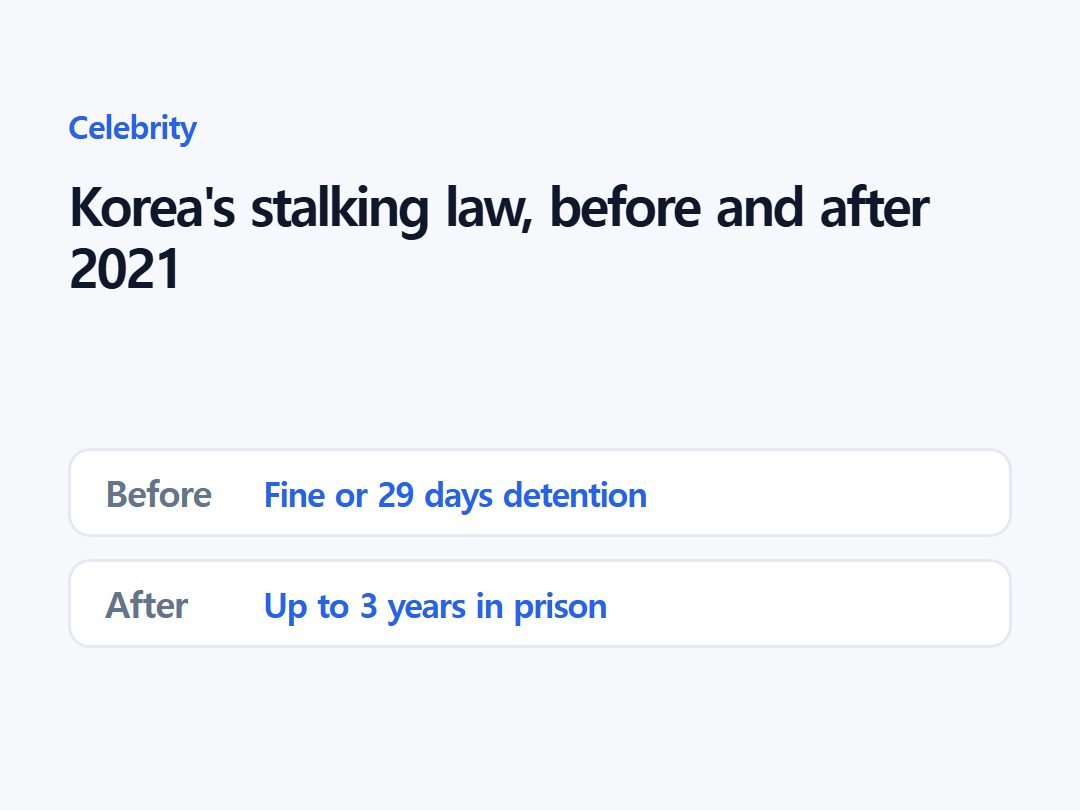
Before October 2021, South Korea had no dedicated law against stalking — police could only act if the behavior separately qualified as trespassing or a minor "causing anxiety" offense, punishable by a small fine at most. The Act on Punishment of Crime of Stalking, effective from October 2021, made stalking a standalone crime for the first time.
| Before October 2021 | After October 2021 |
|---|---|
| Treated as a minor offense at most | Standalone crime under the Stalking Punishment Act |
| Fine or up to 29 days detention | Up to 3 years prison or 30 million won fine |
| No restraining-order tool for police | Police can bar suspects within 100 meters |
The law has already produced convictions, including a woman sentenced to six months in prison for repeatedly ringing the doorbell of actor Rain and singer Kim Tae-hee's home in 2021. Apink's Jung Eunji and The Boyz's Sunwoo have also been targets of documented stalking incidents that agencies pursued through the courts.
What the law still does not reach
The Stalking Punishment Act covers physical following, waiting outside a home, and repeated unwanted contact. It does not clearly cover the sale of leaked flight and seat data, or the creation of fake accounts used to spread information about an idol's private movements — both remain, in practice, a legal gray zone.
Agencies also face a quieter obstacle: pressing criminal charges against a fan risks backlash from parts of the fandom, so some incidents are handled privately rather than in court. Simply waiting at an airport to photograph an idol is, by itself, still legal — which is precisely why the mask remains a daily tool rather than a temporary one.
For an international reader, the gap is easy to underestimate: a fan who legally buys a plane ticket, legally boards the same flight, and legally photographs a public figure in a public seat has broken no law at all, even if the seat assignment behind that ticket was obtained illegally from a leaker who will likely never be identified.
Do idols also mask up for reasons that have nothing to do with stalkers?
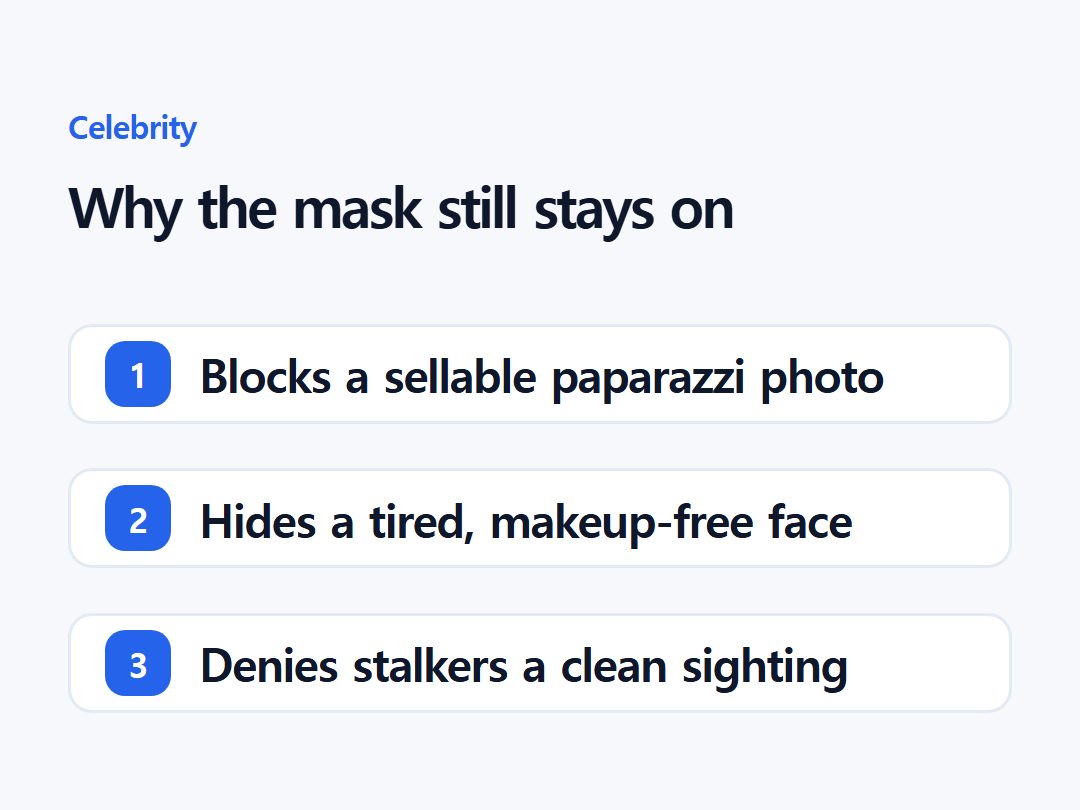
Yes — idols themselves have said masks serve more than one purpose. Red Velvet's Seulgi has explained that long flights leave her face puffy, and a mask covers that before cameras catch it; idols without makeup or a styled look also use masks and caps simply to avoid being photographed off-duty and undone.
Those reasons coexist with the safety motive rather than replace it. A single accessory that blocks recognition, hides fatigue, and denies photographers a sellable image is, for idols managed by agencies that plan every public appearance, a rational default rather than an eccentric one.
South Korea's stalking law, before and after October 2021
| Before October 2021 | After October 2021 |
|---|---|
| Treated as a minor offense at most | Standalone crime under the Stalking Punishment Act |
| Fine or up to 29 days detention | Up to 3 years prison or 30 million won fine |
| No restraining-order tool for police | Police can bar suspects within 100 meters |
Frequently asked
Why do K-pop idols wear masks at the airport?
Masks make it harder for sasaeng stalkers and paparazzi outlets like Dispatch to get a clean, sellable photo or confirm an idol's location — it's not about illness.
What is a sasaeng fan?
A sasaeng fan is an obsessive stalker who tracks an idol's real-time movements, sometimes hiring taxis to chase their car, camping outside hotels, or hiding cameras in rooms.
Is stalking illegal in South Korea?
Since October 2021, South Korea's Stalking Punishment Act makes it a standalone crime punishable by up to 3 years in prison or a 30 million won fine, though selling leaked flight and seat data remains a legal gray zone.
Sources
Every factual claim above is traceable. We do not translate articles — we gather facts from multiple outlets and write them ourselves.
- Red Velvet's Seulgi Reveals The Truth Behind Why K-Pop Idols Wear Masks At Airports — Koreaboo
- BTS' V says stalker fans force group to fly on private jets instead of commercial flights — Malay Mail
- Sasaeng fan — Wikipedia
- Stalker fans, or 'sasaeng' continue to plague entertainment landscape — The Korea Herald
- How severe are the legal penalties for obsessive (sasaeng) fans? — allkpop
- Airport staff leaked K-pop idols' information, the 'sasaeng taxi' network — KBIZoom
- Sasaengs Use New Method To Find Out Idols' Flight Information — Soompi
- Dispatch Korea | All About The Nation's Biggest Paparazzi Media & Celebrity Romances Revealed By Them — Creatrip
- K-pop idol Nayeon from Twice living in fear of German stalker who followed her from Japan to Korea — Malay Mail