
Celebrity
Why Jo Kwon's Solo Comeback Took Eight Years
Jo Kwon's first solo single in eight years traces back to a contract he didn't leave until 2017, two years of mandatory military duty, and a group that never technically disbanded.
Eighteen months offline in the most attention-driven industry on earth.
15 stories
Jo Kwon's first solo single in eight years traces back to a contract he didn't leave until 2017, two years of mandatory military duty, and a group that never technically disbanded.

K-pop agencies almost never release new music the moment an idol leaves the army — they book a fan meeting first, and that gap is a deliberate two-step strategy, not a scheduling accident.

Lee Jun-young didn't just quietly stop releasing music before enlisting — he said out loud that he's done singing for good, which is rarer than it sounds in K-pop.

Wanna One's 2026 reunion left out two of its eleven members, and the reasons why show how little control a K-pop project group actually has over its own comeback.
BIGBANG's three-member comeback for its 20th anniversary is the result of one member's criminal conviction, another's expired contract, and a K-pop agency system that now splits the group across three separate companies.

International fans often read K-pop's obsession with debut age as vanity, but it traces back to a training pipeline, a military conscription clock, and a seven-year contract law.
Two idols can enlist on the same day and end up living completely different professional lives for the next 18 months — this explains why, and what that gap means for when a star reappears.

South Korean law bars soldiers from paid work, so agencies get actors to finish projects before they enlist and release them on a schedule that outlasts the 18-to-21-month term.

How three members of an idol-system band kept writing and playing their own music, and why the group never replaced the member it lost in 2019.
Korea only legalized non-doctor tattooing in 2025, which is the real reason so few idols show visible ink — and why TWICE's Chaeyoung not covering hers keeps going viral.
Every able-bodied Korean man in entertainment must serve 18 to 21 months in the military by age 28, and how an agency times that gap can define, or derail, a career.
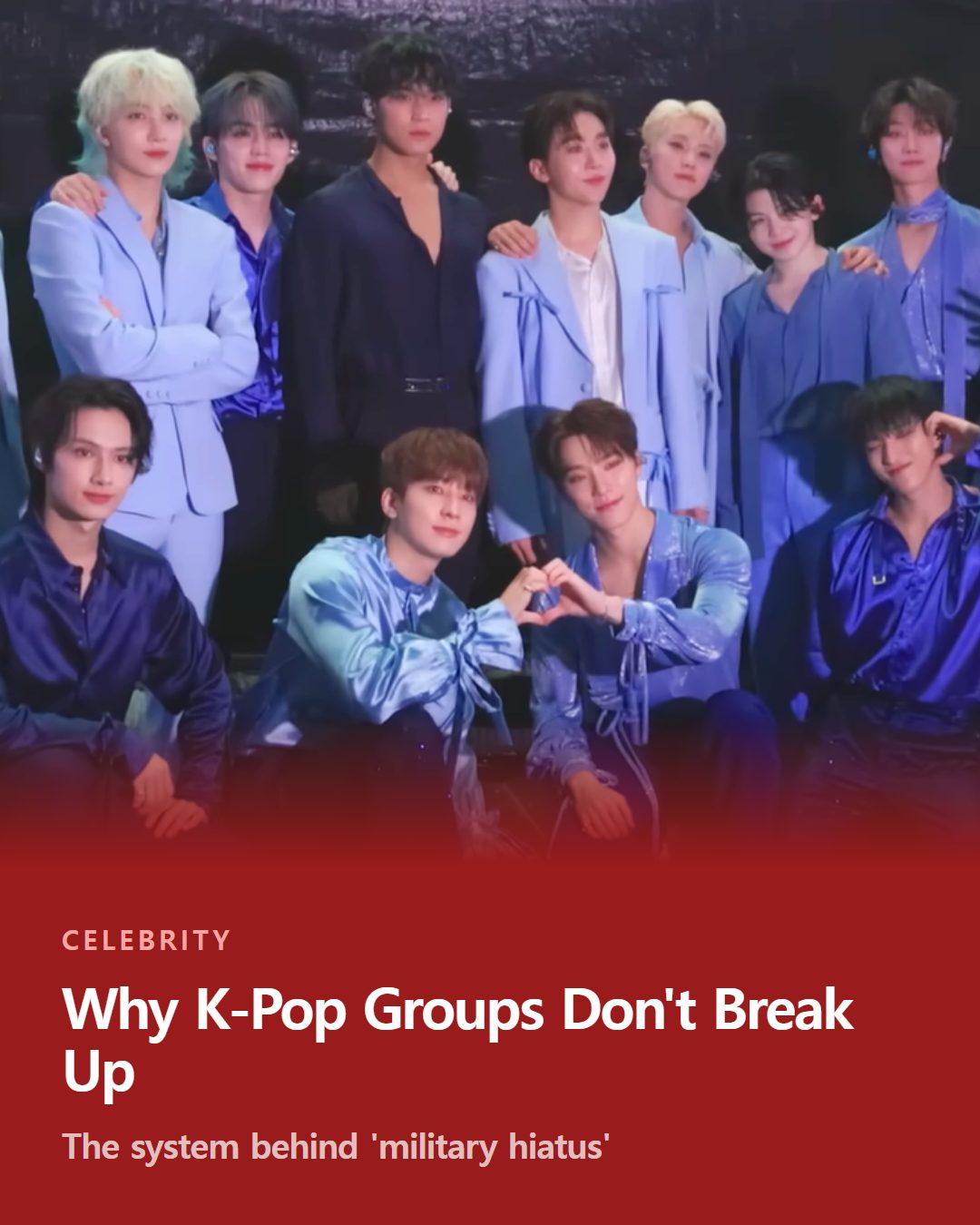
South Korean law requires nearly all male citizens to serve 18 to 21 months in the military, so K-pop groups have built a standard playbook of sub-units, solo work and staggered enlistment to keep operating instead of disbanding.

In South Korea, a mandatory physical exam — not personal choice or celebrity status — decides whether a man serves as an active-duty soldier or as a social service worker, and understanding that legal grading system explains a controversy that resurfaces every time a star is assigned to it.

Long, unexplained breaks by Korean stars are usually driven by contract disputes, agency-confirmed health rest, or mandatory military service, not hidden scandals.

South Korean law requires almost every able-bodied man, famous or not, to serve 18 to 21 months in the military, and the country treats attempts by celebrities to avoid it as a serious offense rather than a private choice.
What Korea is talking about today — with the context that does not make it into the English headlines.