
A new drama premieres, and its lead actor is currently a private in the Republic of Korea Army, months into a term that legally bars him from any paid work besides his duties. Yet a project with his face on it keeps arriving anyway, sometimes more than once.
The short version
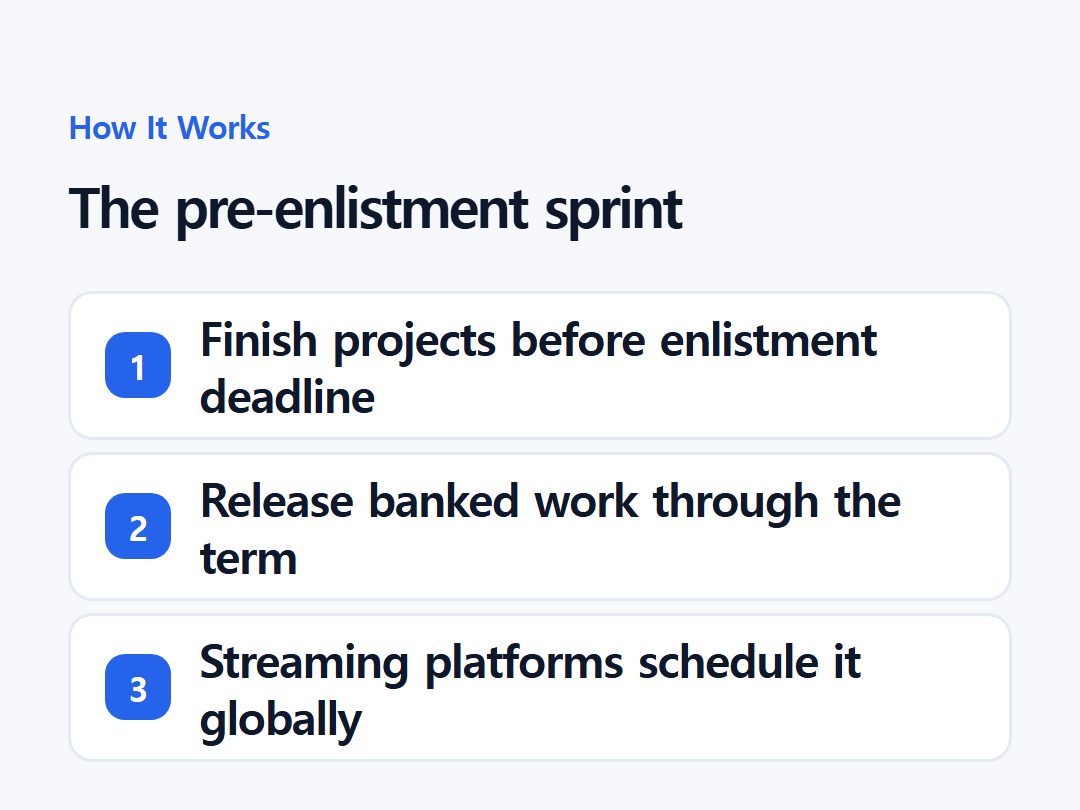
- Only work finished before enlistment can legally release during a soldier's term.
- Actors stockpile projects for years before hitting Korea's age-28 deadline.
- Streaming lets agencies drip-feed banked content worldwide during military service.
This is not a scheduling accident. It is the routine result of an industry that has spent decades organizing its production calendar around one fact: the work these actors are being paid for was finished before they put on the uniform.
The rule: no new paid work, but finished work still counts
South Korea’s Framework Act on Military Status and Service bars active-duty soldiers from taking on any work for profit outside their military duties. On paper, that should mean a total blackout on new releases for the length of a term.
In practice, the rule tracks when the work happened, not when it airs. Content that was planned, contracted, recorded, or filmed before enlistment can still be released, and still earn money, while the actor is serving.
That distinction between work done and work released is the entire mechanism behind every drama that seems to premiere out of nowhere mid-service.
The restriction itself exists to keep celebrities on equal footing with every other conscript. South Korea treats draft evasion by public figures as a serious scandal, so the system was built to let stars stay employed without appearing to get special treatment during the service itself.
Every able-bodied man faces the same clock
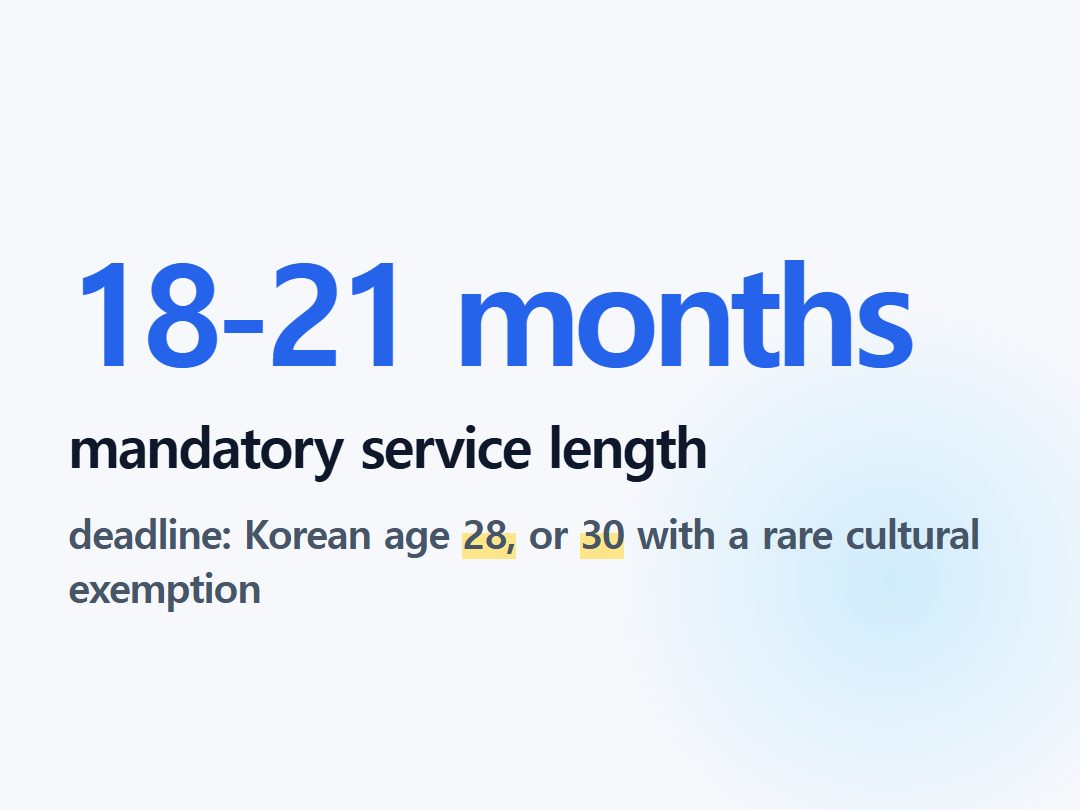
Conscription is mandatory for South Korean men, with terms running roughly 18 to 21 months depending on branch. The deadline to begin service is generally Korean age 28, a fixed point every actor’s schedule has to work around.
One narrow exception exists. A 2020 revision nicknamed the “BTS law” lets entertainers who have received a government cultural merit honor defer enlistment to age 30. It was written for globally recognized K-pop acts specifically, so most actors still enlist on the standard schedule.
Some enlist into a military band instead of a combat unit
A subset of celebrities apply for a service branch’s own band or honor guard, a public-facing unit built around ceremonies and cultural promotion rather than combat rotations. Selection is competitive, and it does not shorten the term or lift the ban on outside paid work.
Park Bo-gum served in the navy’s cultural promotion unit; Lee Do-hyun served in the Air Force band. The assignment changes daily duties, not the underlying rule: both were still barred from filming anything new for the length of their service.
The pre-enlistment sprint most fans never see
Because the deadline is fixed and public, management agencies (the companies that handle a Korean star’s contracts, schedule, and image) plan years ahead, packing the calendar with as many roles as production allows before an actor leaves.
Lee Jun-young enlisted on July 21, 2026, having already wrapped three separate projects timed to surface one after another during his absence: a thriller, a Netflix romantic comedy, and a feature film.
- Ji Chang-wook wrapped “Suspicious Partner” weeks before enlisting in 2017; its finale aired after he had already begun basic training.
- Park Bo-gum finished “Record of Youth” and the film “Seobok” just before joining the navy band in August 2020; both reached audiences while he served.
- Jang Ki-yong completed “Now, We Are Breaking Up” days before an enlistment date that was abruptly moved up in 2021, forcing producers to pre-record the press conference so he could still appear.
- Kwak Dong-yeon filmed a 10th-anniversary special of “Love in the Moonlight” before enlisting on August 25, 2026, with discharge not scheduled until February 2028.
A hit film released without its own lead actor
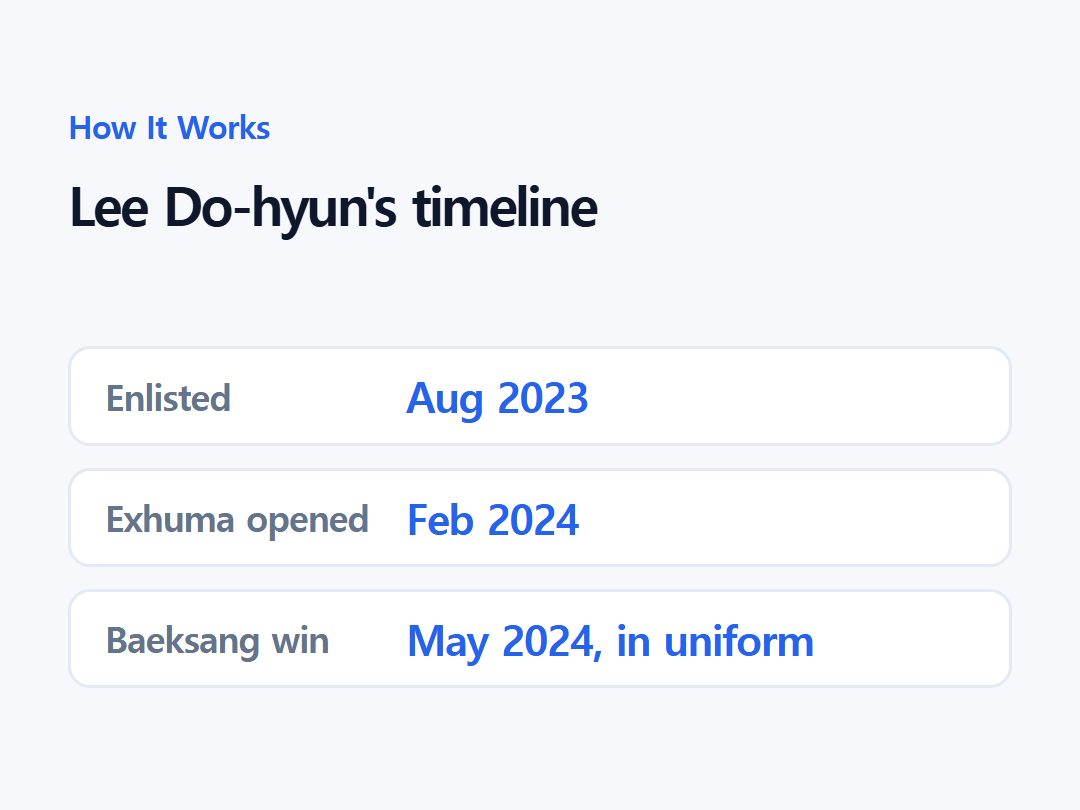
Lee Do-hyun enlisted in the Air Force band on August 14, 2023, after a stretch that included the drama “Bad Mother,” the final season of “Sweet Home,” a cameo in Tving’s “Death’s Game,” and the film “Exhuma.”
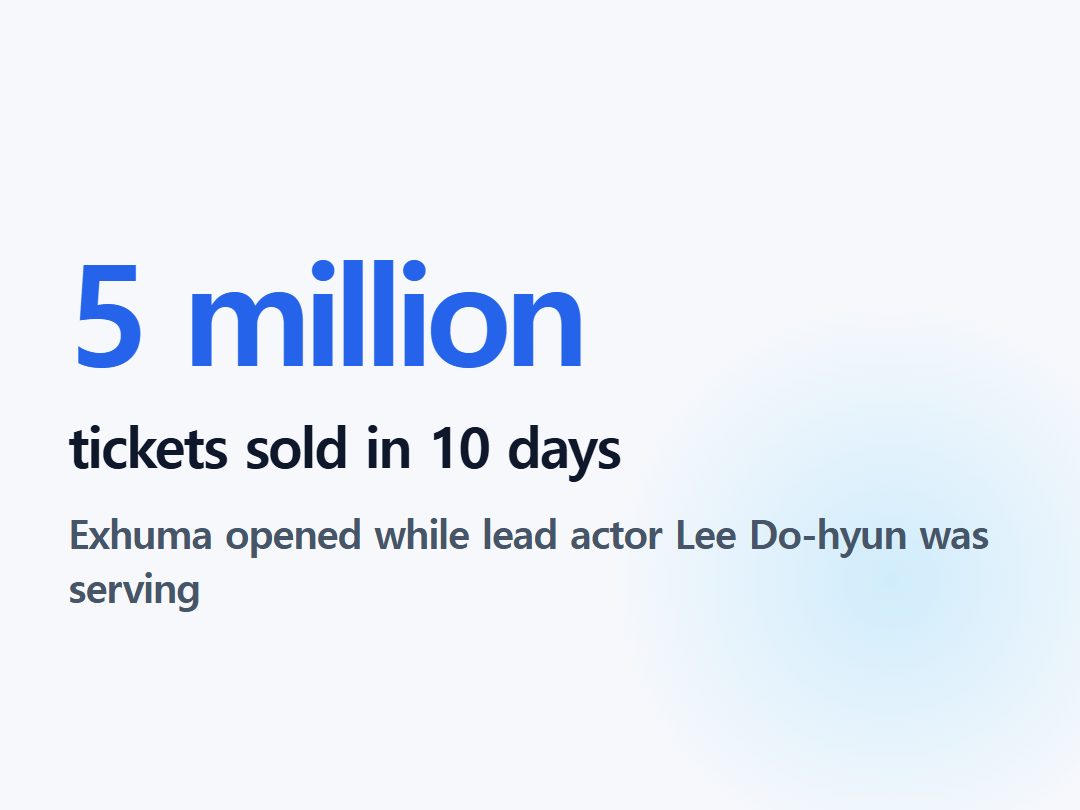
“Exhuma” opened in Korean theaters on February 22, 2024, six months into his service, and drew 5 million admissions within ten days, finishing as one of the year’s top-grossing Korean films.
Three months later, Lee won Best New Actor (Film) at the 60th Baeksang Arts Awards. He attended in Air Force uniform on special leave, one of the few sanctioned exceptions to a soldier’s otherwise closed calendar.
Why agencies bother: image continuity has a price tag
A rising actor’s market value rests on endorsement deals, casting offers, and audience recall, all of which erode if a face disappears from screens for nearly two years. Stockpiling protects that value; it is not just a courtesy to fans.
An actor who returns to find casting directors and brands have moved on to someone else loses leverage built up over years of work. Spacing out already-finished projects turns a hard stop into a slower fade.
Streaming rewrote the release calendar around the pause
Domestic broadcasters once dictated when a comeback (a Korean entertainment term for an artist’s high-profile return to promotion) could air. Global platforms now let agencies release banked content on their own timeline, reaching an international audience already in place.
Korean entertainment press has described the shift bluntly: military service is “no longer a career pause that artists need to recover from,” but increasingly a gap bridged by pre-planned streaming releases.
The scheduling can get literal. tvN’s “Four Hands, Two Sonatas,” premiering August 29, 2026, is simultaneously Song Kang’s first project since his October 2025 discharge and Lee Jun-young’s last before his own enlistment, one broadcast slot covering both ends of the cycle.
The same loophole keeps K-pop idols visible too
The mechanism isn’t limited to actors. Seventeen’s Hoshi recorded a self-written single on June 12, 2024, and released it a year later, in June 2025, while still serving.
BTS built an entire hiatus around it. After Jin enlisted in December 2022, member solo albums and documentaries kept surfacing on schedule; HYBE’s CFO confirmed in November 2023 that the company had “already prepared a great deal of prerecorded content” to cover the gap.
What a soldier still cannot do
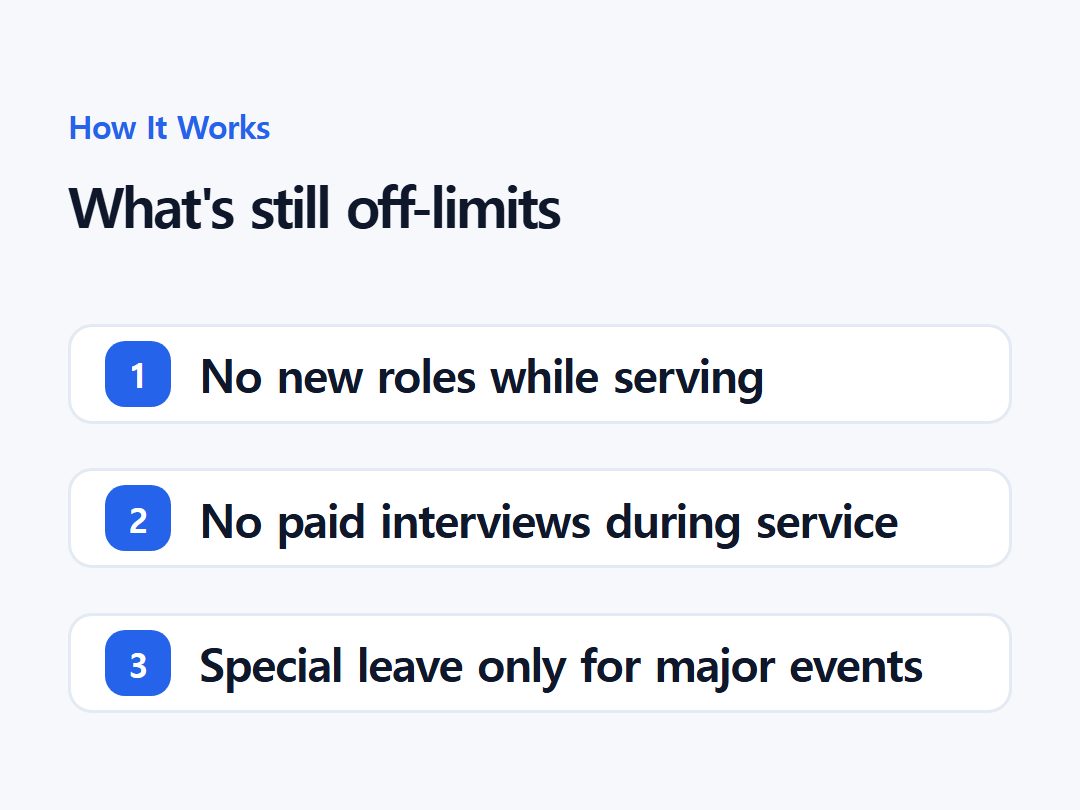
The loophole has limits. An enlisted actor cannot sign a new contract, film a new scene, or give a paid interview while serving; only work completed beforehand qualifies.
Appearances outside that window require special leave granted case by case, which is why Lee Do-hyun’s Baeksang appearance was treated as unusual rather than routine.
Agencies that push too far have faced backlash. SM Entertainment deleted a batch of EXO member Baekhyun’s in-service YouTube uploads after criticism that the release timing blurred the line between archived and new paid activity.
Not every actor gets the same runway
The strategy depends on being in enough demand to have several projects lined up before a fixed deadline, a position only an actor’s busiest years put him in.
A less established actor with one project on the slate faces the same 18-to-21-month blackout with nothing banked to fill it. The visible, seamless comebacks belong disproportionately to whoever was already in demand.
That gap can compound. An actor who enlists mid-breakout, with several productions competing for his remaining months, ends up with a fuller pipeline than one who enlists during a quieter stretch, regardless of who is more talented.
There is also no public disclosure requirement for how much content an agency has stockpiled. Outside a given announcement, audiences have no way to know how deep a star’s backlog runs until each release actually appears.
Pre-enlistment stockpiling, actor by actor
| Actor | Enlistment | Projects banked beforehand | What happened during service |
|---|---|---|---|
| Lee Jun-young | July 21, 2026 | Thriller, Netflix rom-com, feature film | Staggered releases during his term |
| Ji Chang-wook | 2017 | "Suspicious Partner" | Finale aired after basic training began |
| Park Bo-gum | August 2020 | "Record of Youth", film "Seobok" | Both released while serving in navy band |
| Jang Ki-yong | 2021 (date moved up) | "Now, We Are Breaking Up" | Press conference pre-recorded so he could still appear |
| Kwak Dong-yeon | August 25, 2026 | "Love in the Moonlight" 10th-anniversary special | Discharge not scheduled until February 2028 |
| Lee Do-hyun | August 14, 2023 | "Bad Mother", "Sweet Home" finale, "Death's Game" cameo, "Exhuma" | "Exhuma" drew 5M admissions six months into service |
Frequently asked
Why do K-drama actors release new shows while in the military?
South Korea's law only bars pay for work done during service, so content planned, contracted, recorded, or filmed before enlistment can still be released and earn money while an actor serves.
Can K-pop idols also release music during military service?
Yes, Seventeen's Hoshi recorded a single in June 2024 and released it a year later while still enlisted, and BTS used prerecorded content to keep member releases going during Jin's service.
What is the BTS law for military service?
A 2020 revision that lets entertainers who received a government cultural merit honor defer enlistment from age 28 to age 30, written specifically for globally recognized K-pop acts.
Sources
Every factual claim above is traceable. We do not translate articles — we gather facts from multiple outlets and write them ourselves.
- How K-pop stars stay visible during military service with prerecorded content — Korea JoongAng Daily
- Actor-singer Lee Jun-young to begin military service, leaving behind packed roster of projects — The Korea Times
- After military duty, Korea's top stars choose streaming over TV — The Korea Times
- Kwak Dong Yeon Begins Mandatory Military Service on August 25 Following Netflix Success — KpopStarz
- Exhuma — Wikipedia
- 60th Baeksang Arts Awards — Wikipedia
- Lee Do-hyun's Military Discharge Date is Finally Here, the 'Exhuma' Star Already Eyes New Roles — CineCinnati
- South Korea passes law to allow BTS to postpone military service — Deccan Herald
- Song Hye Kyo And Jang Ki Yong's New Drama To Pre-Record Press Conference Due To His Military Enlistment — Soompi
- Record of Youth — Wikipedia