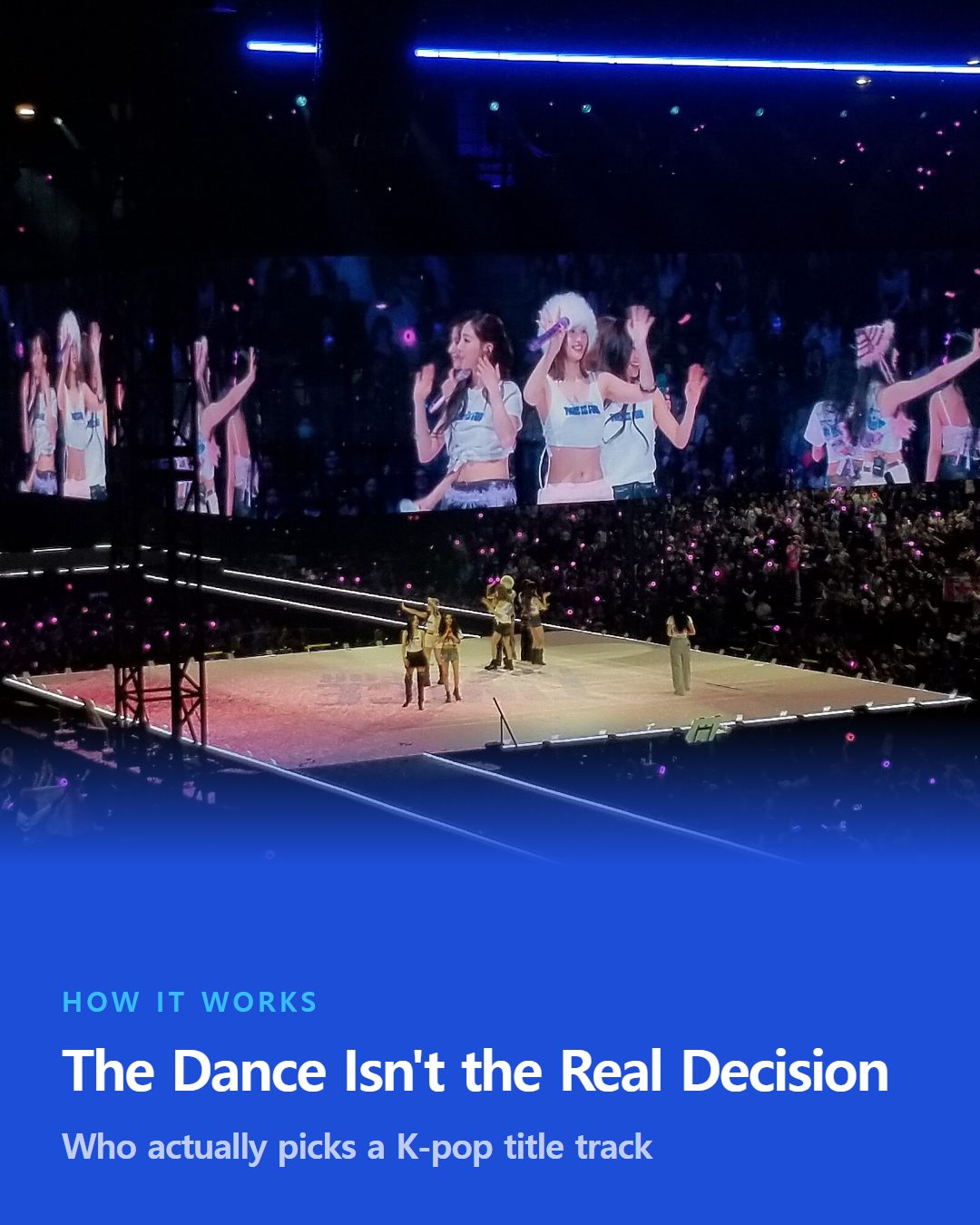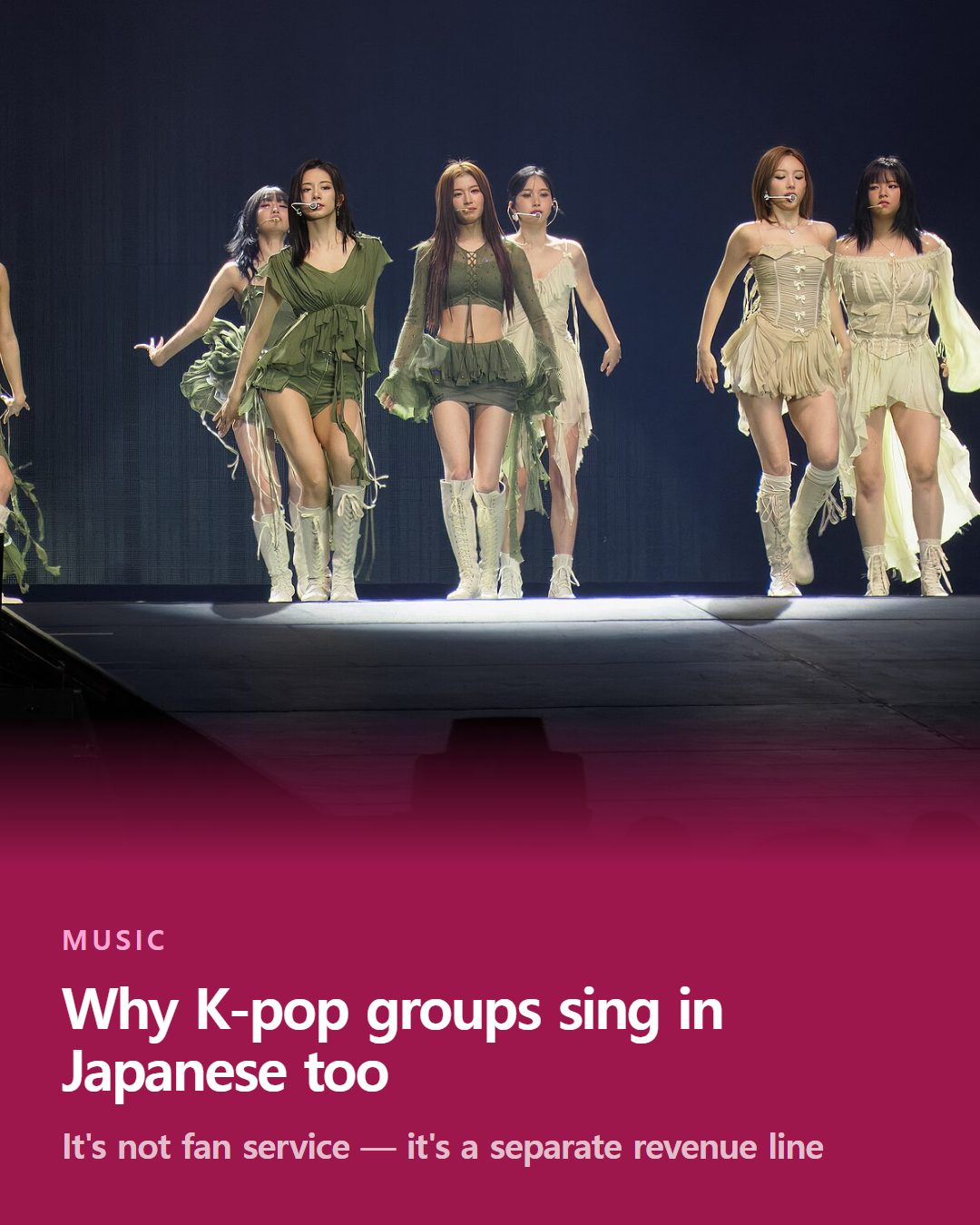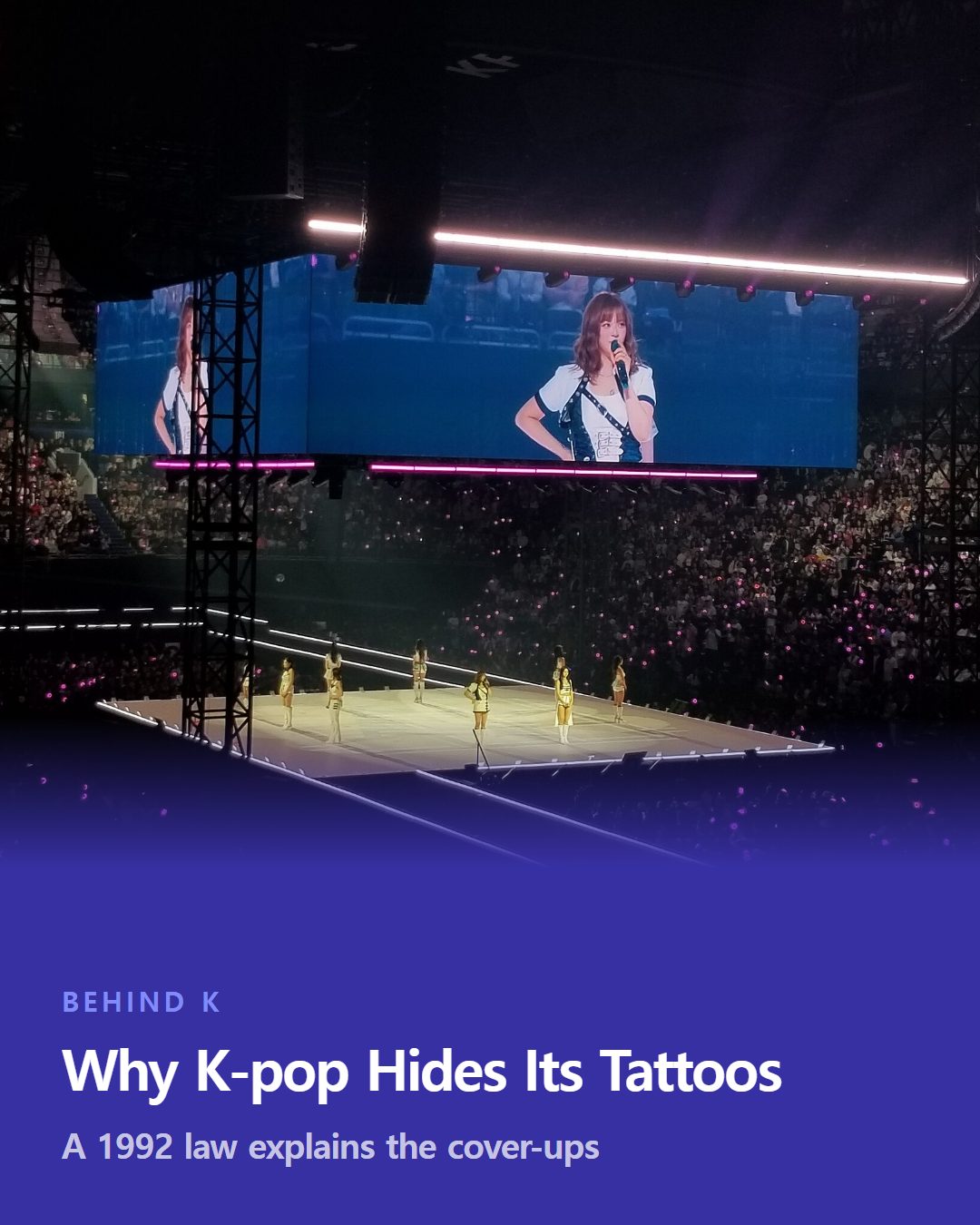
TWICE's Chaeyoung has stopped covering her tattoos onstage. Clips of her uncovered wrist, arm and back circulate widely outside Korea after nearly every recent show. To international fans it can look like a small styling choice. Inside Korea, it reads as something closer to a stance.
The short version
- Korea legalized non-medical tattooing in 2025, ending a 33-year ban.
- Chaeyoung stopped covering hers; most idols still hide tattoos on camera.
- New law takes effect October 2027; broadcast rules haven't changed yet.
Most K-pop idols still hide their tattoos, even the ones who have them. That is not a K-pop style rule. It traces back to a piece of Korean law that, until very recently, made tattooing itself borderline illegal.
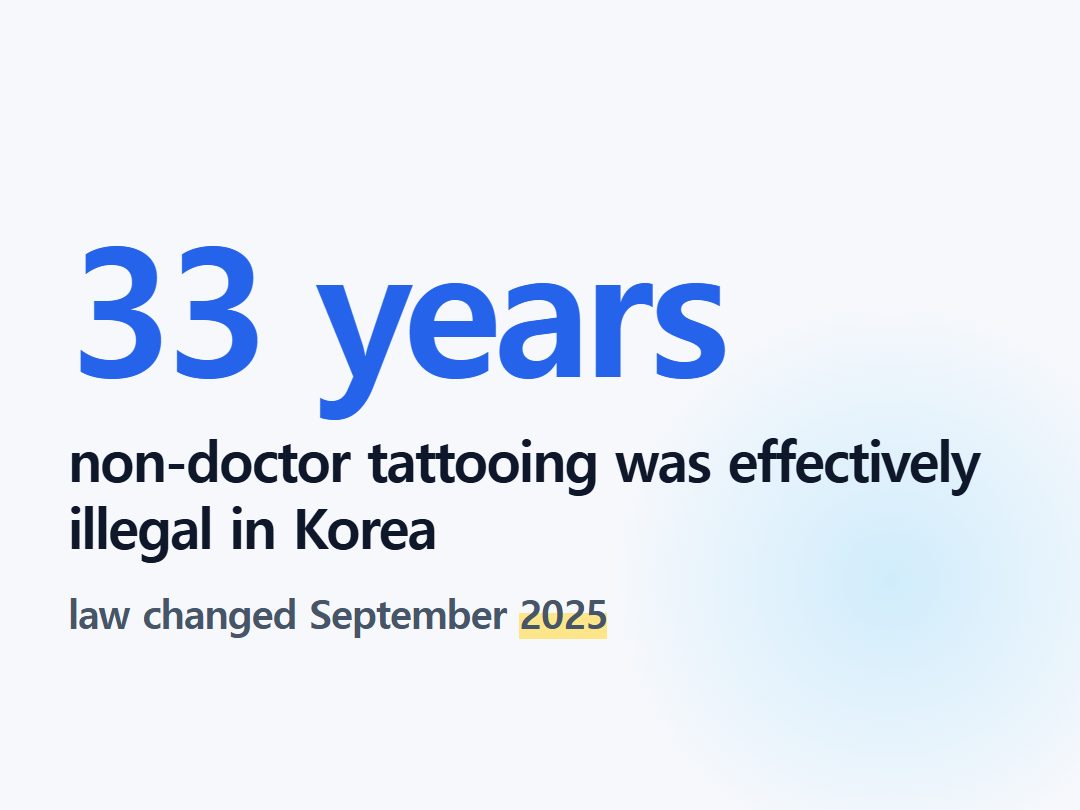
Korean law treated tattooing as a medical act since 1992
In 1992, South Korea's Supreme Court ruled that tattooing eyebrows without a medical license counted as unlicensed medical practice. In 2004, the court extended the same logic to ordinary body tattoos.
From that point on, working as a tattoo artist without a doctor's license carried real legal risk — a fine of up to ₩50 million (roughly $36,000) or a prison term. Almost every tattoo artist working in Korea was, technically, breaking the law, since virtually none of them are doctors.
Tattoo artists challenged the ban in 2022. Korea's Constitutional Court upheld it anyway, ruling that non-medical tattooing still carried unacceptable health risks and leaving it to lawmakers to design a licensing system instead.
Why a visible tattoo could force a music show to reshoot
There has never been a written law banning tattoos from Korean television. According to Korea's Broadcasting and Communications Standards Commission, standards are judged case by case, based on whether content "may hinder ethics and dignity."
In practice, that has meant idols cover up. Broadcasting staff have said that if a tattoo is caught on camera, the segment is sometimes recorded again.
The rule is applied unevenly. Olympic broadcasts, produced outside Korea, air athletes' tattoos uncensored. Domestic music shows do not get the same pass — a double standard fans have pointed out for years.
Part of the reason is history rather than law. Tattoos in Korea carried a strong association with organized crime for decades, and broadcasters have treated that lingering stigma as a bigger risk than any actual regulation.
Agencies manage tattoos the same way they manage everything else
Korean idols typically spend years as trainees — teenagers signed to an entertainment company and drilled in singing, dancing and media training before they ever debut. The agency system does not stop at debut: companies continue shaping almost every visible detail of a member's image, from hairstyle to interview answers.
Tattoos fall under that same control. Agencies commonly ask members to cover ink with flesh-toned patches or wardrobe choices during promotions, both to avoid broadcast trouble and to protect a clean image that matters for sponsorship deals.
Chaeyoung is unusual because she stopped hiding hers
TWICE's main rapper has at least ten known tattoos, built up gradually since 2019 — a lips design on her wrist, cherry tomatoes and carrots on her arm and hand, a heart-and-arrow behind her ear, and a still-undeciphered piece on her back.
What changed is not the tattoos themselves but her willingness to show them. On recent tours she has performed in outfits that leave her back and arms visible, on the same stages where she once kept them covered.
That shift is what keeps making "Chaeyoung tattoo" trend online: not the ink itself, but a member of one of K-pop's biggest girl groups choosing not to hide something most of her peers still do.
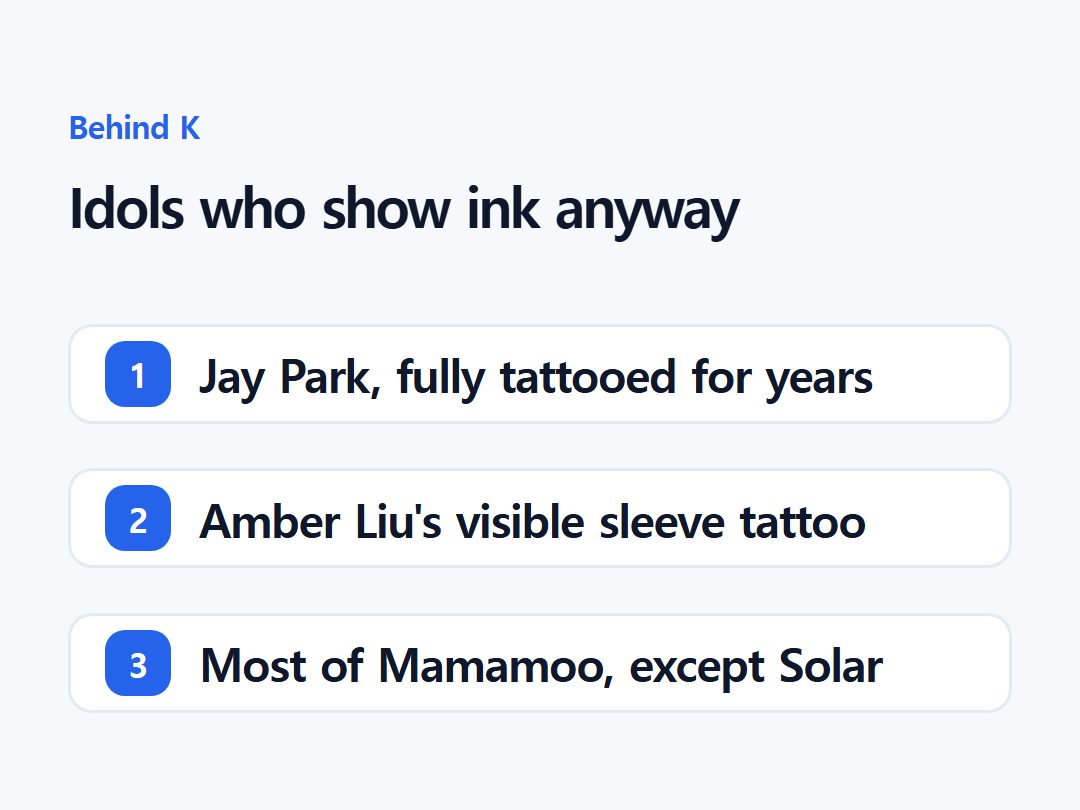
She isn't the first to show tattoos, just the most visible right now
A small group of artists normalized visible tattoos before her, mostly by working outside the strictest idol-image rules:
- Jay Park, a hip-hop artist and label founder, has performed fully tattooed and uncovered for over a decade
- Amber Liu of f(x) has a visible full-sleeve tattoo
- Jessi has around eight tattoos, including a swallow named for her fandom
- Most members of Mamamoo have tattoos — Hwasa and Wheein even got matching neck tattoos to mark ten years of friendship
Chaeyoung stands out because TWICE is a mainstream girl group built on a clean, approachable image — a space where tattoo concealment has been closer to unwritten rule than personal choice.
Tattoos don't keep anyone out of military service, but they limit where you can serve
Military service — mandatory for nearly all Korean men, currently around 18 months for army conscripts — does not exempt anyone for having a tattoo. It can, however, rule out assignment to special forces units, where a visible tattoo could compromise identification.
Until 2020, heavily tattooed men could sometimes be classified for non-active duty instead of front-line service. The Defense Ministry revised that rule in December of that year, telling reporters that "negative social perceptions of tattoos have declined" enough that tattooed conscripts could serve normally.
BTS's Jungkook enlisted in December 2023 with visible arm tattoos and served through the standard system. He has since been photographed in uniform with a sleeve tattoo plainly visible — tolerated day to day, even though broadcasters back home would still blur it on a music show.
A 33-year legal freeze ended in September 2025
On September 25, 2025, the National Assembly passed the Tattooist Act, legalizing tattooing by non-medical professionals for the first time since the 1992 ruling. The bill passed by an overwhelming majority.
The law creates a national license exam for tattoo artists, requires hygiene and safety training and record-keeping for every procedure, and bans tattooing minors without parental consent.
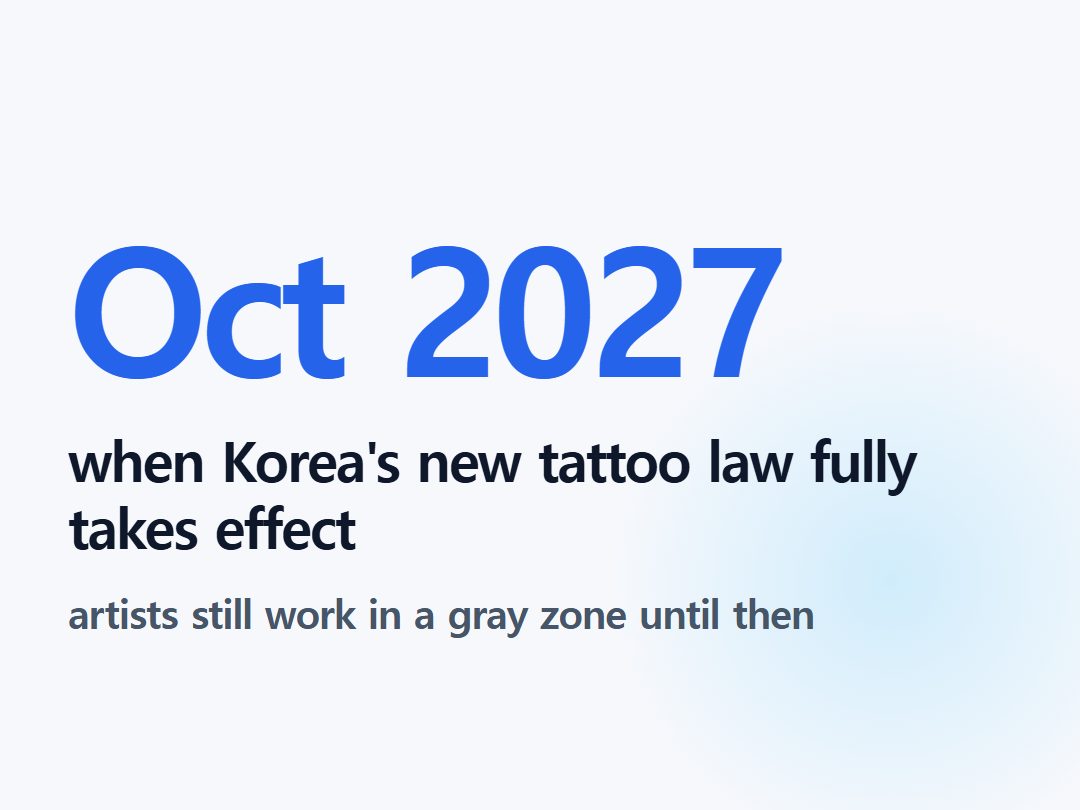
It does not take effect immediately. The law is set to take effect on October 29, 2027 — two years after promulgation — with a further transitional window letting current artists register provisionally.
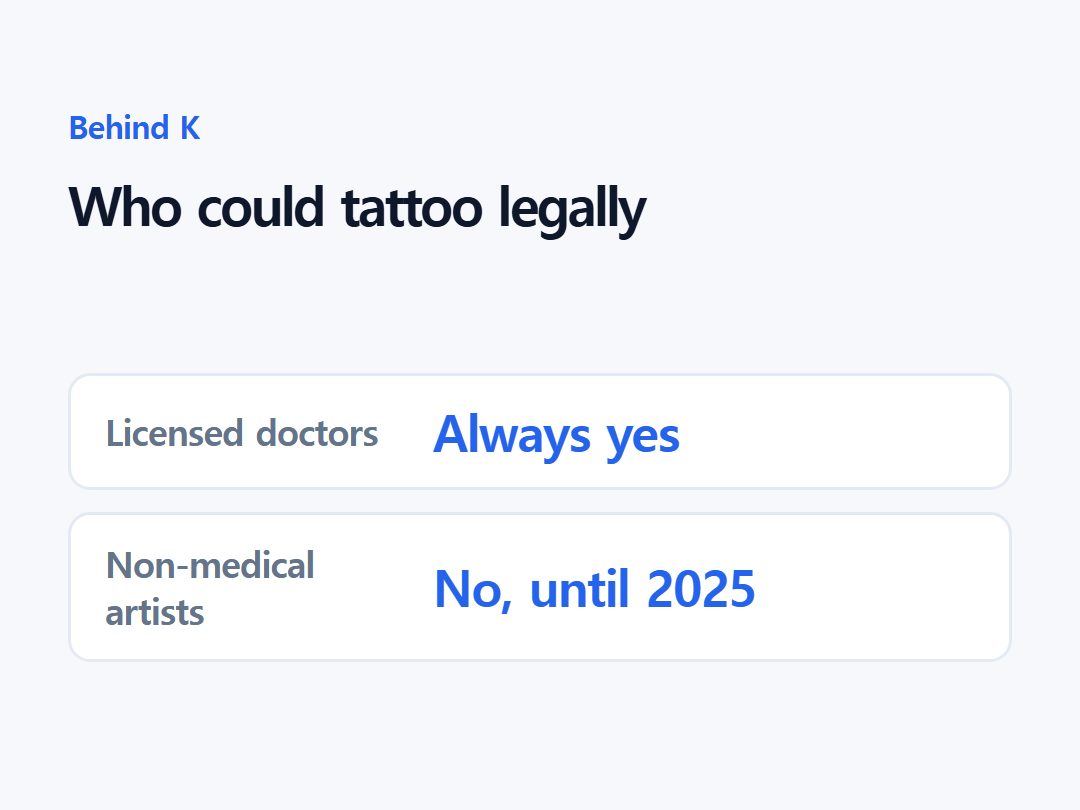
| Who can tattoo legally | Before the 2025 law | After it takes effect |
|---|---|---|
| Licensed doctors | Yes | Yes |
| Non-medical tattoo artists | No — treated as unlicensed medical practice | Yes, with a national license |
The Supreme Court went further in May 2026
In May 2026, Korea's Supreme Court, sitting en banc, overturned its own 1992 and 2004 precedents. It ruled that tattooing performed by a non-medical professional is not, by itself, unlicensed medical practice.
The court grounded the decision in constitutional personality rights — the freedom to express one's own identity — under Article 10 of the Korean Constitution. Legal analysts have cautioned this is not full deregulation; going forward, tattooing is expected to be governed within the Tattooist Act's licensing framework rather than left completely open.
What hasn't changed yet
The Tattooist Act does not fully take effect until late 2027, so most tattoo artists working today are still operating in the legal gray zone the law was written to close.
Broadcasting standards haven't been formally rewritten either. The same case-by-case review that has led stations to blur tattoos for years is still, on paper, the rule — even though the legal basis for treating tattooing as unlicensed medicine has now been undermined twice.
Agency image policies are private business decisions, not law. Nothing in the new legislation requires a company to let a member show a tattoo on a music show. Whether idols beyond Chaeyoung follow her lead is, for now, a question the law can't answer.
What is clear is that the underlying premise — tattooing as inherently criminal — no longer holds up in court. That gap, between a legal system that has moved on and an entertainment industry that hasn't caught up yet, is exactly where Chaeyoung's uncovered arms keep making headlines.
Korea's tattoo law timeline
| Date | Event |
|---|---|
| 1992 | Supreme Court rules tattooing eyebrows without a medical license is unlicensed medical practice |
| 2004 | Court extends the same ruling to ordinary body tattoos |
| Dec 2020 | Defense Ministry ends non-active duty classification for heavily tattooed conscripts |
| 2022 | Constitutional Court upholds the tattoo ban, leaves licensing to lawmakers |
| Sept 25, 2025 | National Assembly passes the Tattooist Act, legalizing non-medical tattooing |
| May 2026 | Supreme Court overturns its own 1992 and 2004 precedents |
| Oct 29, 2027 | Tattooist Act takes full effect |
Frequently asked
Why do K-pop idols cover their tattoos?
Tattooing was legally treated as unlicensed medical practice in Korea until recently, so agencies and broadcasters push idols to hide ink to avoid on-air trouble and protect a clean image.
Is tattooing illegal in South Korea?
Non-medical tattooing was effectively illegal since a 1992 Supreme Court ruling, but the Tattooist Act passed in September 2025 legalizes it, with full effect starting October 29, 2027.
How many tattoos does Chaeyoung have?
TWICE's Chaeyoung has at least ten known tattoos, including designs on her wrist, arm, hand, behind her ear, and back.
Sources
Every factual claim above is traceable. We do not translate articles — we gather facts from multiple outlets and write them ourselves.
- S. Korea legalizes tattooing by nonmedical professionals after 33 years — The Korea Herald
- Military becomes more tolerant of tattoos, obesity — The Korea Herald
- Korean Supreme Court Upholds Right To Tattoo By Non-Medical Professionals — The Korean Law Blog (IPG Legal)
- South Korea passes landmark bill to legalize tattoo artists — NBC News
- South Korean tattooists fume after court upholds ban — Malay Mail
- BTS Jungkook sparks cultural debate on tattoos after revealing new ink — Malay Mail
- Here's Why Idols Have To Cover Up Tattoos On Broadcast But Athletes Don't — Koreaboo
- TWICE's Chaeyoung confidently reveals her tattoos at the concert — KbizoOm
- Chaeyoung (Twice) Tattoos & Meanings (Updated!) — Kprofiles
- 6 K-pop idols with tattoos who aren't afraid to flaunt them — South China Morning Post
- How did Jungkook go to the military with all his tattoos? — Sportskeeda