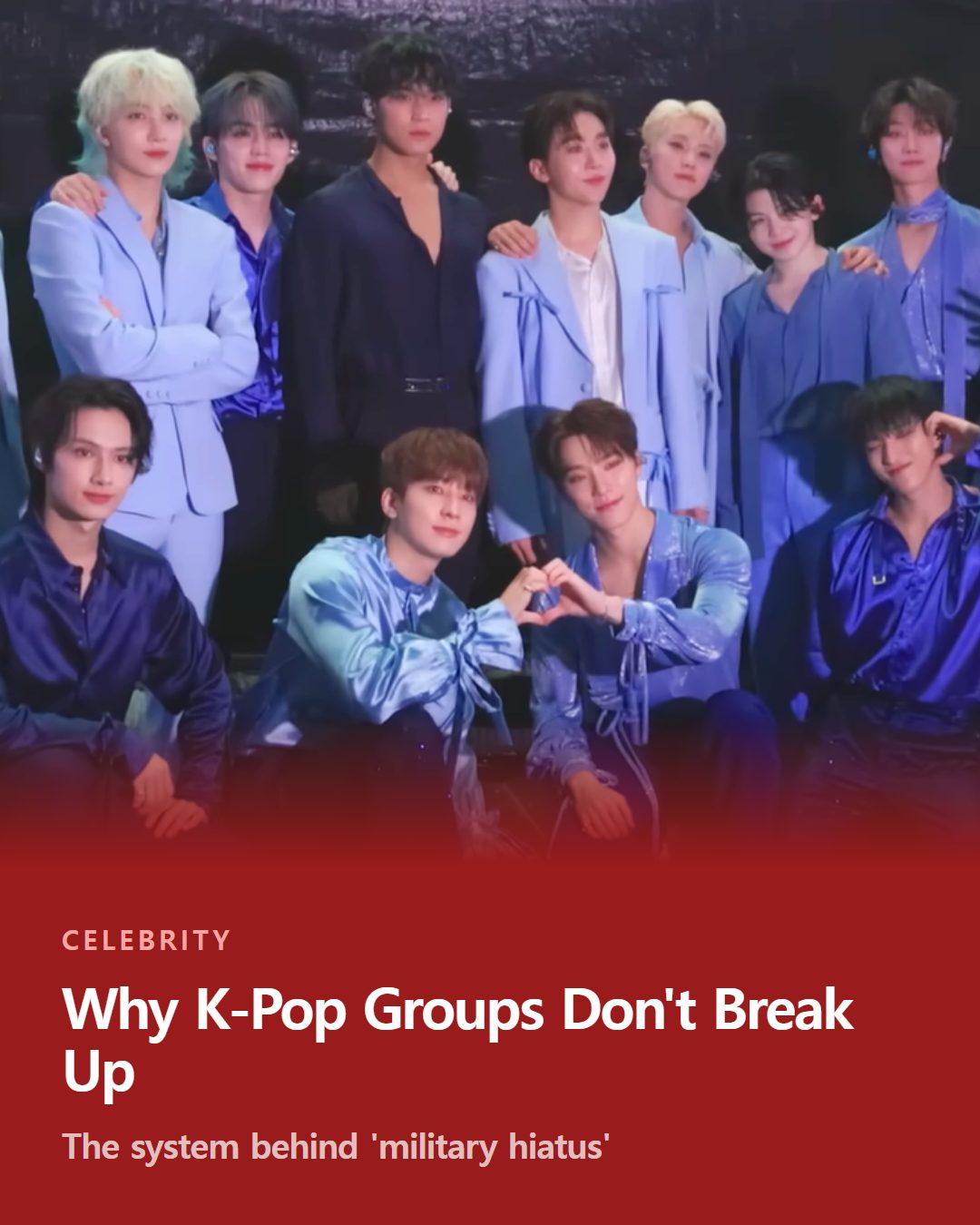
In July 2026, Seventeen's agency Pledis Entertainment confirmed that two more members, Vernon and DK, would begin mandatory military service — Vernon on August 20 and DK on September 8. Both are continuing group schedules up to their enlistment dates.
It is a routine announcement in Korean pop culture, but it raises a question international fans keep asking: what actually happens to a group's music, tours and brand while a member is gone?
The short version
- Seventeen's Vernon and DK enlist August 20 and September 8, 2026.
- Military service is mandatory in Korea; K-pop groups don't disband, they rotate.
- BTS returns with a full album and world tour on March 20, 2026.
The short answer is: usually, not much stops. Korean groups have a well-established playbook for keeping a team's activities running during a member's military service, built from decades of agencies managing exactly this problem.
Seventeen's rotation echoes BTS's staggered enlistment
Seventeen is currently mid-way through what fans call its military service era, with several of its 13 members already enlisted, serving, or completed, alongside members who hold foreign citizenship and are not subject to Korean conscription.
Vernon and DK's announcement extends a rotation the group has managed since its first member enlisted, and the agency has continued to schedule releases and promotions around it rather than pausing the group outright.
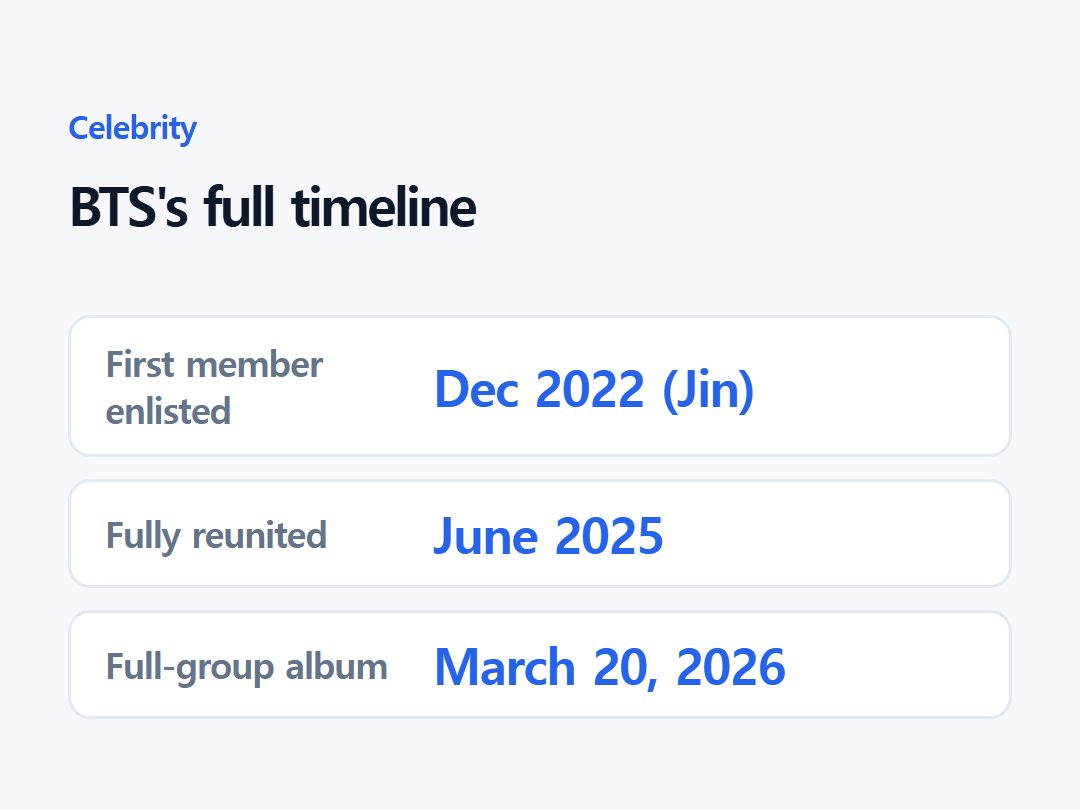
The clearest completed example belongs to BTS. Between December 2022 and June 2025, all seven members enlisted in a staggered order, starting with Jin and ending with Suga, who was discharged June 21, 2025.
RM and V were released on June 10, 2025, followed by Jimin and Jungkook the next day, drawing crowds of fans and press to the discharge site in Chuncheon, according to NPR's coverage of the reunion.
Rather than going quiet for those two and a half years, the members individually kept releasing music, and the group's label, HYBE, has since confirmed a full seven-member album, titled BTS's 5th full-length record, for release on March 20, 2026, with a world tour to follow — the group's first full-group project since 2020.
Mandatory service doesn't mean the group goes quiet
For readers used to Western bands, where a member's long absence often signals a breakup in progress, this pattern needs unpacking.
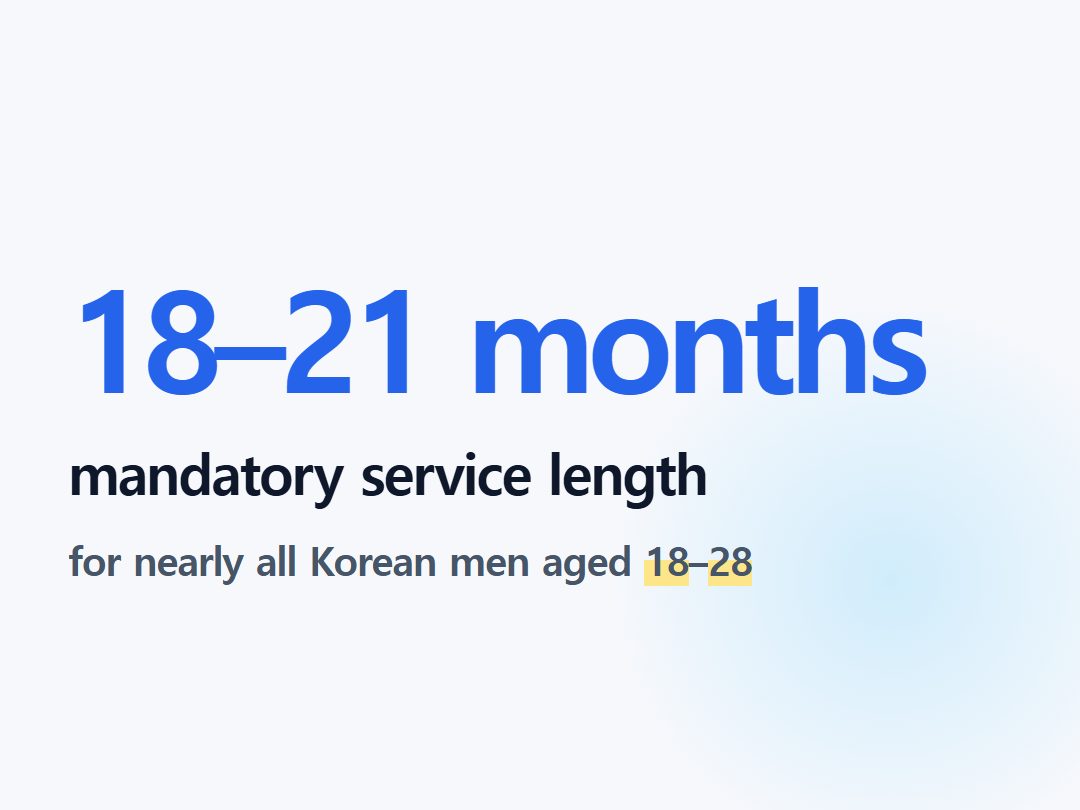
In South Korea, nearly every able-bodied man between ages 18 and 28 must serve in the military, typically for 18 to 21 months depending on the branch, under Article 39 of the constitution, which frames national defense as a citizen's duty. There is no exemption for entertainers as a category.
A 2020 law, often called the "BTS law," lets K-pop stars who have received a government cultural medal defer enlistment until age 30 — but it only delays service, it does not remove it.
Every BTS member ultimately enlisted rather than seeking further exemption, and dodging service in Korea carries serious reputational damage, so idols serve as regular conscripts alongside other citizens.
Because service is mandatory and unavoidable, Korean fans have long since stopped treating it as a crisis. The fandom shorthand for this period is 군백기 (gunbaekgi), a portmanteau of "military" and "blank period," describing the stretch when a group can't promote at full strength.
Its counterpart is 완전체 (wanjeonche), meaning "complete form," used when every member is finally active together again. The existence of a dedicated vocabulary for this cycle reflects how normalized it is — it is treated as a scheduling problem, not an existential one.
The mechanism that makes this work is the agency system. Nearly every K-pop act is managed by an entertainment company that recruits and trains members as trainees, sometimes for years, then debuts and promotes them under a multi-year contract.
Crucially, a member's contract is with the company, and the group itself is effectively a product line the agency continues to operate. When one member enlists, the agency doesn't have to dissolve the group — it can lean on the members who remain active.
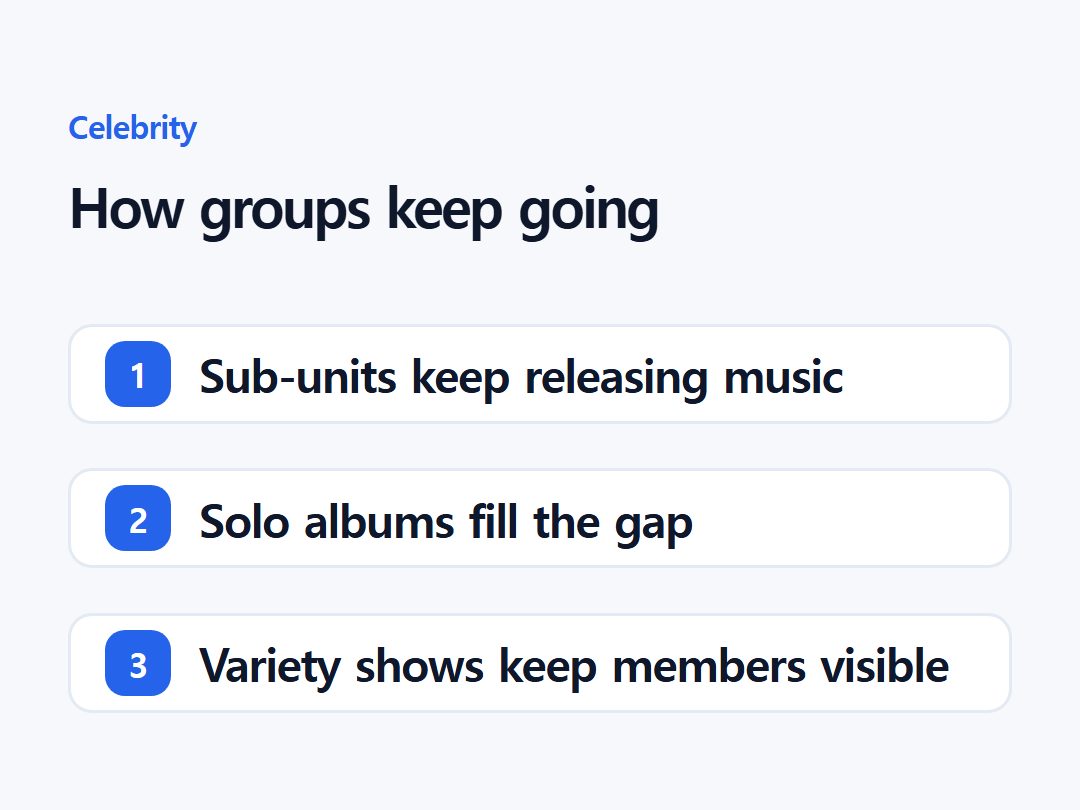
That usually takes three forms: sub-units, where a smaller combination of remaining members releases music under the group's name (Seventeen's Jeonghan and Wonwoo released a joint single, "This Man," staggering it to land just before their own enlistments so fans had new material during their absence); solo projects, where individual members put out their own albums or singles, as Jimin did with Muse in July 2024 while still an active member, producing the single "Who," which became the longest-charting song by a Korean solo act on the Billboard Hot 100, according to Grammy.com's tally of BTS members' solo output; and variety and talk-show appearances, the reality and panel programming that keeps a face on screen without requiring a full group comeback, which is how Jin filled his schedule immediately after his June 2024 discharge, appearing on shows including Netflix's Kian's Bizarre B&B before rejoining group promotion.
None of this requires disbanding the parent group. It requires patience, planning, and pre-recorded content stockpiled before a member leaves — increasingly, agencies bank music videos, footage and social posts in advance specifically to bridge the gap.
From Super Junior's decade wait to BTS's global test
The current playbook wasn't designed all at once; it was learned the hard way by an earlier generation of groups. Super Junior, an 11-to-13-member act depending on the era, is the case most often cited by Korean fans as the origin story.
Between Kangin's enlistment in 2010 and Kyuhyun's discharge on May 7, 2019, the group cycled almost continuously through members entering and leaving service, releasing albums and touring with whatever line-up was available at the time.
The Korea Herald reported that Kyuhyun's return marked the first time since 2010 that the group was free of any member's active military obligation — nearly a decade later.
That long, difficult rotation established the norm that a group stays a group through service, however incomplete its promotional line-up looks in the meantime.
EXO followed a comparable path in the 2020s.
With Suho, Xiumin and D.O. serving simultaneously at points, the remaining members — including the sub-unit EXO-CBX, formed from Chen, Baekhyun and Xiumin back in 2016 — kept releasing music and touring individually, a pattern the South China Morning Post described as the group "pumping out solo and sub-unit hits" through its hiatus years rather than stopping activity altogether.
BTS then became the highest-profile stress test of the entire system, because unlike earlier groups, its members were competing on the global charts rather than just the domestic ones.
Bang Si-hyuk's label HYBE opted for a fully staggered enlistment schedule instead of sending members in all at once, spacing the group's seven members across roughly three years so that individual releases — like Jimin's and other members' solo albums — could keep the group's commercial presence alive through 2023 and 2024, according to Gulf News's reporting on the enlistment process.
That approach, and the scale of BTS's global fandom, turned military hiatus into an internationally visible case study rather than a domestic-only phenomenon.

Will BTS's return prove the system still works?
Two threads are worth tracking.
First, Seventeen's rotation continues through 2026 and into 2027, with Vernon and DK's enlistments in August and September adding to a group timeline the Korea Times has flagged as one of the more complex among current fourth-generation acts; how the agency times releases around returning members will be the next test of the sub-unit strategy.
Second, BTS's March 20, 2026 album and accompanying world tour will be the clearest evidence yet of whether a group can lose its entire active line-up to conscription for years and return with its commercial standing intact — a question the industry has debated since Super Junior's decade-long wait, and one the group's global fanbase will be watching closely.
The debate over whether high-achieving entertainers should get broader military exemptions, similar to those available to some athletes and classical musicians, remains unresolved in Korea's National Assembly.
Until that changes, the sub-unit-and-solo-work playbook remains the default — not a workaround groups invented to survive an inconvenience, but the standard operating procedure of an industry built around a law that applies to everyone equally.
How four K-pop groups handled member enlistment
| Group | Service Period | How the Group Stayed Active |
|---|---|---|
| Super Junior | 2010–2019 (Kangin to Kyuhyun) | Cycled through members entering/leaving service; toured with whatever line-up was available |
| EXO | 2020s (Suho, Xiumin, D.O. overlapping) | Sub-unit EXO-CBX plus individual solo releases |
| BTS | Dec 2022–June 2025 (all 7 members) | Fully staggered enlistment; members released solo music throughout |
| Seventeen | Ongoing, through 2026–2027 | Sub-unit releases (e.g., "This Man") timed around staggered enlistments |
Frequently asked
Why don't K-pop groups disband when a member goes to the military?
A member's contract is with the agency, not the group, so the agency keeps the group running through sub-units, solo releases, and staggered enlistment schedules while a member serves.
Can K-pop idols avoid mandatory military service in South Korea?
No — the 2020 'BTS law' only lets idols with a government cultural medal delay enlistment until age 30; every BTS member ultimately enlisted rather than skip service.
When is BTS's next album and tour coming out?
HYBE has confirmed a full seven-member BTS album for release on March 20, 2026, with a world tour to follow, the group's first full-group project since 2020.
Sources
Every factual claim above is traceable. We do not translate articles — we gather facts from multiple outlets and write them ourselves.
- Seventeen's DK And Vernon Announce Military Enlistment — Forbes
- K-pop group BTS set to reunite as two more members complete military service — NPR
- BTS confirms full-group comeback, world tour for spring 2026 — The Korea Herald
- As Seventeen and NCT enter military hiatus, who will lead the next wave of K-pop boy bands? — The Korea Times
- Exo's Baekhyun, Sehun and Chanyeol pump out solo and sub-unit K-pop hits, while Suho, Xiumin and D.O. complete military service — South China Morning Post
- Breaking Down Every Solo Act From BTS — Grammy.com
- BTS' RM, Jimin, V, and Jungkook have started military enlistment process, BigHit announces — Gulf News
- Super Junior's Kyuhyun completes military service, returns to show biz — The Korea Herald
- How military service works for K-pop idols — The Week