
Hyun Bin and Son Ye-jin, two of South Korea's most recognizable actors, married in March 2022 at ages 39 and 40. Gong Yoo, one of the industry's most consistently cast leading men, has never married at all.
The short version
- Hyun Bin and Son Ye-jin married at 39 and 40; Gong Yoo never married.
- Actresses report losing roles after marriage or pregnancy far more than male co-stars.
- A 2009 lawsuit capped agency contracts at seven years but never banned dating clauses.
Neither case reads as unusual to a Korean audience. International fans watching K-dramas often notice the pattern and assume it is personal preference. It is closer to an industry norm, built by contracts, casting decisions, and fan economics rather than by chance.
Korea's biggest stars keep marrying in their late 30s and 40s
Son Ye-jin and Hyun Bin had known each other for years, co-starring in the 2018 film The Negotiation before Crash Landing on You made them a global couple on screen in 2019. They went public with their real relationship in January 2021 and married the following year, both 40.
That timing is not an outlier. Actors in their late 30s and 40s marrying for the first time, or not marrying at all, is common enough in Korean entertainment that entertainment reporters treat early marriages as the exception worth noting.
The gap is bigger than Korea's own rising marriage age
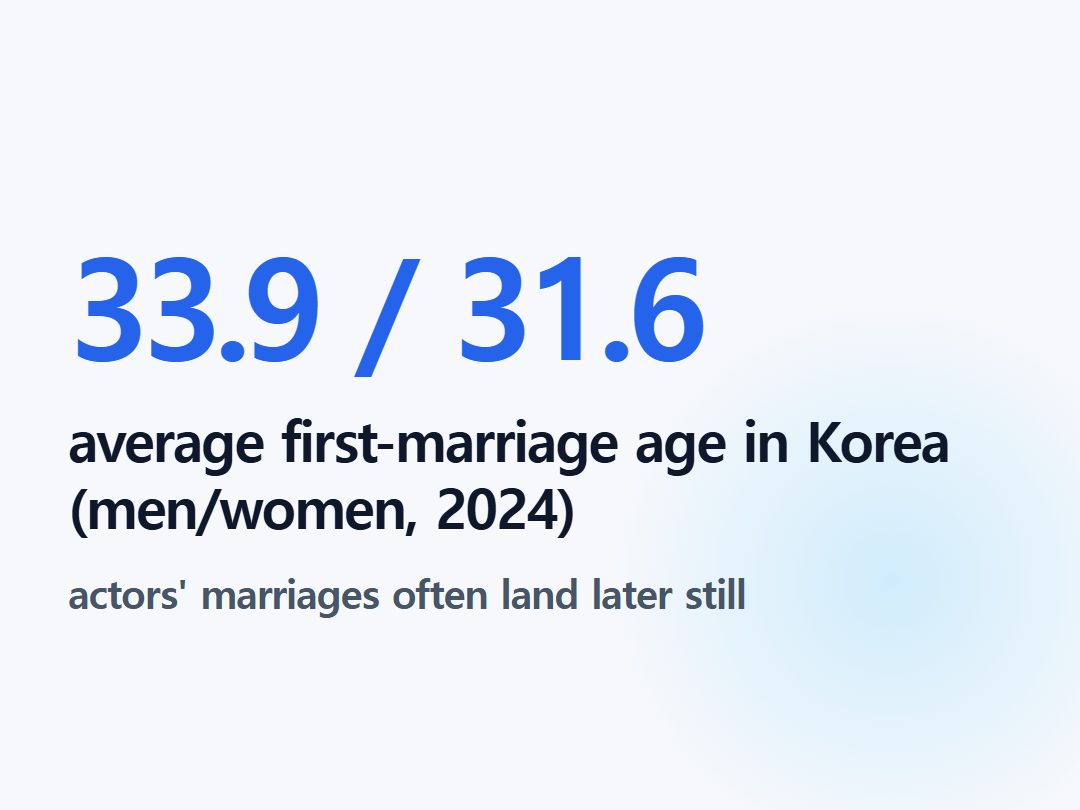
South Koreans in general are marrying later than they used to. According to Statistics Korea data reported in 2025, the average age at first marriage in 2024 was 31.6 for women and 33.9 for men — up from roughly 25 and 28 in 1995.
Actors' marriages tend to land at or past that already-elevated national average, and unmarried stars in their mid-40s, like Gong Yoo, are common enough that they don't generate headlines. A national shift toward later marriage is part of the story, but it does not fully explain an industry where staying single well past 40 barely registers as news.
The broader shift has been sharp enough to invert old assumptions. East Asia Forum reported that since 2021, more Korean women in their early 40s have married than women in their early 20s — a reversal that would have looked implausible a generation ago.

Why a wedding can cost an actress her next role, not just her privacy
The clearest industrial pressure falls on actresses. A June 2025 Korea Times report gathered on-the-record accounts from several Korean actresses describing how marriage and motherhood interrupted careers that had nothing to do with acting ability.
Actress Cha Chung-hwa said she withdrew from three roles she had already been cast in after becoming pregnant, saying she didn't want her pregnancy to become "a burden" for the production. Kim Hee-sun described a six-year gap after marriage and childbirth, recalling: "Is this the end for me as an actress because I'm a mom now?"
Park Ha-seon told the paper her casting priority dropped after marriage, saying some male co-stars are reluctant to appear opposite a married actress at all. The pattern repeats across separate careers:
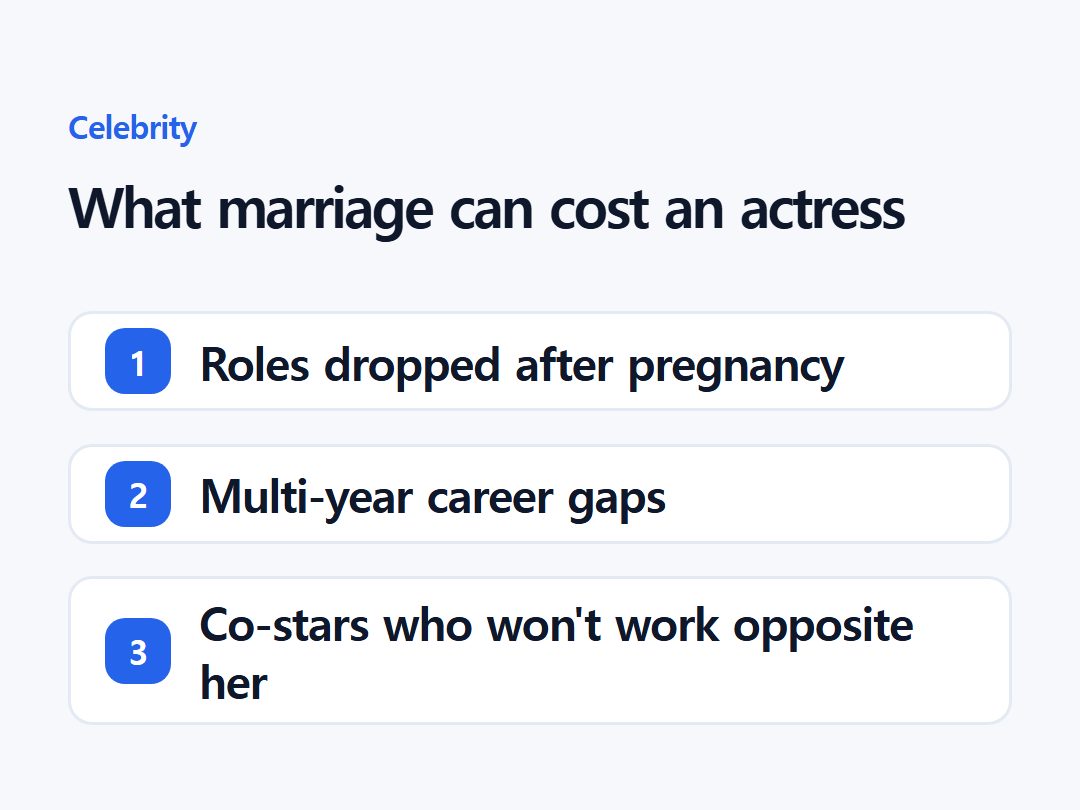
- Actresses stepping back from already-cast roles after becoming pregnant
- Multi-year career gaps that follow marriage and childrearing
- Co-stars or productions treating a married actress as a casting risk
Actress Hwang Bo-ra, speaking after a recent birth, said pregnancy itself signals to decision-makers that an actress will be unavailable for a year or two — reason enough, in a competitive casting market, to be passed over.
None of the actresses interviewed described a written rule barring married talent. What they described instead was a pattern of casting directors and co-stars making individually cautious choices that add up to the same result — an unwritten filter that operates well before any contract is signed.
The dating restriction that no longer needs to be written down
Few Korean entertainment contracts today contain an explicit line banning stars from dating. What persists instead are broader "conduct" and "exclusivity" clauses that let an agency — the management company that signs, trains, and represents a Korean performer, often called a sosoksa — penalize behavior it judges damaging to a client's image, romance included.
The clearest public test of that system involved K-pop idols rather than actors. In September 2018, Cube Entertainment fired singer HyunA and rapper E'Dawn after the two confirmed they were dating, stating that "trust is broken beyond repair." The backlash was immediate: fan boycotts, a stock dip, and a company statement walking the decision back within hours, according to Billboard's reporting at the time.
The firing didn't stick as originally announced, but the two ultimately left Cube by contract termination in October 2018. The episode, covered by the BBC and other outlets, remains the clearest documented case of an agency treating a confirmed relationship as a fireable offense.
Idols, who are typically signed and trained from their teens, face the most rigid version of this system. Actors who debut later and build reputations through individual roles usually get more contractual room, but the same reputational calculus still shapes what an agency will publicly defend.
Agencies are protecting a fantasy, not just a reputation
Entertainment industry analysts who spoke to reporters after the HyunA case pointed to a specific business logic: fans are sold a version of intimacy with an idol or actor, and a real, named partner competes with that illusion.
For idols, that means album sales and fan-meeting attendance. For actors, particularly the ones cast repeatedly as romantic leads, it means audiences projecting themselves onto a character's love story — something a highly public marriage can complicate, even if it doesn't end a career outright.
The calculation plays out differently across the two career paths. An idol's income depends partly on perceived accessibility to fans; an actor's bankability depends more on being convincingly paired with a rotating cast of on-screen love interests, something an established, well-known marriage can make harder to sell over time.
A 2009 lawsuit rewrote the rules every agency now follows
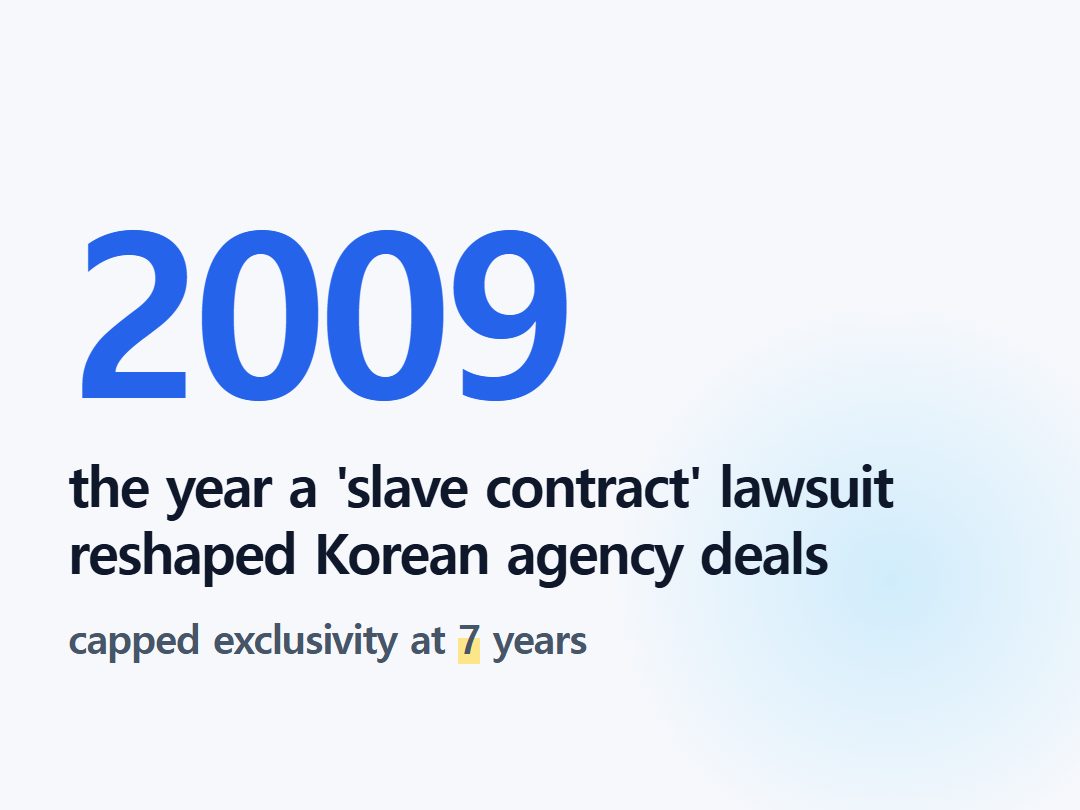
The modern contract system dates to a specific legal fight. In 2009, three members of the idol group TVXQ sued their agency, SM Entertainment, to exit what Korean media dubbed a "slave contract" — a 13-year exclusive deal with no clear exit and heavy control over the members' personal lives.
The case pushed Korea's Fair Trade Commission to introduce a standard contract that same year, capping exclusive agency deals at seven years and requiring clearer profit-sharing terms. The reform addressed pay and contract length directly; it never explicitly banned dating clauses, which is why informal image-management rules were able to survive it largely intact.
That gap matters. Because the standard contract regulates money and time rather than romance, image-based restrictions never needed a legal challenge of their own — they were simply never covered by the law in the first place.
Male actors describe feeling a lighter version of the same pressure
The penalty is sharpest for actresses, but male actors aren't entirely exempt from the perception that domestic life competes with castability. In 2023, actor Song Joong-ki drew criticism for telling an interviewer that "being a father, being a husband... means losing jobs" in the industry.
The backlash, reported by outlets including Her World Singapore, focused less on whether the claim was true for him and more on the double standard it exposed: critics pointed out that actresses lose roles after marriage and childbirth far more consistently than their male co-stars do.
Song Joong-ki later softened the claim, saying outcomes vary case by case. But the initial remark had already done the work of confirming, from a male star's own mouth, that Korean productions and audiences do factor marital status into who gets cast.
What hasn't changed, even as public attitudes loosen
Some things are shifting. High-profile actors now announce marriages, and occasionally pregnancies, without agencies treating it as a crisis, and co-star couples like Son Ye-jin and Hyun Bin are publicly celebrated rather than hidden.
What hasn't shifted is the underlying casting math the 2025 Korea Times report described: actresses still report losing roles to pregnancy and marriage in ways their male counterparts largely don't.
Whether that comes from agencies making cautious business decisions or from productions and viewers driving those decisions is still an open question in the industry's own reporting on itself — and it is the part no contract reform has yet touched.
Actresses on how marriage and pregnancy hit their careers
| Actress | What she reported |
|---|---|
| Cha Chung-hwa | Withdrew from three already-cast roles after becoming pregnant |
| Kim Hee-sun | Took a six-year gap after marriage and childbirth |
| Park Ha-seon | Casting priority dropped after marriage; some co-stars avoided pairing with her |
| Hwang Bo-ra | Said pregnancy signals a year or two of unavailability to casting decision-makers |
Frequently asked
Why do Korean actresses lose roles after getting married?
Actresses interviewed by the Korea Times described casting directors and co-stars treating marriage and pregnancy as risk signals, with some withdrawing from roles or losing priority rather than facing any written ban.
Did HyunA actually get fired for dating?
Cube Entertainment fired HyunA and E'Dawn in September 2018 after they confirmed they were a couple, then reversed the decision within hours after backlash; the pair still left the agency by contract termination that October.
What is the average age Koreans get married?
According to Statistics Korea data reported in 2025, the average age at first marriage in 2024 was 31.6 for women and 33.9 for men.
Sources
Every factual claim above is traceable. We do not translate articles — we gather facts from multiple outlets and write them ourselves.
- Marriages in Korea rise for 2nd straight year in 2024: data — The Korea Times
- 'I was really struggling': The unspoken career cost of motherhood in Korean showbiz — The Korea Times
- Is the '7-year itch' a thing of the past? — The Korea Herald
- K-pop: HyunA sacked over relationship controversy — BBC
- HyunA & E'Dawn of Pentagon Ousted from Cube Entertainment: Report — Billboard
- Late marriage becoming the new norm in South Korea — East Asia Forum
- Song Joong-ki sparks outrage with controversial comments on parenthood and careers — Her World Singapore
- 'Crash Landing on You' actors Son Ye-jin and Hyun Bin announce they're getting married — Gulf News