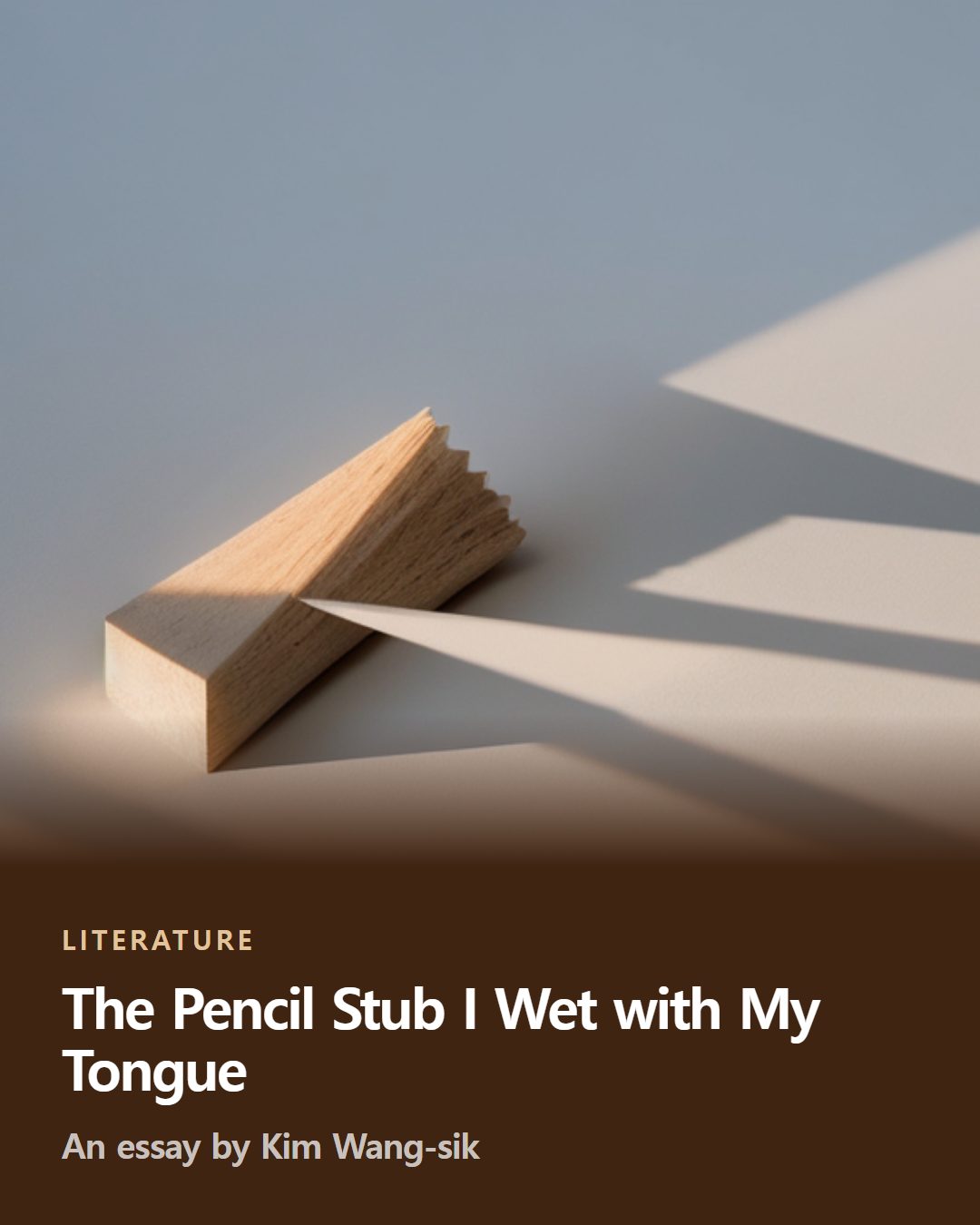
The pencil stub is still waiting for me.
The short version
- A childhood spent wearing pencils down to stubs by hand and mouth.
- Mechanical pencils are convenient but feel like mere instruments, not memories.
- The old pencil stub still symbolizes youthful dreams and lost simplicity.
We sometimes take great joy in small things — and those small things are so often the memories of long ago. Everyone remembers the games they played with a dear childhood friend, or how it felt to fall in love for the first time. But what calls all these memories back to us are the objects of that time.
For me, that object was a pencil.
As a boy, I would come home from school and settle down to my homework. Lying flat on the floor, wetting the tip with my tongue as I wrote, I would wear a pencil down until it was no more than a stub. When it grew too short to hold, I would fit it into the barrel of a ballpoint pen and keep on writing.
These stubs — proof of how hard I had studied — I gathered up and kept like treasure. That heap of worn-down pencils was my proudest possession. It felt as though each and every one of them would somehow lift my grades a little higher.
Technology moves on. Now we use mechanical pencils. They are convenient and practical: no sharpening required, always a fine point at the ready.
Yet a mechanical pencil carries none of the warmth that the pencil stubs of my childhood held. It seems to have been reduced to a mere instrument for putting words on paper.
In those lean years, I poured my whole heart into every letter I wrote with a pencil stub. With that small pencil, I drew great dreams. Each time I began a new chapter, sharpening my pencil felt like a ritual — a rite of new beginnings. Into even that simple act, I folded my dreams and my hopes and sent them on their way.
Now I am grown, living a life that asks me to juggle its many complications. I am deeply grateful for modern conveniences like the mechanical pencil, yet at times I find myself longing for the simplicity and the pure ardor of those days — for something like the pencil stub of my childhood.
My pencil stub is still waiting for me. It reminds me of my dreams, of the nostalgia of childhood, and of the innocent eyes with which I once looked upon the world. Sometimes I want to set down the mechanical pencil, pick up that old stub, and write out a small dream once more — hoping, all the while, that it will grow into a great one.
Pencil Stub vs. Mechanical Pencil
| Pencil Stub (Childhood) | Mechanical Pencil (Today) | |
|---|---|---|
| Upkeep | Needed sharpening; whittled down to a stub | No sharpening required, always a fine point |
| Feeling | Warmth and nostalgia | A mere instrument for putting words on paper |
| Ritual | Sharpening felt like a rite of new beginnings | Not described as a ritual |
Frequently asked
Why did people used to wet pencil tips with their tongue?
The essay's narrator did this as a child, lying on the floor doing homework, wearing the pencil down to a stub in the process.
What did people do with pencils too short to hold?
They fit the stub into the barrel of a ballpoint pen so they could keep writing with it.
Why do mechanical pencils feel different from old pencil stubs?
The essay says mechanical pencils are convenient and always have a fine point, but they carry none of the warmth of a worn-down pencil stub, feeling like a mere instrument instead.
Sources
Every factual claim above is traceable. We do not translate articles — we gather facts from multiple outlets and write them ourselves.
- 침 발라가며 쓴 몽당연필 — 청람서루 · Kim Wang-sik