Search any K-pop idol's birthday on X and a familiar image turns up: a bubble tea shop wallpapered floor to ceiling with the idol's face, offering a free cardboard cup sleeve with every drink. That is a cupsleeve event, and it has become the default way Korean fandoms mark a birthday.
The short version
- A fan organizer, not the idol's agency, funds and runs every cupsleeve event.
- Seoul gift sets run 8,000 to 12,000 won, about six to nine dollars.
- US organizers sometimes spend up to $1,000 of their own money on one event.
The mechanics look simple, buy a drink, get a sleeve. What international fans often miss is who is actually running the show. It is not the idol's management company, and that single fact reshapes almost everything else about how the event gets funded, decorated, and priced.
A cardboard sleeve becomes a party invitation
The name comes from the plainest object in the room: the corrugated paper band wrapped around a takeaway cup to keep it from burning your hand. Fans repurpose that sleeve as a piece of merchandise, printing it with an idol's photo, a birthday message, or a fan-drawn illustration.
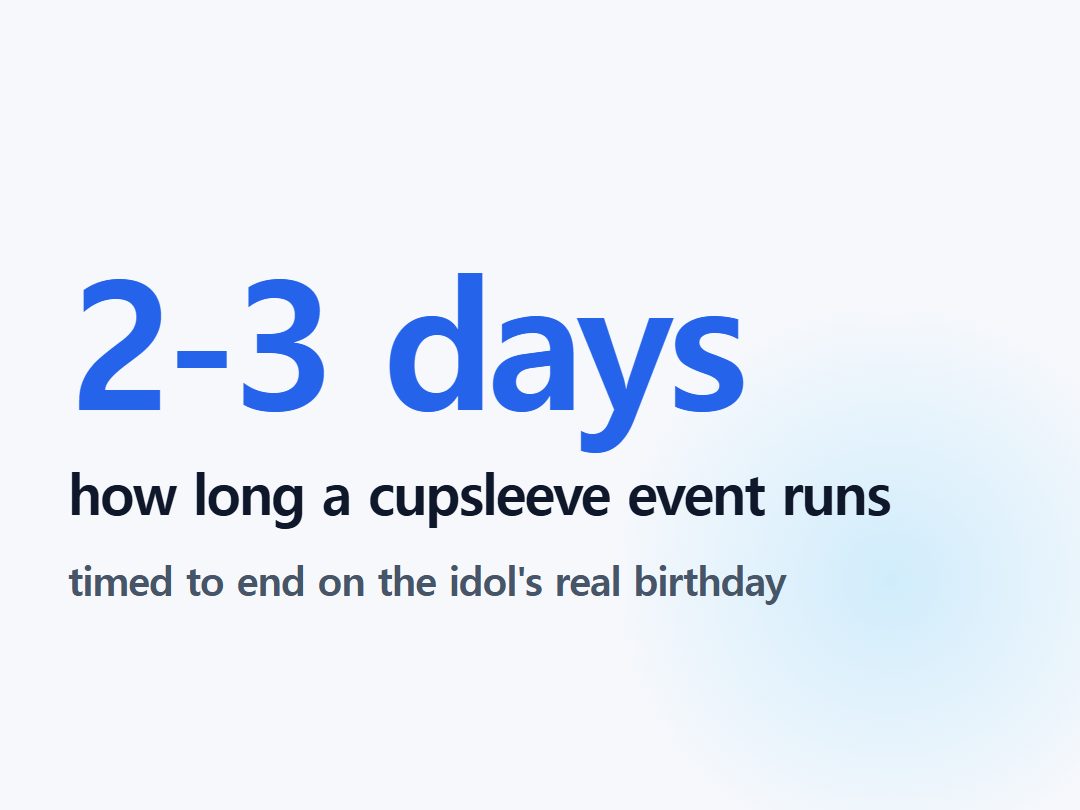
A typical event runs two to three days and is timed to end on the idol's actual birthday. The host cafe is covered in posters and banners, sometimes with a life-size cardboard cutout of the star, and the shop's regular drinks are given fan-invented names for the occasion.
A larger version, often called a 'birthday cafe' rather than a cupsleeve event, can take over an entire venue for a full week rather than a weekend. Organizers turn the space into something closer to a pop-up museum, with framed photo galleries, themed corners for pictures, and a far bigger catalog of exclusive goods than a standard sleeve giveaway.
The fan-run economics behind a 'free' drink
Nothing about the sleeve is actually free, a single fan organizer has already paid for it. That person books the cafe, commissions the artwork, and orders the printed goods weeks in advance, usually recovering the cost through the drinks customers buy during the event.
Typical gift sets in Seoul run about 8,000 to 12,000 won, roughly six to nine dollars, depending on the tier. A drink-only package gets a cup sleeve and one or two extras, while a drink-and-dessert package unlocks more goods. Some events add a raffle, priced at 1,000 to 2,000 won a try.
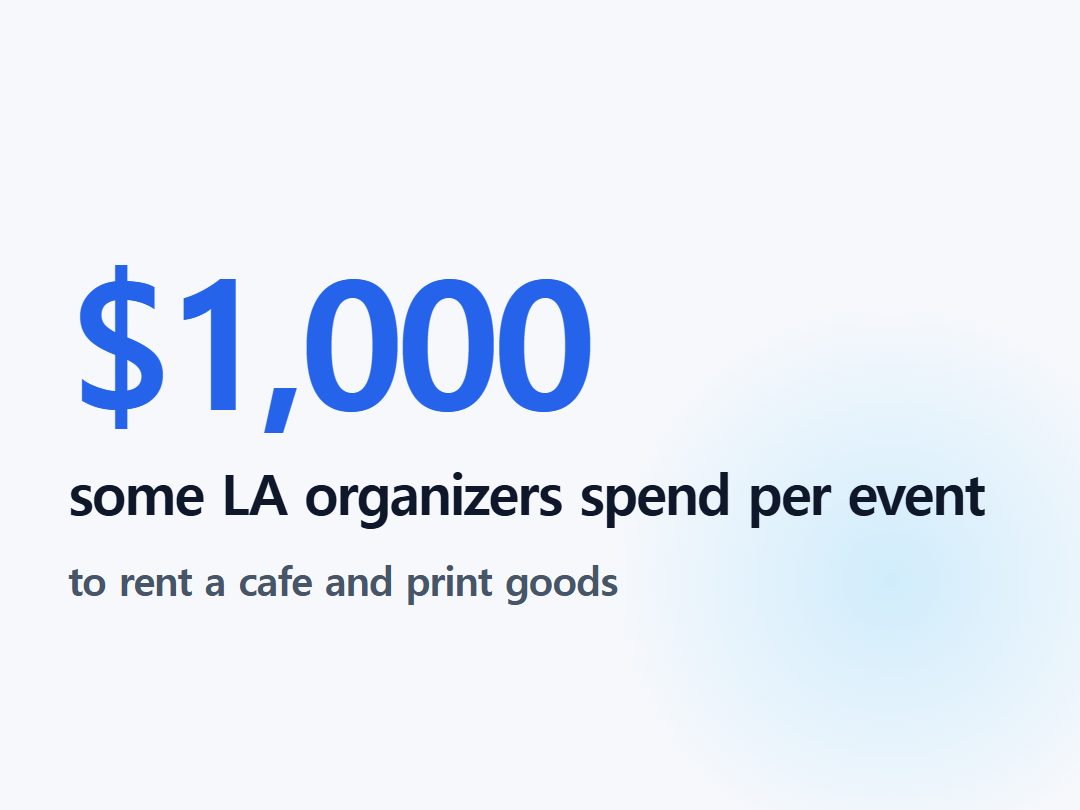
In the United States, organizers have told the Los Angeles Times they sometimes spend up to $1,000 of their own money to stage a single event, drawing crowds in the hundreds.
Why agencies stay out of it
This is the detail that separates a cupsleeve event from ordinary celebrity marketing: the idol's agency did not commission it, does not fund it, and in most cases has no formal role in it at all.
The photos printed on the sleeves are typically unlicensed, pulled from official promotional shots or a fan's own camera roll, which keeps the whole practice in a legal gray zone that agencies quietly tolerate rather than officially endorse.
That absence is precisely why the ritual feels different from a company-run comeback campaign or a brand tie-in. A cupsleeve event exists because a fan decided, on their own time and their own budget, that the birthday deserved a room full of strangers who understand the reference.
The homma who bankrolls the cafe
Many organizers come from the ranks of 'homma,' short for 'homepage master,' a term for fans, mostly active on X and Instagram, who take and share high-quality photos of idols at public schedules. Hommas often build large followings, and some fund their photography with sales of calendars, photobooks, and tumblers printed with their own shots.
The proceeds do not stop at cafes. One longtime homma, Venus Lee, told ABC News that when it is her idol's birthday or debut anniversary, she sells merchandise to pay for a subway advertisement, part of a wider fan tradition of buying billboard and station ads as birthday gifts that predates the cupsleeve trend and runs alongside it.
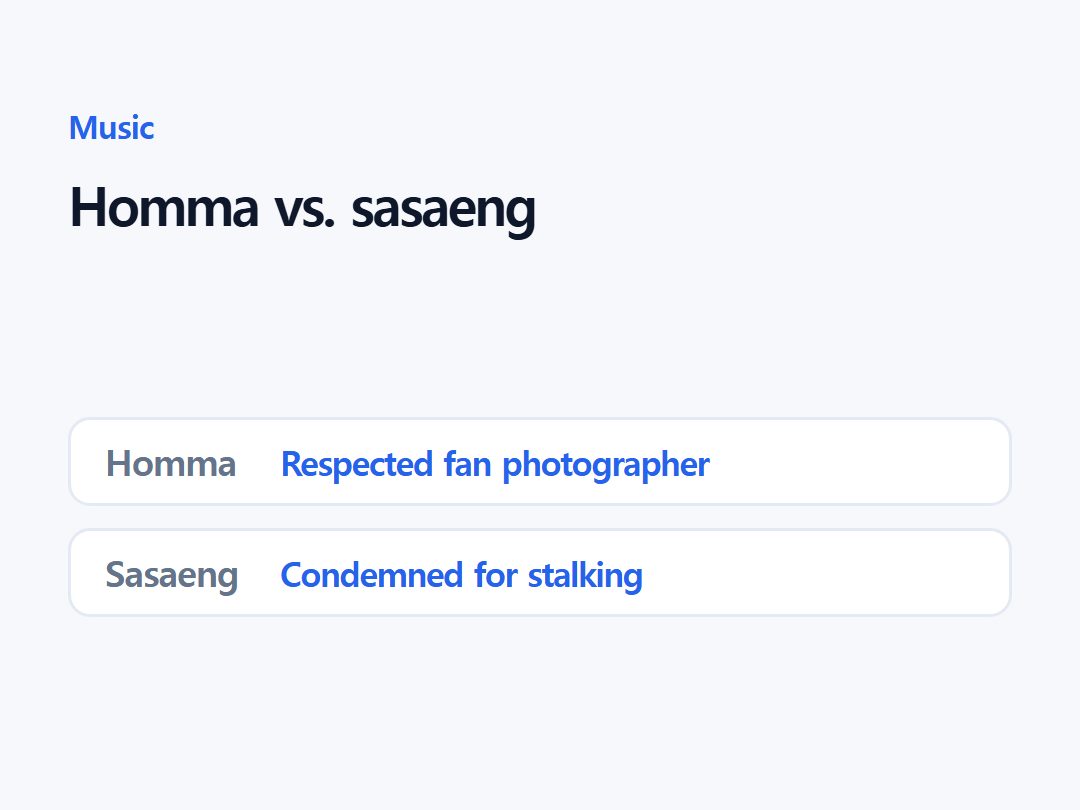
That existing fan-run merchandise pipeline is what makes a cupsleeve event logistically possible. The same fan who already prints photocards for sale can print cup sleeves for a cafe instead. Fan communities draw a firm line between hommas, broadly respected for this work, and 'sasaeng' fans, whose stalking and privacy violations are condemned across the fandom.
From fansite-only clubs to anyone with a cafe contact
Cupsleeve events trace back to South Korea in the late 2010s, when they were the near-exclusive domain of official fansites and fan clubs, the same accounts that already had the photo archives and the merchandise budget.
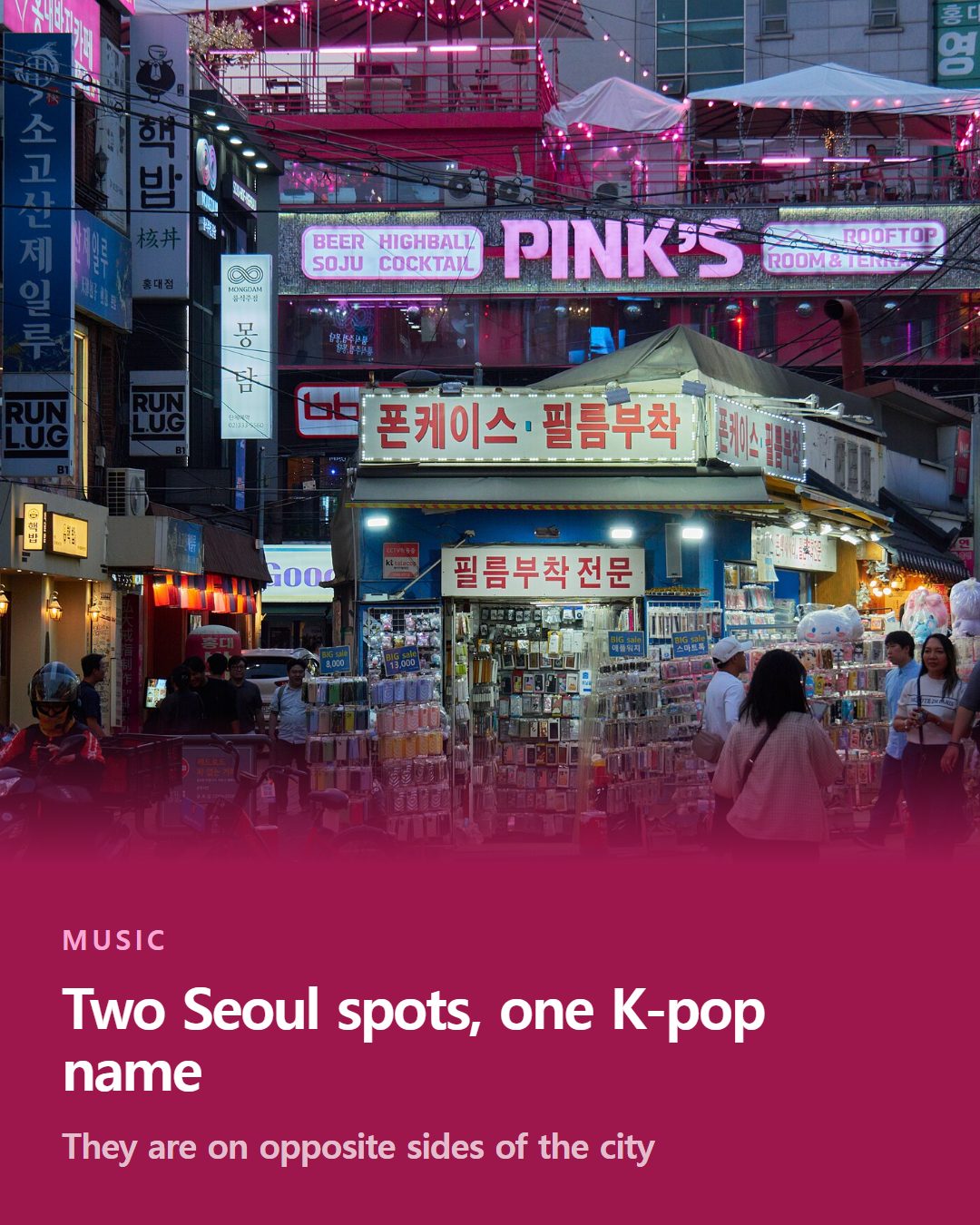
That exclusivity has since eroded. A single motivated fan, with no fansite affiliation, can now approach a cafe directly and run an event, and dedicated apps and social feeds exist purely to help other fans find and attend them. Seoul's Hongdae and Sangsu neighborhoods, dense with small independent cafes, have become the unofficial center of the practice.
What one ticket actually buys
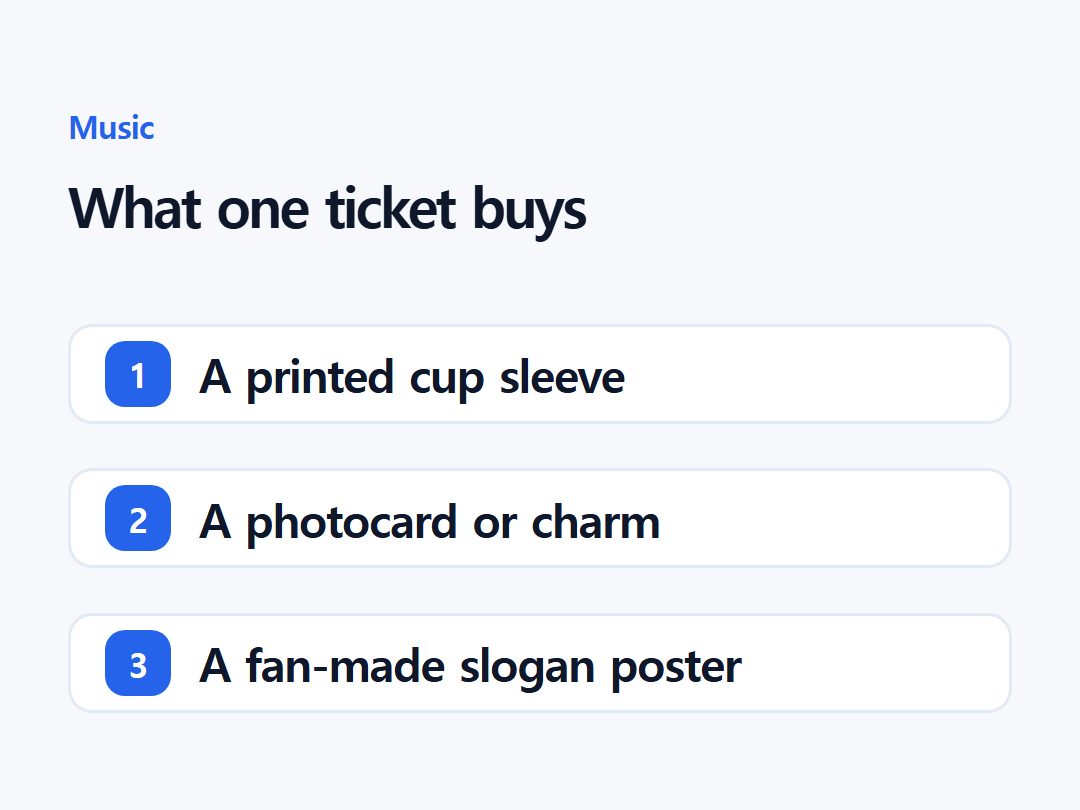
- A cup sleeve printed with the idol's photo or a fan illustration
- A photocard, charm, or small plush tied to the event's theme
- A fan-made 'slogan' banner or poster available for purchase
Menu items get renamed to fit the idol, sometimes with elaborate wordplay. One 2024 event for solo singer Jung Se-woon offered a drink called 'acho-latte,' combining the Korean word for a chocolate poodle with a nickname fans use for the singer, a joke that only lands if you already follow him.
On the rare chance the idol shows up
Occasionally, the idol being celebrated actually visits their own cupsleeve event, greeting fans and signing autographs in person. It is never guaranteed and never announced in advance, since neither the agency nor the organizer controls the artist's schedule.
When it happens, fans treat it as a rare stroke of luck rather than a planned appearance, and it is one of the few moments where an idol steps directly into a space their fans built without the agency's involvement. The organizer gets no advance warning either, which is part of why photos from these surprise visits circulate so widely afterward.
How a Hongdae ritual became a Los Angeles weekend habit
The format spread outward from Korea as K-pop's overseas fanbase grew, adapted almost unchanged by fans in the Philippines, Malaysia, and the United States. In Los Angeles, the trend accelerated during the pandemic and now regularly fills boba shops across Southern California on weekends, according to reporting in the Los Angeles Times.
In Malaysia, events cluster around a handful of cafes in the Klang Valley, tracked by dedicated accounts such as @cupsleeveMY on X, while Filipino fan groups run their own circuit through Manila's cafe scene. Local organizers outside Korea follow the same playbook: rent the space, design the sleeve, price the tiers, and hope the drink sales cover the outlay.
What's still unresolved
The copyright question hangs over the entire practice. Sleeves and photocards routinely reproduce agency-owned promotional photos without a license, and agencies have generally chosen not to enforce their rights against fans rather than risk the backlash of suing their own supporters.
There is also no quality guarantee. Because anyone can announce an event and collect payment before the goods are printed, fan communities warn newcomers to check an organizer's track record before sending money for a cupsleeve set they won't see until the day itself.
And it is still an open question how far the format can scale before it stops being the thing that made it appealing in the first place: a small, low-stakes gathering run by one fan who wanted to do something nice, not a franchise.
Cupsleeve Event vs. Birthday Cafe
| Cupsleeve Event | Birthday Cafe | |
|---|---|---|
| Duration | Two to three days | A full week |
| Scale | One cafe, wallpapered with posters | Entire venue, pop-up museum feel |
| Goods | Standard sleeve giveaway | Far bigger catalog of exclusive goods |
Frequently asked
What is a K-pop cupsleeve event?
It's a fan-organized birthday celebration where a cafe sells drinks with free cup sleeves printed with an idol's photo, usually run for two to three days around the idol's birthday.
Who pays for a cupsleeve event?
A single fan organizer books the cafe, commissions the artwork, and orders the goods in advance, recovering costs through the drinks and merchandise fans buy at the event.
What's the difference between a cupsleeve event and a birthday cafe?
A cupsleeve event typically runs two to three days at one cafe, while a birthday cafe takes over an entire venue for a full week with a much bigger catalog of exclusive goods.
Sources
Every factual claim above is traceable. We do not translate articles — we gather facts from multiple outlets and write them ourselves.
- Cupsleeve Event — Fanlore
- Cupsleeves 101: An Ultimate Survival Guide to Korean Birthday Cafes — The Kraze
- A Breakdown of K-Pop Fan Events — POP TOKKI
- How K-pop fans connect at 'cupsleeve' events — Spectrum News / LA Times Today
- Hommas, a unique part of K-pop fandom culture — Good Morning America / ABC News
- [카페민지MZ] 생일카페가 뭔데? 아이돌 '덕질' 방식 직접 체험해보니 — 매일신문 (Maeil Shinmun)
- 팬이라면 이 정도쯤이야! 카페를 통으로 빌리는 '아이돌 생일 카페' — gobang.kr
- What Is A 'Cupsleeve Event' And Why Is This K-Pop Phenomenon Taking Off In Malaysia? — The Rakyat Post