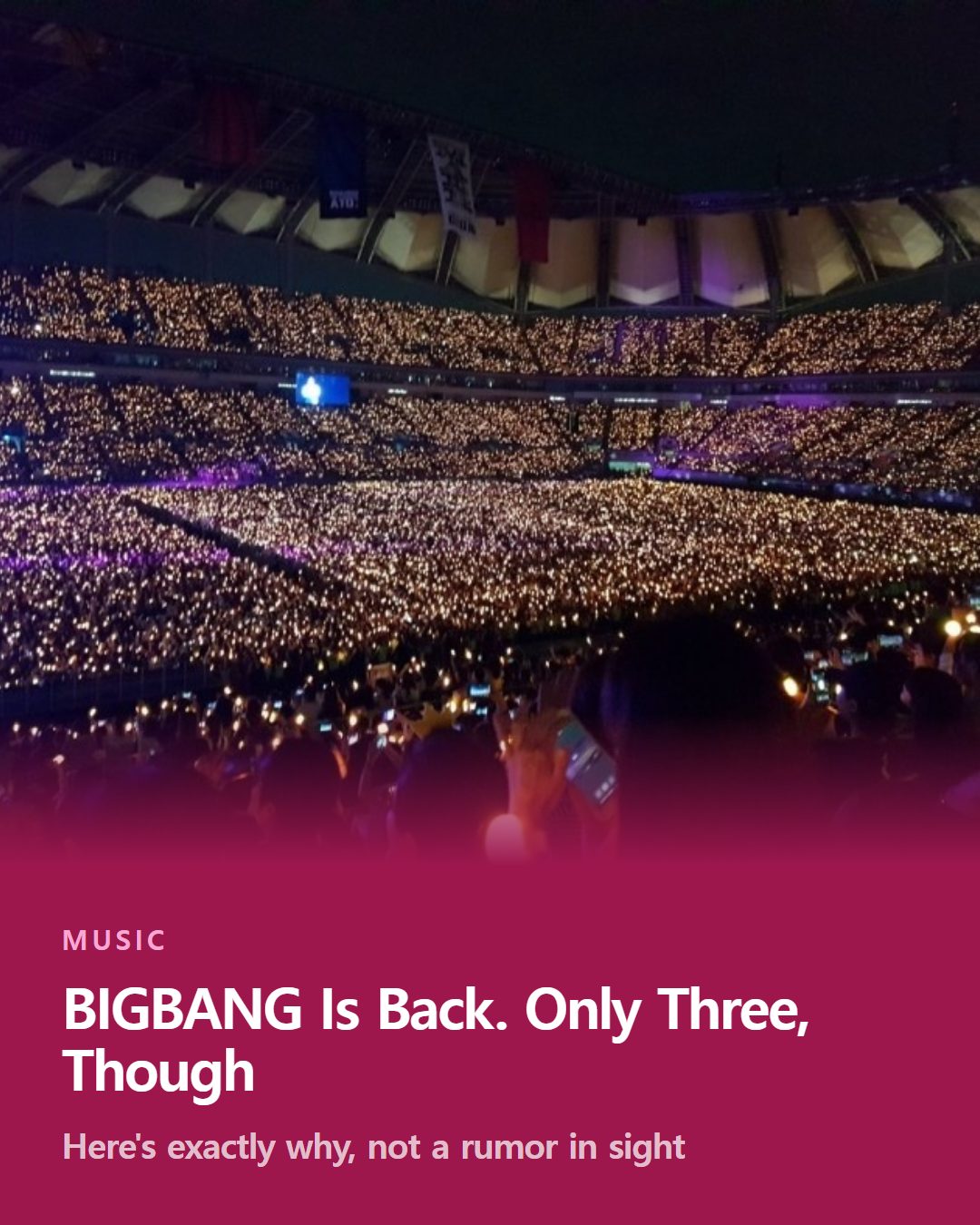
In August 2026, the British band Massive Attack covered Seo Taiji and Boys' 1995 protest song "Regret of the Times" at Incheon's Pentaport Rock Festival. Onstage and online, the band called the cover an act of "continuity, revival and solidarity" with a song that once beat back government censorship — and a pointed jab that K-pop has since "become subjugated to capitalism and mass commodification."
The short version
- Korea capped agency contracts at seven years after TVXQ's 2009 lawsuit.
- Trainee debt can hit six figures before a group earns income.
- KOMCA songwriting credits now give some idols real ownership and royalties.
The performance reopened an argument international fans hear constantly but rarely see explained with facts: is a K-pop idol an artist, or a product engineered by a company? The industry has an actual answer to that, built out of contract law, court rulings, and songwriting credits — not just PR.
A protest song borrowed to make a point about profit
Seo Taiji and Boys' original 1995 track was itself a fight against corporate power. The band refused a government order to alter lyrics referencing corner-cutting corporate disasters, including the 1994 Seongsu Bridge collapse, and public backing for the band helped end South Korea's pre-release music censorship system entirely.
Massive Attack's cover, performed the same way in Korea, Japan, and Sweden, argued that the industry Seo Taiji helped liberate now polices itself for profit instead. The claim triggered real political fallout: a South Korean city councillor has since pushed for a government audit into the band over the performance.
Trainees don't get a salary — they get training debt
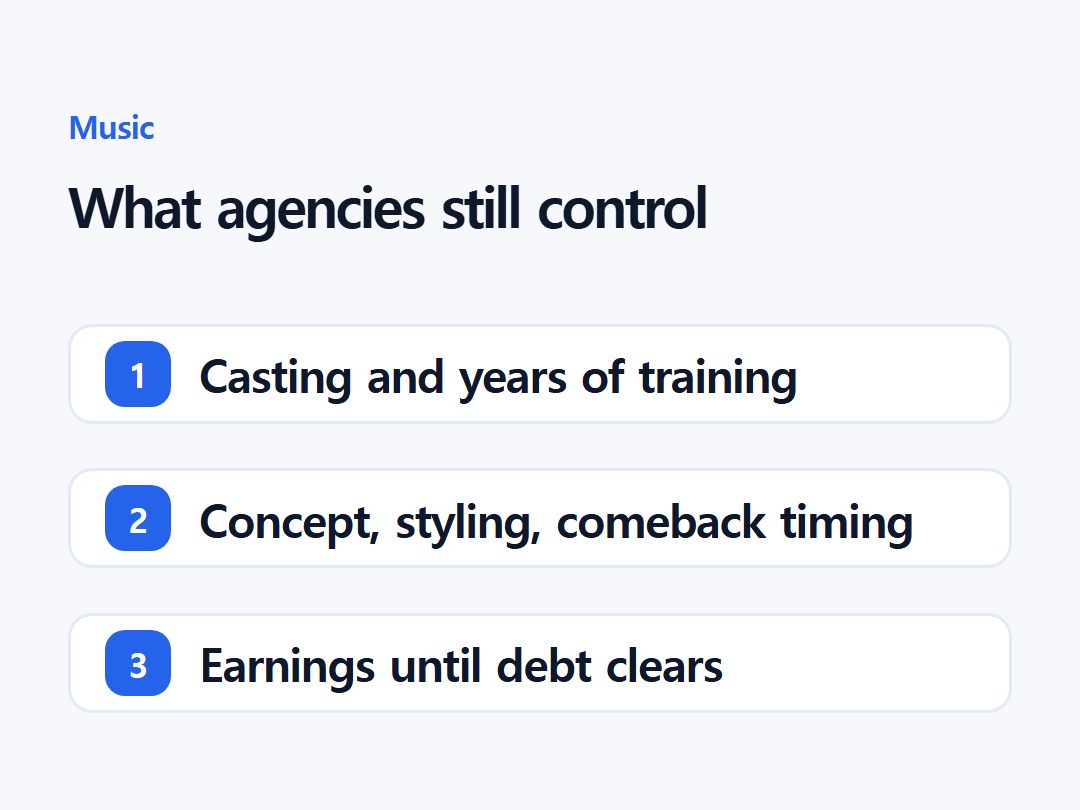
Before a single song is released, an agency has already spent heavily on an act: dance and vocal lessons, housing, styling, and produced but unreleased tracks. Under the industry's long-standing recoupment model, that spending becomes debt attached to the act, not a sunk cost absorbed by the company.
Estimates of that debt per debuting group commonly run from roughly $50,000 to several hundred thousand dollars, and until it is repaid, a rookie act may see little or no personal income even after a hit single. This is the mechanical basis of the "product" criticism: the group exists on the agency's balance sheet before it exists as a career for its members.
Even a debuting hit act can start in the red
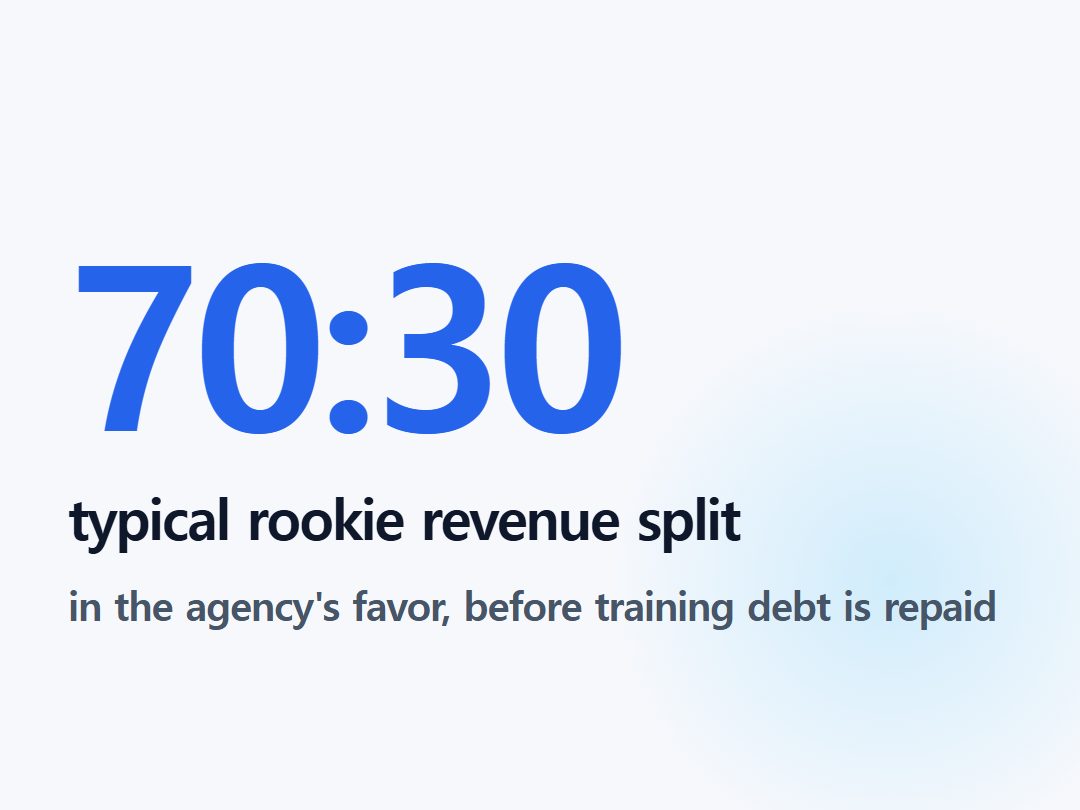
Rookie-era contracts typically split earnings around 70:30 in the agency's favor, narrowing toward 30–50% for the group as members prove profitable and debt clears. A seven-member group's cut of a single event fee, once divided, can amount to a few thousand dollars per member — before tax and before any remaining debt is deducted.
The clearest historical example is TVXQ. Court-related accounts from their 2009 dispute with SM Entertainment describe the group receiving between roughly 0.4% and 1% of album sales under a revised contract, with bonuses tied to sales thresholds rather than a straightforward profit share.
A 2009 lawsuit produced the industry's only hard limit
Three TVXQ members sued SM Entertainment in 2009 over what they called an effectively 13-year contract, running through military service to near-retirement age. The case did not conclude that the contract was unlawful — it was settled in 2012 — but it forced regulatory change well before that.
Korea's Fair Trade Commission revised its standard entertainment contract in December 2009 and, through the 2014 Popular Culture and Arts Industry Development Act, capped exclusive contracts at seven years. New rules taking effect January 2026 go further, adding a statutory duty of care requiring agencies to provide counseling and psychiatric access for trainees and artists.
What changed on paper
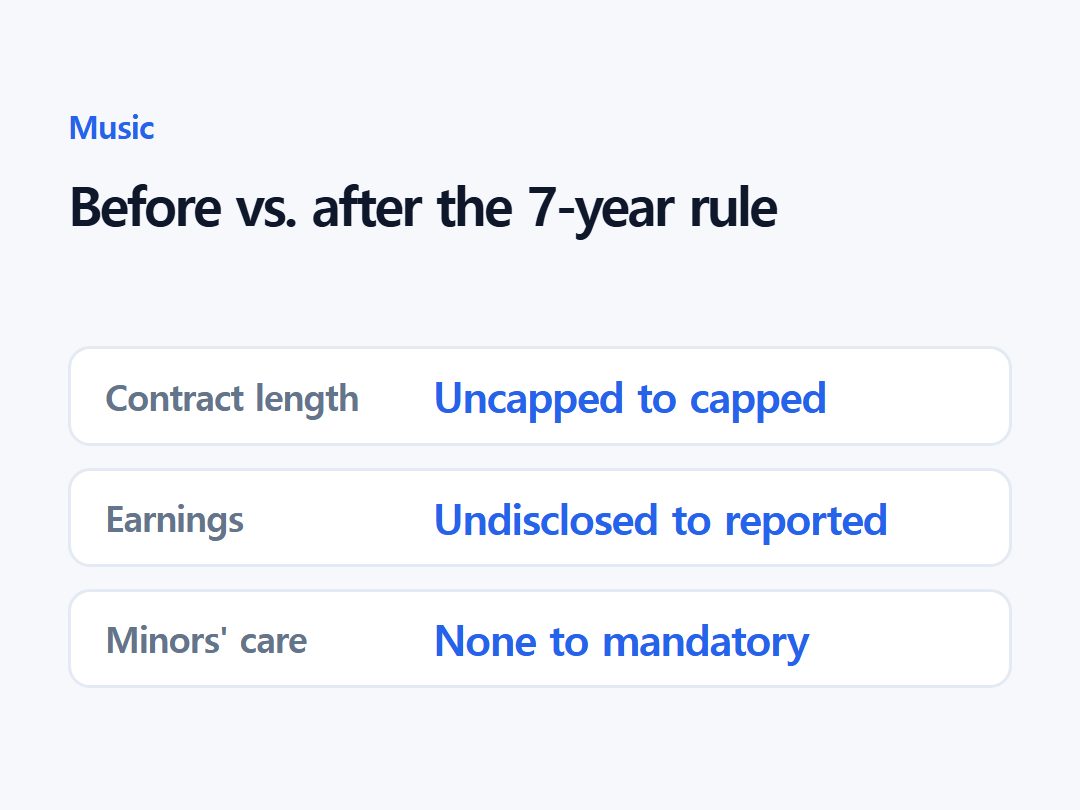
- Contract length: previously open-ended, now capped at seven years
- Earnings disclosure: agencies must now report revenue and expenses to artists
- Minors' welfare: 2026 rules add mandatory mental-health support for trainees
The industry's counter-argument: idols who write their own hits
Agencies increasingly point to a specific class of artist as proof the "product" label is outdated: idols with real songwriting credits registered through the Korea Music Copyright Association, or KOMCA — the body that verifies who actually wrote and produced a song.
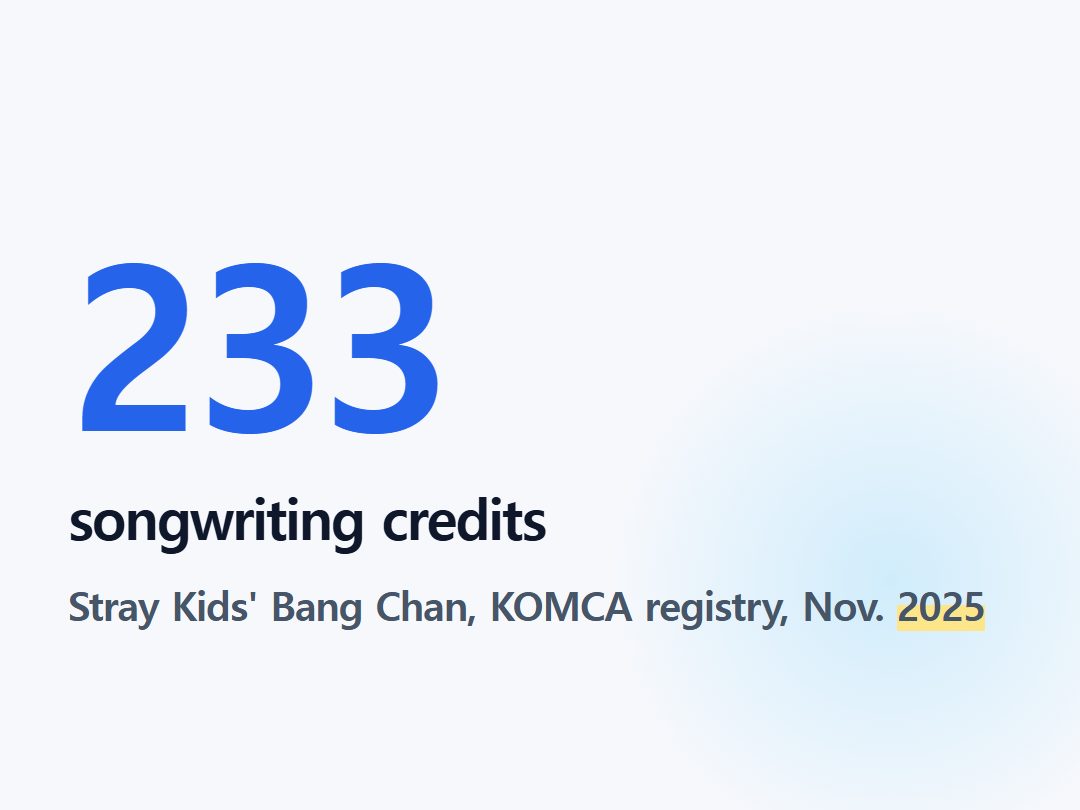
Stray Kids' Bang Chan holds 233 KOMCA credits as of November 2025, ranking him among the most-credited songwriters in K-pop history; bandmate Han became KOMCA's youngest member in 2023 and has since logged 196 credits. BTS's Suga reached 136 credits by 2022. These are not honorary titles — KOMCA credits carry royalties, meaning the artist is legally recognized as a co-owner of the work.
Some agencies have built an entire brand identity around this. Thirteen-member group SEVENTEEN, under HYBE label Pledis Entertainment, markets itself officially as a "self-producing idol group": member Woozi leads production on most of the discography, and the group's three internal units — vocal, performance, and hip-hop — divide creative work among members rather than leaving it entirely to outside producers.
Scholars say the assembly-line image misses half the picture
The framework much of the modern industry runs on traces back to SM Entertainment founder Lee Soo-man's "cultural technology" manual from the late 1990s, a set of documented steps for training, styling, and marketing acts for export — the origin of the "manufactured pop" reputation.
It is worth noting that hired songwriters and label-driven image control are not unique to Korea — Motown's house producers and modern hitmakers like Max Martin have long written for Western pop acts too. What sets K-pop apart is how openly the training pipeline is documented and marketed, which makes the corporate machinery visible in a way Western labels rarely expose.
A 2026 ethnographic study in the journal Global Studies pushes back on reading that system as a pure factory line, arguing it flattens the industry into an "orientalist" cliché of exploited labor on a conveyor belt.
The researchers instead describe a "funnel production ecosystem," where resources concentrate on a small number of acts with genuinely uncertain commercial outcomes — closer to film development than mass manufacturing.
A live lawsuit is testing who actually controls a group
The clearest ongoing test of the "who's really in charge" question is the fight between HYBE and Min Hee-jin, the producer who built girl group NewJeans as CEO of its label, ADOR. HYBE removed her from that role in 2024, alleging she tried to seize control of the label; Min countered that HYBE had undervalued and interfered with the label she built.
NewJeans itself was pulled into the fight, announcing an exit from ADOR in solidarity with Min before a court ruled in October 2025 that their contracts remained valid. In February 2026, a Seoul court sided with Min on a separate shareholder dispute, awarding her roughly $17.4 million and rejecting HYBE's claim that she had breached her agreement — a ruling HYBE has since appealed.
What the industry's own conduct still undercuts
The "idols as artists, not products" argument took a direct hit in October 2024, when a leaked internal HYBE document containing disparaging commentary about rival idols' appearances surfaced during a National Assembly audit. CEO Lee Jae-sang apologized publicly and removed the executive responsible.
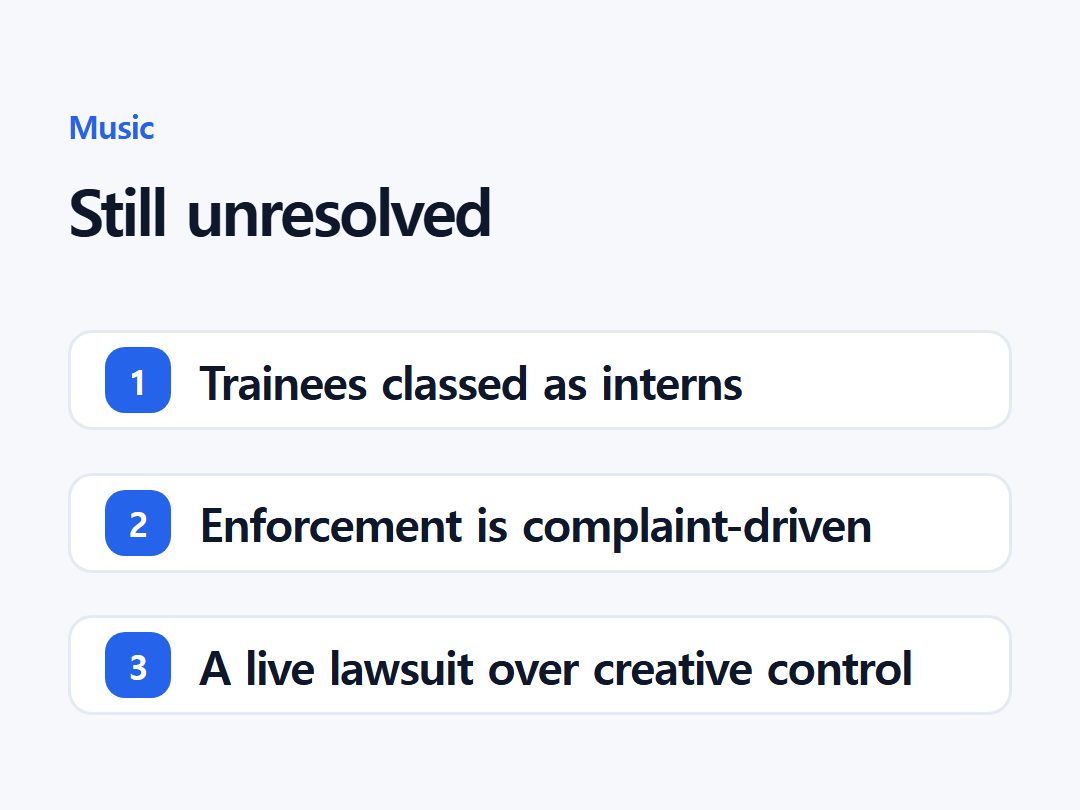
Structural gaps remain even after the 2026 reforms. Trainees are still generally classified as interns rather than employees under Korean labor law, and enforcement of the standard contract rules depends largely on individual complaints rather than proactive inspection — meaning protection on paper does not guarantee protection in practice.
What the record actually shows is a system in transition rather than a settled answer either way: real financial leverage still favors agencies in the early years, but court rulings, KOMCA credit rolls, and disputes like Min Hee-jin's have all narrowed the gap between "product" and "artist" since 2009 — without closing it.
How Korea's standard entertainment contract rules changed
| Rule | Before | After |
|---|---|---|
| Contract length | Previously open-ended | Capped at seven years |
| Earnings disclosure | Not required | Agencies must report revenue and expenses to artists |
| Minors' welfare | No mandated support | 2026 rules add mandatory mental-health support for trainees |
Frequently asked
Do K-pop idols get paid a salary?
Not upfront — trainees accrue training debt for lessons, housing, and styling that agencies recoup from future earnings, so even a debuting hit act can start out with little personal income.
How long can a K-pop contract last?
South Korea's 2014 Popular Culture and Arts Industry Development Act caps exclusive contracts at seven years, a limit that followed TVXQ's 2009 lawsuit against SM Entertainment.
Do K-pop idols actually write their own songs?
Some do — Stray Kids' Bang Chan has 233 KOMCA songwriting credits and BTS's Suga reached 136, credits that carry royalties and legal recognition as a co-owner of the work.
Sources
Every factual claim above is traceable. We do not translate articles — we gather facts from multiple outlets and write them ourselves.
- Watch Massive Attack cover 'Regret of the Times' by Seo Taiji and Boys — NME
- Massive Attack's tribute to Seo Taiji draws censorship fight of its own in Incheon — The Korea Times
- Massive Attack deliver history lesson on K-pop's roots in political protest — The Conversation
- The K-pop status shuffle: producers, power and reinvention — Cornell Chronicle
- South Korea Enforces 'K-Pop Prevention of Unfair Practices' Standard Contracts — Lawzana
- South Korea Updates K-pop Trainee Contract Rules — Outlook
- Here's How Badly TVXQ Was Paid During Their Peak With SM Entertainment — Koreaboo
- Stray Kids' Bang Chan Becomes the 2nd Most-Credited Idol in KOMCA History — allkpop
- HYBE's Bang Si-hyuk on the creation of BTS: 'I didn't want them to be false idols' — NME
- Cultural technology — Wikipedia
- Cultivating A&Rs in K-pop: The Funnel Production Ecosystem in the Contemporary Popular Culture Industry — Global Studies (University of Michigan)
- Min Hee-jin and Hybe's legal battle grinds on — even as NewJeans exit fight — The Korea Herald
- Former NewJeans EP Min Hee Jin Wins $18 Million Court Battle Against HYBE — Forbes
- HYBE CEO issues apology for controversial leaked internal reports — NME
- 5 things to know about K-Pop's Seventeen ahead of Dubai debut — Gulf News