CLC debuted in March 2015 as a five-member act under Cube Entertainment, the agency behind 4Minute and BEAST. Two more members, Elkie and Eunbin, joined a year later.
By the time the group quietly stopped promoting in 2020, fans and critics had spent years arguing about why a group with real vocal and dance talent never broke through in Korea. The usual answer splits into two camps: the agency mismanaged them, or the group's own constant concept-switching confused audiences. The record shows those two explanations are not actually separate.
The short version
- Cube dropped the trap sound after "Hobgoblin" hit No. 4 on Billboard's chart.
- Cube reassigned CLC's finished song "La Vie en Rose" to newly debuting IZ*ONE.
- Members' contracts lapsed one by one after Cube pushed solo careers over the group.
Seven Members, One Long Unwind
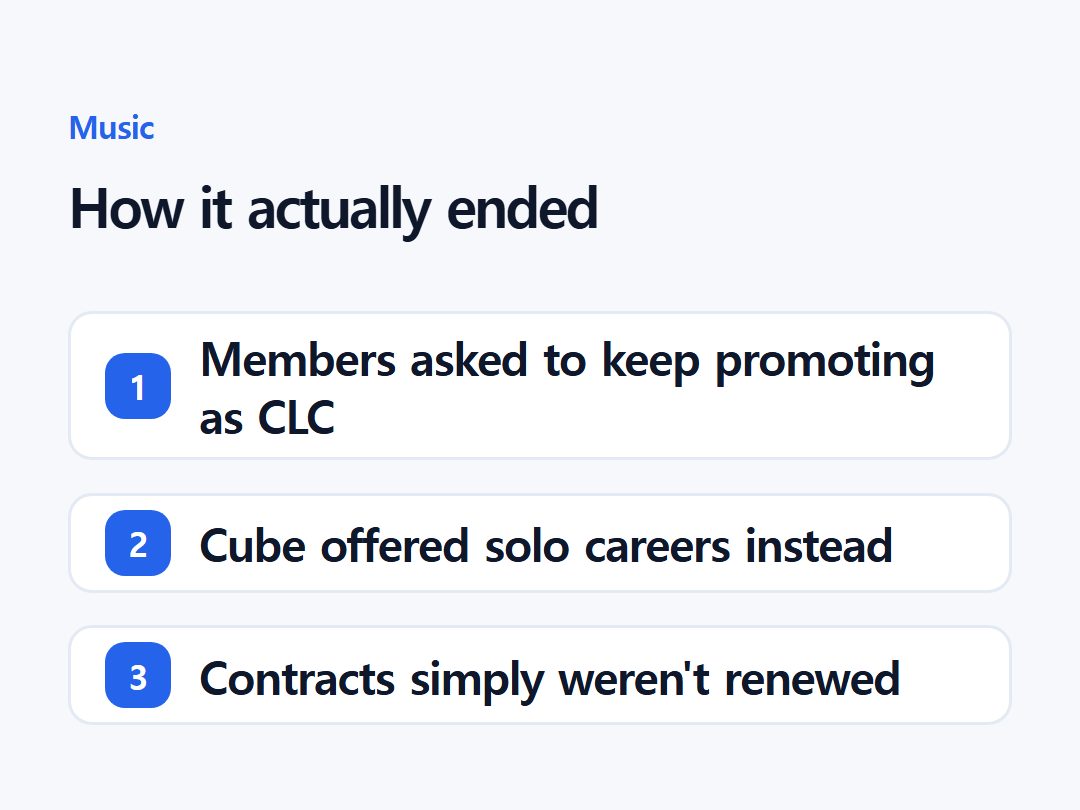
CLC didn't disband in a single announcement. It came apart member by member over roughly fifteen months. Elkie left first, in February 2021, after asking to terminate her contract over what she described as the agency's lack of support.
Sorn's exclusive contract expired in November 2021 with no renewal. Seungyeon and Yeeun followed in March 2022 when their own contracts ran out. Yujin had already moved on, joining the group Kep1er after winning the survival show Girls Planet 999.
Cube Entertainment confirmed on May 20, 2022 that CLC's "official activities" had ended, closing the group's fan site the following month.
A Girl Group That Rebranded Almost Every Year
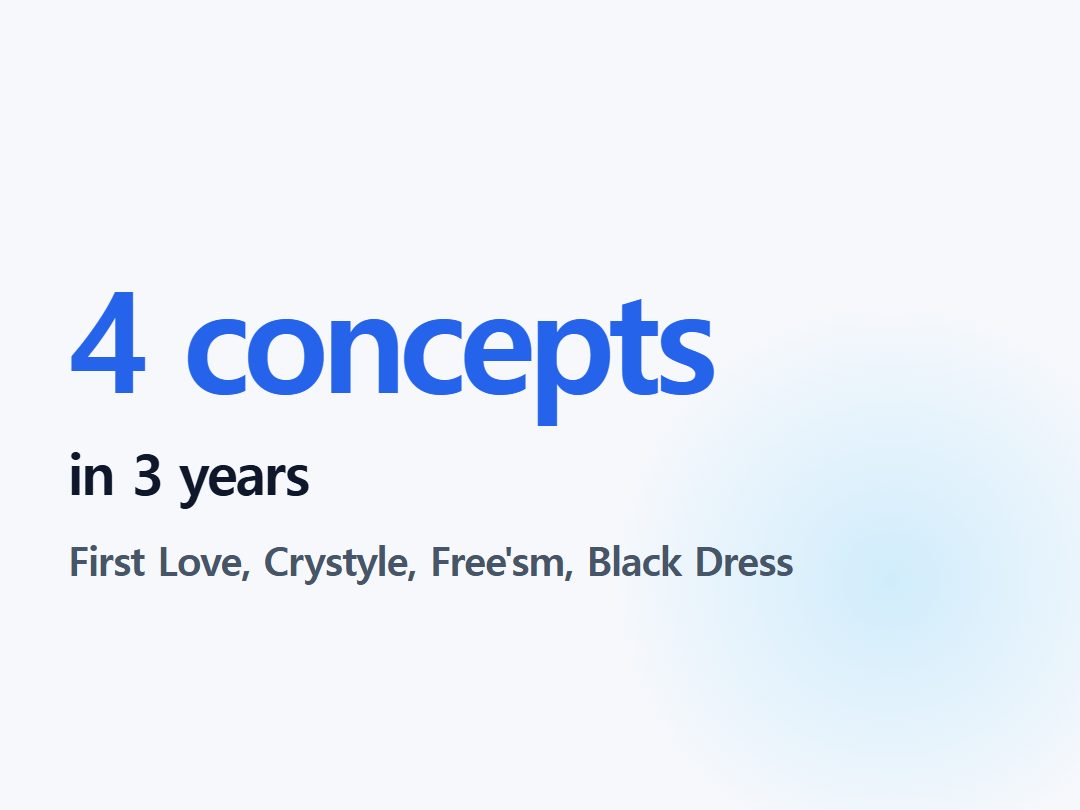
CLC's discography reads like a list of different groups. The 2015 debut, First Love, drew on 1990s girl-group nostalgia. Two years later, Crystyle introduced a harder trap-and-EDM sound with the single "Hobgoblin," co-written by former Cube labelmate HyunA.
Then came Free'sm, which pulled back toward the softer 1990s influence again, followed by 2018's Black Dress, pitched by the agency as a "chic and charismatic" mature concept.
Four distinct visual and musical identities in three years is unusual even by K-pop standards, where a "comeback" — a new single or album release from an already-debuted act — typically resets a group's image each cycle, but rarely this drastically.
The Trap Song That Broke Through, Then Vanished
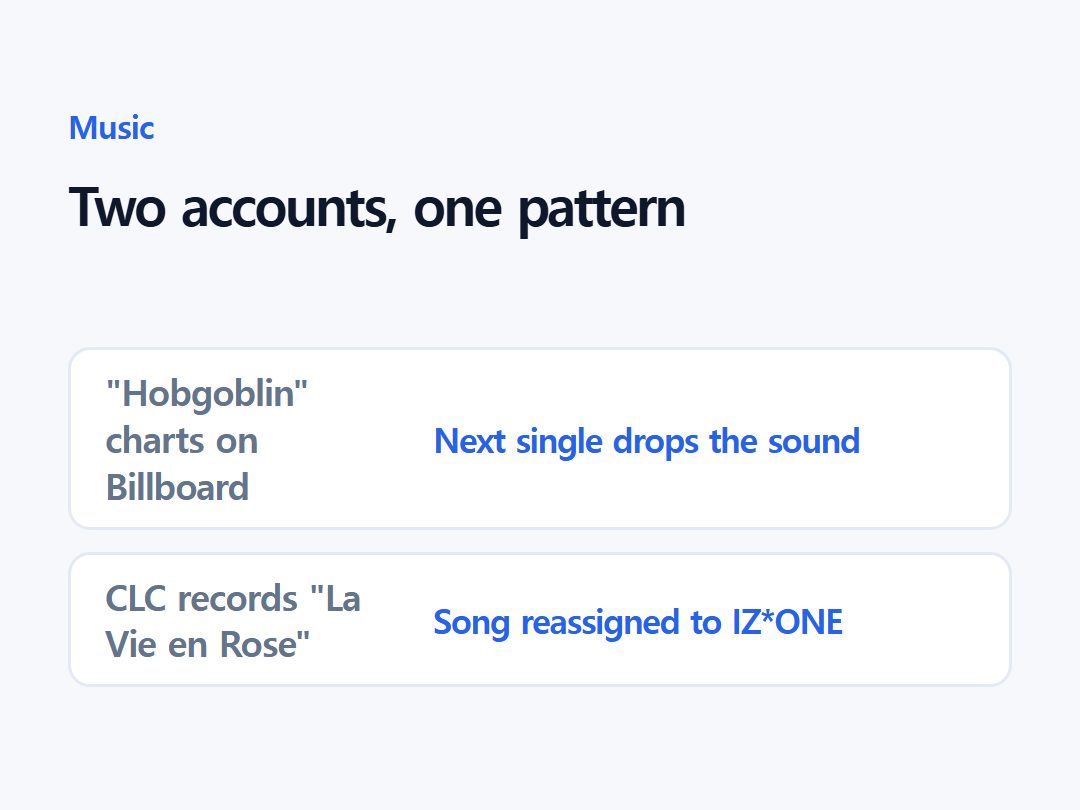
"Hobgoblin" became CLC's first track to chart on Billboard's US World Digital Songs chart, peaking at No. 4, even though it didn't chart at home in Korea. It was the clearest signal the group had found an international audience.
Cube didn't build on it. The next release moved away from the trap sound that had just worked, and the harder-edged direction was largely dropped from later comebacks. A group that had just found a lane in the international market was steered out of it before the lane had time to pay off.
A Roster Built for a Global Audience Korea Barely Saw
Part of why "Hobgoblin" charted internationally before it charted at home traces back to CLC's lineup itself. Sorn is Thai, Elkie is from Hong Kong, and the group's promotional reach extended into Southeast Asian and Chinese-speaking markets from early on — a multinational makeup increasingly common at K-pop agencies chasing audiences beyond Korea.
That built-in international fanbase is part of why CLC's Billboard placements and Japanese-language releases kept landing even as domestic chart performance stayed weak. It also explains why the loudest complaints about Cube's handling of the group came from overseas fans and outlets first — the audience most invested in CLC succeeding was, for years, the one furthest from Cube's Seoul headquarters.
A Song Recorded, Then Handed to a Different Group
In 2018, CLC began teasing a comeback built around rose imagery. The teasing stopped abruptly. The song, "La Vie en Rose," written by Cube's in-house MosPick production team, was reassigned to the newly debuting IZ*ONE instead — a group formed through the survival show Produce 48 and given a heavy promotional push from the start.
Fan-uploaded footage later surfaced showing IZ*ONE's choreography set to what were audibly CLC's own recorded vocals, confirming CLC had finished the track before it was taken away. CLC released a different song, "No," instead. Elkie later confirmed the song had been pulled from them and called it an opportunity that belonged to CLC.
Elkie raised a second, quieter complaint in the same interview: CLC's comebacks were simply too infrequent, sometimes a full year apart. In an industry where staying visible depends on a steady release schedule, a gap that long is its own kind of erasure, regardless of what any single comeback looks like.
What Members Say Happened Behind the Curtain
In a 2022 interview, Sorn described the trainee system that shaped CLC before debut: practice rooms monitored by CCTV, and a "warning sticker" system where trainees seen as underperforming were marked, with five stickers resulting in dismissal from the agency.
This kind of pre-debut training period — where hopefuls live under company supervision for months or years before ever performing publicly — is standard across Korean agencies, not unique to Cube.
Sorn said that once CLC debuted, the same lack of input continued. Members had no say over songs, choreography, or outfits — decisions came from the company regardless of what had worked before or what fans responded to.
The Members Fought For Creative Control, and Still Lost
According to Sorn, the group eventually pushed back. Frustrated with performing material they disliked, the members agreed among themselves not to simply follow whatever the agency handed them, and began pitching their own concept ideas directly to Cube.
Some of the results, including "Hobgoblin" and "Black Dress," came out of that pushback and drew some of the group's best reception. But the wins were inconsistent, and the underlying pattern — concepts imposed or reversed without member buy-in — never fully changed.
The Contract Term That Actually Ended the Group
The final break wasn't about a single bad comeback. When members' contracts came up for renewal, they told Cube they wanted to keep promoting as CLC. The agency's counteroffer was different: it wanted to move members into solo careers instead of continuing the group.
For members who had spent years fighting to perform together on their own terms, an offer to work solo instead of as CLC removed the reason to stay. That is the point at which contracts stopped being renewed, one member at a time.
How Cube Announced the End
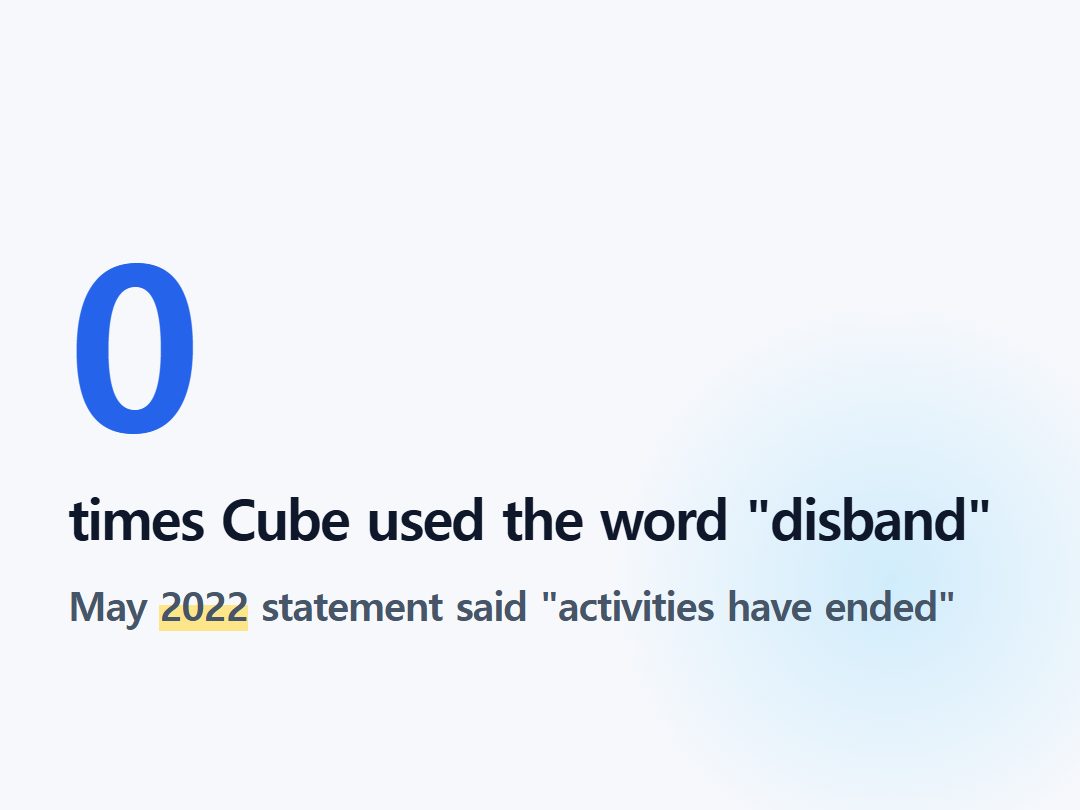
Cube's official statement, released May 20, 2022, thanked fans for "always loving and supporting CLC over the last seven years" and confirmed that "CLC's official activities have ended," with the group's global fan platform shutting down on June 6.
The wording never used the word "disband." That phrasing turned out to matter more than it seemed at the time.
Why CLC Says They Never Actually Disbanded
In 2023, Sorn pushed back publicly on the word "disband," saying the members were simply pursuing individual paths rather than ending the group outright.
That framing held up: in February 2025, she confirmed the members would reunite for CLC's tenth anniversary, and in June 2026 the group announced an eleventh-anniversary concert in Taiwan titled "After All," with all original members except Yujin, now active with Kep1er, taking part.
What remains unresolved is whether the reunion changes the underlying account members have given: that CLC's shifting concepts weren't the cause of its struggles so much as a symptom of members never being allowed to hold one identity long enough to see if it worked.
The reunion doesn't undo the seven years that came before it, but it does let the members write a coda on their own terms — something the group itself was rarely given control over the first time around.
CLC's Four Concepts In Three Years
| Album | Concept |
|---|---|
| First Love (2015) | 1990s girl-group nostalgia |
| Crystyle (2017) | Trap-and-EDM sound ("Hobgoblin") |
| Free'sm | Softer 1990s influence, pulled back |
| Black Dress (2018) | Chic and charismatic mature concept |
Frequently asked
Why did CLC disband?
CLC never formally disbanded — members' contracts simply expired one by one starting in 2021 after Cube offered solo careers instead of renewing the group, and Cube confirmed 'official activities' had ended on May 20, 2022.
Why did CLC give 'La Vie en Rose' to IZ*ONE?
Cube's in-house MosPick team wrote the song for CLC, but reassigned it to the newly debuting IZ*ONE before release, even though CLC had already recorded the vocals.
Is CLC getting back together?
Sorn confirmed in February 2025 that the members would reunite for CLC's tenth anniversary, and in June 2026 the group announced an eleventh-anniversary concert in Taiwan with all original members except Yujin, who is now in Kep1er.
Sources
Every factual claim above is traceable. We do not translate articles — we gather facts from multiple outlets and write them ourselves.
- Cube Entertainment Announces CLC's Disbandment — Soompi
- CLC (group) — Wikipedia
- Hobgoblin (song) — Wikipedia
- Song Review: CLC – Hobgoblin — The Bias List
- The Controversy Surrounding CLC, IZ*ONE And "La Vie En Rose" — JazmineMedia
- Elkie (ex-CLC) talks K-pop hardships, Cube's lack of support — Asian Junkie
- Sorn Gets Real About CLC Disbandment, Mistreatment Under CUBE Entertainment, And More — Koreaboo
- CLC's Sorn clarifies that the group "did not disband" — NME