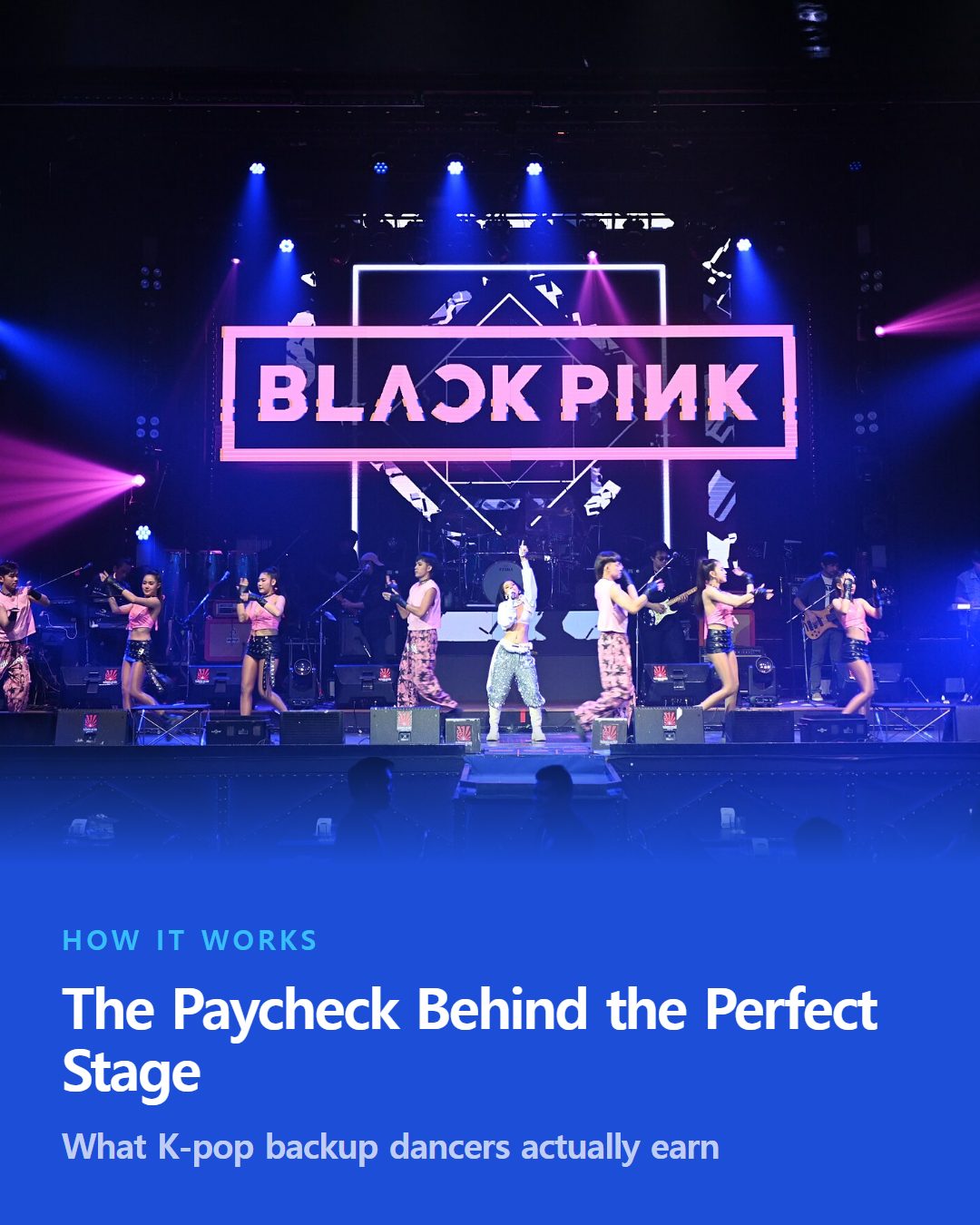
A K-pop "comeback" — the industry term for a group's return with new music — looks seamless on screen: a dozen or more dancers moving in perfect sync behind the idols, cameras cutting to close-ups, fan clips circulating within minutes. None of that choreography's economics show up on camera.
The short version
- A K-pop backup dancer earns about $60–$75 per broadcast, split among the crew.
- Nearly all are freelancers, so agencies skip payroll taxes and injury insurance.
- No royalty system pays choreographers when their routines go viral online.
Jang Mi, a choreographer who later trained IVE's Wonyoung and other contestants on the survival show Produce 48, spent her early career backing KARA, Brown Eyed Girls and T-ara. She told the outlet Heyday her crew was paid about ₩70,000 (roughly $53) per broadcast episode, split evenly among the team.
After the split, she was left with ₩30,000 to ₩40,000 — before covering her own transport and meals.
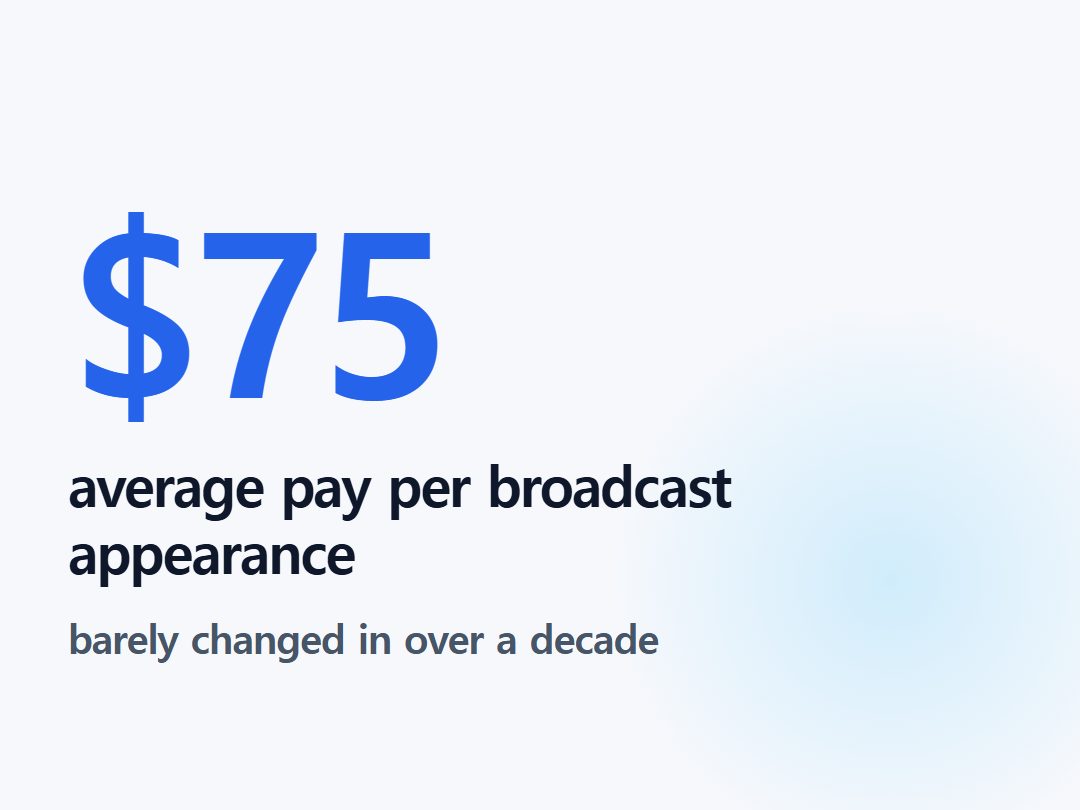
A broadcast appearance still pays about $75
That interview describes conditions from more than a decade ago, but the baseline hasn't moved much. Reporting by Edaily and OhmyNews puts the standard fee for a single music-show appearance today at ₩80,000 to ₩100,000 per dancer — roughly $60 to $75.
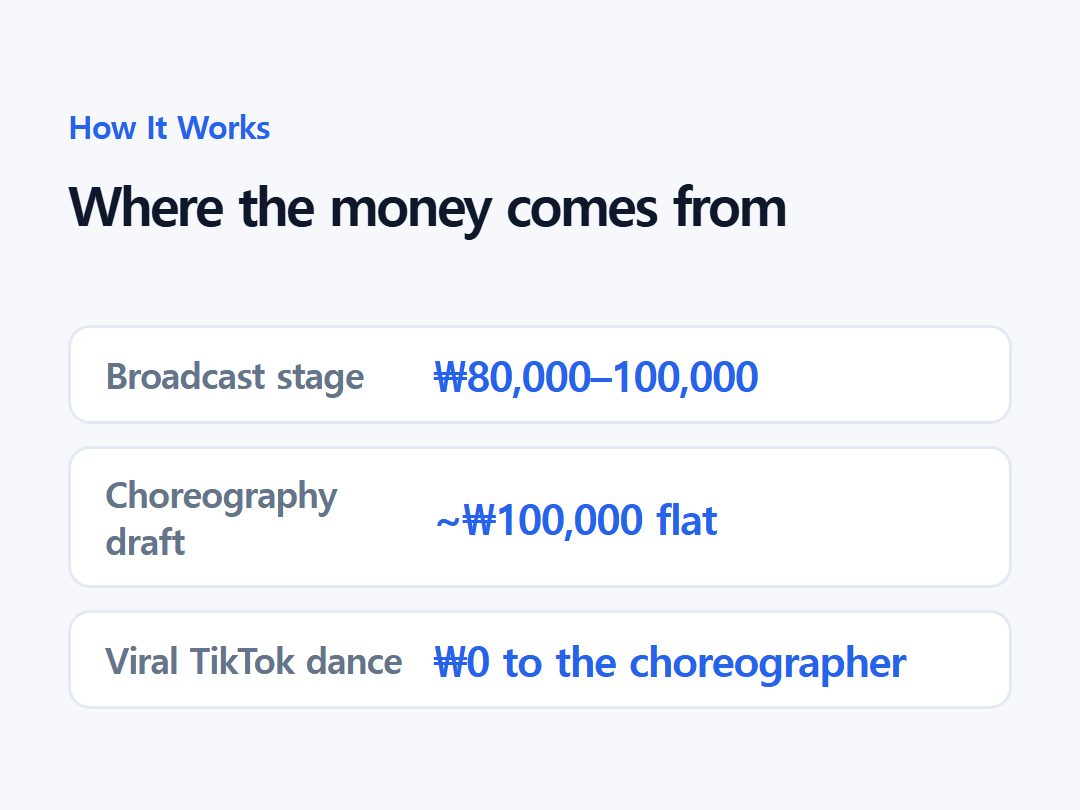
Choreography design work pays about the same flat rate regardless of effort. Building the routine a group performs across an entire promotion cycle typically earns a team around ₩100,000, whether the process takes five hours or twenty, according to OhmyNews.
| Type of work | Typical pay |
|---|---|
| Music-show broadcast appearance | ₩80,000–₩100,000 per dancer, per show |
| Choreography draft (안무 시안) | ~₩100,000 flat, for 5–20 hours of work |
| Studio dance lessons | ~₩35,000/hour, or ~₩200,000/month fixed |
| Established choreographer, one music video | ₩8 million–₩10 million (rare) |
Group numbers compound the gap rather than closing it. When a 20-to-35-member "mega crew" rehearsed a full month for one televised mission, OhmyNews reported the group split ₩2 million total — about ₩50,000 per dancer once team leaders divided it.
How a company decides who dances behind the idol
Backup dancers rarely work alone. Most belong to a dance crew — a small studio or collective built around one or two choreographers — because without an existing network, a freelance dancer struggles to find work at all.
When a group has new music, its agency (the Korean entertainment company managing an idol's training, contracts and public activities) typically invites two or three crews to pitch a routine, known as an 안무 시안 (an-mu si-an), or "choreography draft." Whichever draft is chosen keeps the promotion cycle — the music-show stages, fan events, sometimes the tour.
Smaller agencies skip the pitch and simply book a crew per event. Either way, the dancers on stage are almost never on the agency's own payroll.
Contractors on paper, staff in practice
South Korean labor law splits workers into two broad categories: employees, entitled to the "four major insurances" (national pension, health insurance, employment insurance and industrial accident insurance), and freelancers, who receive none of them automatically.
Backup dancers are almost always classified as freelancers — paid per project, with no monthly salary and no guarantee of future bookings.
Industry sources cited by Weekly Today describe a specific arrangement they call a 턴키 계약 (turnkey contract) practice — a broadcaster or production pays one lump sum to a lead choreographer, who becomes solely responsible for hiring, paying and managing every dancer underneath them.
In effect, the broadcaster or agency directs the actual work — schedules, staging, revisions — while legal liability for the dancers sits with a freelancer one rung above them. If a dancer isn't paid, there is no employer of record to file a complaint against.
The classification also determines the bottom line for whoever is paying. Treating a dance team as freelance subcontractors, rather than staff, lets a broadcaster or agency skip payroll taxes and insurance contributions it would otherwise owe — the same incentive that has pushed South Korean labor regulators to scrutinize gig-style work across other industries in recent years.
Rehearsal doesn't count as billable time
None of the fees above include rehearsal. A choreography draft that takes twenty hours to build is still paid as one flat fee. A televised stage that requires a full day of blocking and camera run-throughs pays only for the few minutes actually broadcast.
Interviews collected by OhmyNews describe call times as early as 2 or 3 a.m. for broadcast recordings, with no separate transportation allowance and no pay for the hours spent waiting between rehearsal and air time.
Contracts, where they exist, are often verbal. One dancer told OhmyNews they lost ₩400,000 in unpaid fees when a mid-sized agency shut down with no paperwork proving what they were owed — and that even major idol agencies can delay payment by three to four months.
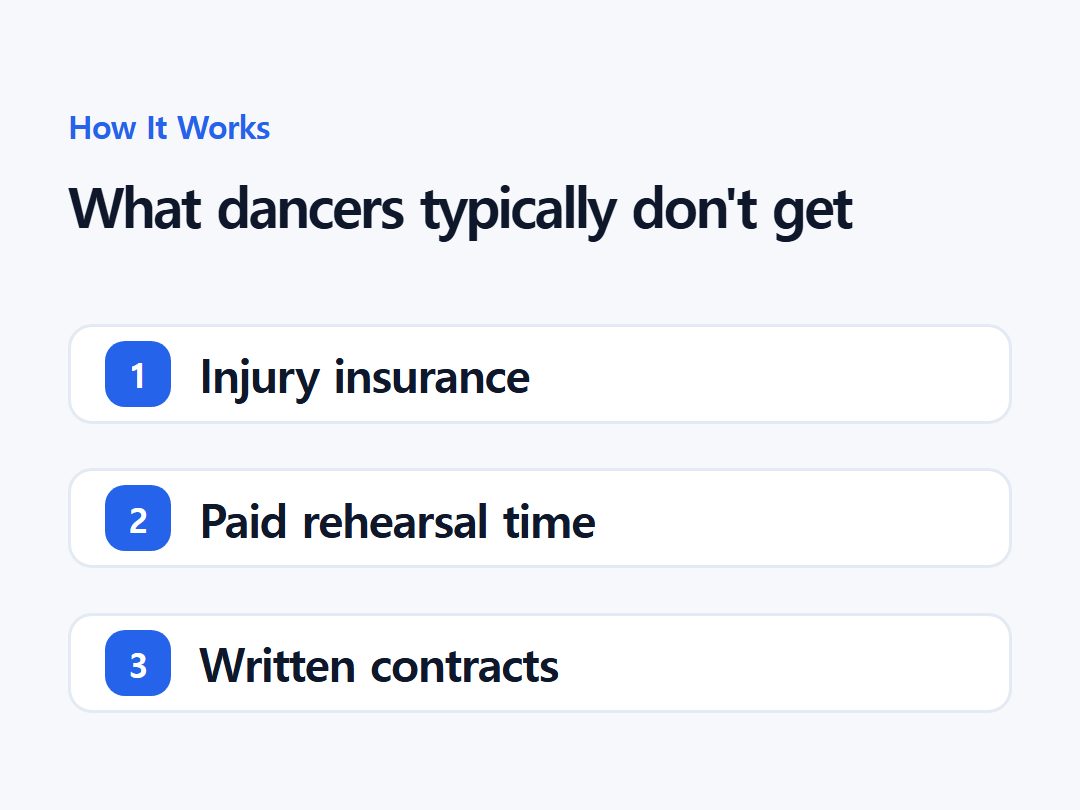
- No injury insurance or safety training for physically demanding stage work
- No pay for rehearsal, fittings or travel time
- No written contract at many small and mid-sized bookings
A routine can go viral and the dancer still isn't paid for it
Choreography has been legally recognized as copyrightable in South Korea since 2011, when the Seoul Central District Court ruled for the choreographer behind Secret's "Shy Boy," ordering a dance academy to stop teaching and profiting from the routine without permission. The Seoul High Court upheld that ruling on appeal in 2012.
The precedent didn't build an industry around it. Songwriters and composers collect royalties automatically through the Korea Music Copyright Association whenever a track streams, airs on broadcast or is used commercially. No equivalent collecting body exists for choreographers.
When a group's dance becomes a global challenge on TikTok or YouTube, the platforms route advertising revenue to whoever owns the music rights — not to the person who designed the moves millions of fans are copying.
Some choreographers have pushed back through the courts rather than wait for new rules. Disputes over uncredited use of a group's signature moves have become more frequent since 2021, though each case still has to prove originality on its own — there is no standing licensing system that pays out automatically the way music royalties do.
Street Woman Fighter raised a few paychecks, not the floor
The 2021 Mnet program Street Woman Fighter — a competition format, common across Korean entertainment, that pits contestants against each other through eliminations — turned professional dancers into recognizable names for the first time.
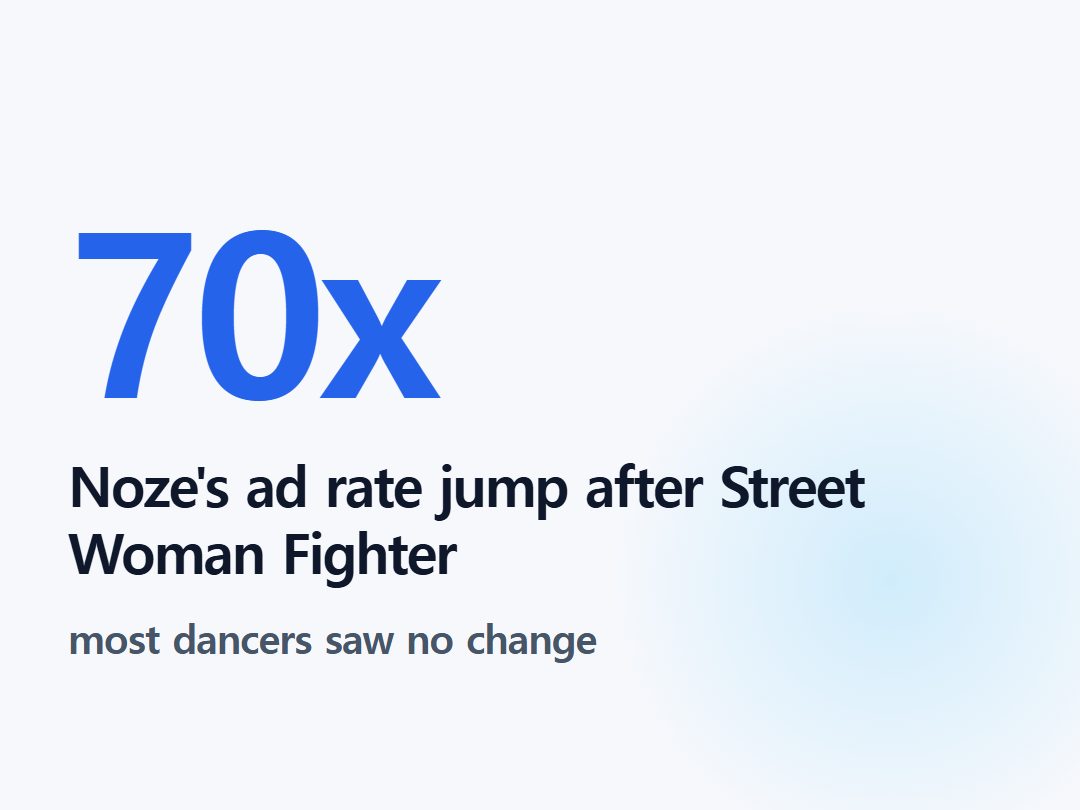
Contestant Noze said on the variety show Radio Star that her advertising fees rose roughly 70-fold after the show aired, and several castmates went on to modeling deals, magazine covers and their own fan followings.
But that windfall stayed with the handful of dancers the show made famous. "Interest in the dance scene has grown," one anonymous dancer told Edaily, "but the choreography and appearance fees paid to dancers with no connection to the show haven't changed at all."
The fixes that are already on the table
The visibility from Street Woman Fighter produced organized pushback. Choreographers formed an industry association in October 2021 to lobby for standardized contracts and clearer copyright terms across the field.
In 2023, South Korea's Ministry of Culture, Sports and Tourism named choreography protection one of four strategies in its copyright policy roadmap. The plan proposes a "name-display system" crediting choreographers on broadcast the way songwriters already are, plus a model standard contract for dancers and choreography teams.
What's still unresolved
None of those proposals is law yet. There is still no royalty-collection body for choreography, no mandatory injury insurance for freelance dancers, and no enforcement mechanism requiring agencies to use a written contract at all.
Until one of those pieces changes, what a K-pop backup dancer earns will keep depending less on how many people are watching the stage, and more on which side of the turnkey arrangement that dancer happens to be standing.
What K-pop dance work actually pays
| Type of work | Typical pay |
|---|---|
| Music-show broadcast appearance | ₩80,000–₩100,000 per dancer, per show |
| Choreography draft (안무 시안) | ~₩100,000 flat, for 5–20 hours of work |
| Studio dance lessons | ~₩35,000/hour, or ~₩200,000/month fixed |
| Established choreographer, one music video | ₩8 million–₩10 million (rare) |
Frequently asked
How much do K-pop backup dancers get paid per show?
Reporting by Edaily and OhmyNews puts the standard fee at ₩80,000 to ₩100,000 — roughly $60 to $75 — per dancer for a single music-show appearance.
Are K-pop backup dancers employees of the agency?
No, they're almost always classified as freelancers, paid per project with no monthly salary, no guaranteed future bookings, and none of Korea's four major insurances automatically.
Do choreographers get paid when their dance goes viral on TikTok?
No. Platforms route advertising revenue to whoever owns the music rights, not the choreographer, since no royalty-collecting body exists for choreography the way one does for songwriters.
Sources
Every factual claim above is traceable. We do not translate articles — we gather facts from multiple outlets and write them ourselves.
- K-Pop Choreographer Exposes The Low Pay Backup Dancers Receive For Performances — Koreaboo
- '알바'보다 못한 비정규직 '백업댄서' — Weekly Today
- 스우파로 빵 떴지만…댄서 출연료는 여전히 10만원 — Edaily
- "유명 아이돌 기획사마저..." 대박 난 '스우파' 참가자들 이렇게 산다 — OhmyNews
- '스우파'로 몸값 70배 오른 노제…가방도 275만원 명품이네 — Money Today
- "시크릿 춤 가르치지마" 판결, 방송댄스학원 '날벼락' — Money Today
- 전 세계가 K댄스 따라춰도…'안무 저작권'은 없다? — Hankyung