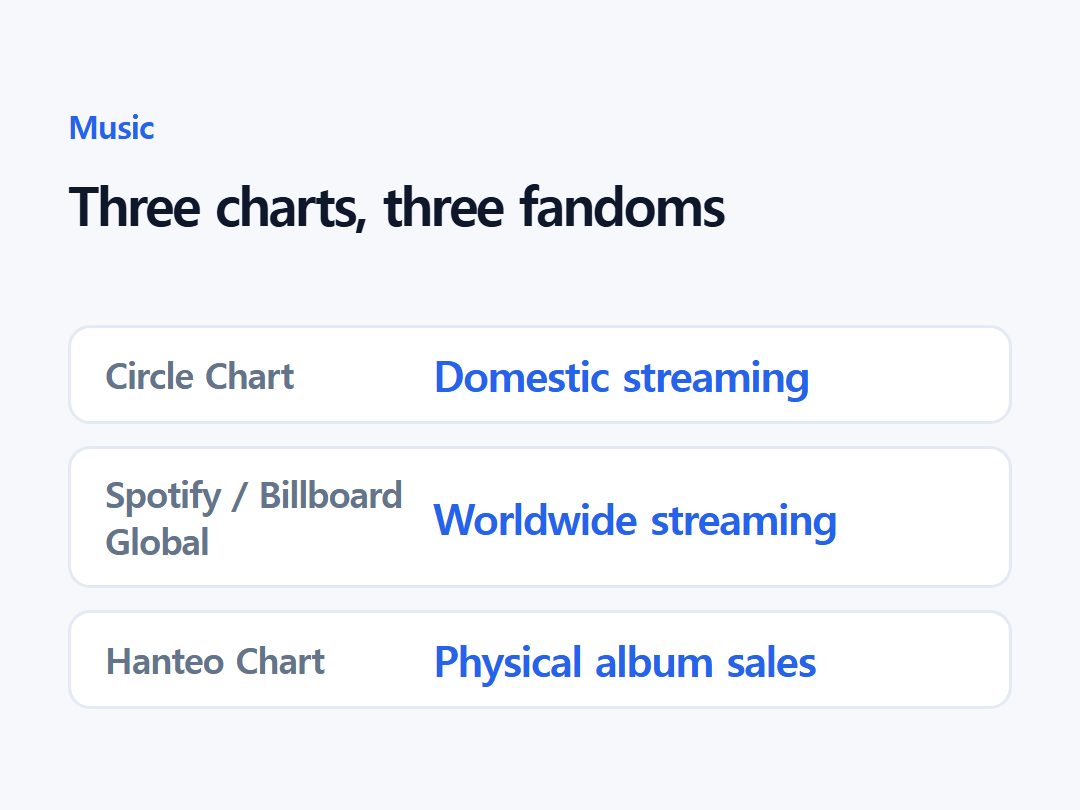
In the week of November 9–15, 2025, Circle Chart — the industry body that tracks how South Korea listens to music — counted only four K-pop idol tracks in its domestic Top 10. BLACKPINK's "JUMP" was one of them, months after the same song had already made the group the first K-pop act to top Spotify's Global Weekly chart twice.
The short version
- BLACKPINK topped Spotify's Global chart twice but missed Korea's own Top 10.
- Korean charts reward ballads and same-week domestic streaming, not global fame.
- Touring now earns agencies more than winning a domestic chart ever did.
That mismatch is not an accident. Korea measures a song's popularity with a different set of tools than the rest of the world does, and understanding those tools explains why a group can sell out stadiums on five continents while barely registering on the chart its own country checks every morning.
Three charts, three different fandoms
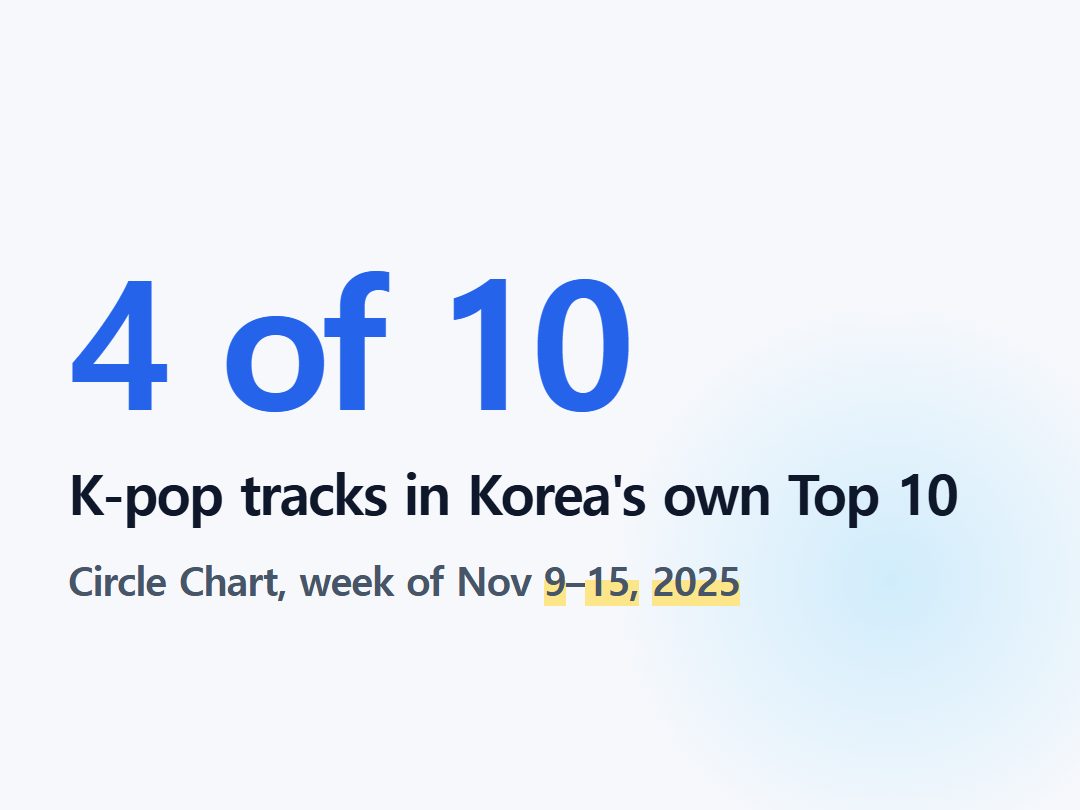
Three separate systems now describe how popular a K-pop act is, and they rarely move together. Circle Chart (the renamed Gaon chart) aggregates streaming, downloads and background-music plays from Korean platforms like Melon and Genie — a snapshot of what people inside Korea are playing that week.
Spotify's Global chart and the Billboard Global 200 instead count streams from listeners everywhere, weighted toward the markets where K-pop fandoms are largest. Hanteo Chart tracks something else again: physical album sales, a category still driven by bulk-buying fans rather than casual listeners.
A song can lead two of these systems and barely register on the third — which is exactly what happened with "JUMP."
The Top 10 Koreans scroll past every day runs on ballads
Circle Chart's weekly ranking is not really a K-pop chart; it is a general-audience chart that K-pop occasionally wins. Ballads have historically outperformed idol pop on Korean streaming.
Dal-yong Jin, director of the Transnational Culture and Digital Technology Lab at Simon Fraser University, argues the genre resonates because it "represents people's daily lives" in a way fandom-oriented idol lyrics do not.
Trot and K-drama soundtracks compete for the same slots. In 2021, trot singer Lim Young-woong topped the year's download chart while IU's ballad "Celebrity" led streaming — neither a K-pop idol act.
Singers like Lee Mujin and Gaho built careers on a single soundtrack placement, in Hospital Playlist and Itaewon Class respectively, and songs like theirs routinely outlast idol comebacks on the domestic chart.
A weekly music-show score rewards being in Korea that week
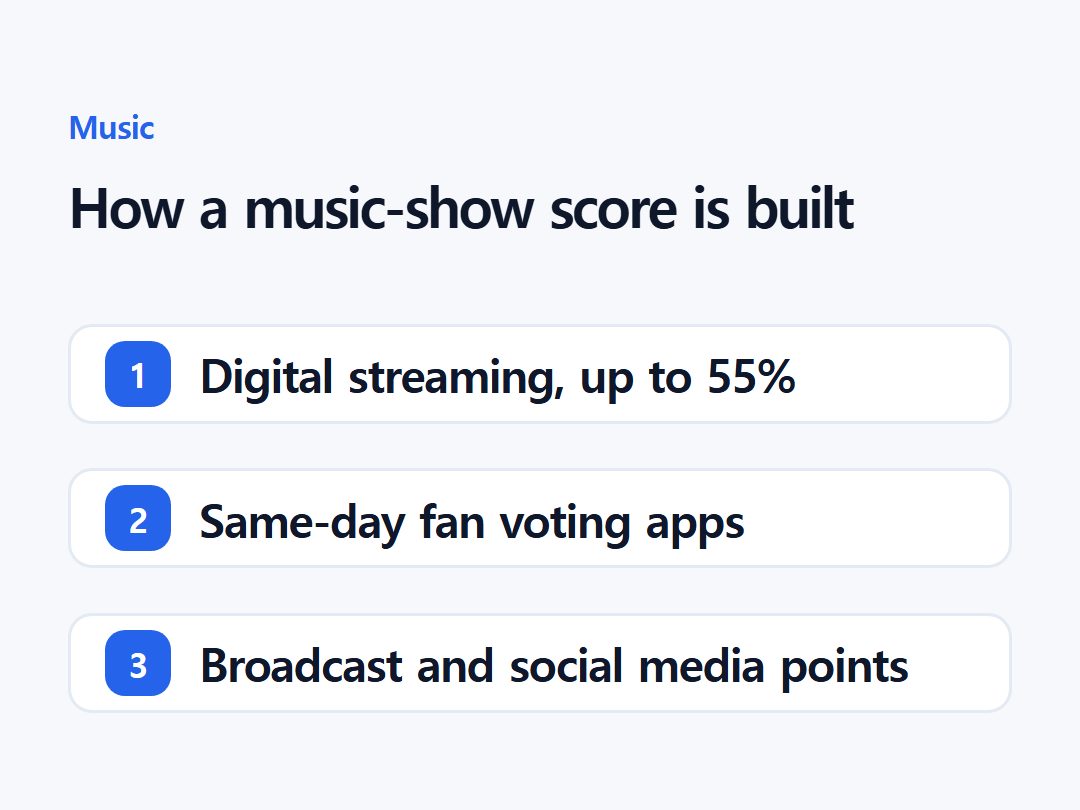
Korean television's weekly music programs — Inkigayo, Music Bank, Show! Music Core and The Show — each hand out a "win" using their own formula, and every formula leans on domestic, real-time activity rather than global reach.
- Inkigayo weights digital streaming at 55% and social media at 30%, with the rest split across sales, broadcast time and same-day fan votes cast through a Korean app
- Music Bank still folds physical album sales in alongside digital and broadcast points
- Show! Music Core reserves part of its score for a live viewer committee and SMS voting, both tied to being reachable inside Korea that week
None of these formulas count Spotify streams, Billboard positions or ticket sales from a stadium overseas. A group can be the biggest act on earth and still lose a weekday taping to a rookie act with a smaller, better-coordinated domestic fanbase.
Real-time charts were rebuilt specifically to punish streaming bursts
Melon, Korea's largest streaming platform, once updated its "real-time" chart every hour — a system fandoms learned to game by organizing mass-streaming "parties" during low-traffic overnight hours to spike a song to No. 1 briefly.
Melon abolished that hourly chart in July 2020, replacing it with "24Hits," which counted only one play per listener per song every 24 hours. In August 2021 it moved again to the current "TOP100," blending 24-hour and 1-hour usage in equal measure.
A Melon representative said the redesign was meant "to minimize attempts to artificially boost music rankings." It rewards songs with broad, sustained daily listenership inside Korea — the pattern ballads and soundtracks show, and short idol promotion cycles often do not.
BLACKPINK's last comeback skipped the scoring system on purpose
For its 2025 "DEADLINE" era, BLACKPINK did not run the usual comeback playbook of music-show appearances timed to a release date. YG Entertainment instead had the group debut its new song "JUMP" live and unreleased, at the opening night of its world tour in Goyang on July 5, 2025.
At that point the track existed nowhere else — not on streaming, not on any platform a domestic chart could count.
"JUMP" went on to make BLACKPINK the first K-pop group to top Spotify's Global Weekly chart twice, holding the top spot for six consecutive days. It did so without the group ever running the domestic broadcast rollout that determines a Korean music-show win.
The fandom still buys albums — just not through the chart that counts
None of this means Korean fans have stopped buying BLACKPINK's music. When the group's next album, "DEADLINE," was released in February 2026, it sold 1,461,785 physical copies worldwide on its first day, according to Hanteo Chart — a record for a female K-pop act.
Sales kept climbing, reaching about 1.77 million copies within the first week.
The distinction is what gets measured. Hanteo tracks physical sales, a category fandoms have always driven through bulk purchasing. It is the daily digital chart — the one an ordinary Korean listener scrolls past without buying anything — where idol groups now lose out to ballads and trot.
Concerts now pay agencies more than a chart win ever did
The business reason agencies have stopped chasing that domestic chart is straightforward: touring now makes more money. HYBE's concert revenue reached 763.9 billion won ($537.5 million) in 2025, up 69.4% year-on-year and nearly equal to its recorded-music revenue for the first time.
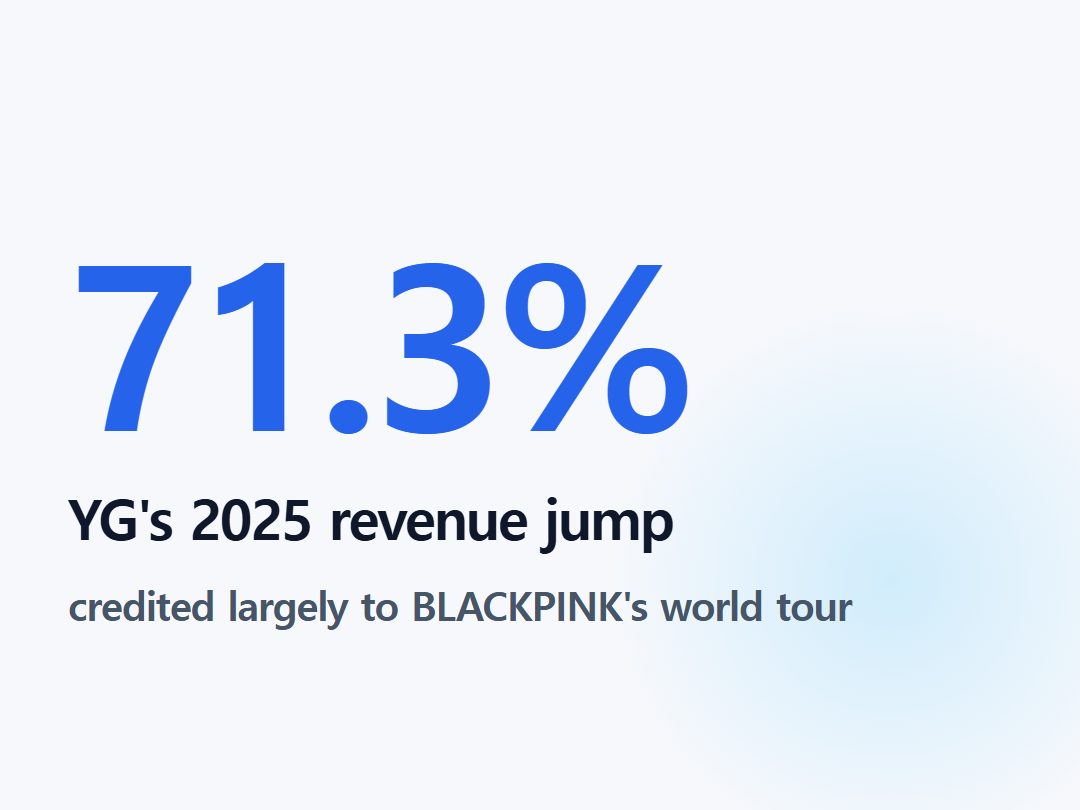
YG Entertainment's total 2025 revenue rose 71.3% to roughly $248 million, a jump the company credited largely to BLACKPINK's world tour. Winning a weekday taping of a Korean music show does not move an agency's bottom line the way a stadium tour does anymore.
Smaller labels are vanishing while the majors bet on touring
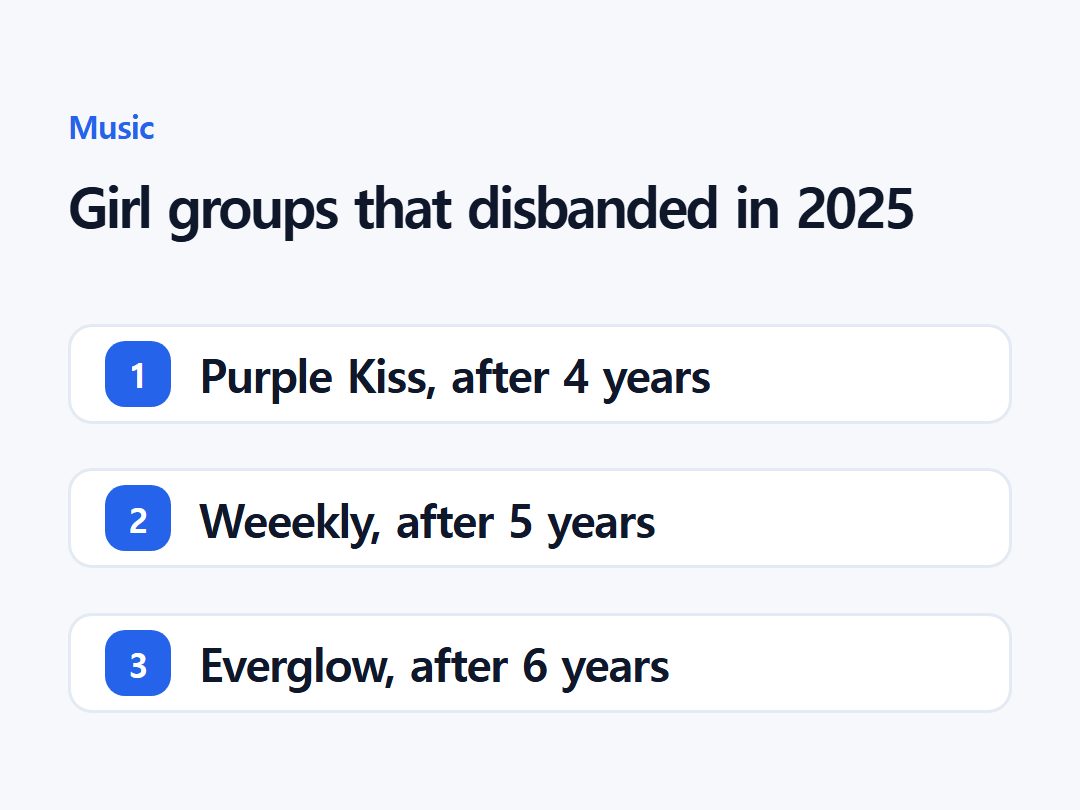
The shift toward a global-touring model has widened the gap between agencies that can fund it and those that cannot. Three girl groups ended their runs in 2025 alone, all before reaching the seven-year mark long treated as a standard K-pop contract length:
- Purple Kiss, whose agency RBW announced the group's breakup in August, with activities ending in November after four years
- Weeekly, whose members ended their exclusive contracts in February after five years
- Everglow, which disbanded in June after six years with Yuehua Entertainment
Industry coverage of the trend frames it as deepening polarization: as touring becomes the main growth engine, sustained visibility increasingly requires backing from one of the four largest agencies — HYBE, SM, JYP and YG — that can fund it.
What a Coachella-style festival is supposed to fix
HYBE, SM, JYP and YG have filed to form a joint venture for a large-scale music festival aimed at rivaling Coachella, with plans to launch in Korea before expanding into a global touring event. Part of the stated goal is to rebuild a shared domestic stage that idol acts currently lack.
Whether that festival closes the gap between global fame and domestic chart position is still an open question. For now, how successful a K-pop act looks depends entirely on which chart — and which country's fans — you ask.
Korea's three K-pop charts measure different things
| Chart | What it measures | Example from this era |
|---|---|---|
| Circle Chart (Gaon) | Streaming, downloads, background-music plays on Korean platforms like Melon and Genie | Only 4 K-pop idol tracks in the Nov 9–15, 2025 domestic Top 10 |
| Spotify Global / Billboard Global 200 | Streams from listeners everywhere, weighted toward the biggest K-pop fan markets | "JUMP" topped Spotify's Global Weekly chart twice |
| Hanteo Chart | Physical album sales, driven by bulk-buying fans | "DEADLINE" sold 1,461,785 copies on day one |
Frequently asked
Why doesn't BLACKPINK top the charts in Korea?
Korea's Circle Chart measures domestic streaming and downloads, where ballads and trot routinely outperform idol pop, so a global hit like 'JUMP' can top Spotify worldwide while barely registering on Korea's own Top 10.
What chart tracks BLACKPINK's album sales?
Hanteo Chart tracks physical album sales; BLACKPINK's 'DEADLINE' sold 1,461,785 copies on its first day and reached about 1.77 million within the first week.
Why did BLACKPINK skip music shows for its 2025 comeback?
For 'JUMP,' BLACKPINK debuted the song live and unreleased at its Goyang tour opener instead of running the usual music-show promotion cycle, since touring now generates more revenue for YG than a domestic chart win does.
Sources
Every factual claim above is traceable. We do not translate articles — we gather facts from multiple outlets and write them ourselves.
- K-pop thrives overseas but struggles at home — The Korea Times
- Why K-pop groups like BTS and Blackpink aren't the only ones who top South Korea's charts — South China Morning Post
- Melon Announces Upcoming Major Changes To Chart System — Soompi
- Melon to Create Top 100 Chart... First Revamp Since Kakao Entertainment Joined — Asia Economy (Asiae)
- Guide to Korean Music Show Wins: How the Scores are Calculated — Creatrip
- BLACKPINK unveils first-ever live performance of new single 'JUMP' from Goyang concert — allkpop
- Blackpink makes history as first K-pop group to top Spotify's global weekly chart twice — The Korea Herald
- Critics split as BLACKPINK's 'DEADLINE' sees record sales — The Korea Times
- HYBE posts record annual revenues of $1.86bn for 2025 as K-Pop firm's concert revenues hit all-time high — but operating profit plunged 73% — Music Business Worldwide
- Which K-Pop Groups Generated the Most Revenue for HYBE, SM, JYP, and YG in 2025? — KbizoOm
- K-pop's harsh truth: Only big-label groups survive — PURPLE KISS announces disbandment — The Korea Times
- As K-pop concert revenues rise, HYBE, SM Entertainment, JYP, and YG plot music festival joint venture — Music Business Worldwide