Scroll through posters for Korean variety shows — on domestic TV or on Netflix — and you will keep running into the same claim: 무각본 (mugakbon), literally "no script." It gets translated into English simply as "unscripted," and international viewers tend to read that the way Western reality TV trains them to: nothing is planned, cameras just happen to catch what occurs.
That is not what the term means inside the Korean industry, and Korean producers and cast members have said so themselves, repeatedly, on the record.
The short version
- 무각본 ("no script") means no dialogue script, not no planning.
- Producers design missions, rules, and constraints; cast reactions stay unscripted.
- Netflix hits like Physical: 100 and Culinary Class Wars use the same formula.
Does a Korean variety show really use a script?
"No script" is not a recent marketing trick — it has been the industry's default self-description for Korean 예능 (yeneung, variety shows) for roughly two decades, applied to everything from long-running staples to Netflix's biggest unscripted exports.
But ask people who actually make these shows whether that label is literal, and the answer is consistently no. In 2021, actor and TV personality Jinhwa, a regular on the MBN marriage-based show My Wife's Taste, was asked during a livestream whether the program used a script.
His response was blunt: "There is no variety show without a script — how could you even proceed without one?" according to a report by South Korean outlet Newsis. That is not a confession of fakery. It is a description of how the format actually works, and it is echoed by producers going back to the genre's origins.
What does 'no script' actually mean in Korea?
The gap here is not about whether Korean variety shows are "fake." It is about what the word "script" refers to in this specific industry, and that distinction rarely survives translation.
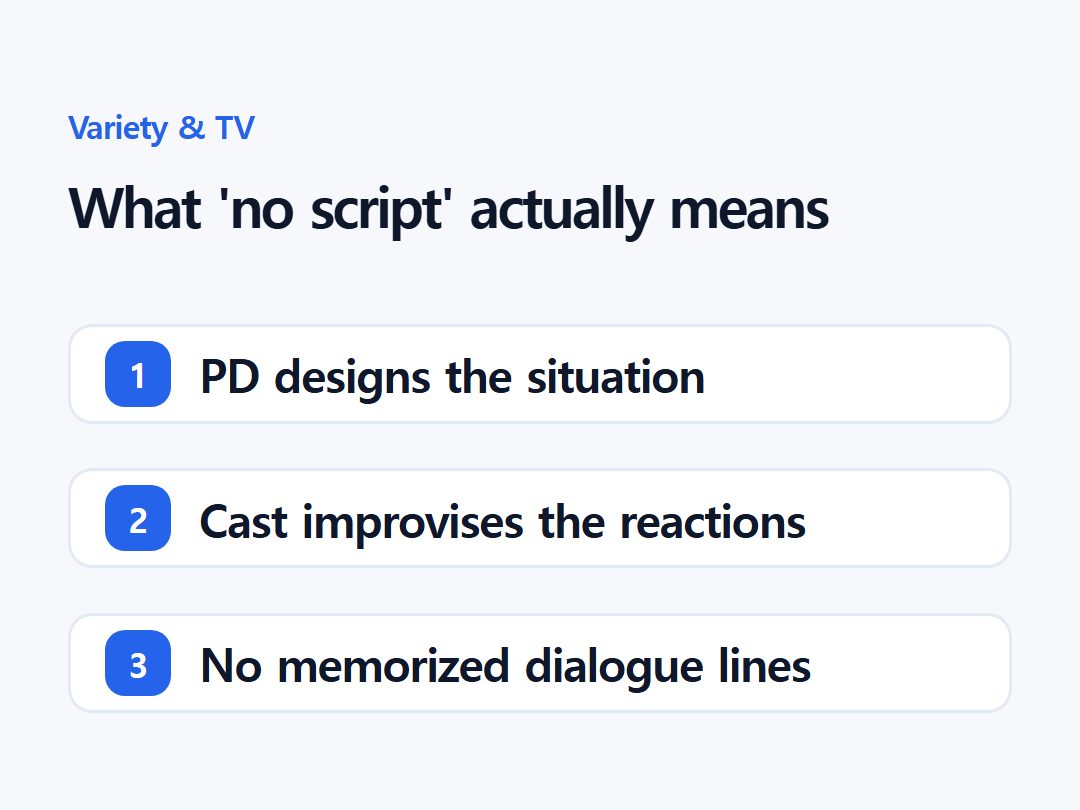
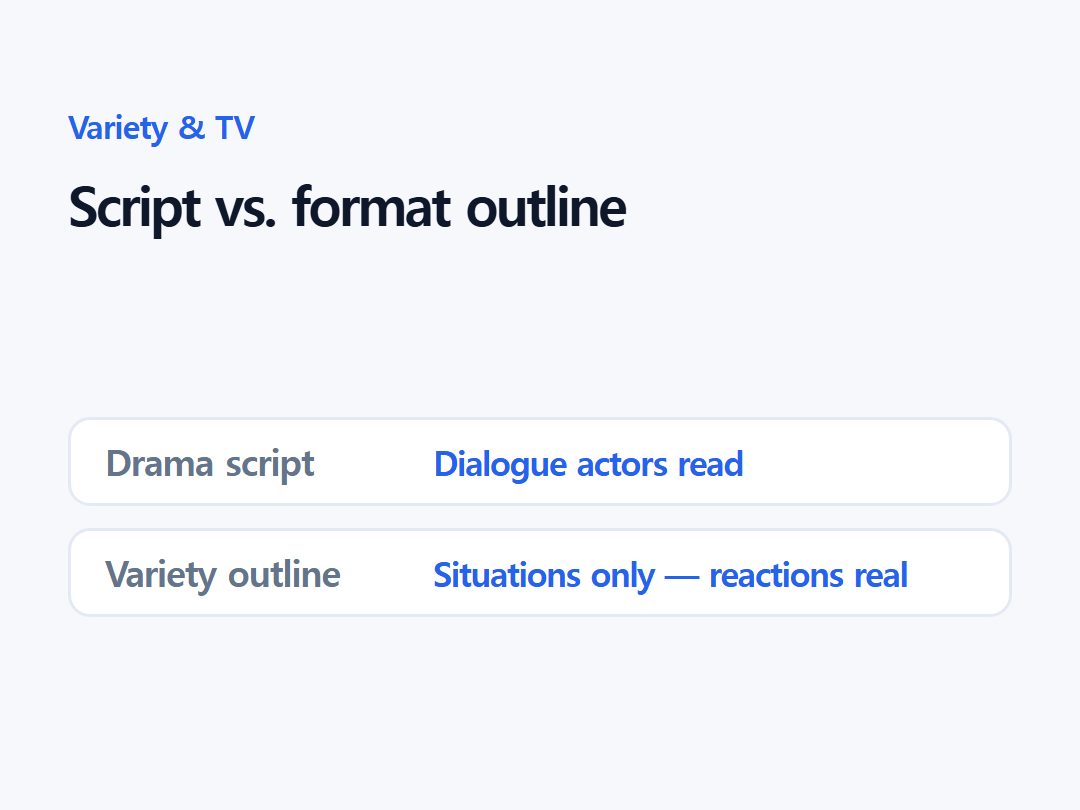
In Korean broadcasting, a PD (producer-director, the person who both produces and directs an episode) writes what is usually closer to a format outline than a drama screenplay. A drama script assigns every line of dialogue to a character, who then memorizes and performs it.
A variety show's planning document instead lays out the premise, the rules, the locations, the games, and the arc the PD wants the episode to build toward — without dictating what any cast member says or does inside that frame.
According to the Korean-language reference site Namu Wiki's entry on "real variety" (리얼 버라이어티), the genre that popularized this method, producers control the mission, setting, and constraints, while cast members' reactions, dialogue, and problem-solving are left genuinely open.
The entry describes an oft-used comparison: the show is built like an RPG video game, where the overall storyline and ending are prepared in advance, but the character-driven moment-to-moment play is improvised.
This is why the same PD who calls a show "real" can also admit its limits without contradicting himself.
Kim Tae-ho, the PD behind the genre-defining show Infinite Challenge, has acknowledged that producers cannot claim total authenticity every single week, since some segments followed a script to varying degrees — a point also noted in the Namu Wiki entry on the genre.
The honest version of "no script," in other words, is closer to: we designed the pressure, not the performance. A game with a real prize is played for real. A conversation that happens because two cast members were placed in a room together is not fed to them line by line.
What varies from show to show, and week to week, is how tightly that frame is drawn — not whether one exists at all.
This is also why viewers who catch a clip online and ask "was that scripted?" are often asking a question the format was never designed to answer with a simple yes or no.
A cooking competition's judging panel, elimination order, and prize structure are fixed in advance because a competition needs rules to function — that is not the same as scripting who wins. A talk segment's topic list might be prepared by writers, while the specific jokes, tangents, and confessions that follow are not.
Collapsing all of that into a single binary, scripted or not, is precisely the translation gap that leaves international audiences either overtrusting a show's spontaneity or dismissing a genuinely unscripted reaction as fake simply because the setting around it was obviously built.
For international readers, this matters for a concrete reason: it is the same production philosophy now sitting inside Netflix's flagship Korean unscripted hits. Physical: 100 and Culinary Class Wars are marketed abroad as premium "unscripted" or "reality" content, formats built on real elimination, real prize money, and real competitors — but also on precisely engineered constraints, rule sets, and challenge design supplied by producers.
Understanding that "no script" describes the dialogue, not the architecture, changes how you should read authenticity claims across the genre: the tension, the prize, and the reactions are real; the situation that produced them was built by someone with a plan.
From Infinite Challenge to Netflix's global hits
Korean variety television was not always built this way. Through the 1990s and early 2000s, comedy-variety programming leaned on studio sketches and scripted comedic bits closer to a traditional TV format.
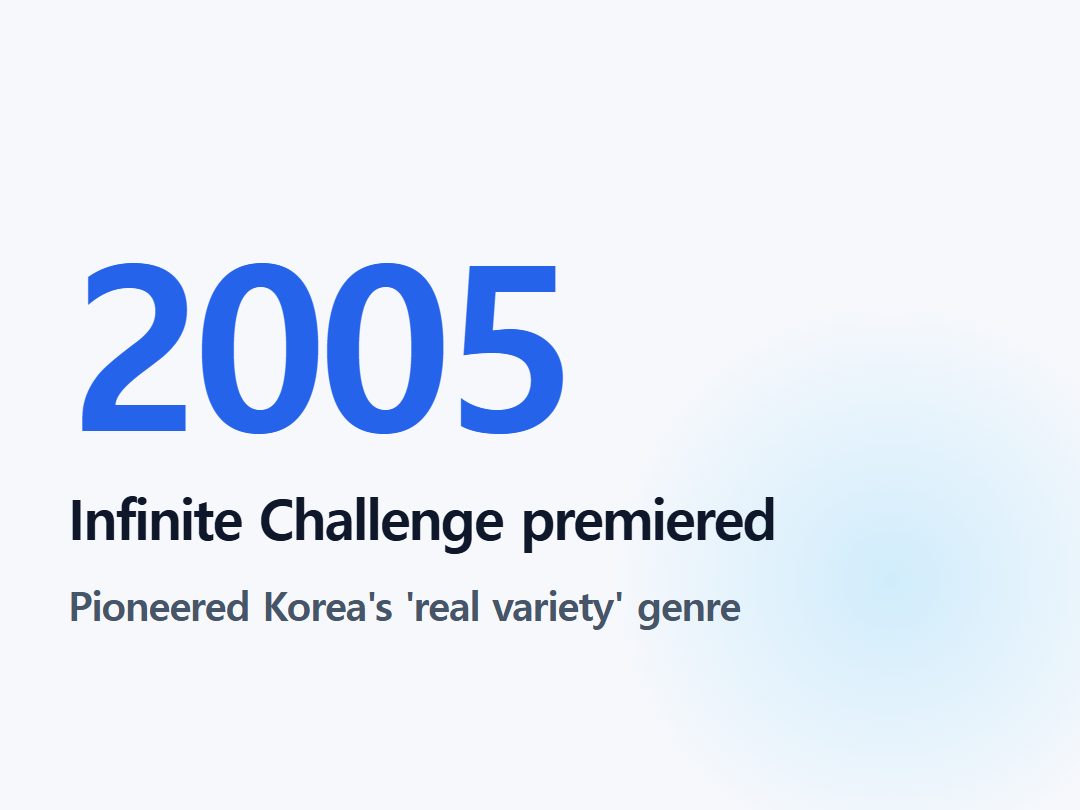
That began shifting with Infinite Challenge, which premiered on MBC in 2005 and is widely credited as the show that established Korea's "real variety" genre — a hybrid where a loose mission replaces a fixed script, and a fixed cast reacts to it over years of episodes.
Kim Tae-ho's approach, giving the cast open-ended challenges and letting the footage find its story in the edit, became the template much of the industry still follows.
The same DNA carried through KBS's long-running 1 Night 2 Days, where, per the Namu Wiki entry, opening scenes might be loosely staged but the show's signature "lucky draw" games and members' choices of transportation and lodging played out for real within the format's rules.
PD Na Young-suk, who worked on that show before moving to cable network tvN, has kept building on the same idea across a run of hit travel and cooking formats.
His most recent project, a 2026 travel-show revival titled Unplanned Trip: Limited Edition, pushes the same logic further: cast members' phones are confiscated, they are given a small daily cash budget, and they must relocate to a new city every day — an intentionally difficult rule set designed, according to a Korea Times report, to force genuinely unplanned situations rather than remove planning altogether.
That same formula is now Korea's biggest unscripted export.
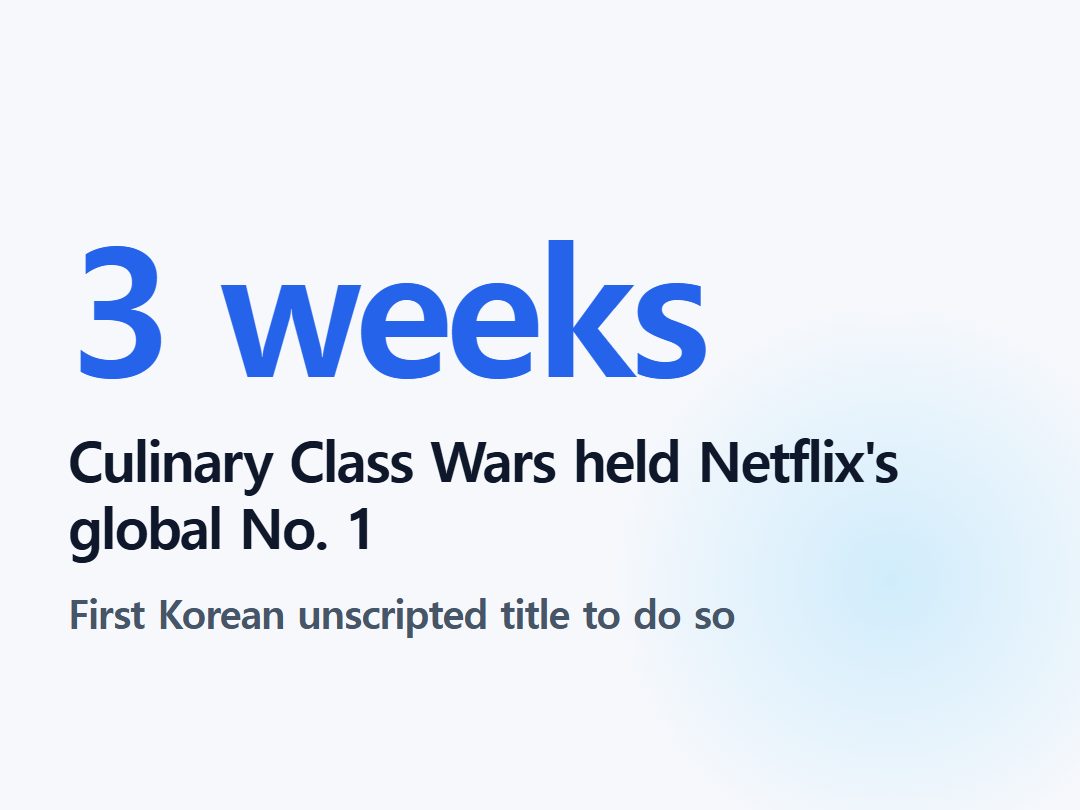
Netflix has expanded its Korean unscripted slate sharply in recent years, and two shows built on exactly this design-the-situation approach have become global hits: Physical: 100, a physical elimination competition that has spun off international versions including Physical: Asia, and Culinary Class Wars, a cooking tournament pitting professional "white spoon" chefs against self-taught "black spoon" cooks, judged by chef Paik Jong-won and Michelin three-star chef Anh Sung-jae. Culinary Class Wars became the first Korean unscripted title to reach No.
1 on Netflix's Global Top 10 (Non-English) TV chart, holding the spot for three consecutive weeks after its 2024 debut, according to Variety.
More hits are coming, but the label won't change
Netflix's Korean unscripted output keeps growing — the platform has been releasing a new Korean unscripted title roughly monthly, with Culinary Class Wars renewed for a team-based third season and Physical: Asia already airing after its October 2025 premiere, alongside further seasons of shows like Single's Inferno planned through 2026, according to Deadline and Variety.
As that slate scales up for a global audience, the industry has not changed its marketing language: shows are still sold internationally as simply "unscripted," without the local context that the term has always referred to dialogue, not design.
Whether international viewers come to understand mugakbon the way Korean audiences already do — situations engineered, reactions real — remains an open question, and one that shapes how fairly each new hit gets judged for "authenticity" once it leaves Korea.
What producers design vs. what stays real
| Show | Producers designed | What's genuinely real |
|---|---|---|
| Infinite Challenge (2005) | Weekly mission and format, set by PD Kim Tae-ho | Cast's reactions, dialogue, and problem-solving |
| 1 Night 2 Days | Lucky-draw games and loosely staged opening scenes | Members' real choices of transport and lodging |
| Unplanned Trip: Limited Edition (2026) | Confiscated phones, daily cash budget, forced city changes | Genuinely unplanned situations forced by the rules |
| Physical: 100 | Elimination format and challenge design | Real competition and real elimination outcomes |
| Culinary Class Wars | Judging panel, elimination order, prize structure | Real cooking results and real judging decisions |
Frequently asked
Are Korean variety shows scripted or real?
Producers write a format outline with missions, rules, and settings, but cast dialogue and reactions are not scripted line by line.
What does 무각본 (mugakbon) mean?
It literally means "no script," but inside the Korean industry it refers to unscripted dialogue within a producer-designed format, not an absence of planning.
Is Physical: 100 real or scripted?
The elimination, prize money, and competition results are real, though the challenges and constraints are engineered by producers in advance.
Sources
Every factual claim above is traceable. We do not translate articles — we gather facts from multiple outlets and write them ourselves.
- '아내의 맛' 대본 있었다?…진화 "대본 없는 예능 없어" — Newsis
- 리얼 버라이어티 — Namu Wiki
- No smartphones, no scripts: Raw experience becomes new trend in travel variety shows — The Korea Times
- Netflix Unveils Star-Studded K-Unscripted Slate at Seoul Festival Event — Variety
- 'Culinary Class Wars' Renewed for Second Season at Netflix — Variety
- Netflix Korea Unveils 'Physical: Asia' October Premiere, 'Culinary Class Wars S2' December Release & New Unscripted Shows With Legendary Producer Na Yeong-seok — Deadline