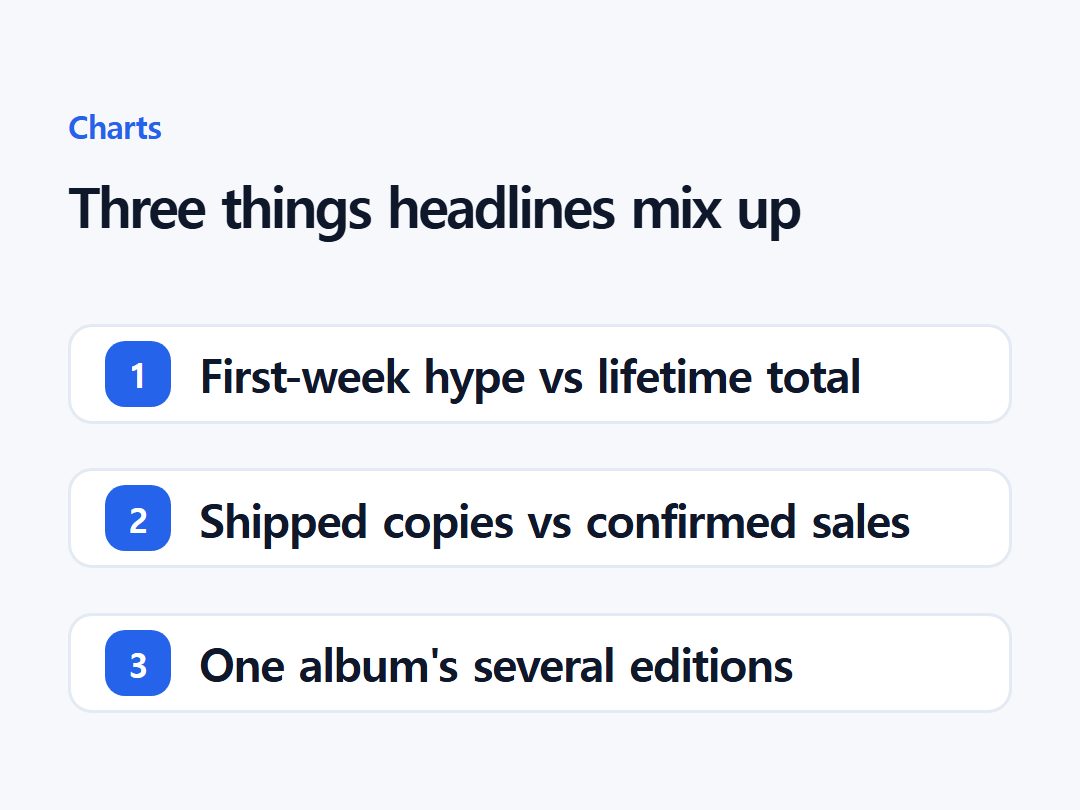
A K-pop headline calls an album a "million-seller." A different headline about the same release calls it a record-breaking debut. A third cites a completely different number for the same week. To an outsider, these look like the same claim reported three ways. They are not.
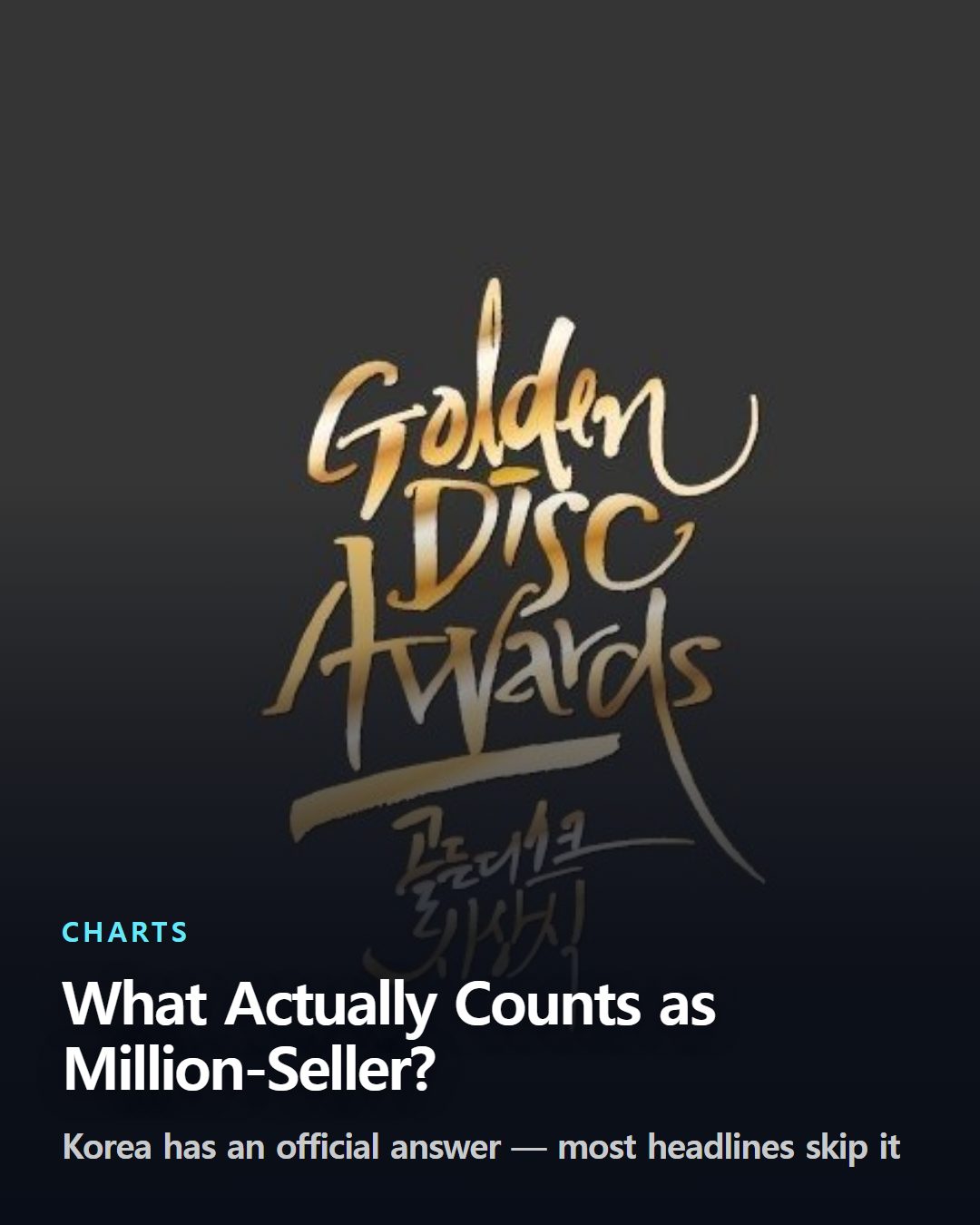
In Korea, "million-seller" is not just marketing language — it is a specific, verifiable status awarded under fixed rules by a chart-operating industry body called Circle Chart, and those rules have almost nothing to do with the first-week sales figures that usually make the news.
The short version
- "Million-seller" is a Circle Chart certification, not just a marketing claim.
- Chodong tracks only week-one sales; Million certification counts cumulative shipments.
- One million albums sold doesn't mean one million fans, due to collector editions.
How does Circle Chart certify a 'million-seller'?
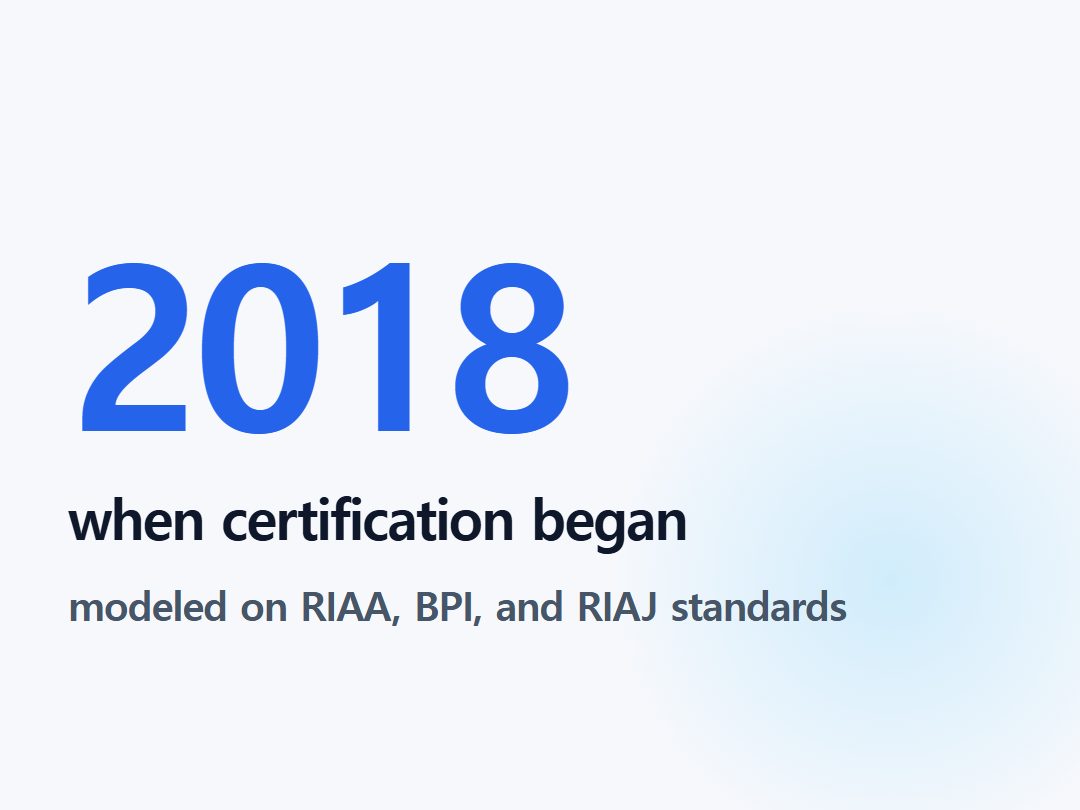
Since April 2018, Circle Chart — Korea's industry-standard music chart, known until 2022 as Gaon Chart — has run a formal certification system for albums, downloads, and streaming, modeled on the gold, platinum, and diamond systems used by the RIAA in the United States, the BPI in the United Kingdom, and the RIAJ in Japan.
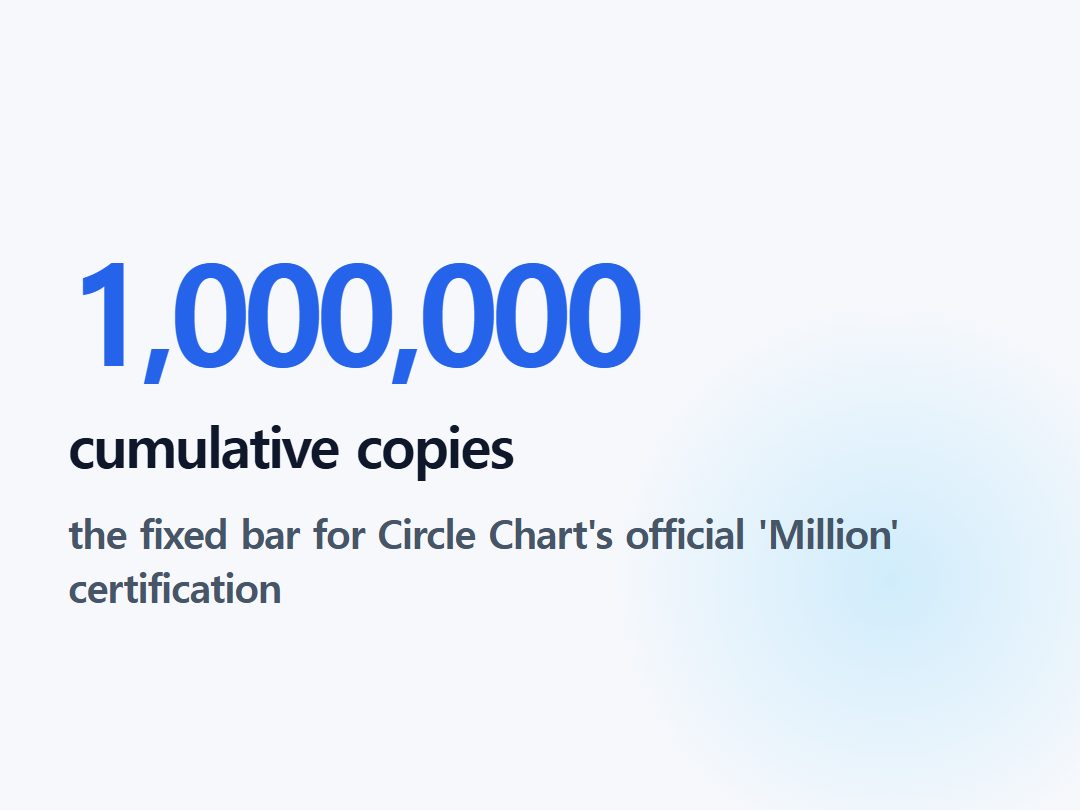
An album earns a "Platinum" certification once its cumulative sales pass 250,000 copies, and a "Million" certification once they pass 1,000,000. Albums that keep selling past that point are certified again at each additional million, so a release can carry a "Double Million" or "Triple Million" label.
In July 2026, for instance, Circle Chart confirmed that CORTIS's mini album "GREENGREEN" had passed roughly 3.1 million cumulative copies within eleven weeks of release, earning a Triple Million certification — one of the fastest such results on record.
The certification is administered by the Korea Music Content Association (KMCA), a nonprofit industry association funded by its member companies, not a government agency.
It applies only to albums released from January 1, 2018 onward, is calculated per single edition with an identical track list and format, and requires an album to have been on the market for at least six weeks before it becomes eligible.
Certifications are then recalculated as new data comes in and published on an ongoing monthly basis, so an album can move up a tier — or several — long after its release week has been forgotten.
Why don't chodong and million-seller numbers match?
For Korean fans, the vocabulary here is second nature: 초동 (chodong) is one thing, and a certified 밀리언셀러 (million-seller) is another, and nobody confuses the two. International coverage frequently blurs them into a single, bigger-sounding number.
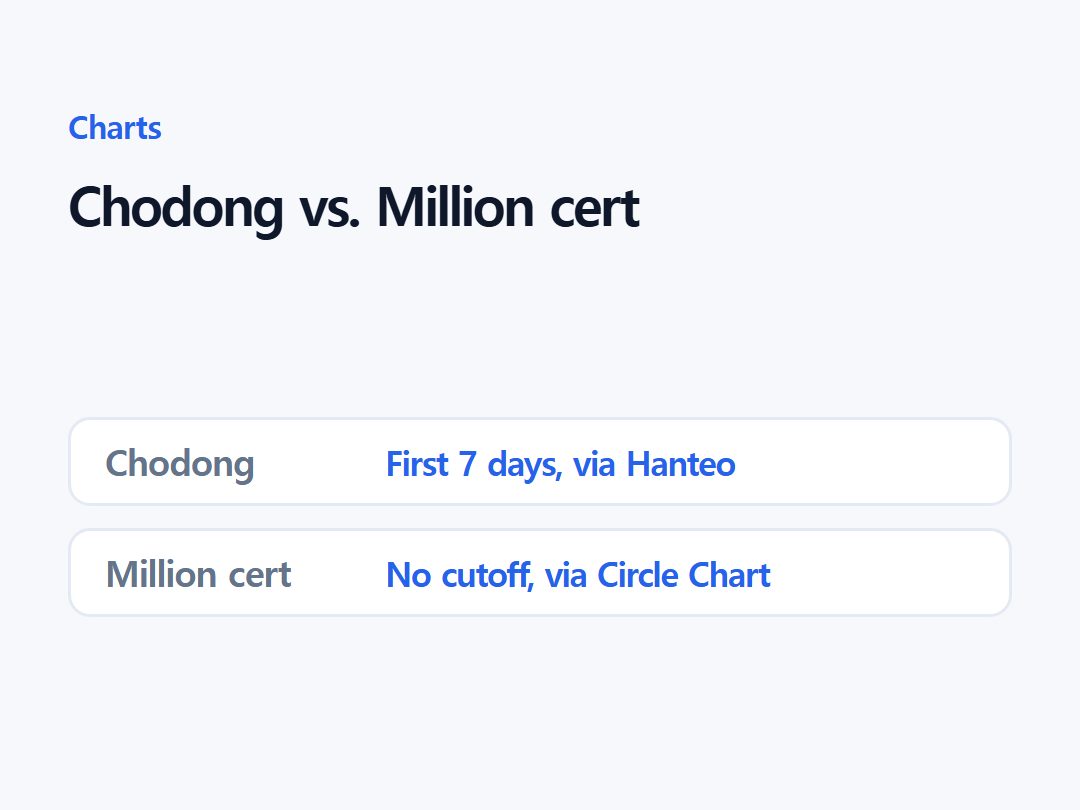
Chodong, a term borrowed from Japanese record-industry slang meaning roughly "initial movement," refers only to how many copies of an album sold in the seven days after release — nothing more.
That figure comes from Hanteo Chart, a private company founded in 1993 that certifies individual retailers to scan a barcode the instant an album is dispatched to a buyer, rather than at pre-order or payment.
Because that scan can happen within minutes of release, chodong numbers arrive fast and dramatic, and Korean entertainment press has treated them as a real-time gauge of a fandom's buying power since the late 2000s.
But chodong is provisional by design: a fixed one-week snapshot from one company's retailer network — over 1,100 stores worldwide by Hanteo's own count, notably not including major platforms like Amazon or eBay — not a verified lifetime total.
Circle Chart's Million certification measures something else: cumulative sales with no time cutoff, verified against a different kind of data.
Rather than scanning individual purchases at the point of sale, Circle Chart's album count is built from shipment volume — the number of copies a label's distributor has sent out to stores, minus any copies later returned unsold.
That is closer to how the RIAA counted gold and platinum records in the United States for decades before streaming data existed, but it means a "certified million" album is best understood as one million net units placed into the market and not sent back, rather than a live count of individual purchases.
In practice the two figures converge for genuinely popular releases, but the gap matters for accuracy: a shipment figure can, in principle, run ahead of a point-of-sale figure until returns are fully reconciled.
| Chodong (first-week number) | Circle Chart Million certification | |
|---|---|---|
| Measures | Sales in the first 7 days only | Cumulative sales, no cutoff |
| Data source | Hanteo-certified retailers, point of sale | Shipment volume minus returns, label-reported |
| Threshold | None — any figure gets reported | Fixed: 250,000 (Platinum), 1,000,000 (Million) |
| Published by | Hanteo Global, a private company | KMCA, a nonprofit industry association |
A second layer of context rarely makes it into English-language coverage: one million "albums sold" is not the same as one million fans.
K-pop releases routinely come in multiple physical versions — different covers, randomized photocards, sometimes a different bonus track — specifically because collector culture rewards owning several copies of the same release.
A fan base numbering in the low hundreds of thousands can generate sales in the millions without the group's actual audience growing by the same multiple.
Circle Chart certifies each edition separately by default; in the CORTIS example above, one edition of "GREENGREEN" crossed the double-million mark on its own, while a separate Weverse-exclusive edition of the same release earned its own, smaller platinum certification.
That precision is useful, but it is easy to misread if a headline doesn't specify which edition, or how many editions, it is citing.
Finally, it is worth being precise about what "certified" does and does not imply. KMCA is an industry association, not a government regulator independently auditing sales — which is also true, structurally, of the RIAA and the BPI.
The certification is a standardized industry benchmark, built from data that labels and distributors report themselves, not a government-verified sales record.
That does not make the Million certification meaningless; it remains the most consistent, longest-running cross-artist yardstick Korea has for physical album success, and the one used by award shows and reported consistently across outlets.
But it is best read the way an RIAA platinum plaque is read abroad — a real industry milestone with defined rules, not an independently government-audited fact.
How Korea built its million-seller certification system
Before 2018, Korea had no formal music-sales certification system at all. Agencies and press described albums as "million-sellers" informally, usually citing whichever chart's cumulative total looked most favorable, with no consistent threshold behind the label.
On April 20, 2018, KMCA — which had operated the Gaon Chart since 2010 as Korea's attempt at a single industry-wide chart, comparable to Billboard in the United States or Oricon in Japan — introduced the certification system explicitly to close that gap, citing the RIAA, BPI, and RIAJ as its models.
The rules were deliberately forward-looking: certification applies only to music released from January 1, 2018 onward, meaning older, pre-certification-era releases cannot retroactively earn an official Circle Chart Million badge, however many copies they are estimated to have sold at the time.
In July 2022, Gaon Chart rebranded as Circle Chart, adding data partnerships with YouTube, TikTok, Spotify, and Apple Music and repositioning itself from a domestic music chart to a chart tracking global K-pop consumption — a response to the growing share of album buyers based outside Korea.
The certification thresholds for albums did not change, but the years since have produced far more Million certifications than the system's early years did, driven largely by the same collector-edition economics described above: as agencies released more simultaneous physical versions per comeback, cumulative totals climbed faster, and multi-million certifications — once rare enough to be newsworthy on their own — became common enough that groups including Seventeen, Stray Kids, and now CORTIS have earned double- or triple-million status on individual releases.
Two things about this system remain unclear
Two things remain unsettled.
First, the multi-million boom may be cooling: industry reporting comparing the first half of 2025 with the first half of 2024 counted fewer Million-certified albums year over year, with no single release crossing 3 million copies in that window — a reminder that a system built on shipment volume is sensitive to broader shifts in physical-album buying, not only to an individual group's popularity.
Second, Circle Chart has not published the exact weighting it applies across streaming platforms for its non-album certifications, and has kept individual song play counts private since 2018 to limit chart manipulation, meaning that outside the album system's comparatively transparent 250,000/1,000,000 thresholds, how the chart's other rankings are calculated is still not fully open to outside verification.
For now, the safest reading of any "million-seller" claim is the most literal one: check whether the figure is described as Circle Chart's certified cumulative total or as a first-week chodong number from Hanteo.
They measure two different things, on two different timelines, and only one of them comes with a fixed, published bar to clear.
Chodong vs. Circle Chart Million Certification
| Chodong (first-week number) | Circle Chart Million certification | |
|---|---|---|
| Measures | Sales in the first 7 days only | Cumulative sales, no cutoff |
| Data source | Hanteo-certified retailers, point of sale | Shipment volume minus returns, label-reported |
| Threshold | None — any figure gets reported | Fixed: 250,000 (Platinum), 1,000,000 (Million) |
| Published by | Hanteo Global, a private company | KMCA, a nonprofit industry association |
Frequently asked
What does 'certified million-seller' mean for a K-pop album?
It means Circle Chart has confirmed the album's cumulative shipments, minus returns, have passed 1,000,000 copies, with no time limit on when those sales happened.
What's the difference between chodong and a million-seller?
Chodong is a first-week point-of-sale snapshot from Hanteo Chart, while a certified million-seller is a cumulative, no-cutoff shipment total verified by Circle Chart.
Is Circle Chart's million-seller certification a government record?
No — it's issued by KMCA, a nonprofit industry association funded by member companies, similar in structure to how the RIAA certifies gold and platinum in the US.
Sources
Every factual claim above is traceable. We do not translate articles — we gather facts from multiple outlets and write them ourselves.
- CORTIS, aespa, TWS, BABYMONSTER, LE SSERAFIM, ILLIT, And More Earn Circle Million And Platinum Certifications — Soompi
- Circle Chart Album Certification — Circle Chart
- 코르티스, 미니 2집 판매고 300만장 넘었다…데뷔 후 누적 525만 ↑ — Financial News
- [Y현장] 가온차트, 글로벌 플랫폼과 손잡고 '써클차트'로 전격 개편 (종합) — YTN
- First-week vs cumulative K-pop album sales: what the numbers mean — Seoul Current
- The History of K-pop First Week Sales: How 'Chodong' became a global war — allkpop
- How do South Korean album certifications work? A breakdown — KpopWorld
- About HANTEO CHART — Hanteo Global