Twelve strangers move into a shared house on the Korean reality show "Ideology Verification Zone: The Community" (사상검증구역: 더 커뮤니티), usually shortened in English to The Community. Before they ever meet, each one has already been given a hidden score for how left-wing, feminist, working-class, or socially progressive they are.
The short version
- Twelve residents hide a secret ideology score worth 4 to 12 points total.
- Winner earns up to ₩200 million ($150,000) over nine days in the house.
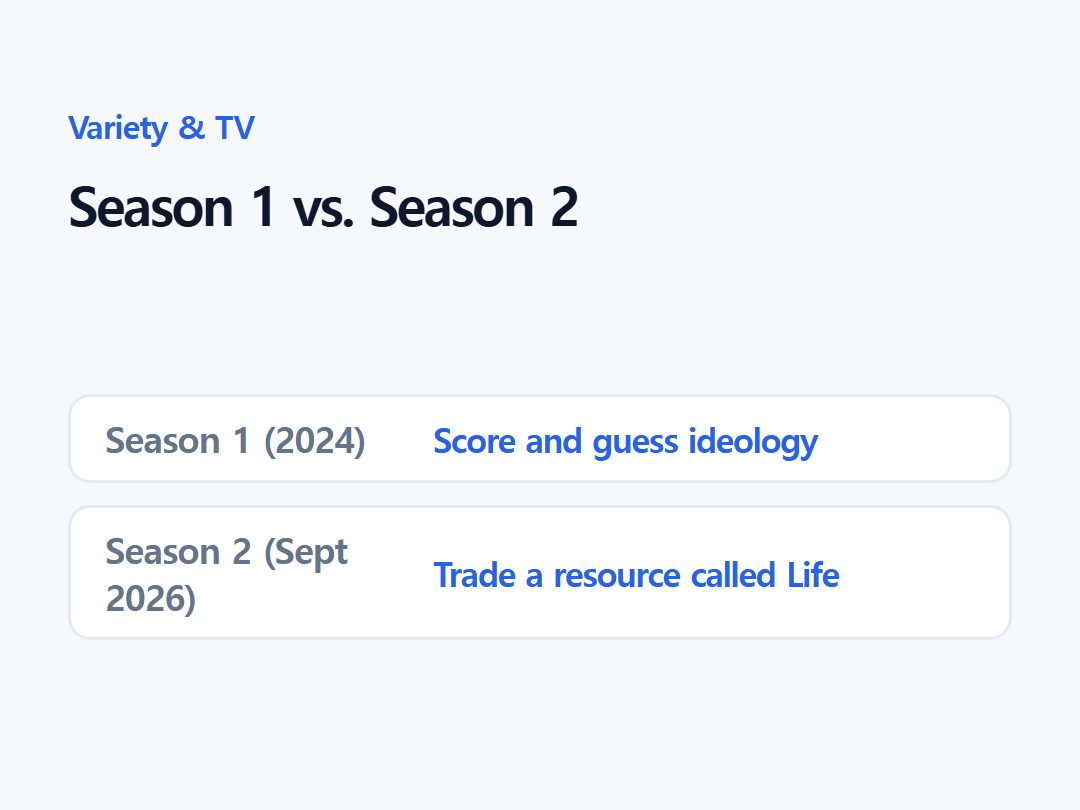
- Season 2 premieres September 4, 2026, replacing ideology scoring with a trading economy.
The show ran for 11 episodes on the Korean streaming service Wavve from January 26 to March 1, 2024, produced by Kakao Entertainment. A second season, subtitled The Invisible Hand, premieres on Wavve on September 4, 2026, which is why the format is worth explaining now, not just when it first aired.
A house scored on politics, not physical skill
Unlike a typical elimination competition, nobody on The Community is voted out for losing a physical challenge. The 12 "residents" compete for up to ₩200 million (roughly $150,000) over nine days by winning group funds, avoiding taxes set by whoever is elected daily leader, and — critically — keeping their political and social views hidden from the other residents.
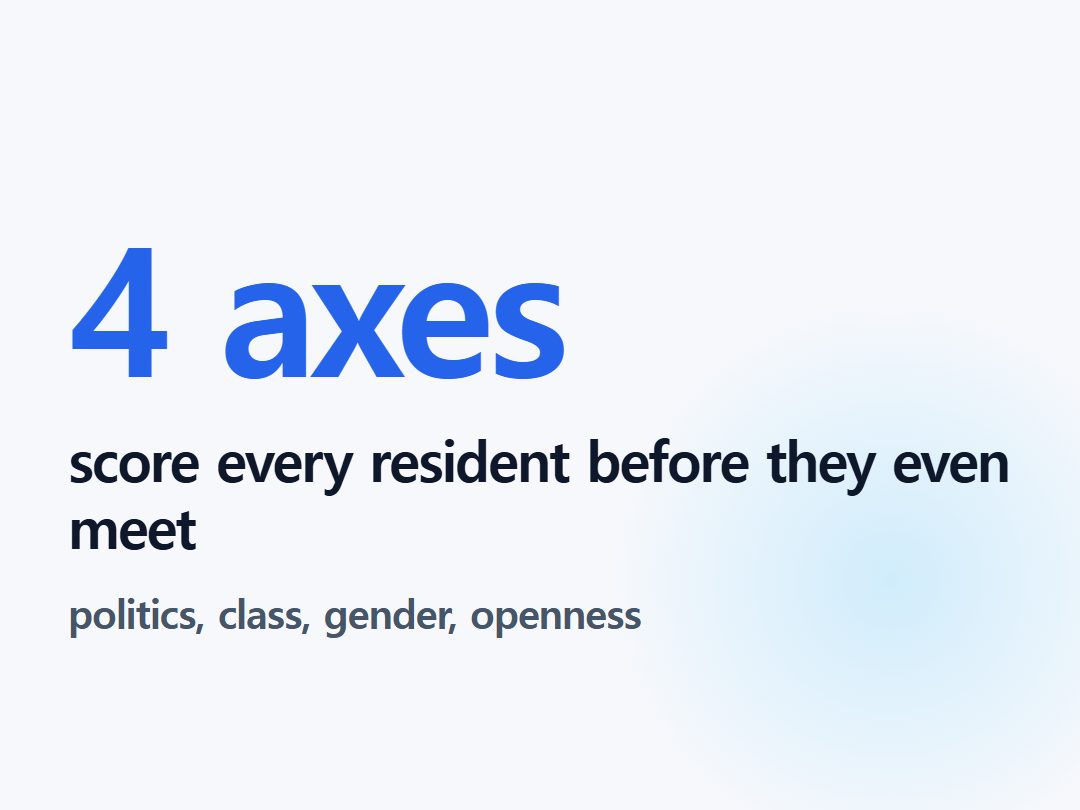
Four axes, twelve points, one hidden number per person
Before filming, every participant answers a questionnaire that scores them on four separate scales: politics (left/right), class (working class/wealthy), gender (feminist/"equalist"), and openness (traditional/progressive). Each axis is worth 1 to 3 points, so every resident enters the house carrying a combined score between 4 and 12.
That number is never shown on screen to the other players. It only exists so the show's central game — guessing it — has a fixed answer.
Getting eliminated means someone guessed what you believe
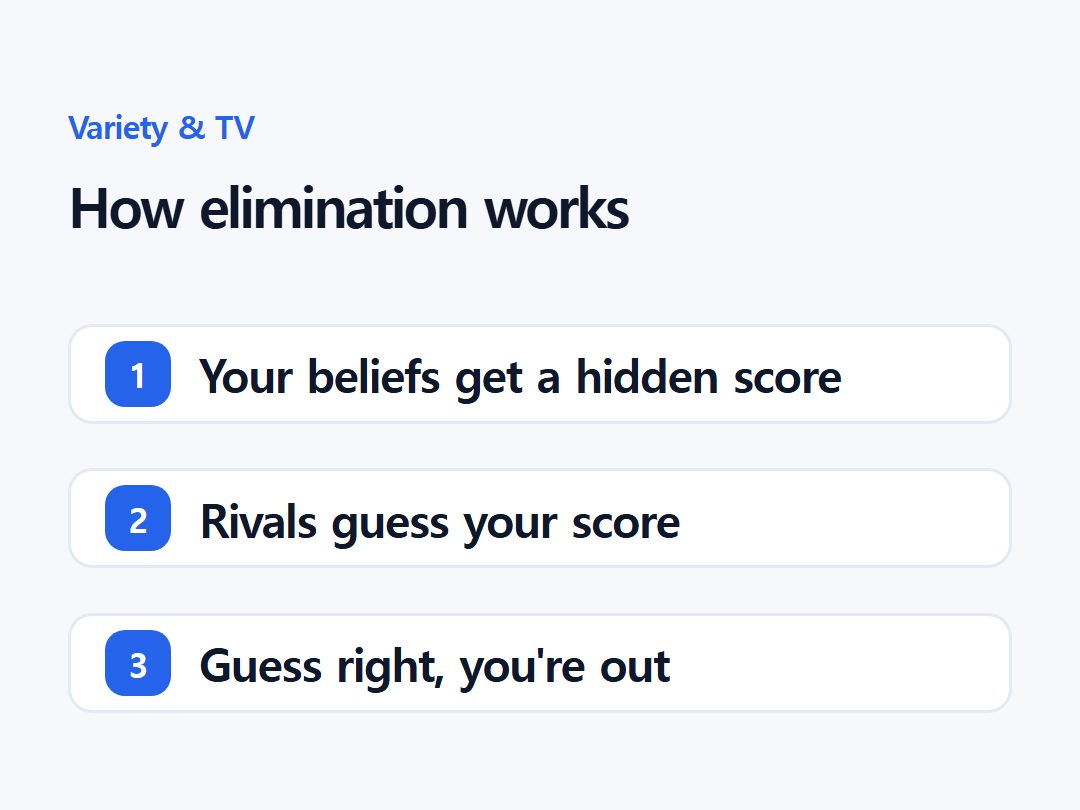
The show's namesake mechanic, "thought verification," lets residents accuse each other of holding a specific ideological position. If the accusation matches a person's real hidden score, that resident can be forced out of the community.
To make the guessing possible, producers release clips of each resident's pre-show interview answers throughout the season — enough to hint at a leaning, not enough to confirm it. The show also seeds one planted "disruptive element" among the twelve, whose job is to sow conflict rather than survive honestly.
Nicknames let residents say in private what they would never post under their name
By day, residents interact face to face and behave with ordinary social caution. By night, they log into an anonymous chat room under pseudonyms and hold three-on-three debates on sensitive topics, with the winning side earning money for the group.
Producers have described this split deliberately: the daytime house is where people wear a "social mask," and the anonymous chat is where the same people say what they actually think — mirroring how many Koreans behave differently on real-name social media versus anonymous forums.
Why a quantified ideology score only makes sense in Korea's online culture
Western social-experiment shows ask contestants to hide a role — a killer, a spy, a secret alliance. The Community asks them to hide an opinion, and turns disagreement over feminism, class, and politics into the actual scoreboard.
That premise only works because Korean online communities are already organized this way. Terms like "이대남" (men in their 20s) and "이대녀" (women in their 20s) function as recognized political camps in everyday Korean media, and gender politics, generational wealth gaps, and left-right splits are argued over constantly on forums with their own dialects.
Each of those forums has developed its own vocabulary, tone, and assumed audience — which is exactly what the show's writers drew on when they built the questionnaire. A viewer who already spends time in Korean online communities recognizes the four axes instantly; one who doesn't needs the show to explain them from scratch, which is part of why the format traveled less easily than Korea's music or dramas.
Reviewers who covered the show before it aired framed it as a kind of national mirror: twelve people who each hold multiple, sometimes contradictory positions — a person can be economically progressive but socially traditional, for instance — forced to negotiate as a group rather than shout past each other in separate comment sections.
The director has said the idea came directly from watching those online arguments and wondering what would happen if the same people had to sit across from each other in person.
The word "equalism" started a fight before the show even aired
One of the show's four axes labels the anti-feminist position "이퀄리즘" ("equalism"), a term the production borrowed from how that side of the debate already refers to itself online. Before the premiere, Jang Ye-jeong, co-executive chair of an anti-discrimination legislation coalition, told OhmyNews the word functions as a euphemism for anti-feminism and has no basis in gender studies scholarship.
Wavve defended the choice, saying it was reflecting language its subjects actually use, not endorsing it — comparing it to using slang terms like "kkondae" (an out-of-touch older person) without implying either side of that generational split is objectively correct. A separate trailer clip in which a participant called homosexuality "an acquired error" also drew criticism ahead of the launch.
Big Brother, Mafia, and a personality quiz don't add up to this
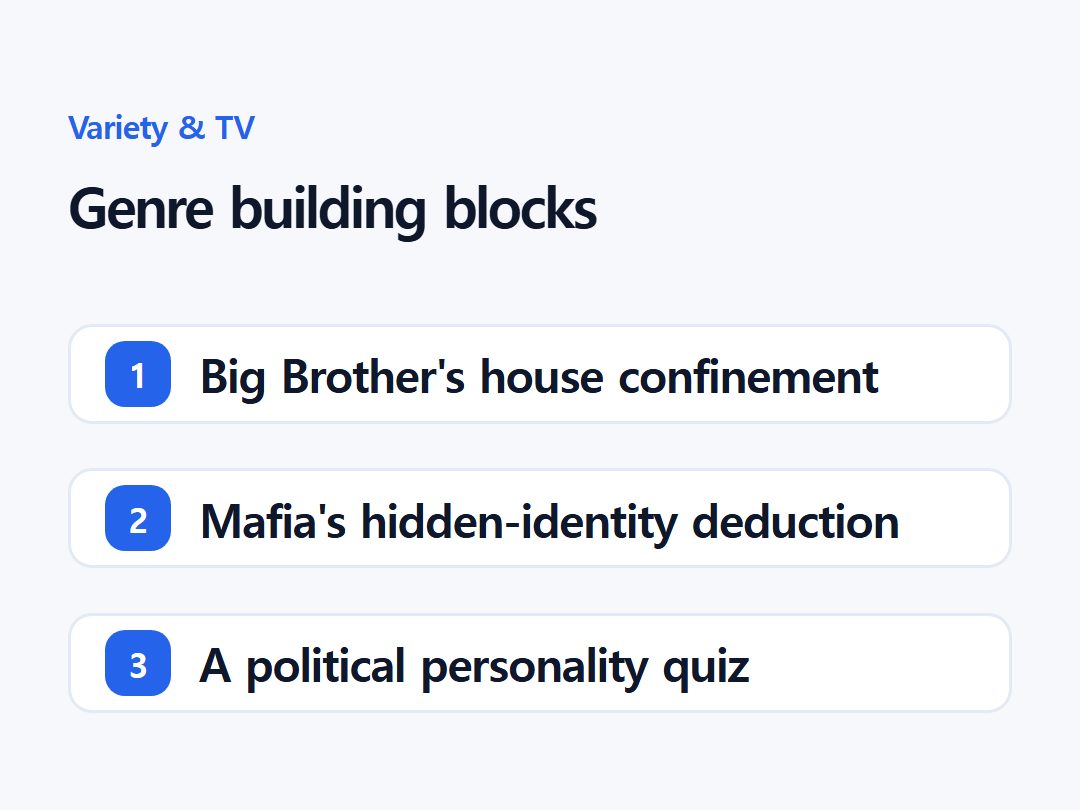
International viewers reaching for a comparison usually land on Big Brother's house confinement, or the hidden-identity deduction of Mafia-style party games. The Community borrows structural pieces from both.
- The confined house and daily leader vote, closer to Big Brother
- The hidden identity and accusation-based elimination, closer to Mafia or Werewolf
- A pre-scored personality axis, closer to a magazine political quiz
What's missing from any of those Western formats is the third piece: a contestant's real political and social views, quantified before filming starts, functioning as the win condition. Mainstream American and British reality shows generally avoid making a contestant's stated politics the explicit game mechanic; this show is built around nothing else.
That is also why English-language coverage of the show tends to fall back on a clunky, literal translation of its Korean title rather than a genre name — there isn't an existing English term for "the show where your politics are the hidden identity."
A ₩200 million prize and a genre Korean streamers already trusted
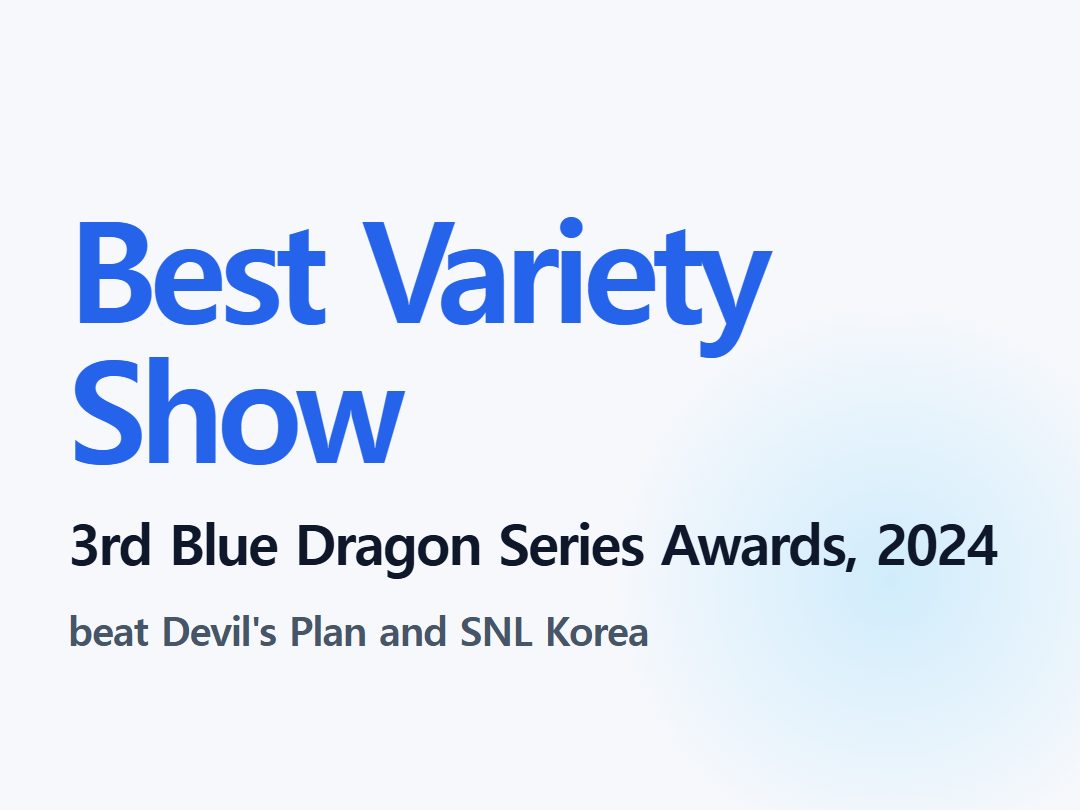
The show didn't invent Korean strategy-based social deduction TV — it arrived alongside established entries in the same genre. At the 3rd Blue Dragon Series Awards in 2024, The Community won Best Variety Show, beating out the strategy series Devil's Plan, the sketch show SNL Korea Season 5, dating show Transit Love: Siblings, and the long-running Mafia-format hit Crime Scene Returns.
That field says something about the audience it was competing for: Korean streaming viewers already had an appetite for high-concept strategy and deduction formats before ideology became the variable being tested.
Season 2 swaps ideology debates for a currency called "Life"
The follow-up season, The Community 2: The Invisible Hand, moves away from scoring beliefs and toward a trading-based survival economy. Thirteen new residents, split into four color-coded teams, compete by trading a resource the show calls "Life," needed simply to keep surviving in the game.
Only one cast member from season one, Lee Ji-na, returns. A released teaser includes an ethics-dilemma question about torturing an innocent suspect's child to prevent a mass-casualty bombing — signaling the show is keeping its taste for uncomfortable moral tests even as the game mechanics change.
What still isn't settled for viewers outside Korea
Season one has never streamed on Netflix and remains exclusive to Wavve, a Korean-market streaming service without a straightforward international sign-up path. There is no confirmed English-subtitled international release for either season as of this writing.
It's also unclear whether the show's core tension — that revealing your real political views can get you eliminated — will translate the same way once the game mechanic shifts to trading a survival resource in season two rather than guessing an ideology score.
The four axes behind every resident's hidden score
| Axis | Spectrum | Points |
|---|---|---|
| Politics | Left ↔ Right | 1–3 |
| Class | Working class ↔ Wealthy | 1–3 |
| Gender | Feminist ↔ "Equalist" | 1–3 |
| Openness | Traditional ↔ Progressive | 1–3 |
Frequently asked
Is The Community Korean show on Netflix?
No, season one has never streamed on Netflix and remains exclusive to Wavve, a Korean-market streaming service without a straightforward international sign-up path.
When does The Community season 2 come out?
The Community 2: The Invisible Hand premieres on Wavve on September 4, 2026, and swaps the ideology-scoring mechanic for a trading resource called "Life."
How does the ideology score work on The Community?
Before filming, each resident is scored 1 to 3 points on four axes — politics, class, gender, and openness — for a hidden total between 4 and 12 that other residents try to guess.
Sources
Every factual claim above is traceable. We do not translate articles — we gather facts from multiple outlets and write them ourselves.
- 사상검증구역: 더 커뮤니티 — Wikipedia (Korean)
- 이념 들키면 탈락하는 '사상검증구역', 대안 정치 될 수 있을까 — OhmyNews
- 이렇게 과격하다고? '사상검증구역' 제작진의 속내 — OhmyNews
- Thought Verification Zone: The Community — NamuWiki (English)
- 웨이브가 독기를 품었다 '사상검증구역: 더 커뮤니티' — Econovill
- 서바이벌이기보다 아찔한 사회실험, '사상검증구역' — Money Today
- 승우아빠→이수민 출연 '더 커뮤니티2', 9월 4일 공개 — eNews (iMBC)
- '더 커뮤니티2' 이수민·승우아빠·박세승 등 13인 출연 — eToday
- "테러 막으려 무고한 아이 고문해야 한다면" '더 커뮤니티2' — eToday