A pot of eggs simmering in dark soy sauce is one of the most common sights in a Korean refrigerator. Ask how long jangjorim actually keeps, though, and the numbers online range from three days to three months.
The short version
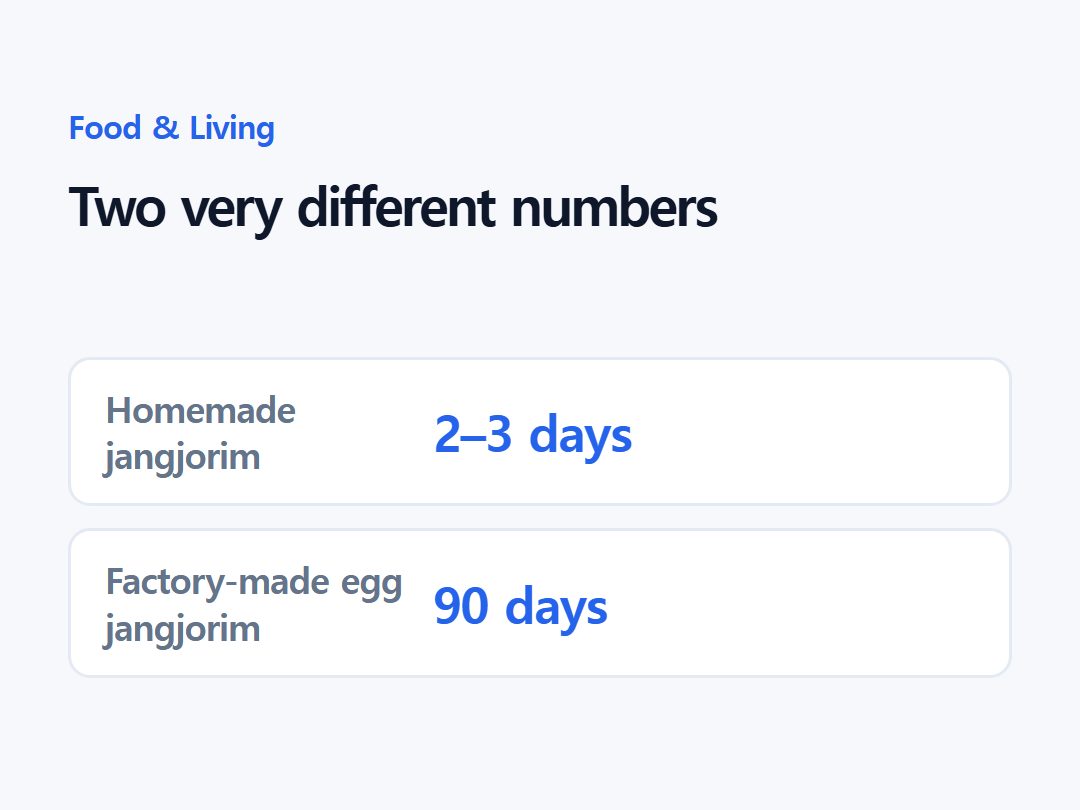
- Homemade jangjorim lasts two to three days in the fridge.
- The 90-day figure applies only to factory-made egg jangjorim, not homemade.
- Keeping eggs fully submerged in sauce slows spoilage the most.
That gap is not a mistake. It exists because people online are talking about two different products that happen to share one name.

What "jangjorim" actually covers
Jangjorim is beef simmered slowly in soy sauce until the meat can be shredded with chopsticks. Boiled eggs are often added to the same pot, where they soak up the sauce and turn a deep brown.
A separate, egg-only version called gyeran-jangjorim skips the beef entirely and is a common lunchbox side for kids. Both are boiled and simmered, which matters for storage — a related but different dish, mayak-gyeran, uses raw egg yolks mixed with unheated soy sauce and spoils far faster because nothing is cooked.
The braising method itself is old. Long before refrigerators reached Korean kitchens, cooks used soy sauce, salt, and slow heat to turn perishable protein into something that could survive travel and days of storage. Jangjorim's name and technique carry that logic forward, even into a kitchen with a working fridge.
The homemade rule: same day, stretched to three
The Ministry of Food and Drug Safety's baseline principle for any dish made at home is simple: eat it the day you cook it. In practice, few households do.
Food safety experts cited by the Korean outlet Lady Kyunghyang recommend finishing homemade banchan — jangjorim included — within two to three days under proper refrigeration, even if it shows no smell or texture change. Bacteria can multiply well before a dish looks or smells off, and the risk rises faster in hot weather.
The 90-day number is a different product entirely
Some sites quote a 90-day refrigerated shelf life for egg jangjorim. That figure is real, but it comes from a specific source: a Ministry reference value for factory-manufactured egg jangjorim sold in stores, not a guideline for a pot made at home.
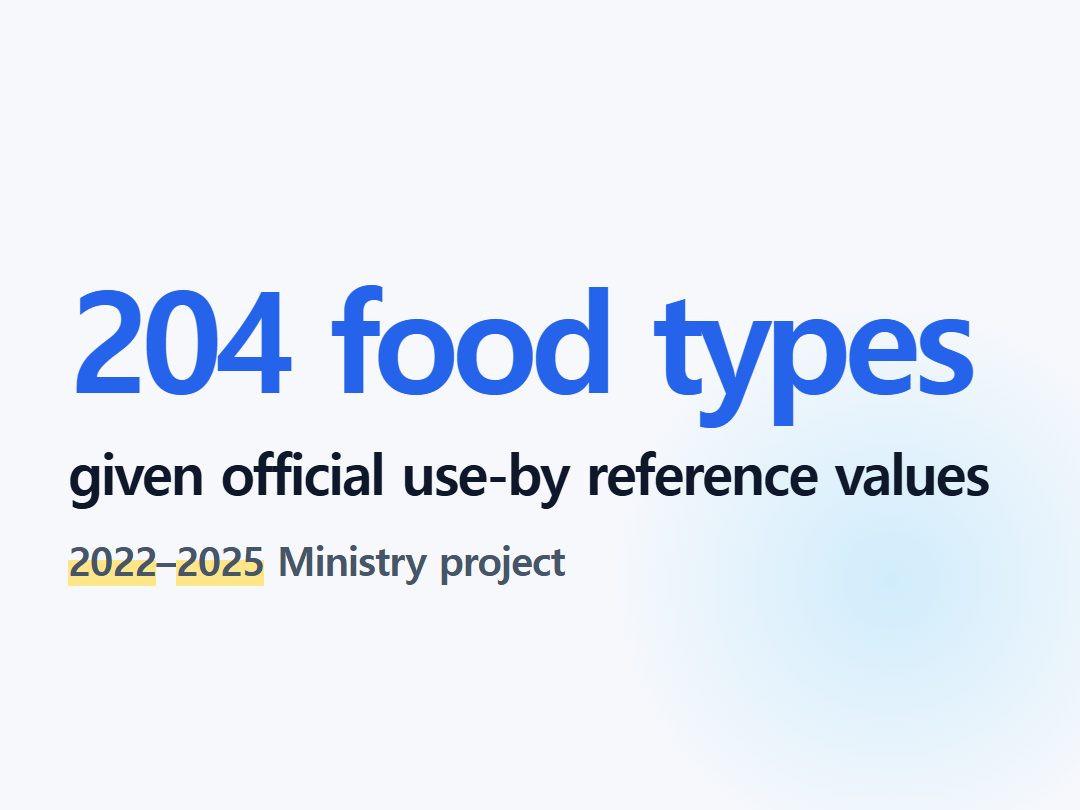
Between 2022 and 2025, the Ministry issued reference "use-by date" values for 204 food categories covering 2,037 individual products, part of a broader shift from sell-by dates to use-by dates on Korean packaging.
The same project set reference values for other egg products, which help show where egg jangjorim sits among them: about 35 days for roasted eggs, roughly 15 days for salted quail eggs despite their intact shells, and a 45-day recommended distribution window for washed raw eggs kept at 10°C or below.
Commercial producers heat-treat and package eggs under sanitary controls that no home kitchen replicates, so a 90-day industrial figure simply does not transfer to a jar in someone's fridge. The number is accurate — it is just answering a different question than the one most readers are asking.
Why Korean kitchens lean on salt instead of the fridge clock
To understand why this confusion happens at all, it helps to know what banchan — the side dishes that accompany rice at nearly every Korean meal — are actually built for.
A subcategory called mitbanchan ("base side dishes") is deliberately seasoned heavy on salt, soy sauce, and sugar, and cooked until most of the moisture is gone. Braised anchovies, soy-glazed lotus root, and jangjorim all belong to this group.
The logic predates the modern refrigerator: a heavily salted, low-moisture dish naturally resists bacteria, so a household could cook a large batch once and portion it out over several days. Rice itself was the daily variable; the side dishes were the part built to hold steady.
That older intuition — "my mother kept it a week and it was fine" — still shapes how many home cooks treat jangjorim today, even though it runs ahead of what current food-safety guidance is willing to certify. The Ministry's official window is calibrated to the worst realistic case, not the best remembered one.
Boiling the sauce is what buys the extra days
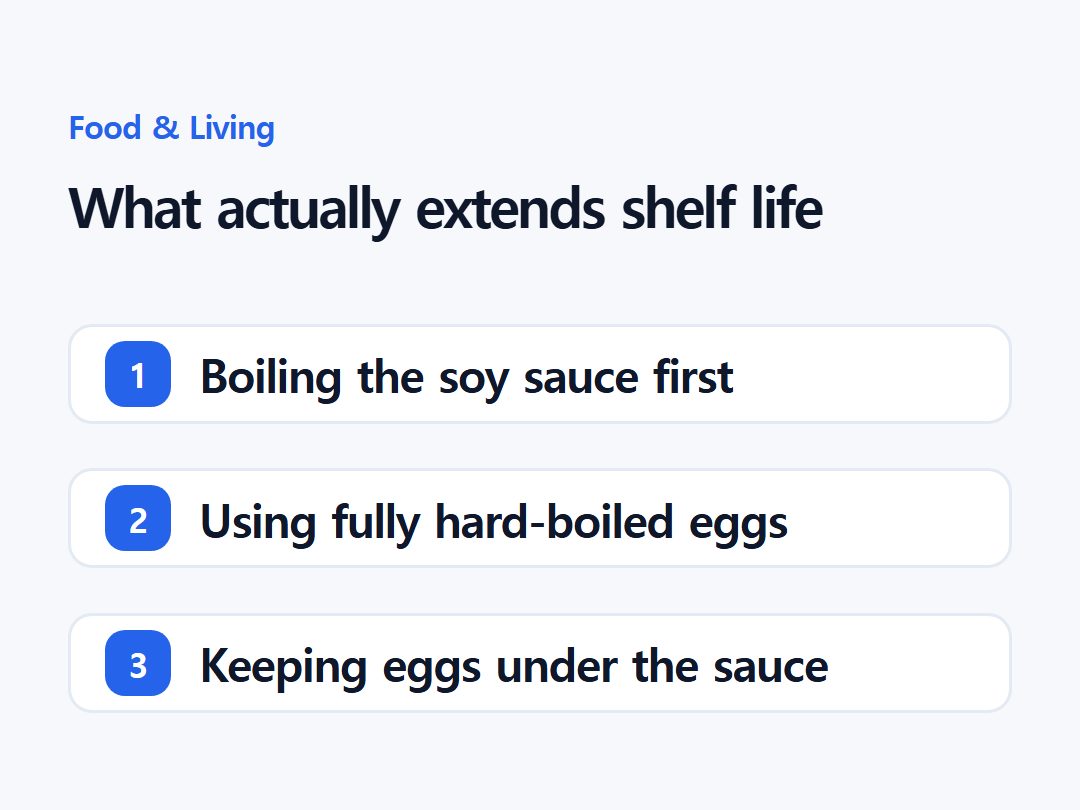
Whether a soy-egg dish is cooked at all makes a large practical difference. Standard jangjorim simmers the soy sauce and sugar together over heat, which concentrates the salt and effectively pasteurizes the liquid the eggs sit in.
Mayak-gyeran and similar raw soy-marinated egg dishes skip that step, mixing raw soy sauce directly with uncooked yolks. Without heat treatment, that version is far more perishable — one more reason the same online search turns up numbers as far apart as one day and two weeks: they are not describing the same food.
A closer comparison than a Western pickle
International readers looking for a familiar reference point may already know Japan's ramen egg, ajitsuke tamago — a boiled egg marinated in soy sauce, soy-sauce-and-mirin broth, or a similar mixture.
Just One Cookbook, a widely used English-language reference for Japanese home cooking, recommends eating ajitsuke tamago within three to four days once the eggs are pulled out of their marinade and refrigerated.
Jangjorim follows a similar boiled-and-marinated logic, but Korean cooks typically leave the eggs sitting in the sauce the entire time rather than removing them. That difference in handling is one reason home cooks often report jangjorim holding up a little longer than a ramen egg kept separately from its broth.
Half-boiled costs you days you don't get back
Even within classic jangjorim, how the eggs themselves are boiled changes the math. Eggs boiled to a soft, jammy center (bansuk) hold more residual moisture than fully hard-boiled eggs (wansuk).
That extra moisture gives bacteria a more hospitable environment, so a batch of half-boiled eggs is generally expected to turn sooner than a batch boiled all the way through — independent of how the sauce itself is handled.
Keeping the eggs under the sauce line
Home cooks have one meaningful lever they control directly: keeping the eggs fully submerged in the soy sauce rather than piled above the liquid.
- Submerged eggs stay isolated from open air, which slows surface bacterial growth
- Eggs sitting above the sauce line dry out and spoil first
- Some cooks reboil the remaining sauce partway through the week before returning the eggs to it
That last step is a widely used kitchen habit rather than an officially tested method, so it should be treated as a way to extend freshness at your own judgment, not a guarantee. A clean spoon and a fully sealed container matter just as much as the sauce itself — every time a used utensil touches the pot, it introduces new bacteria that the salt and heat treatment did not account for.
What no one has actually measured yet
Despite testing hundreds of packaged egg products down to specific numbers, the Ministry has not published a reference value for homemade jangjorim itself, boiled eggs and beef included.
The official guidance stops at a blanket two-to-three-day window that applies to homemade banchan broadly, without distinguishing a heavily salted, fully boiled, fully submerged batch from a lightly seasoned one sitting in shallow sauce.
Until a food-safety lab tests jangjorim the specific way it has tested plain boiled and roasted eggs, the honest answer is a range set by the safest floor, not a single confirmed number: two to three days if you want the Ministry's guarantee, closer to a week if the eggs are fully boiled, fully submerged, and handled with a clean spoon.
Ministry reference shelf-life values for egg products
| Product | Refrigerated shelf life | Basis |
|---|---|---|
| Salted quail eggs | ~15 days | Ministry reference value |
| Roasted eggs | ~35 days | Ministry reference value |
| Washed raw eggs (≤10°C) | 45 days | Ministry distribution window |
| Commercial egg jangjorim | 90 days | Ministry reference value, factory-made |
| Homemade jangjorim (any) | 2-3 days | Ministry blanket homemade-banchan guidance |
Frequently asked
How long does jangjorim last in the fridge?
Korean food-safety guidance says two to three days for any homemade banchan, though fully boiled, fully submerged batches handled with a clean spoon often hold closer to a week.
Is the 90-day shelf life for egg jangjorim real?
Yes, but it's a Ministry reference value for factory-manufactured egg jangjorim sold in stores, not a guideline for a pot made at home.
Does jangjorim keep longer than a Japanese ramen egg (ajitsuke tamago)?
Ajitsuke tamago is recommended for eating within three to four days once pulled from its marinade, while jangjorim eggs are typically left in the sauce the whole time, which is one reason cooks report them holding up a bit longer.
Sources
Every factual claim above is traceable. We do not translate articles — we gather facts from multiple outlets and write them ourselves.
- 언제까지 보관하면 안전?…달걀 '소비기한' 이모저모 — Nongmin Shinmun
- 든든한 밑반찬, 두고두고 먹어도 될까?…냉장고 속 반찬에도 소비기한 있다 — Lady Kyunghyang
- 식약처, 204개 유형 2037개 품목 소비기한 참고값 제공 — Food News
- 반찬 — Namuwiki
- Ramen Eggs (Ajitsuke Tamago) — Just One Cookbook