Type "Koreans lactose intolerant" into a search bar and the answer that comes back is blunt: 75 percent, sometimes higher. It shows up in diet blogs, trivia lists, and K-food explainers as settled fact.
The short version
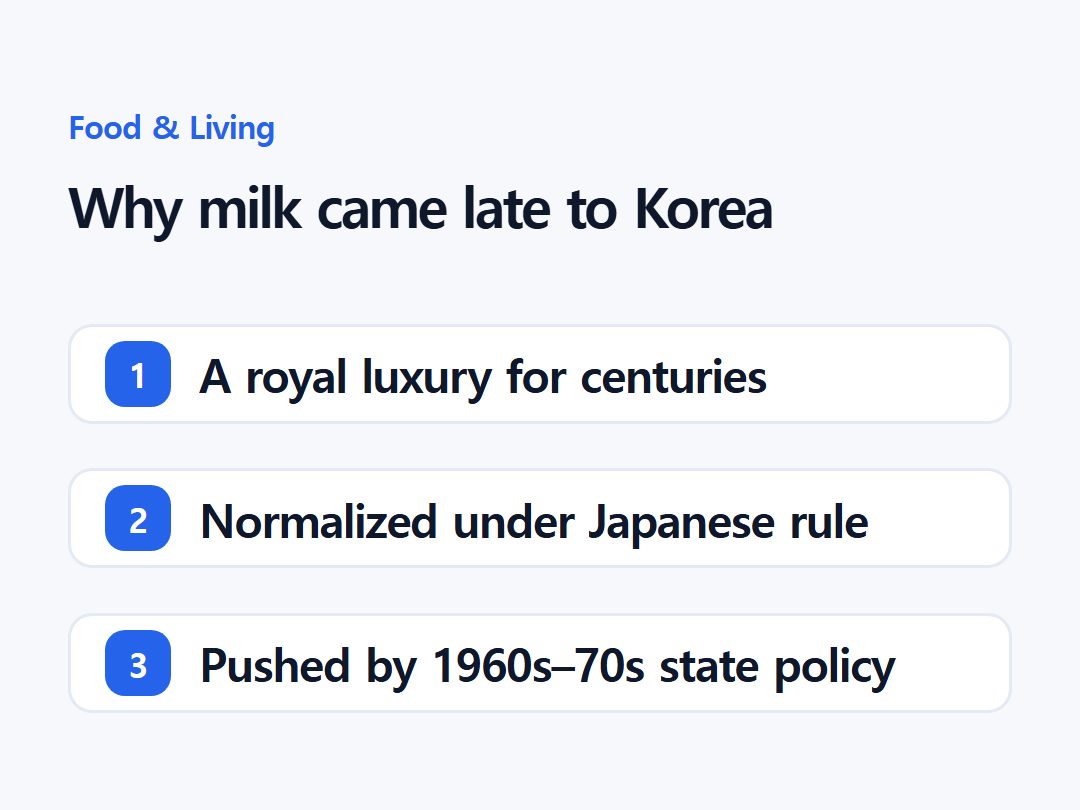
- A 2026 study found 31.9 percent lactose intolerance, not the often-cited 75 percent.
- Genes didn't change; milk simply arrived in Korea very late in history.
- Kimchi and anchovies supplied calcium for centuries before milk was an option.
The real picture is messier. A 2026 clinical study puts the number closer to 32 percent, and the reason so many Koreans avoid milk has as much to do with history as biology.

The "75 percent" figure everyone repeats
The widely quoted claim goes back to a 1994 study in the Korean Journal of Dairy Science, which tested 300 Korean adults with a lactose-barium mixture and found lactose intolerance in 75.7 percent of them. That number has been repeated in Korean media and international food writing ever since.
It fit a broader pattern. Large reviews of Asian populations have long reported lactose intolerance rates above 70 percent across China, Japan, Korea, and Vietnam, giving the figure a scientific pedigree that made it easy to treat as permanent and unchanging.
A 2026 study cut that number in half
In April 2026, researchers from Dankook University and Eulji University published a study titled "Prevalence and Distribution of Lactose Intolerance Among Koreans." It surveyed 623 people aged 14 to 59 about their milk-drinking habits and any digestive symptoms that followed.
Using gastrointestinal symptom criteria rather than a lab test alone, the team found a prevalence of 31.9 percent — less than half the commonly quoted figure. About 29.5 percent reported some discomfort within two hours of drinking milk, and most described the symptoms as mild to moderate.
The researchers were explicit that their findings contradict "the conventional belief that three out of four Koreans suffer from lactose intolerance." They also found no significant jump in symptoms between teenagers and people in their fifties, a detail that matters for what follows.
Genes explain the pattern, not culture
Lactose intolerance is not a Korean trait; it is the human default. Most mammals, including most adult humans worldwide, stop producing meaningful amounts of the enzyme lactase after weaning.
The exception is lactase persistence — the ability to keep digesting milk sugar into adulthood — which spread through a small number of populations with a long history of dairy farming. Geneticists trace the best-studied version of this mutation to farming communities in central Europe roughly 7,500 years ago, where it offered such a strong survival advantage that it spread rapidly once established.
Populations without that farming history, including most of East Asia, never picked up the mutation. So the 1994 and 2026 studies are not really contradicting each other on biology — most Korean adults likely do produce less lactase than they did as children. What has changed is how many people notice, and how severely.
Milk was for kings, not commoners
Korea's folk memory of milk goes back further than most readers expect. Legend holds that Jumong, the founder of the ancient kingdom of Goguryeo, was nursed on horse milk, and the 13th-century chronicle Samguk Yusa describes milk being served to kings on special occasions.
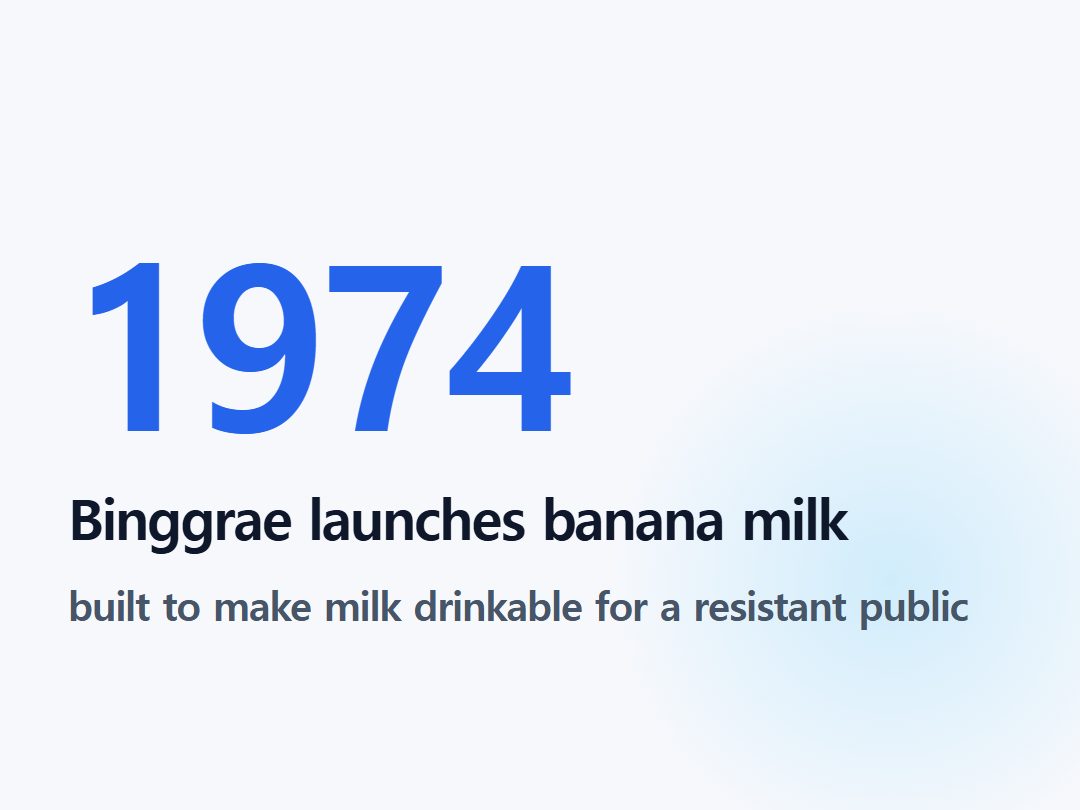
For most of Korean history, though, that is where it stayed — at the royal table. Through the Goryeo (918–1392) and Joseon (1392–1910) dynasties, milk was a rare privilege of royalty and the highest nobility, not a food ordinary households ever saw or needed.
Cow's milk arrives with colonial rule
The shift began under Japanese colonial rule (1910–1945). Newspapers and magazines of the period promoted condensed, powdered, and raw cow's milk as a modern substitute for breast milk, drawing on Western ideas about infant nutrition that were spreading through colonial-era media.
Korea's dairy industry got its first real infrastructure in 1937, when the Gyeongseong Milk Trade Association opened — the forerunner of today's Seoul Milk. Even so, milk remained a marginal, faintly foreign product for most families for decades afterward.
A government order for "milk people would like"
The Korean War added another entry point: American bases brought powdered milk and processed cheese into Korean food culture, some of which found its way into dishes like budae-jjigae (army-base stew).
Government policy did the rest. In the early 1970s, the Park Chung-hee government imported dairy cows from West Germany and began pushing daily milk drinking through schools and subsidies, convinced that dairy was essential to a healthier, taller generation.
The push ran into a wall: plain milk was unfamiliar, and many people found it hard to drink or got sick from it. The government's response was to order dairy companies to develop a milk that people would actually want.
The result, launched by Binggrae in 1974, was banana-flavored milk, built around a fruit so scarce under import restrictions that people bought the drink just to taste it. It remains Korea's best-selling single milk product, with roughly 800,000 bottles sold every day.
Why kimchi and anchovies did the job milk does elsewhere
Because dairy arrived so late, Korean cuisine built its calcium supply from other sources long before milk was an option. Three traditional foods carried most of that load:
- Napa cabbage kimchi, eaten at nearly every meal
- Dried and salted anchovies (myeolchi), used in broths and side dishes
- Fermented soybean pastes like cheonggukjang, whose fermentation process is thought to improve calcium absorption
Nutrition surveys of older Korean adults still find kimchi and anchovies among their top calcium sources — evidence that a substitution built over centuries didn't disappear once milk became widely available.
How Korea eats dairy today
Milk consumption did eventually take off: per-capita dairy intake rose roughly 25-fold between 1969 and 1987, before peaking in the late 1990s and gently declining since. But the country never fully converted to drinking plain milk the way Western diets did.
Yogurt filled part of that gap instead. Yakult's door-to-door saleswomen, known as "Yakult ajumma," began selling small bottles of fermented milk in the 1970s, and drinkable yogurt has grown into one of the fastest-expanding dairy categories in the country, driven by interest in digestive and probiotic health.
Cheese took a stranger path. A Belgian monk opened Korea's first cheese factory in the rural county of Imsil in the early 1960s, but cheese stayed a niche import until a Seoul restaurant's melted-cheese spicy-chicken dish went viral on television after the 2008 financial crisis, turning cheese-topped dishes into a mainstream trend almost overnight.
Today's dairy aisle reflects the intolerance data directly: lactose-free milk and low-lactose processed products are sold as an alternative to giving up dairy altogether, alongside a growing shelf of soy, oat, and almond-based drinks.
What the numbers still don't explain
The genetic case for widespread lactase non-persistence in East Asia is well established, but it doesn't map cleanly onto how many people report symptoms — 31.9 percent is a large gap from the 70-plus percent that older genetic surveys of the region would predict.
Researchers haven't fully resolved why. Candidate explanations include gut bacteria that adapt to small, regular doses of lactose, the buffering effect of eating dairy alongside other food, and the fact that self-reported surveys can miss people who avoided milk their whole lives and were simply never tested.
The 2026 study also found no meaningful rise in symptoms between its youngest and oldest participants, aged 14 to 59, which sits awkwardly next to the 1994 study's finding that intolerance climbed to 100 percent by age 70. Whether that reflects a real generational shift or two studies measuring different things is not yet settled.
How milk moved into the Korean diet
| Period | Development |
|---|---|
| Goryeo & Joseon dynasties (918–1910) | Milk a rare privilege of royalty and the highest nobility |
| 1910–1945 (Japanese colonial rule) | Condensed and powdered milk promoted as a modern infant food |
| 1937 | Gyeongseong Milk Trade Association opens, Korea's first dairy infrastructure |
| 1950s (Korean War) | U.S. bases bring in powdered milk and processed cheese |
| Early 1970s | Park Chung-hee government imports dairy cows, pushes school milk programs |
| 1974 | Binggrae launches banana-flavored milk to make milk more palatable |
| 1969–1987 | Per-capita dairy intake rises roughly 25-fold |
Frequently asked
Are Koreans really lactose intolerant?
A 2026 study of 623 people found about 32 percent showed lactose intolerance symptoms, far lower than the commonly quoted 75 percent figure from a 1994 study.
Why didn't Koreans traditionally drink milk?
Milk was reserved for royalty through the Goryeo and Joseon dynasties, only becoming widely available after Japanese colonial rule and later government dairy campaigns in the 1970s.
Why is banana milk so popular in Korea?
The government ordered dairy companies to make milk more appealing, and Binggrae's 1974 banana-flavored milk became the fix, remaining Korea's best-selling single milk product with about 800,000 bottles sold daily.
Sources
Every factual claim above is traceable. We do not translate articles — we gather facts from multiple outlets and write them ourselves.
- Lactose Intolerance Among Koreans Found to Be Less Than Half the Previously Believed Rate — The Asia Business Daily
- Milk drinking started around 7,500 years ago in central Europe — UCL News
- Seoul Milk: the milk of the nation for 79 years — Korea.net
- Long time friend, banana milk fills your heart — Korea.net
- Kimchi and Cheese: How crisis made dairy dominate Korean cuisine — ZenKimchi
- The History of the School Milk Program in Korea — Journal of the Japan Dietetic Association (J-STAGE)
- MAFRA School Milk Program, Republic of Korea — International Dairy Federation
- Fermented Foods of Korea and Their Functionalities — Foods (MDPI)
- Changes in Nutritional Status Through Low-Lactose Processed Milk Consumption in Korean Adults With Lactose Intolerance — Clinical Nutrition Research