A fan call is a video or phone call between a K-pop idol and a paying fan, and it rarely lasts longer than two minutes. Fan accounts and ticket guides put the price anywhere from $17 to well over $100 for that window.
The short version
- Fan calls last one to two minutes and cost $17 to over $100.
- Most fan calls are raffle entries won by buying physical albums.
- Fan calls emerged in March 2020 as a pandemic fansign substitute.
The number looks strange until you break it down by the second. Fan calls are not really selling a conversation — they are selling metered access to an idol's attention, and the industry has built a pricing logic around exactly how long that attention lasts.
A minute or two, and a price that swings wildly
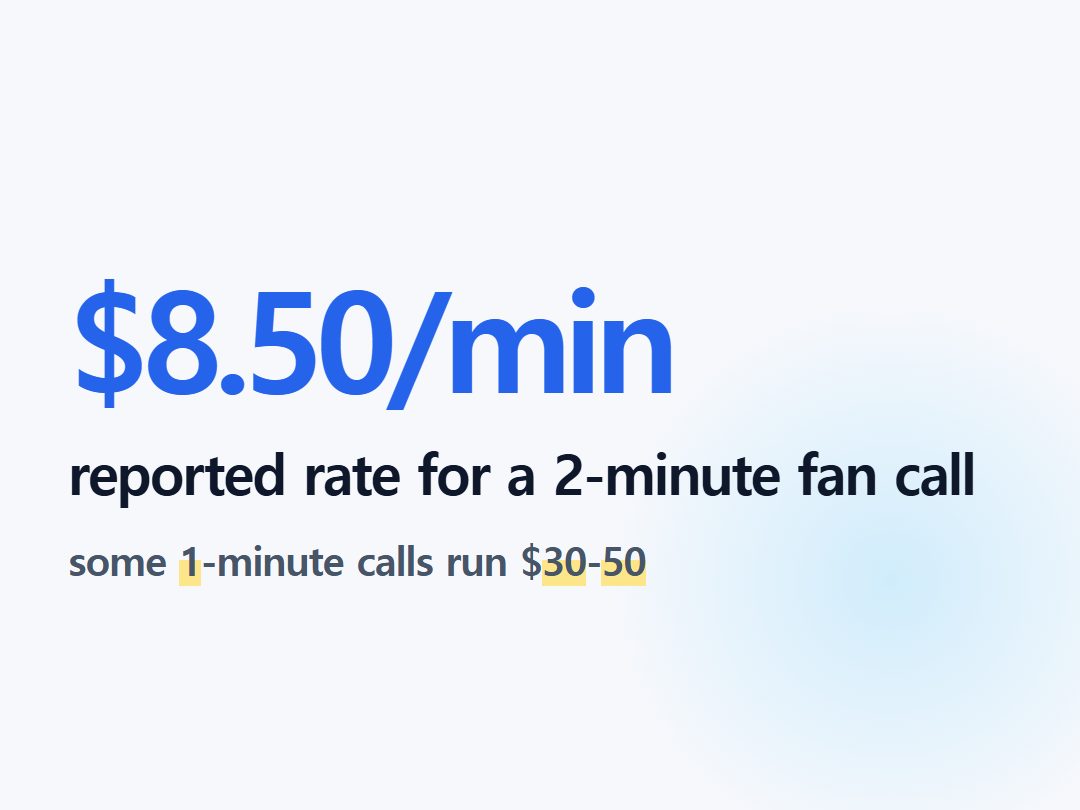
Reported prices cluster in a wide band. Guides and fan accounts describe roughly $17 for a two-minute call, $30–50 for a one-minute call sold directly by a smaller act's own store, and $100 or more once a slot changes hands through resale.
Duration barely moves: it is almost always one to two minutes per idol, sometimes with staff or a translator on the line. When a full group is on a call, that time is split further, member by member, in a fixed order.
Two ways in — a lottery disguised as an album, or a straight sale
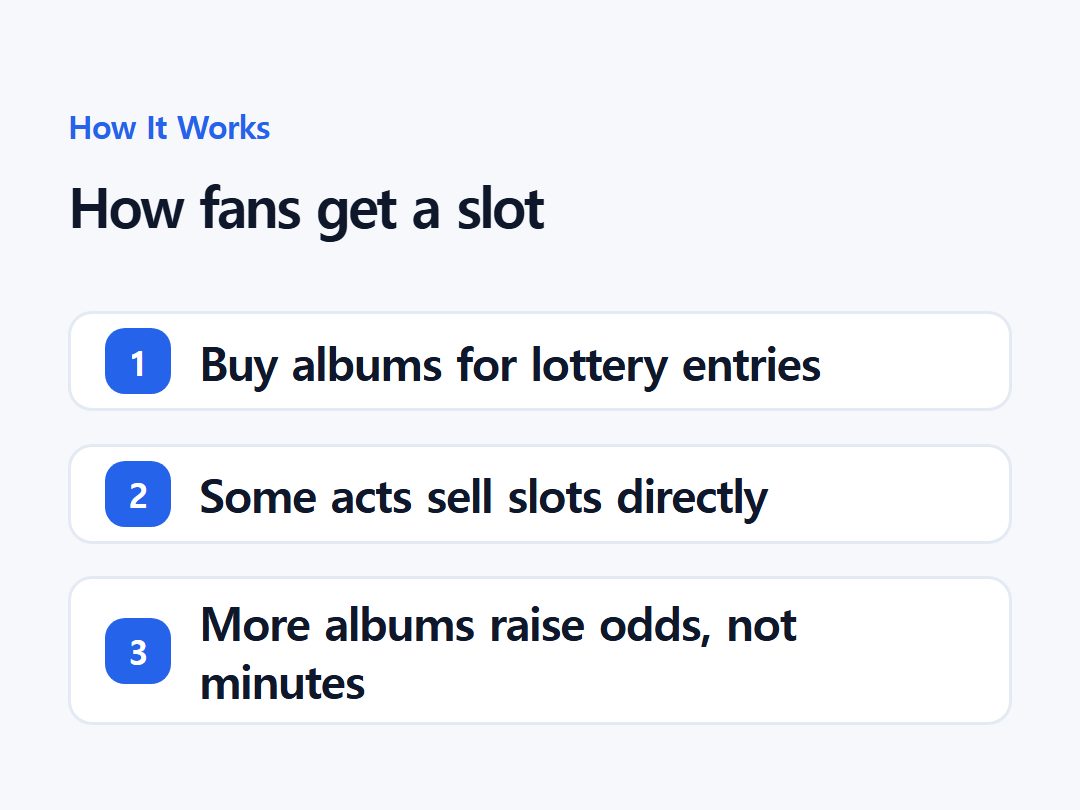
Most fan calls are not bought directly. Fans buy a physical album released through the idol's agency — the management company that trains, produces, and markets the act — and each copy becomes one entry in a raffle for a call slot.
Buying more albums does not guarantee a win, but it raises the odds, and fandoms track roughly how many copies past winners bought to get in. Less established acts sometimes skip the raffle and sell a slot outright, which is where the $30–100 direct prices come from.
Either route ends the same way: a fixed, short block of paid time with an idol, priced by scarcity rather than by any published rate card.
What the call actually buys — seconds, not conversation
Fans compare notes on what fits into two minutes: a greeting, a question or two, maybe a song request. There is rarely room for more before staff move the line along.
That is by design. The product is not the content of the exchange — it is the fact that an idol's one-to-one attention was rationed to a single person for a fixed, short span. Scarcity is what is being sold, not conversation.
The math behind a call that can cost more than a concert ticket
Line up the reported figures and a rate appears: $17 for two minutes works out to roughly $8.50 per minute, and $30–50 for a single minute runs several times higher again. Both dwarf what fans pay per minute of an actual concert.
That gap is the part international readers usually miss. Fan calls are not priced against other entertainment — they are priced against how rare unmediated access to one specific person is, and shorter calls read as more exclusive, not less valuable.
Researchers studying platforms like Weverse have coined a term for what an idol performs on the other end of that line: relational labor, the emotional-engagement work of building and maintaining a fan's sense of personal connection, sold as a product in its own right.
The same intimacy, sold by the month instead of the minute
Fan calls sit inside a wider set of paid-intimacy products. DearU's Bubble app, for example, charges a recurring monthly fee per idol for messages styled to look like private one-to-one texts.
Bubble raised that fee from 4,500 won (about $3.99) to 5,000 won (about $4.49) per idol per month starting July 2025. HYBE's Weverse runs a comparable direct-messaging tier, also priced member by member.
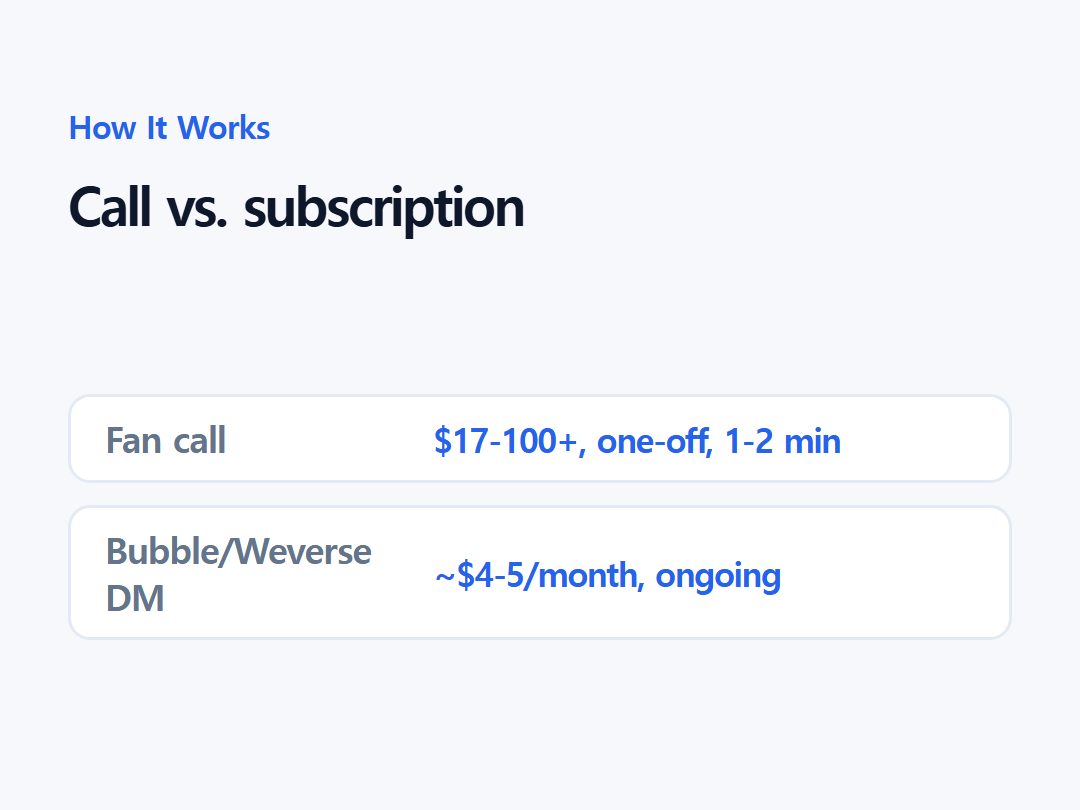
| Product | What you get | Typical price |
|---|---|---|
| Fan call | 1–2 minutes, one idol, one-off | $17–100+ |
| Bubble / Weverse DM | Ongoing messages, one idol | ~$4–5 per month |
The two models answer different needs: a call sells one bounded moment of exclusivity, a subscription sells an ongoing sense of daily contact. Together they turn a single emotional relationship into two separate recurring products.
Where the format came from — a 2020 workaround, not a plan
Fan calls did not exist before the pandemic. In-person fansigns — events where winners meet an idol briefly to get an album signed — were the standard until COVID-19 made gatherings impossible.
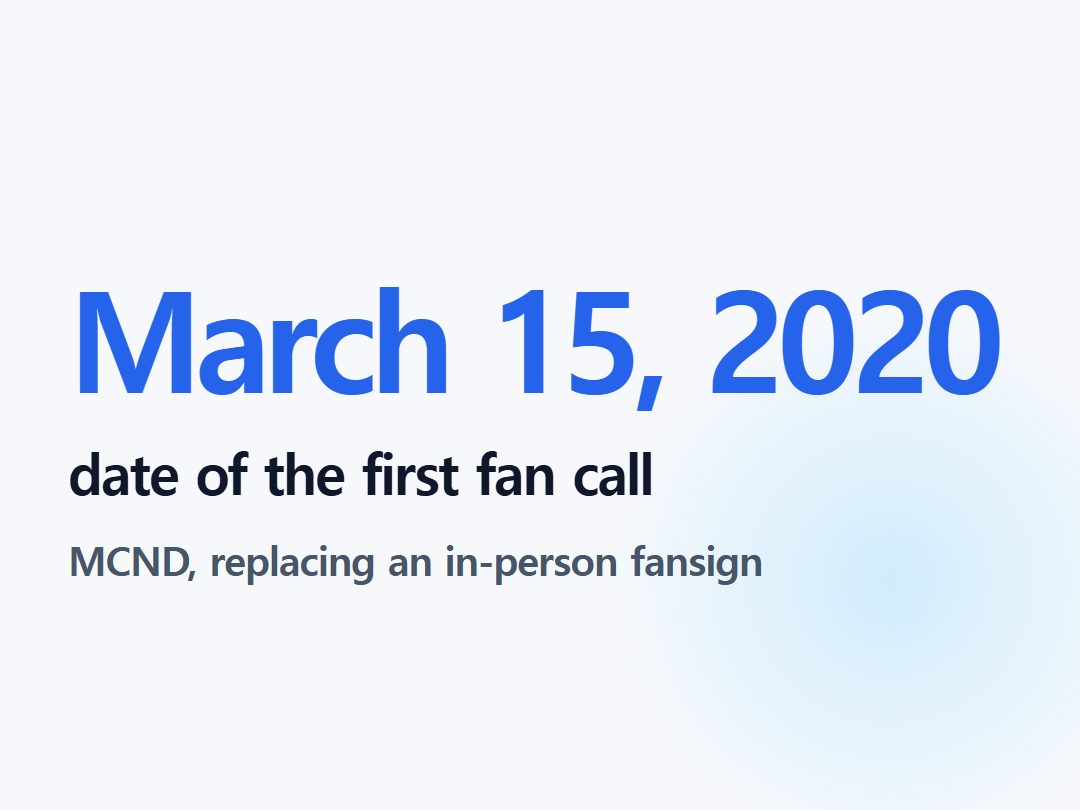
Boy group MCND, managed by Top Media, held what is widely credited as the first fan call on March 15, 2020, passing a phone between members so each winner could speak to every member in turn. EXO's Suho and soloist Sejeong followed within weeks, and the format spread across the industry inside a single album cycle.
Why the format outlived the pandemic that created it
In-person fansigns resumed once gathering restrictions eased, but fan calls did not disappear. For fans outside Korea, a call requires no flight, no visa, and no wait outside a venue — only an internet connection at the scheduled time.
That accessibility changed who the product was really built for. A format invented to substitute for an in-person event became, for much of the international fanbase, the only version of that event they could ever realistically attempt.
The album count fans run before a release even drops
Because most fan calls run on a lottery, fans do a specific calculation before an album drops: how many copies, at what odds, for how many minutes. Reports describe fans buying anywhere from a handful to more than 100 copies of a single release chasing one slot.
- Randomized photocards inside albums push repeat purchases on their own
- Chart rankings and award-show points reward raw sales volume
- A fan-call raffle entry adds a third incentive on top of both
Industry insiders have pushed back on the pattern. Former ADOR producer Min Hee-jin said in 2024 that she wished companies would stop "random photocards and push-out tactics," calling the current album market "abnormal" — a rare on-record admission that stacked incentives, not fan demand alone, drive the volume.
What agencies do not publish — a real per-minute rate card
No agency releases an official per-minute price list for fan calls. What is public comes from fan-run guides, resale listings, and individual accounts of what a given slot cost — consistent enough to establish a range, not precise enough to verify for any single artist.
That opacity is itself part of the model. Because calls are sold through album lotteries or case-by-case listings rather than a fixed storefront, there is no published benchmark a fan can point to and call unfair.
Does paying more guarantee more time with the idol you wanted?
Not necessarily. In a group call, order and per-member time are usually fixed regardless of how many albums a fan bought — more copies raise the odds of winning a slot at all, not the length of the call itself.
Individual events have also drawn scrutiny over boundaries: coverage has reported Seventeen's Mingyu ending a call after a fan asked to see his abs, and fans praising Red Velvet's Seulgi for declining an inappropriate request during a call of her own.
Album sales tied to these lotteries are falling industry-wide — down roughly 2.56 million units in 2025 versus 2024, the second consecutive annual decline — even as agencies lean harder on merchandise-style album editions to keep the raffle mechanism attractive. Whether fan calls keep scaling as album sales soften is still an open question.
Fan call vs. paid-DM subscription
| Product | What you get | Typical price |
|---|---|---|
| Fan call | 1–2 minutes, one idol, one-off | $17–100+ |
| Bubble / Weverse DM | Ongoing messages, one idol | ~$4–5 per month |
Frequently asked
How much does a K-pop fan call cost?
Reported prices range from about $17 for a two-minute call to $30–50 for a one-minute call, and over $100 when a slot is resold.
How do you get a K-pop fan call?
Most fan calls are won through a raffle tied to buying physical albums from the idol's agency; some smaller acts sell a slot directly instead.
Why are K-pop fan calls so short?
Calls are capped at one to two minutes per idol by design, since the product being sold is rationed, one-on-one attention rather than an actual conversation.
Sources
Every factual claim above is traceable. We do not translate articles — we gather facts from multiple outlets and write them ourselves.
- Kpop Fan Call: Ultimate Guide to Winning a Fan Call Event — Cute Frog Creations
- The History and Growth of Kpop Fansign Video Calls — KpopWise
- Fan communication app Bubble to increase prices — allkpop
- Relational Labor: The Hidden Cost of K-Pop's Manufactured Intimacy — KpopWave
- Mediating Intimacy: The K-pop Industry's Commercialization of Parasocial Relationship Between Adolescent Filipino Fans and Their Male Idols Via Weverse Application — De La Salle University / IAFOR
- Why K-pop albums are increasingly resembling merchandise — The Korea Times
- K-Pop in crisis? Around 93m albums were sold in South Korea in 2024 – 23m fewer than in 2023 — Music Business Worldwide
- The Shadow of Album Sales: A Harmful Tradition in K-Pop That Must End — The Dankook Herald
- SEVENTEEN's Mingyu allegedly hangs up video call after fan asks to see his abs — Sportskeeda
- Fans praise Red Velvet's Seulgi for declining inappropriate TikTok challenge request during fan call — Sportskeeda