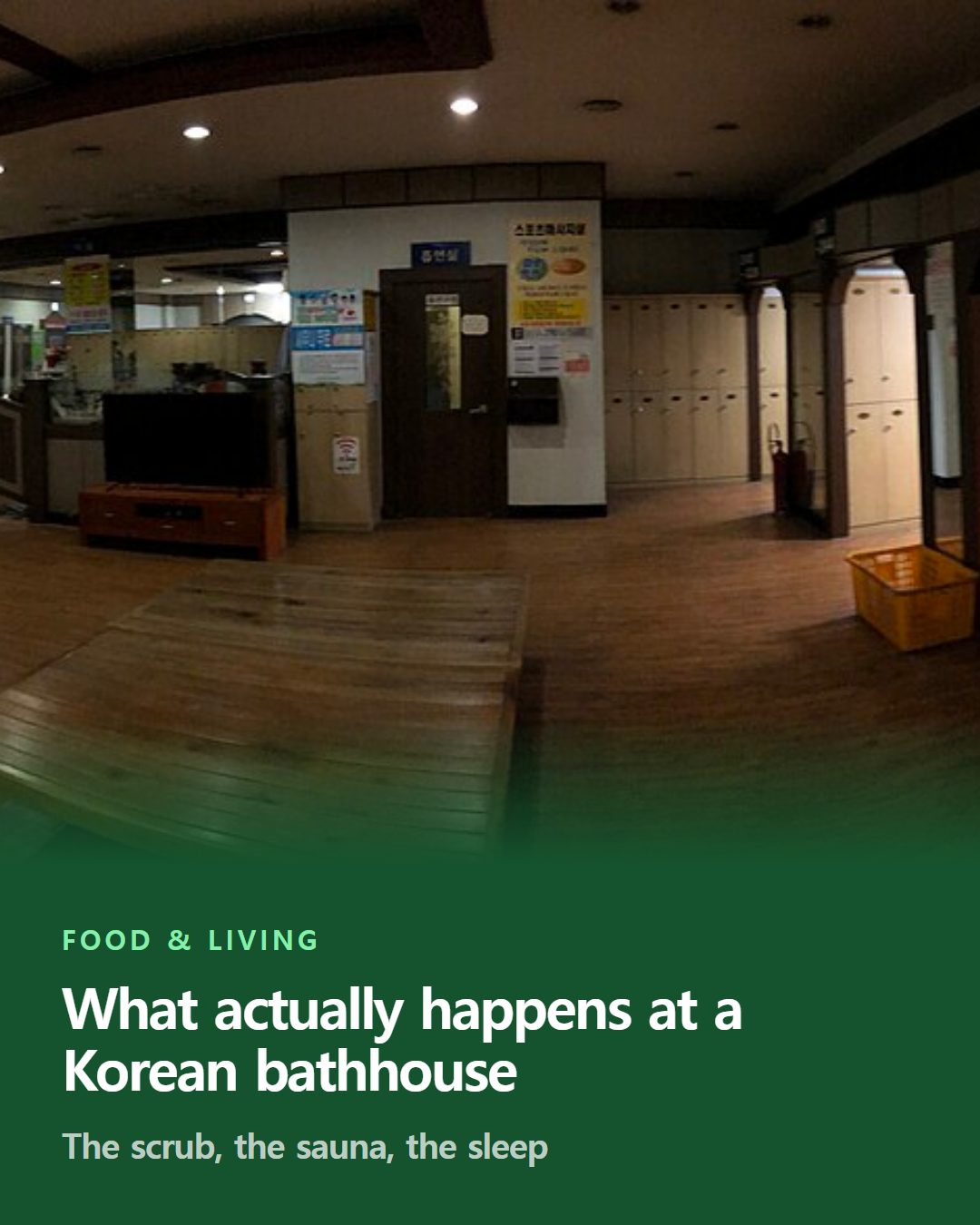
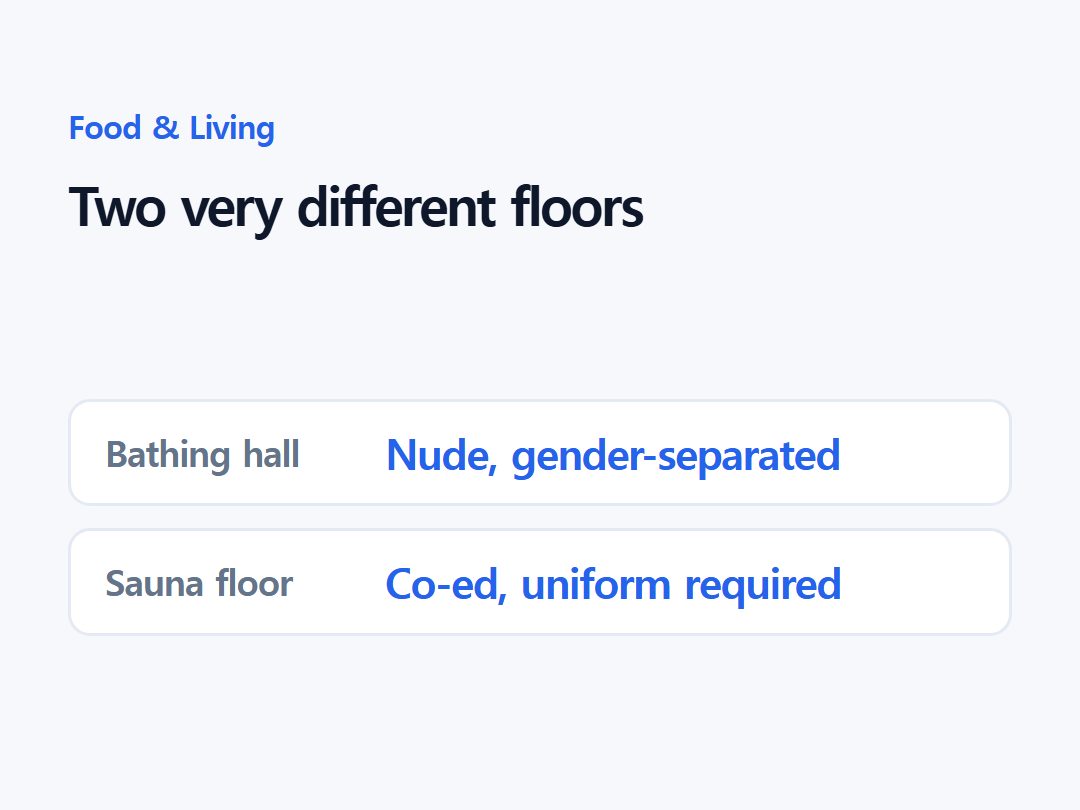
A jjimjilbang (찜질방) is a 24-hour Korean bathhouse-and-sauna complex where people bathe, get scrubbed down by a stranger, eat, nap, and sometimes stay the whole night. The bathing floor is nude and gender-separated; the sauna floor above it is co-ed and dressed in matching pajamas.
The short version
- A jjimjilbang is a 24-hour bathhouse: nude bathing floor, co-ed pajama floor above.
- A seshinsa scrub costs about 35,000 won and strips off dead skin.
- The 'Italy towel' scrub mitt is actually a Korean invention, not Italian.
For a first-time international visitor, the mechanics — and the reasons behind them — are rarely explained anywhere. This is what actually happens, in order, and why each step exists.
Why the shower comes before the tub, not after
Every visit starts the same way: pay a flat entry fee, usually 8,000 to 15,000 won (about $6–11), and take a locker key that doubles as the tag for a shoe cubby at the door.
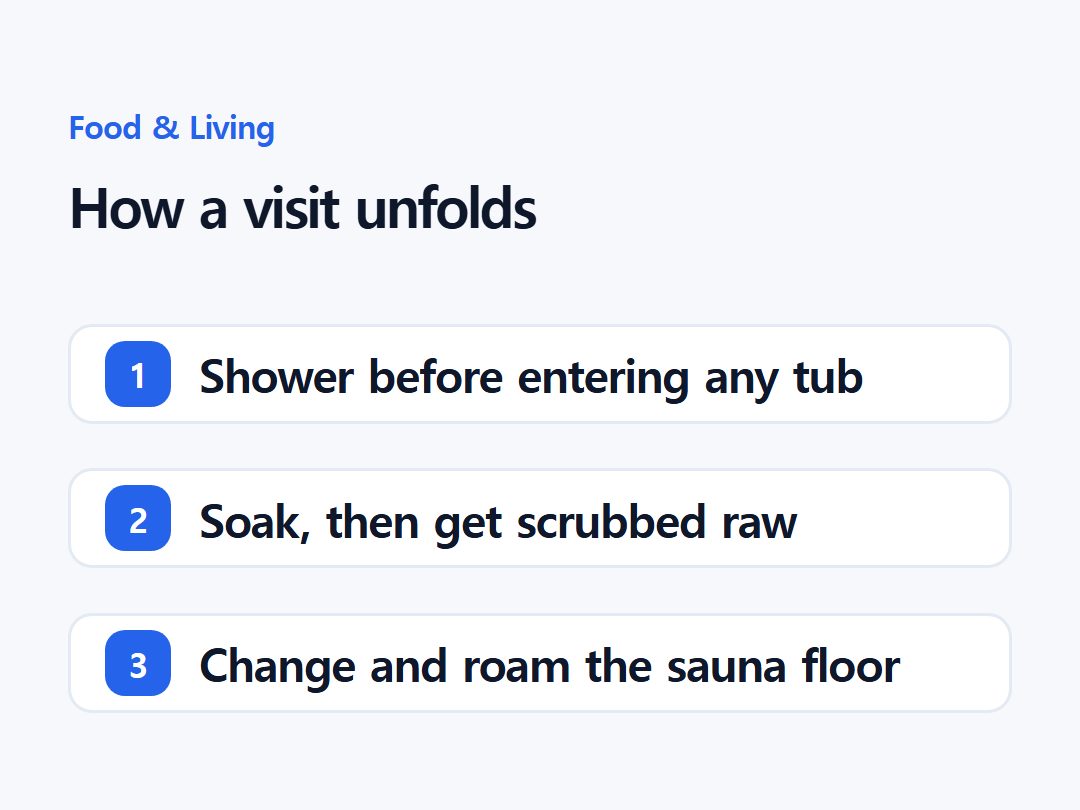
Inside the locker room, clothes come off entirely before entering the bathing hall, called a mogyoktang (목욕탕). Full nudity is the baseline condition for everyone in the room — staff included, not just other bathers.
Before touching any of the shared hot tubs, bathers are expected to shower and rinse thoroughly at an individual stall first. Skip this step and a regular will very likely send you back to wash, because the tub water is shared, not private.
What a 때밀이 scrub actually involves
Bathers who want the full treatment soak in a hot tub for 15 to 30 minutes first — long enough for hot water to soften the outer layer of dead skin.
They then lie down on a plastic-covered table beside the tubs, where a seshinsa (세신사), a bathhouse scrub attendant of the same gender as the bather, scrubs the entire body with a rough mitt.
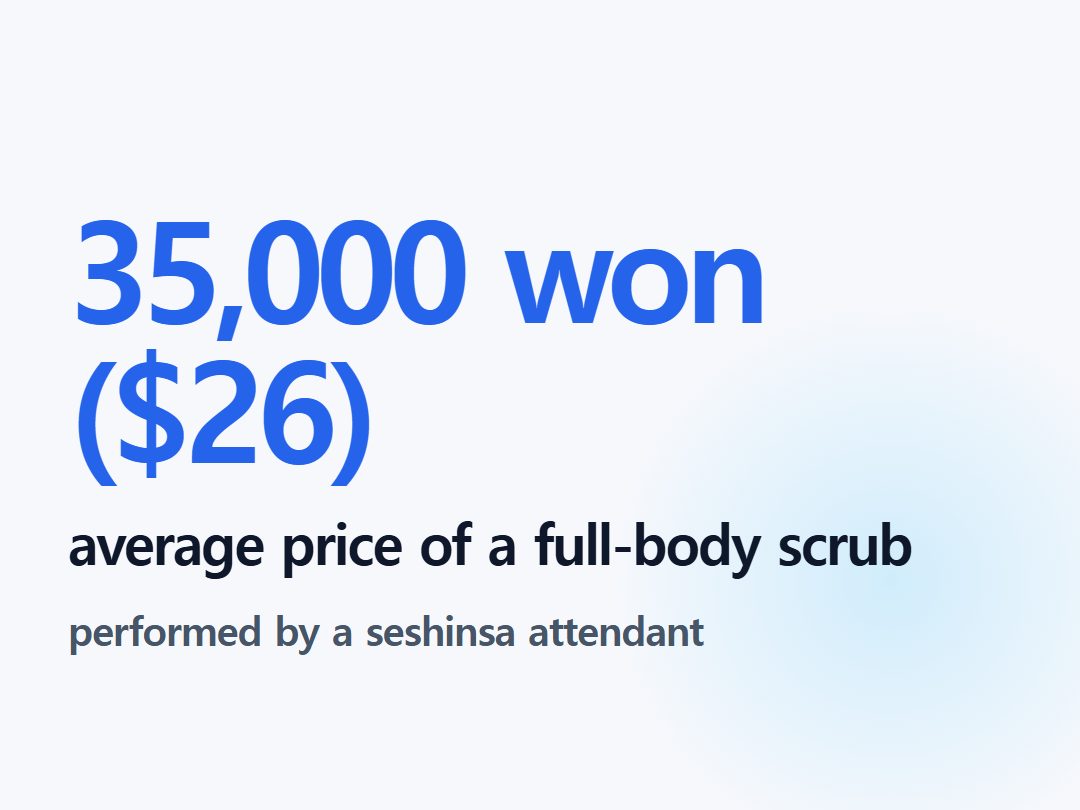
The service — called seshin (세신), or 때밀이 in everyday speech — runs about 35,000 won ($26) at most bathhouses. Small gray rolls of dead skin coming off the arms and back are the visible proof it worked, not a side effect to be embarrassed about.
A rough cloth that has nothing to do with Italy
The tool that makes this possible is a small, coarse mitt known as the Italy towel (이태리타올) — despite the name, it is a Korean invention with no Italian design behind it.
Records cited by Korean textile historians credit a Busan towel manufacturer, named in different accounts as Kim Won-jo or Kim Pil-gon, with importing a coarse viscose rayon fabric from Italy in the late 1960s, originally meant for ordinary towels.
The fabric turned out to be too rough for that job — but tests at a local bathhouse showed it was excellent at scrubbing off dead skin. A patent for the compressed fabric followed in 1968; once it expired in 1976, other manufacturers copied the design, and it spread into nearly every Korean bathroom.
From nude bathhouse to co-ed pajama floor
Once the bathing is finished, towel off and put on the jjimjilbok (찜질복) — a plain cotton uniform, often one color for each gender, handed out at check-in.
This is the point where the two genders reunite. The upper floors of a jjimjilbang are co-ed, clothed, and function less like a spa and more like a public living room.
| Mogyoktang (bathing hall) | Jjimjilbang (full complex) | |
|---|---|---|
| Nudity | Required, gender-separated | Only in the bathing section |
| Dress elsewhere | None — bathing only | Co-ed uniform (jjimjilbok) |
| Typical stay | 30–90 minutes | 3 hours to overnight |
| In use since | 1925 | Early 1990s |
Typical upper-floor facilities include:
- Themed heat rooms — salt, jade, charcoal, or ice-walled
- A shared nap room with floor mats
- A snack counter serving sikhye (a sweet rice drink) and eggs roasted in the sauna's heat
- Sometimes a PC room, karaoke booth, or arcade corner
Why mandatory nudity is the biggest culture shock
For many international visitors, the hardest adjustment is not the scrub itself — it is that nudity in the bathing hall is universal and unremarkable to Koreans.
Korean bathhouse culture treats the bathing hall the way a locker room treats a shower stall: everyone is naked, so nobody looks twice. Young children, including boys, are routinely brought into the women's side by their mothers, since gender separation by household is a later habit rather than an infant rule.
What can read as exposure to a foreign visitor is, to a Korean bather, simply hygiene infrastructure — the same instinct that makes a shared gym shower unremarkable. A short list of unwritten rules follows from that baseline:
- Keep conversation quiet inside the bathing hall
- Bring a small personal towel — one is not always provided free
- Expect some venues to restrict large tattoos, a policy tied to old associations with organized crime rather than any bathing rule
The back-scrub as family duty, not spa luxury
In Korea, the scrub itself carries a family meaning that a Western spa-treatment framing misses. A parent scrubbing a child's back, or an adult child scrubbing an elderly parent's, is a recognized small act of care between generations.
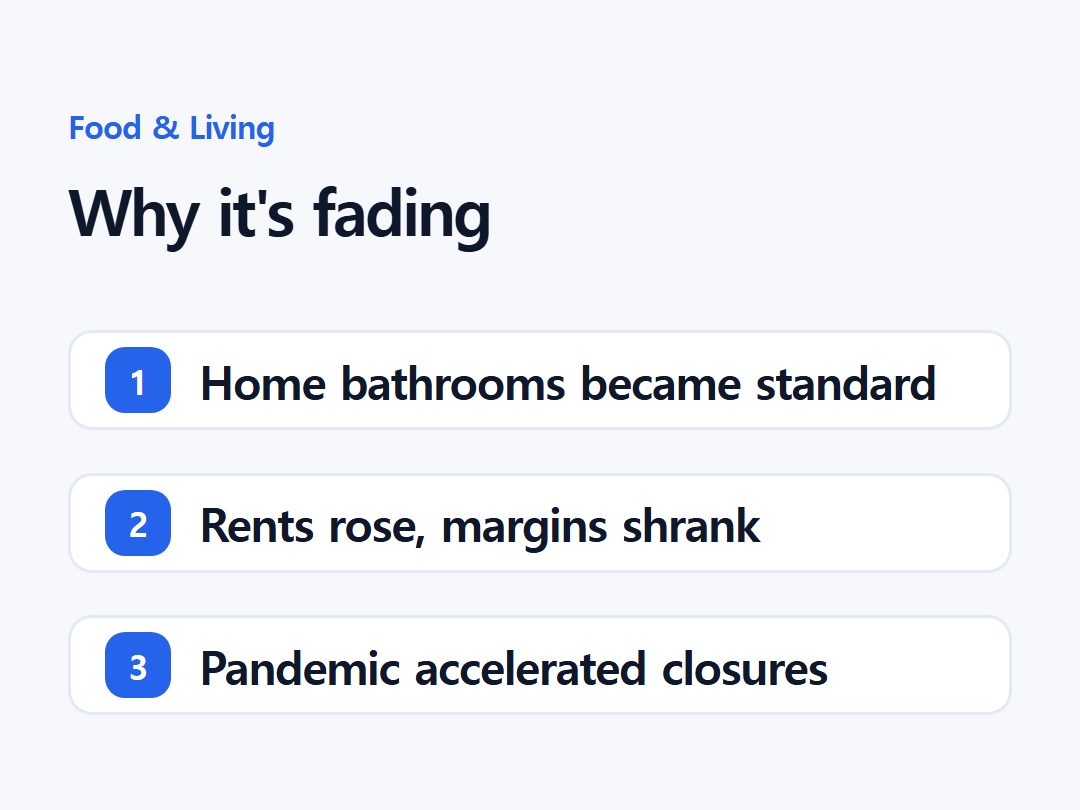
That ritual has been fading along with the venues that hosted it. As private bathrooms became standard in Korean apartments from the 1970s onward, the reason for regular family trips to the neighborhood bathhouse quietly disappeared.
What remains today is largely transactional: a paid seshinsa performing a service that, within living memory, was more often something family members did for each other for free.
From a 1925 hygiene measure to a 24-hour institution
The public bathhouse itself is not ancient in its current form. Seoul's first modern public bathhouse opened in 1925, part of an effort to bring bathing to households without heated water — at the time, most Korean homes had none.
That model held for decades. Through the 1970s, few homes had a private bathroom, so the neighborhood mogyoktang was less a treat than a weekly necessity for most families.
The jjimjilbang — with its heated theme rooms, matching uniforms, and overnight stays — is a distinctly newer layer on top of that. The format is generally traced to Busan around 1993, and it spread fast: by 1995, more than 700 sauna complexes were operating nationwide.
Why thousands of neighborhood bathhouses have closed
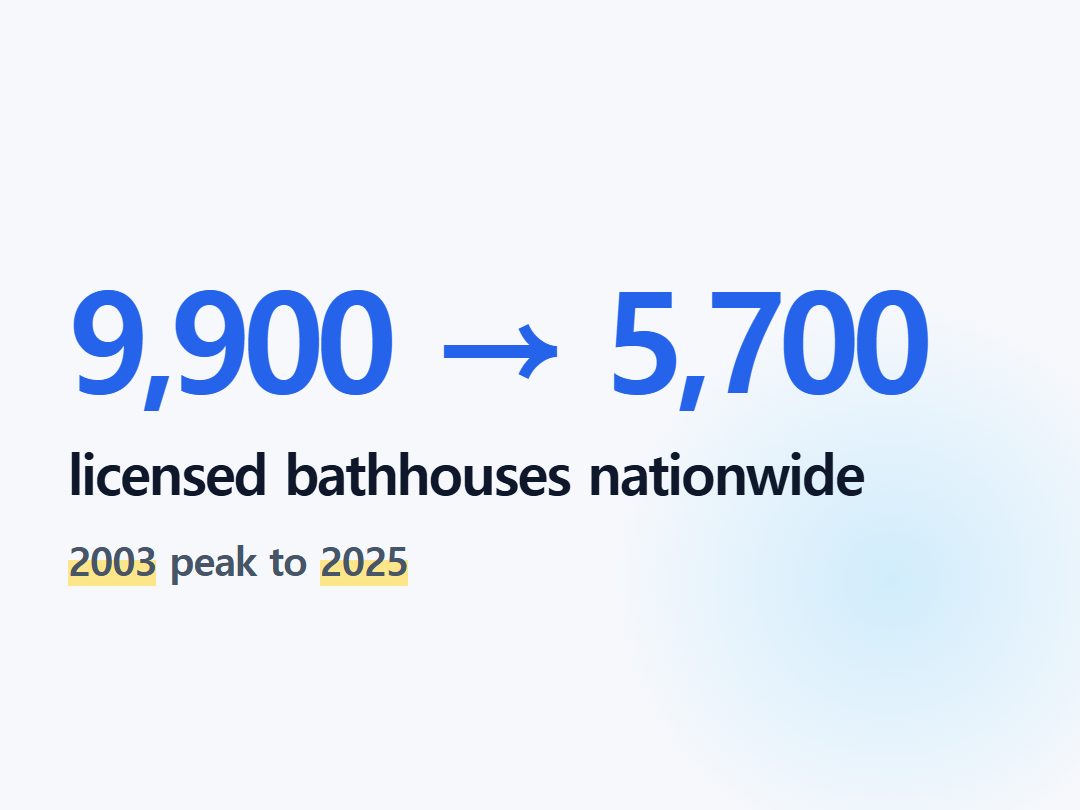
Korea's licensed bathhouses peaked at roughly 9,900 in 2003–2004, according to Ministry of the Interior and Safety data reported by Korean outlets, then began a steady decline as private bathrooms became standard in new housing.
By 2022 that number had fallen to about 6,000. Lawmakers citing more recent ministry figures put the 2025 count at roughly 5,700 — a drop of more than 13 percent since 2020 alone.
Rural areas without private baths have felt this hardest. A handful of local governments, including Taebaek in Gangwon Province, have started opening new public bathhouses specifically for elderly residents who still lack home bathing.
What a Netflix film changed, and what it didn't
In 2026, a bathhouse scene in the Netflix animated film K-Pop Demon Hunters gave the jjimjilbang a burst of international attention it had not had before. Korean travel platform Creatrip reported that bookings for related spa experiences rose 115 percent in the summer months after release, compared with the previous spring.
Inside Korea, a separate but related revival is underway among younger Koreans, who increasingly organize sauna meetups through neighborhood apps, treating the bathhouse as a deliberately phone-free space for conversation rather than a chore.
Neither trend reverses the underlying math. The number of neighborhood bathhouses is still shrinking even as the largest jjimjilbang complexes, and the scrub ritual itself, draw more curious visitors than before.
Mogyoktang vs. jjimjilbang
| Mogyoktang (bathing hall) | Jjimjilbang (full complex) | |
|---|---|---|
| Nudity | Required, gender-separated | Only in the bathing section |
| Dress elsewhere | None — bathing only | Co-ed uniform (jjimjilbok) |
| Typical stay | 30–90 minutes | 3 hours to overnight |
| In use since | 1925 | Early 1990s |
Frequently asked
How much does a jjimjilbang scrub (seshin) cost?
The seshin scrub, done by an attendant called a seshinsa, runs about 35,000 won ($26) at most bathhouses.
Do you have to be naked in a Korean bathhouse?
Yes — the mogyoktang bathing hall requires full nudity for everyone, including staff, but the upper jjimjilbang floors are co-ed and clothed in matching uniforms.
Is the Italy towel actually from Italy?
No — despite the name, it's a Korean invention; a Busan manufacturer adapted a coarse Italian-imported fabric meant for ordinary towels into the scrubbing mitt in the late 1960s.
Sources
Every factual claim above is traceable. We do not translate articles — we gather facts from multiple outlets and write them ourselves.
- Korean Public Bathhouse (Mokyoktang): Cultural Guide — Daebak
- Jjimjilbang — Wikipedia
- Italy towel — Grokipedia
- Busan couple documents Korea's bathhouse heritage — The Korea Times
- Why Korea's local governments are trying to sustain bathhouses — The Korea Herald
- At Korean saunas, strangers become friends through sweat and soaking — The Korea Herald
- The K-Pop Demon Hunters travel craze: why set-jetters are choosing Seoul — Euronews


