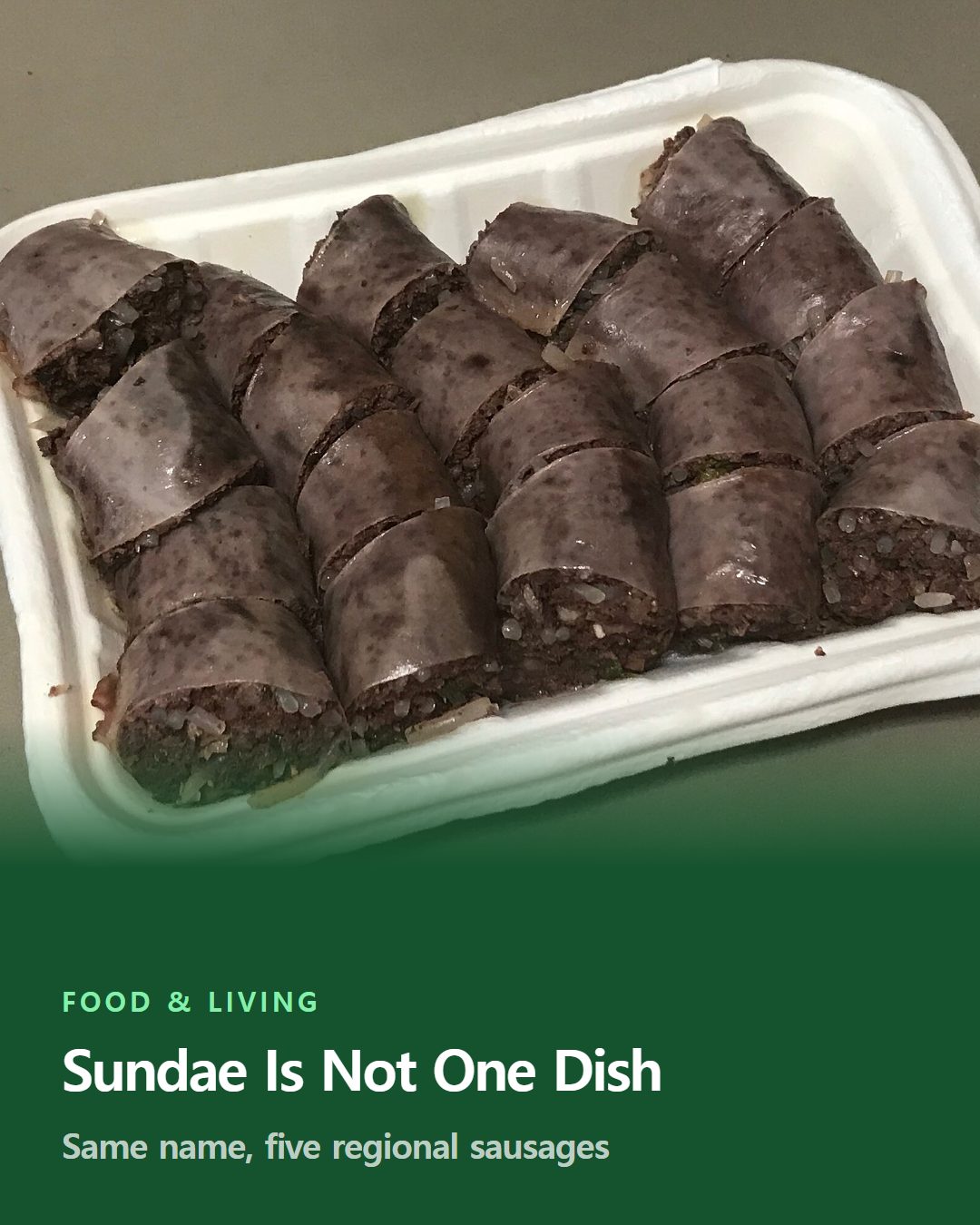
Order 순대 (sundae) in Seoul and in Jeonju, and you may not recognize it as the same food. The Korean word covers a wide family of stuffed-intestine sausages that change casing, filling, and dipping sauce by region — closer to how "sausage" covers everything from chorizo to bratwurst than to one fixed recipe.
The short version
- Korean sundae varies by region — casing, filling, and sauce all change locally.
- Glass-noodle sundae is a postwar substitution, not the original recipe.
- Dipping sauce signals region: salt, chojang, ssamjang, saeujeot, or soy sauce.
Most international visitors encounter only the version sold at pojangmacha (street food carts) or in convenience stores: a glass-noodle sausage, sliced into coins, dipped in salt. That is one regional variant among many, not the standard.
The gap matters because Korean diners navigate this without thinking: someone from Cheonan expects one filling, someone from Busan expects a different sauce, and both are right.
Export write-ups and food-tour menus tend to describe sundae as one fixed dish — a flattening that would be like explaining "pizza" using only a description of Chicago deep dish.
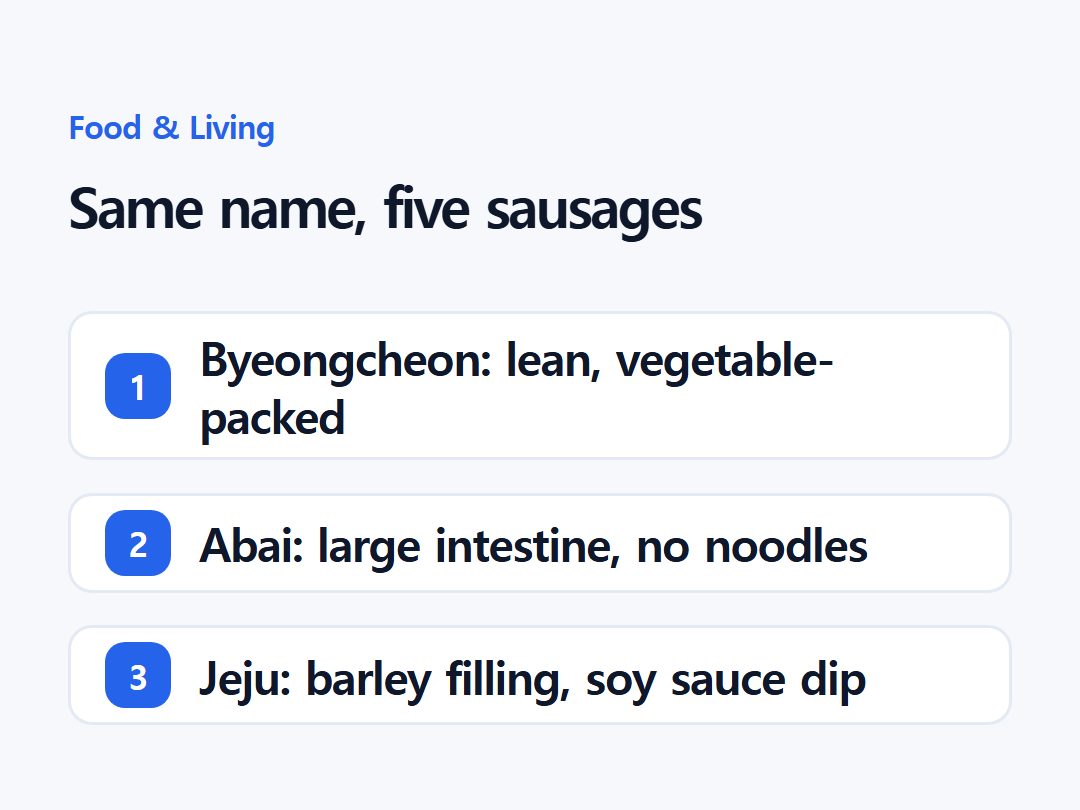
Five regions, five different sausages
Sundae is a market food, and market foods reflect whatever a region has on hand. The result is a set of regional styles that share a cooking method — steaming a stuffed casing — and little else.
- Byeongcheon sundae (Cheonan): small intestine, little to no glass noodle, packed with cabbage and vegetables
- Abai sundae (Sokcho): large intestine casing, glutinous rice and tofu instead of noodles
- Pi sundae (Jeonju/Jeolla): blood-heavy filling, low in carbohydrate, more intense in flavor
- Baek sundae: made without blood at all, pale and mild, usually stir-fried
- Jeju sundae: barley or grain filling instead of rice, reflecting the island's poor rice-growing land
None of these is a variation on a "real" sundae. Each developed independently around local ingredients.
Korean food references catalog well over a dozen additional named variants beyond these five, including squid, pollock, and meat-free temple versions — a range that reflects how localized market food remained before national supply chains and franchise restaurants existed.
The casing changes the sausage more than the filling does
Most people assume the filling defines sundae. The casing matters just as much: small intestine gives a thinner, chewier bite, while large intestine — used for abai sundae — is wide enough to hold a denser, rice-heavy filling that eats more like a terrine than a sausage.
That is also why abai sundae looks so different on a plate: cut into thick rounds nearly the width of a fist, rather than the finger-thick coins sold elsewhere.
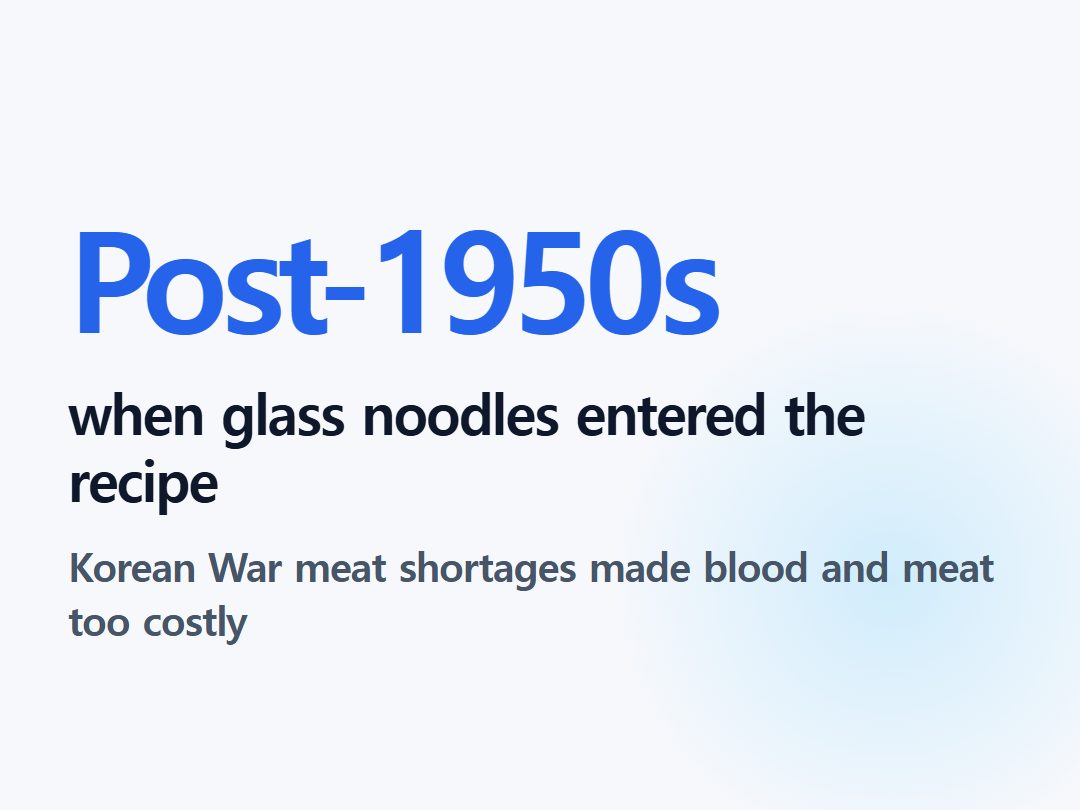
Glass noodles are a wartime substitution, not the original recipe
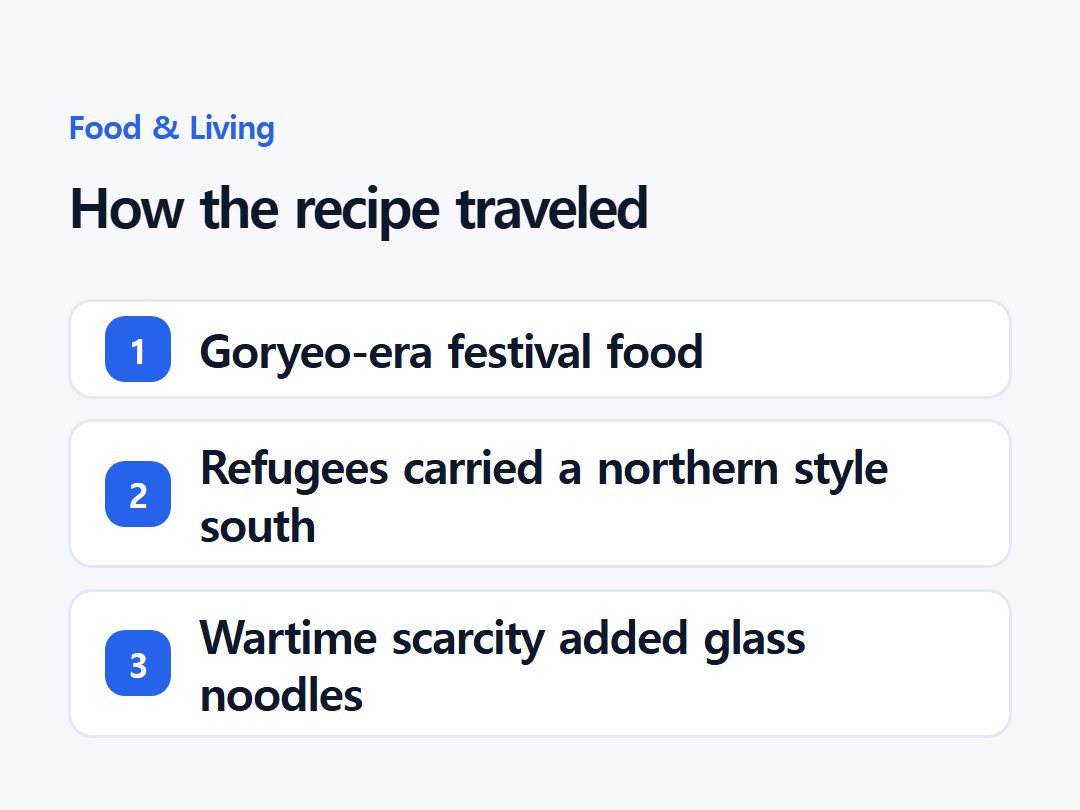
The glass-noodle (dangmyeon) filling most international visitors meet first is a relatively recent addition. Sundae itself is older: food historians trace stuffed-intestine sausages in Korea back to the Goryeo period (918–1392), when wild boar blood and meat filled a dish reserved for festivals and holidays.
After the Korean War, meat was scarce and expensive. Cooks stretched the filling with cheap sweet-potato starch noodles, and the dish shifted from an occasional luxury to an everyday street snack sold at open-air markets and food stalls.
Regional styles that kept the older, blood- and meat-heavy filling — like pi sundae — sit nutritionally close to the opposite of the noodle version: low in carbohydrate, higher in protein and fat.
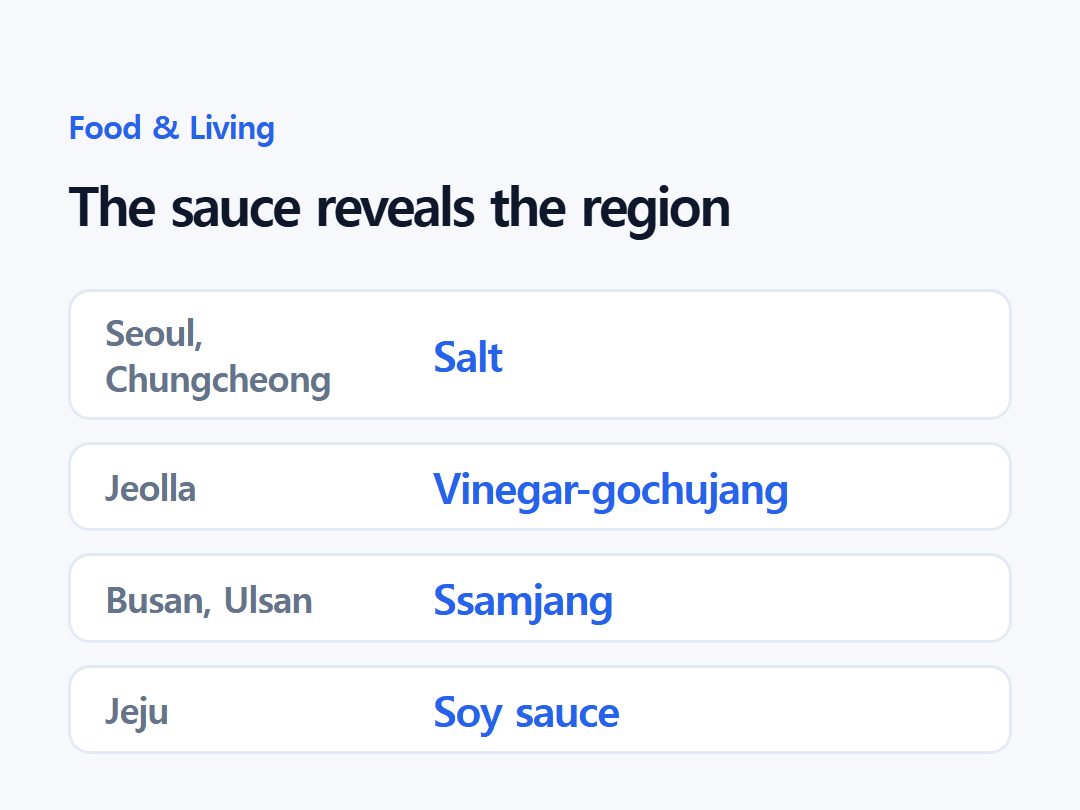
The dipping sauce works like a regional passport
Korean sundae shops often skip a written sauce menu, because everyone local already knows the local sauce. For an outsider, the sauce is a quick clue to where you are.
| Region | Typical dip |
|---|---|
| Seoul, Gyeonggi, Chungcheong | Coarse salt, often with chili powder |
| Jeolla (Honam) | Chojang — vinegar mixed with gochujang |
| Busan, Ulsan, Gyeongnam | Makjang or ssamjang, a fermented soybean paste blend |
| Gangwon, parts of Chungcheong | Saeujeot, salted fermented shrimp |
| Jeju | Soy sauce, sometimes with wasabi |
Local variation runs even finer than province lines. In Daegu, for example, chili-salt is the default but some shops keep a wasabi-soy option behind the counter for customers who ask, a small sign that individual shops still improvise even within one regional sauce tradition.
Jeju's choice is practical as much as cultural: the island's barley-and-grain sundae is drier and denser than the rice or noodle versions, so a salt crust would make it taste flat. Soy sauce adds moisture as well as flavor.
Squid took over where pig intestine ran out
Ojingeo sundae (squid sundae) is a Gangwon-do specialty that started as a substitution, not an invention for its own sake. Families displaced by the Korean War who settled near Sokcho had limited access to pig intestine and used squid bodies as the casing instead.
The swap created a practical problem: squid does not hold a stuffed filling together the way intestine does, and it tends to split or leak. Many restaurants now coat the stuffed squid in egg and pan-fry it — closer to a fritter than a steamed sausage — specifically to solve that structural issue.
A Seoul neighborhood built on stir-fried sundae
A third format exists alongside steamed sundae and sundae-guk soup: sundae-bokkeum, a spicy stir-fry of sliced sundae, noodles, vegetables, and gochujang sauce cooked together in a pan.
The dish has its own dedicated neighborhood. Sillim-dong, in southern Seoul, is informally known as Sundae Town — a strip of restaurants built around the stir-fried version rather than the steamed one, drawing customers who come specifically for that format rather than for sundae in general.
From a festival luxury to war-era street food
Sundae's status has flipped over time. Early written recipes, recorded in 19th-century household cookbooks such as Gyuhapchongseo and Siuijeonseo, describe a dish made for special occasions rather than daily eating.
Postwar poverty is what turned it into everyday food. Cheap noodle filling made sundae affordable enough to sell by the plate at markets and street stalls, and it has stayed there since — a rare case of a dish moving downmarket in status while staying just as popular.
A northern recipe carried south by refugees
Abai sundae's history is tied directly to displacement. "Abai" is a Hamgyong-dialect term of respect, roughly "father" or "elder," and the dish traces to Hamgyong Province in what is now North Korea.
Refugees who fled south during the Korean War settled in Sokcho's Abai Village, expecting the war to end quickly enough that they could go home. They never did, and the dish they brought with them stayed too — becoming a fixture of the city's tourist market rather than a private memory of home.
Sundae, sundae-guk, and sundae-bokkeum are three different orders
The regional variety above is only half the confusion. Sundae is the sausage itself, while sundae-guk (also called sundaetang) is a soup built around it — broth, sliced sundae, and often organ meat, served in a hot stone bowl.
Sundae-bokkeum, the stir-fried version described above, is the third. All three start from the same sausage.
Ordering "sundae" gets you a plate of sliced sausage with dipping sauce. Ordering "sundae-guk" gets you soup. Ordering "sundae-bokkeum" gets you a hot pan of stir-fry. Menus rarely spell out the difference for non-Korean speakers.
There is no single "authentic" version to chase
Because sundae developed independently in different regions rather than spreading outward from one origin point, there is no earlier "correct" version that the noodle-filled street snack diverged from. Byeongcheon, abai, pi, baek, and Jeju sundae are parallel traditions, not a hierarchy with one at the top.
What has changed is availability. Mass-produced, noodle-filled sundae now dominates supermarkets and delivery menus nationwide, which makes it easy for visitors to mistake the most common version for the only one.
What to order the first time
For the version most Koreans grew up eating, order plain sundae with salt at a market stall. To taste what the dish looked like before glass noodles took over, look for pi sundae in Jeolla-region restaurants, or abai sundae near Sokcho.
Either way, ask what the local dipping sauce is before reaching for salt out of habit — it may not be what the kitchen intended.
Sundae dipping sauce by region
| Region | Typical dip |
|---|---|
| Seoul, Gyeonggi, Chungcheong | Coarse salt, often with chili powder |
| Jeolla (Honam) | Chojang — vinegar mixed with gochujang |
| Busan, Ulsan, Gyeongnam | Makjang or ssamjang, a fermented soybean paste blend |
| Gangwon, parts of Chungcheong | Saeujeot, salted fermented shrimp |
| Jeju | Soy sauce, sometimes with wasabi |
Frequently asked
What is Korean sundae made of?
It's a stuffed-intestine sausage that varies by region — glass noodles in the common street-food version, but blood, rice, tofu, or barley elsewhere.
Is sundae made with blood?
Some styles, like pi sundae, use a blood-heavy filling; others, like baek sundae, are made without blood at all.
What's the difference between sundae, sundae-guk, and sundae-bokkeum?
Sundae is the sliced sausage itself, sundae-guk is a soup built around it, and sundae-bokkeum is a spicy stir-fried version.
Sources
Every factual claim above is traceable. We do not translate articles — we gather facts from multiple outlets and write them ourselves.
- Sundae: The Complete Guide to Korean Blood Sausage — Daebak
- Korean Sundae: Korea's Blood Sausage Street Food — Daebak
- Sundae Bloody Sundae — Roads & Kingdoms
- Soondae: The Korean Blood Sausage You Should Know About — Tasting Table
- Sundae (sausage) — Wikipedia


