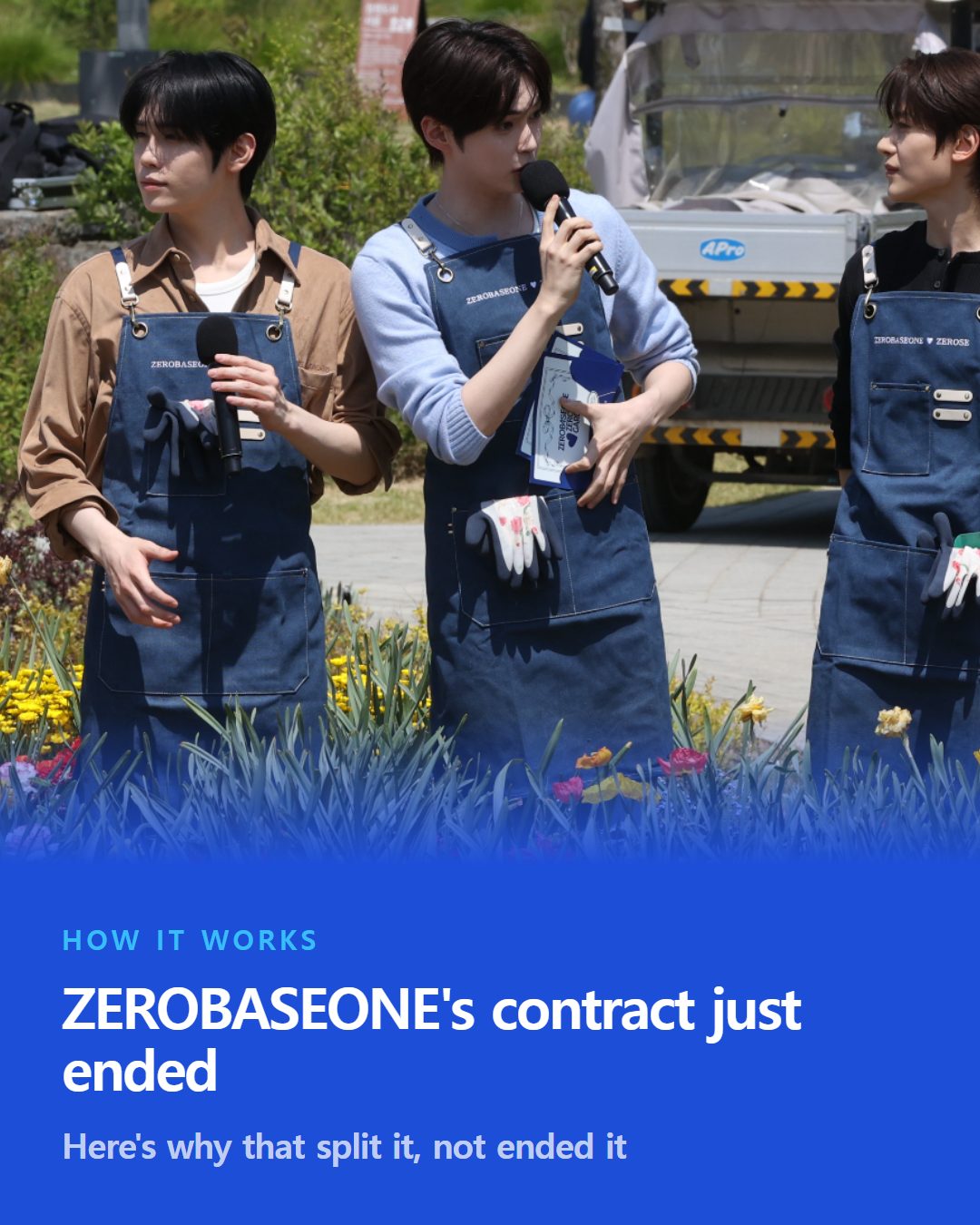
ZEROBASEONE's contract with its agency, WakeOne, ran out on schedule in March 2026 — two and a half years after the nine-member boy group debuted through the survival show Boys Planet, a televised competition in which trainees from different companies compete for a limited number of spots in a new group.
The short version
- ZEROBASEONE's WakeOne contract expired in March 2026, right on schedule.
- Four members returned to YH Entertainment; five stayed as ZEROBASEONE.
- Project groups exist because members already have separate home-agency contracts.
Four members went back to their original agency and later launched a new group. The other five stayed with WakeOne and put out a comeback in May, still performing as ZEROBASEONE.
Nothing here is a scandal or a breakup in the sense international pop fans might assume. ZEROBASEONE was built from day one as what the industry calls a project group: a K-pop act whose contract has an end date written into it before the debut single is even recorded.
Nine members, one contract clock, two outcomes
WakeOne had denied extension rumors in August 2025, saying only that talks with each member's home agency were ongoing. In December, the company confirmed a short extension: two extra months, moving the cutoff from January to March 2026, plus one last world tour encore and a final album.
The nine-member era closed with three encore shows at Seoul's KSPO Dome, March 13 to 15. What followed was a clean split rather than a shutdown:
- Sung Hanbin, Kim Jiwoong, Seok Matthew, Kim Taerae and Park Gunwook stayed under WakeOne as a five-member ZEROBASEONE.
- Zhang Hao, Ricky, Kim Gyuvin and Han Yujin returned to YH Entertainment (formerly Yuehua), the agency they were signed to before the show.
A contract that was never meant to be renewed
Most K-pop groups sign one long exclusive contract with a single company and stay there for years, sometimes their whole career. A project group works differently: it exists to promote a fixed-term act assembled from trainees — aspiring idols who can spend years in unpaid or low-paid training before ever performing publicly — who each already belong to a separate home agency.
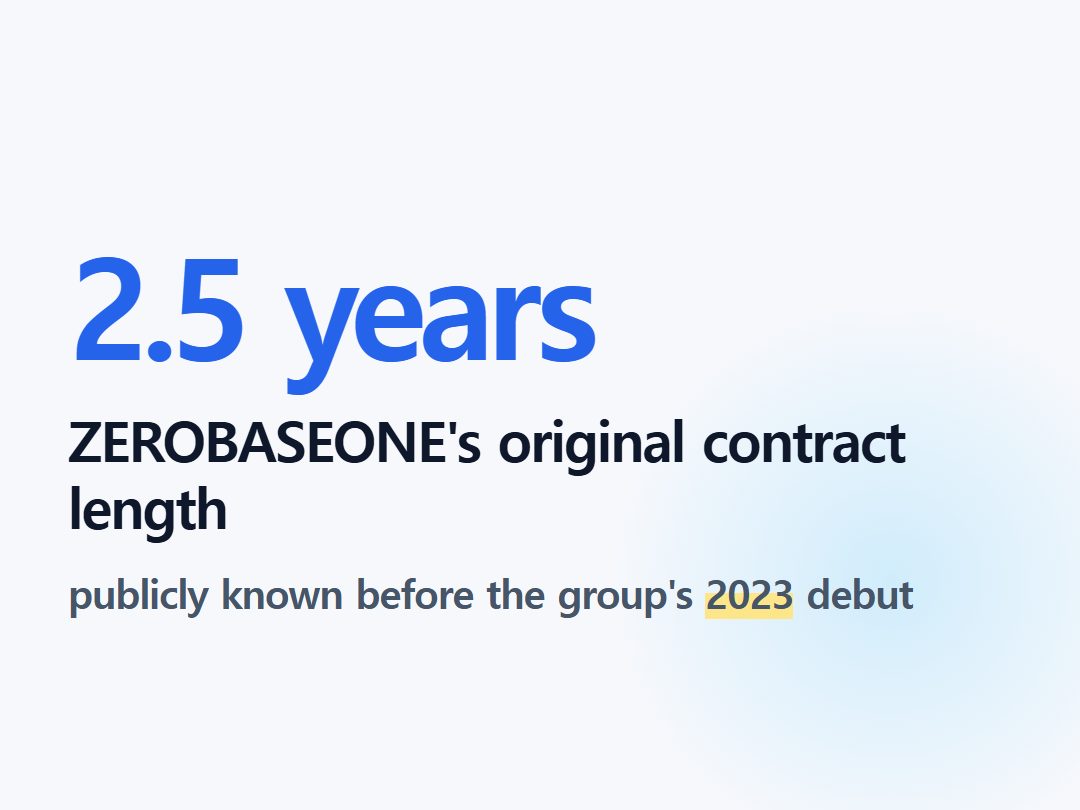
ZEROBASEONE's original term was two and a half years, publicly known well before the group's July 2023 debut. Fans and reporters didn't discover an expiration date late — they were tracking a deadline everyone already knew existed.
Two contracts stacked on top of each other
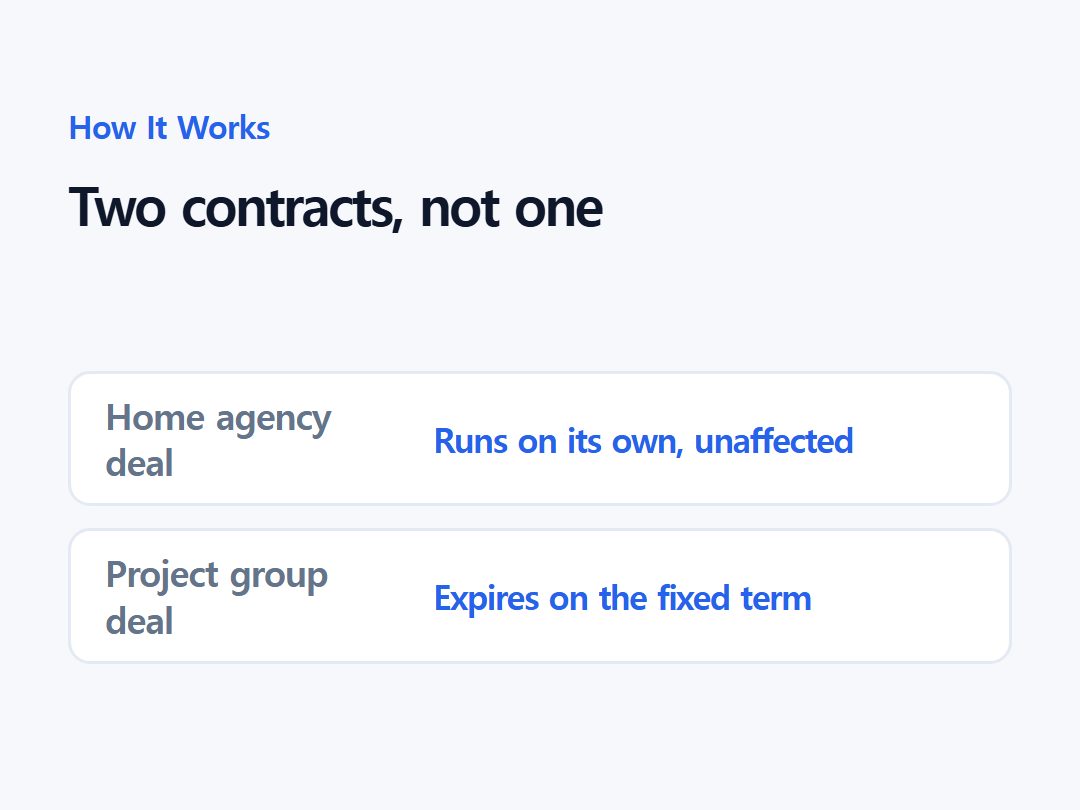
This is the part international coverage tends to skip. Every ZEROBASEONE member was bound by two separate agreements at once, not one.
| Contract | Who it's with | What happens at expiry |
|---|---|---|
| Home agency deal | Member's original company (e.g. YH Entertainment) | Continues on its own schedule, unaffected by the group's end date |
| Project group deal | WakeOne, the group-specific company | Expires on the fixed term; can be extended by mutual agreement |
A similar dual-contract structure surfaced publicly in 2026 when a different project group, Close Your Eyes, and one member's home agency disputed how much outside activity the group contract actually permitted. The disagreement illustrated a structural point that applies broadly: the project company controls the group brand, but it does not own the person underneath it.
This layering is a direct extension of what's usually called Korea's agency system — the practice of a company managing every part of an idol's career, from training to scheduling to media appearances. A project group simply adds a second, temporary layer of that same system on top of the first.
Why the timer runs on the group's name, not the member's career
Because the second contract only ever governed the group itself, its expiration doesn't touch a member's underlying career. When WakeOne's deal ended, four members simply had a home agency ready to manage what came next — because that agency had never stopped being their legal management company.
This is the core piece of context missing from most headlines: a project group ending is a company's promotional contract lapsing, not nine individual careers being terminated.
Four members, one new group, eight days apart
YH Entertainment said on January 11 that the four departing members would take time to prepare new activities. On April 3, the agency confirmed their lineup — joined by Yoo Seungeon, formerly of the group Evnne — as a new act.
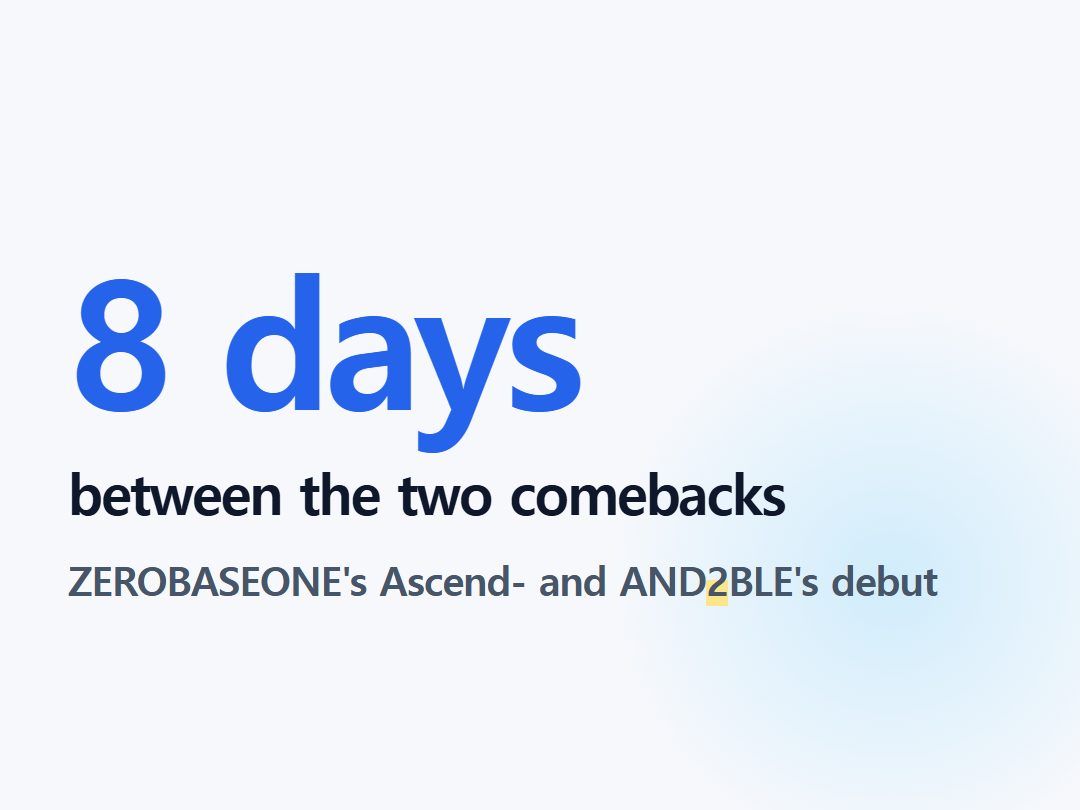
The group, AND2BLE, announced its debut EP on April 27 and released it May 26. That was eight days after WakeOne's five-member ZEROBASEONE put out its own comeback — the K-pop term for a new single or album cycle by an act that never actually left, not a return from hiatus — titled Ascend-, on May 18. Two groups, one shared origin, releasing music within the same two weeks.
Why the cap is measured in months, not years
South Korea's Fair Trade Commission set a standard exclusive contract ceiling of seven years back in 2009, after a lawsuit by TVXQ over a 13-year deal exposed how long-term “slave contracts” had become. Regular idol groups are built around that seven-year horizon, and hitting it is nicknamed the industry's “seven-year itch.”
Project groups don't operate on that scale at all. Their contract only covers a temporary promotional collaboration layered on top of members' pre-existing, separate agency ties — extending it indefinitely would eventually collide with those other contracts. A term measured in months or a couple of years is the structural ceiling, not a marketing choice.
The Produce 101 assembly line that wrote the rulebook
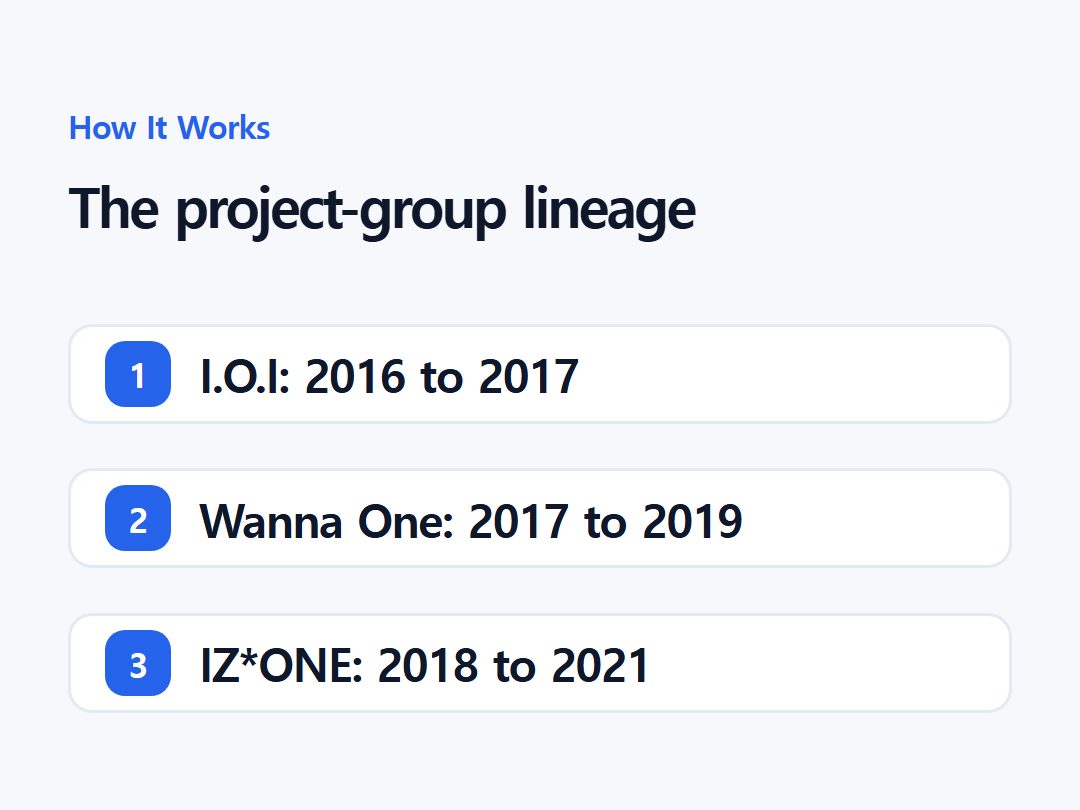
ZEROBASEONE's format traces back to Mnet's Produce 101 franchise, which spent nearly a decade normalizing fixed-term groups built from survival-show votes:
- I.O.I debuted May 2016, ended January 2017.
- Wanna One debuted August 2017, ended January 2019.
- X1 debuted August 2019, ended January 2020.
- IZ*ONE debuted October 2018, ran its full two-and-a-half-year term to April 2021.
Each case trained Korean audiences to expect a set expiration date as a normal feature of the format, not a red flag. WakeOne itself, the company behind ZEROBASEONE, is a joint venture backed by media giant CJ ENM and had already run this exact playbook once before with IZ*ONE.
A vote-rigging scandal that shortened two of those timelines
X1's run was cut short after producer Ahn Joon-young admitted to manipulating Produce X 101's voting results, forcing the group to disband within months of debut. IZ*ONE's own producer-manipulation fallout briefly halted its promotions, but the group still completed its full contracted term rather than ending early.
That distinction matters for reading ZEROBASEONE's ending correctly: nothing about its 2026 split involved scandal or wrongdoing. It ran out its clock exactly as scheduled.
What the WakeOne split actually tested
ZEROBASEONE entered 2026 with an unusually large commercial track record for a project group: its 2023 debut EP sold over 1.8 million copies in its first week, a first for a K-pop debut release, and its September 2025 full album entered the Billboard 200 at No. 23. That made the five-member continuation a genuine commercial experiment — could a project-group brand survive losing nearly half its lineup?
Korean entertainment press framed May 2026 as a direct test case, with ZEROBASEONE's Ascend- and AND2BLE's debut landing in the same stretch of weeks as competing proof points for two different paths out of the same contract.
What's still unresolved
WakeOne has not published a new fixed end date for the five-member ZEROBASEONE, so it's unclear whether the “project group” framing still applies or whether the act now operates on an open-ended basis like a standard idol group.
It's also too early to say whether AND2BLE's launch validates redeployment as a template other agencies will copy. The two acts will spend 2026 releasing music in parallel, effectively running a live comparison of what a project group's ending is worth to each side once the shared brand splits in two.
ZEROBASEONE members' two overlapping contracts
| Contract | Who it's with | What happens at expiry |
|---|---|---|
| Home agency deal | Member's original company (e.g. YH Entertainment) | Continues on its own schedule, unaffected by the group's end date |
| Project group deal | WakeOne, the group-specific company | Expires on the fixed term; can be extended by mutual agreement |
Frequently asked
What is a K-pop project group?
It's an act built from trainees who each already belong to a separate home agency, with a fixed-term contract — often around two and a half years — set before the group even debuts.
Is ZEROBASEONE disbanding?
No — WakeOne's group contract simply expired in March 2026. Five members continue promoting as ZEROBASEONE while the other four returned to YH Entertainment.
What is AND2BLE?
AND2BLE is the new group YH Entertainment formed from four former ZEROBASEONE members plus Yoo Seungeon of Evnne, debuting with an EP on May 26, 2026.
Sources
Every factual claim above is traceable. We do not translate articles — we gather facts from multiple outlets and write them ourselves.
- ZEROBASEONE Announces Short-Term Contract Extension — Soompi
- WAKEONE Entertainment - CJ ENM's Project-Group Engine — HITKULTR
- ZEROBASEONE Extends Contract Through March 2026, Announces New Album — Korea Portal
- ZEROBASEONE Reported To Make Spring Comeback Following Reorganization As 5 Member Group + Agency Briefly Comments — Soompi
- ZEROBASEONE returns as five-member group in May, marking a new beginning — allkpop
- Boy groups from audition shows stage back-to-back comebacks in May — The Korea Times
- Former ZEROBASEONE Members Confirmed To Re-Debut With All-New Trainees — Koreaboo
- ZB1's Zhang Hao, Ricky, Gyuvin, Yujin Re-Debut as AND2BLE — HITKULTR
- Is the '7-year itch' a thing of the past? — The Korea Herald
- IZ*ONE to disband next month; prison sentence for 'Produce 101' director confirmed — The Korea Times
- Clear Breach Of Contract? Project 7 Group Close Your Eyes' Agency Responds To PocketDol Studio Amidst Conflict Regarding Members' Dual Activities — Sportskeeda