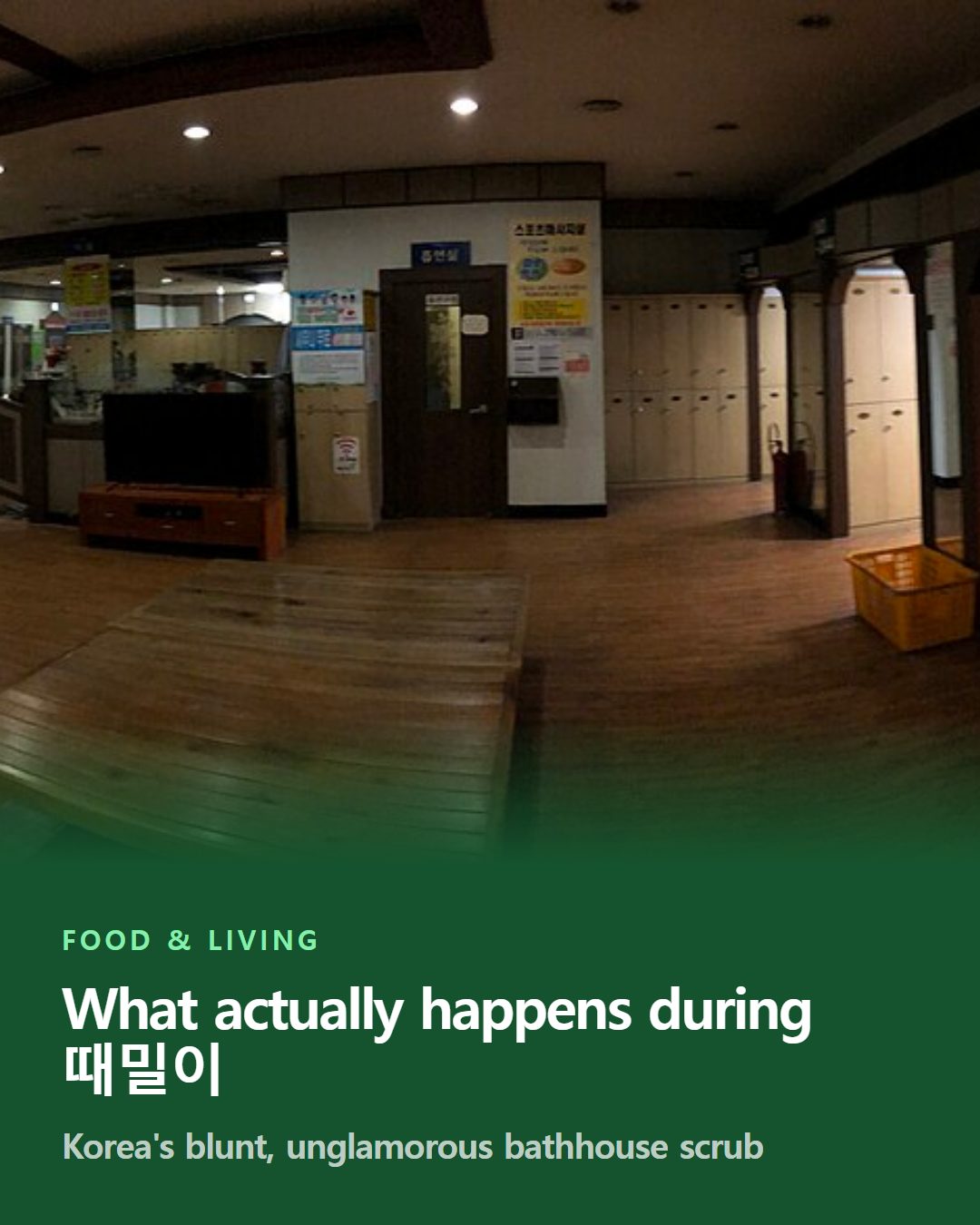
때밀이 (ttae-mil-i) is the vigorous full-body exfoliation performed at Korean public bathhouses, using a rough mitt to scrub off dead skin after a long soak. The person who does it professionally is called a sesinsa (세신사), a paid bathhouse attendant, not a spa therapist.
The short version
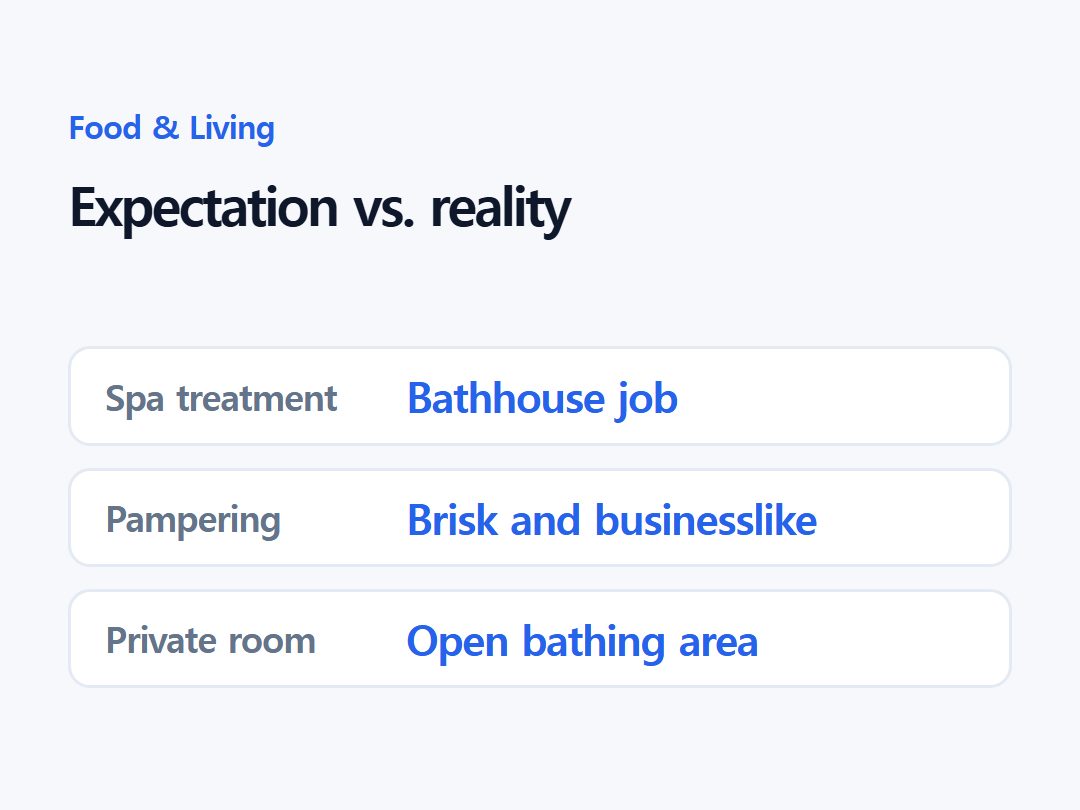
- Ttae-mil-i is brisk, functional exfoliation by a paid sesinsa, not a spa treatment.
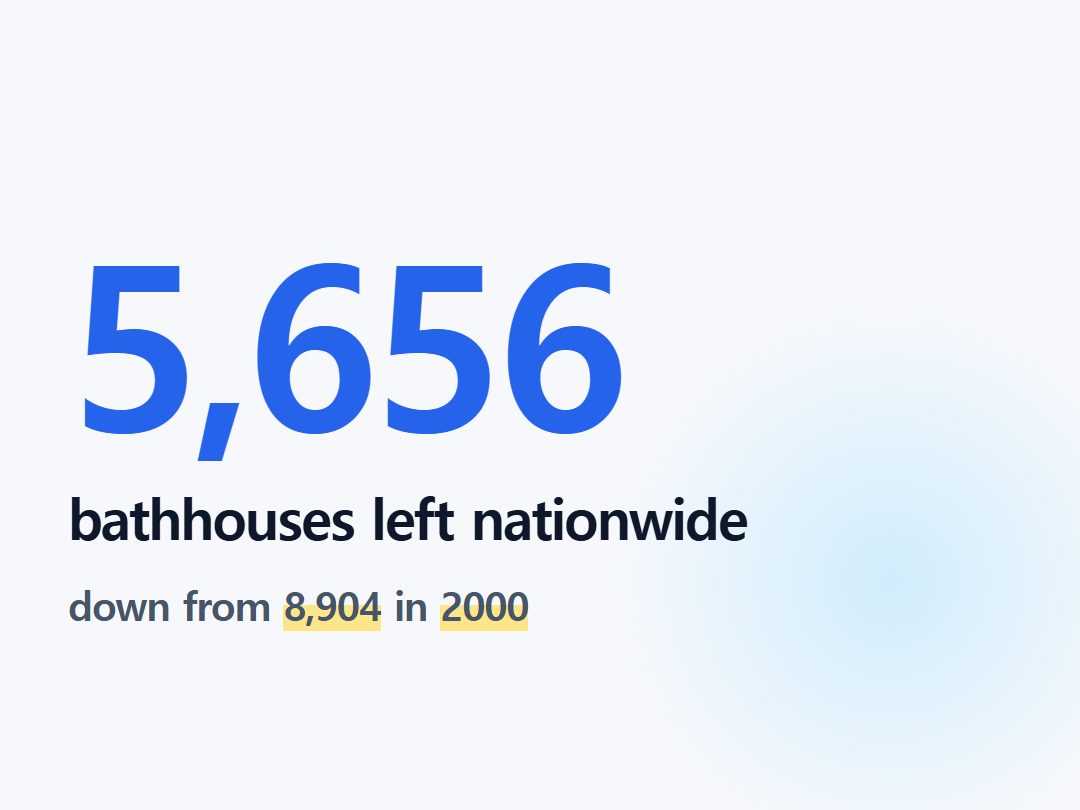
- Registered bathhouses nationwide fell from 8,904 in 2000 to 5,656 by 2025.
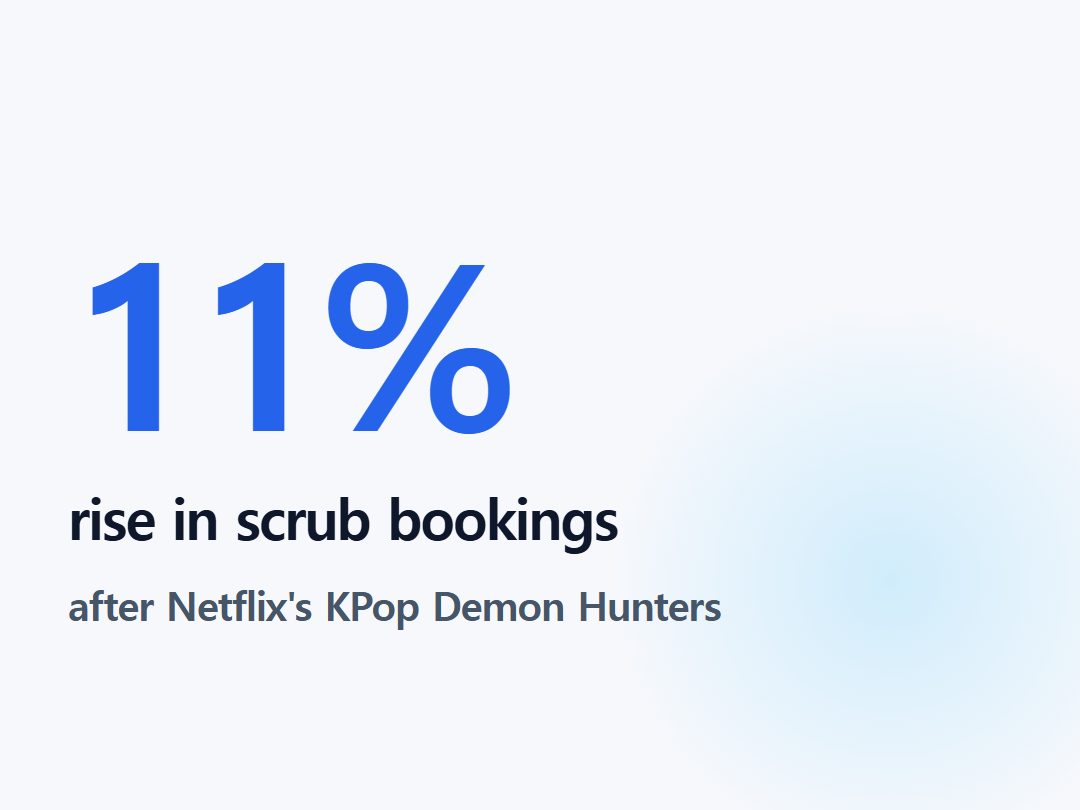
- A Netflix bathhouse fight scene drove an 11% jump in scrub bookings.
International coverage tends to frame it as a quirky wellness treatment. Korean fans know it's closer to a haircut than a massage: functional, quick, and slightly no-nonsense. That gap is the point of this piece.
You don't need a special appointment or a dedicated day spa to get one. Any full-service mokyoktang (public bathhouse) or jjimjilbang (sauna complex) with a scrub counter offers it, usually as a walk-in add-on to the entrance fee, not a separately booked treatment.
The order never changes: soak, table, towel, rinse
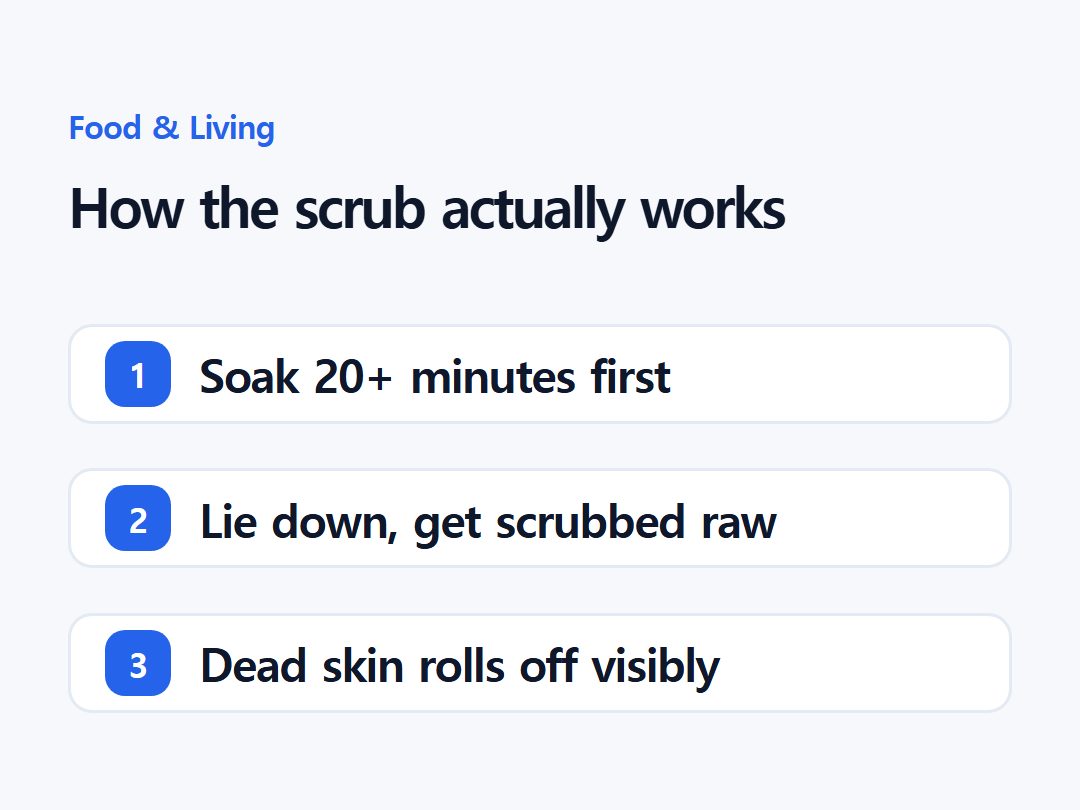
A 때밀이 session follows a fixed sequence, and bathhouses rarely deviate from it.
- Soak in a hot communal pool for at least 20–30 minutes so the skin softens
- Lie down on a vinyl-covered table next to the sesinsa's station
- Get scrubbed with a coarse mitt, section by section, for roughly 10–20 minutes
- Rinse off, and sometimes get a hair wash or oil rubdown as an add-on
Nothing about the setup resembles a spa suite. The table sits in the open bathing area, in full view of other bathers, because privacy was never the design goal — throughput was.
A green-and-pink towel that has nothing to do with Italy
The scrub mitt itself, called the ittari taol (이태리타올, literally 'Italy towel'), is a Korean invention. A small Busan textile business in the early 1960s imported viscose rayon fabric from Italy meant for ordinary towels.
The fabric was too coarse to use as intended, so a manufacturer tested it as a scrubbing cloth instead. It worked, the name stuck, and by the late 1960s the product had utility-model patent filings behind it. It is still manufactured in Korea and sold for home use worldwide.
The dead skin comes off in visible grey rolls
The most-described part of the experience, in nearly every first-hand account, is watching small rolls of dead skin gather on the body mid-scrub. This is normal: after a long soak, the outer skin layer softens enough to shed in clumps rather than flakes.
It looks more dramatic than it is. The skin underneath is not raw — it is simply skin that was never mechanically exfoliated before, because most home showers don't include an equivalent step.
For the sesinsa, this is a trade, not a treatment
This is the section international coverage usually skips. A sesinsa is a working-class occupation with a specific labor history, not a beauty-industry role. The job emerged alongside the towel itself, as bathhouses realized customers would pay someone else to do the scrubbing.
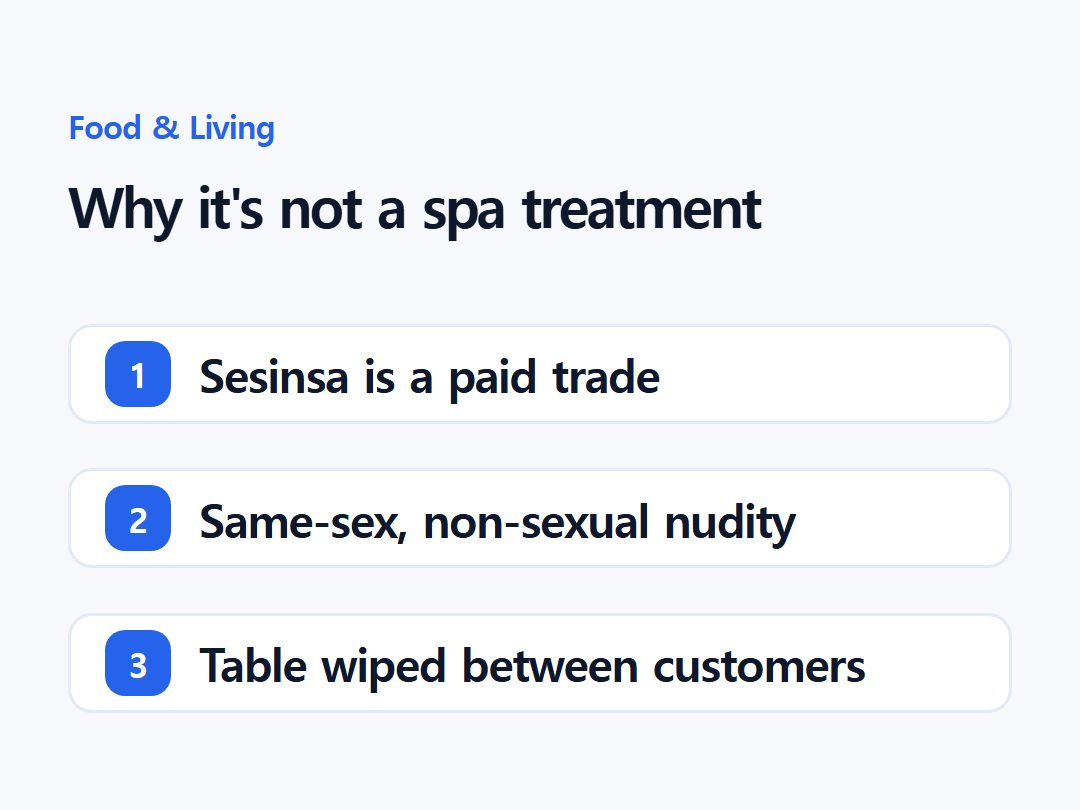
The interaction is transactional and brisk — sections done in order, a set price, no small talk expected. Comparing it to a Western spa facial misreads the tone entirely; it reads closer to a barber shop than a wellness clinic.
It's also physically demanding, repetitive labor, performed standing over a table for a full shift. Most sesinsa in Korea are middle-aged or older women, and the job is generally paid per scrub rather than by salaried hour, which is part of why the pace stays fast.
Full nudity is standard, and no one treats it as remarkable
Korean bathhouses are strictly single-sex, and full nudity in the pool and scrub areas is the norm, not an exception. Bathers shower before entering the pools, a rule that is enforced rather than suggested, and tables are wiped down between customers.
For first-time foreign visitors, the nudity is often the biggest adjustment. For Korean patrons, it registers as no more notable than a locker room — because functionally, that's what it is.
Bathhouses were infrastructure before they were nostalgia
The gap in outside understanding starts here: 때밀이 didn't emerge from a wellness trend. It emerged because most Korean homes didn't have private bathrooms.
Public bathhouses first appeared in Korea in the late 19th century, built for Japanese residents in newly opened ports; access for Koreans was initially restricted and unequal. The neighborhood mokyoktang (목욕탕) that most Koreans associate with the tradition took shape later, through the 1960s–1980s, as cities grew faster than plumbing did.
Weekly bathhouse visits were a practical necessity for households without hot water at home, not a leisure outing. The scrub became a fixture of that routine simply because people were already there, undressed, with time to spare.
Apartment construction accelerated through the same decades, and many early apartment blocks still had shared or minimal bathing facilities. The neighborhood bathhouse filled that gap until in-unit bathrooms became the default, which for most of the country happened only within the last generation or two.
Scrubbing a parent's back counts as filial duty
Because bathhouses were a shared family errand for decades, the scrub picked up a domestic meaning that survives even as the bathhouses themselves decline. A parent scrubbing a child's back, or an adult child scrubbing an elderly parent's, is a recognized small act of care in Korean family life.
That version of the ritual is largely gone from households with private bathrooms — which is most of them now. It survives mainly as something older generations still do together at a bathhouse, deliberately.
Nationwide, bathhouse numbers have nearly halved since 2000
The infrastructure that built this culture is disappearing. According to the Korea Herald, the number of registered bathhouses nationwide fell from 8,904 in 2000 to 5,656 by 2025, with the pace of closures accelerating in recent years.
| Year | Bathhouses nationwide |
|---|---|
| 2000 | 8,904 |
| 2025 | 5,656 |
Rising energy costs for heating pool water, and the simple fact that home bathrooms are now standard, are the two most-cited reasons. Closures have concentrated in smaller, rural bathhouses, while larger urban ones — often combined with a jjimjilbang sauna — still draw younger customers.
One animated bathhouse fight scene moved real booking numbers
The scrub found a second life through an unrelated route: Netflix's animated film KPop Demon Hunters features a bathhouse fight scene between its main characters, and the exposure translated into bookings.
Travel platform Klook reported seshin reservations up 11% between June 20 and August 10, 2025, compared with the seven weeks prior, with sauna bookings in Seoul's Hongdae district up 57% and Jongno up 15%. International bookings rose too — 20% in Japan, 16% in Hong Kong, 11% in Taiwan.
That has pushed a parallel format into growth: standalone, private scrub studios aimed at tourists who want the treatment without the full communal bathhouse experience.
What a scrub costs, and what still isn't clear
Pricing is not standardized. A basic scrub typically runs from roughly 25,000 to 60,000 won depending on the venue, with the higher end including a facial mask or oil massage as add-ons.
What's unresolved is whether the current tourist interest changes the trajectory of a declining industry, or simply cushions it at the margins. The customer base driving closures — Korean households with their own bathrooms, and a younger domestic generation less attached to communal bathing — hasn't reversed.
Whether international demand can offset that longer-term domestic shift is not something the booking data from a single summer can answer.
Booking increases after Netflix's KPop Demon Hunters (Jun 20–Aug 10, 2025)
| Location | Booking increase |
|---|---|
| Overall seshin reservations | +11% |
| Hongdae, Seoul (sauna bookings) | +57% |
| Jongno, Seoul (sauna bookings) | +15% |
| Japan | +20% |
| Hong Kong | +16% |
| Taiwan | +11% |
Frequently asked
What is a Korean body scrub called?
It's called ttae-mil-i (때밀이), a full-body exfoliation done with a coarse mitt called an ittari taol, performed by a paid attendant called a sesinsa.
How much does a Korean body scrub cost?
A basic scrub typically runs 25,000 to 60,000 won depending on the venue, with facial masks or oil massage available as pricier add-ons.
Do you have to be naked for a Korean bathhouse scrub?
Yes — Korean bathhouses are strictly single-sex, and full nudity in the pool and scrub areas is standard, treated by Korean patrons as no more notable than a locker room.
Sources
Every factual claim above is traceable. We do not translate articles — we gather facts from multiple outlets and write them ourselves.
- Why Korea's local governments are trying to sustain bathhouses — The Korea Herald
- KPop Demon Hunters puts traditional Korean body scrub on tourist map — KED Global
- Ancient Korean Bathing Cultures — Korean Cultural Center
- Korean Public Bathhouse (Mokyoktang): Cultural Guide — Daebak
- Korean scrub mistress spills her secrets — CNN Travel
- Korean Bath House Guide: What To Expect In A Jjimjilbang — The Soul of Seoul


