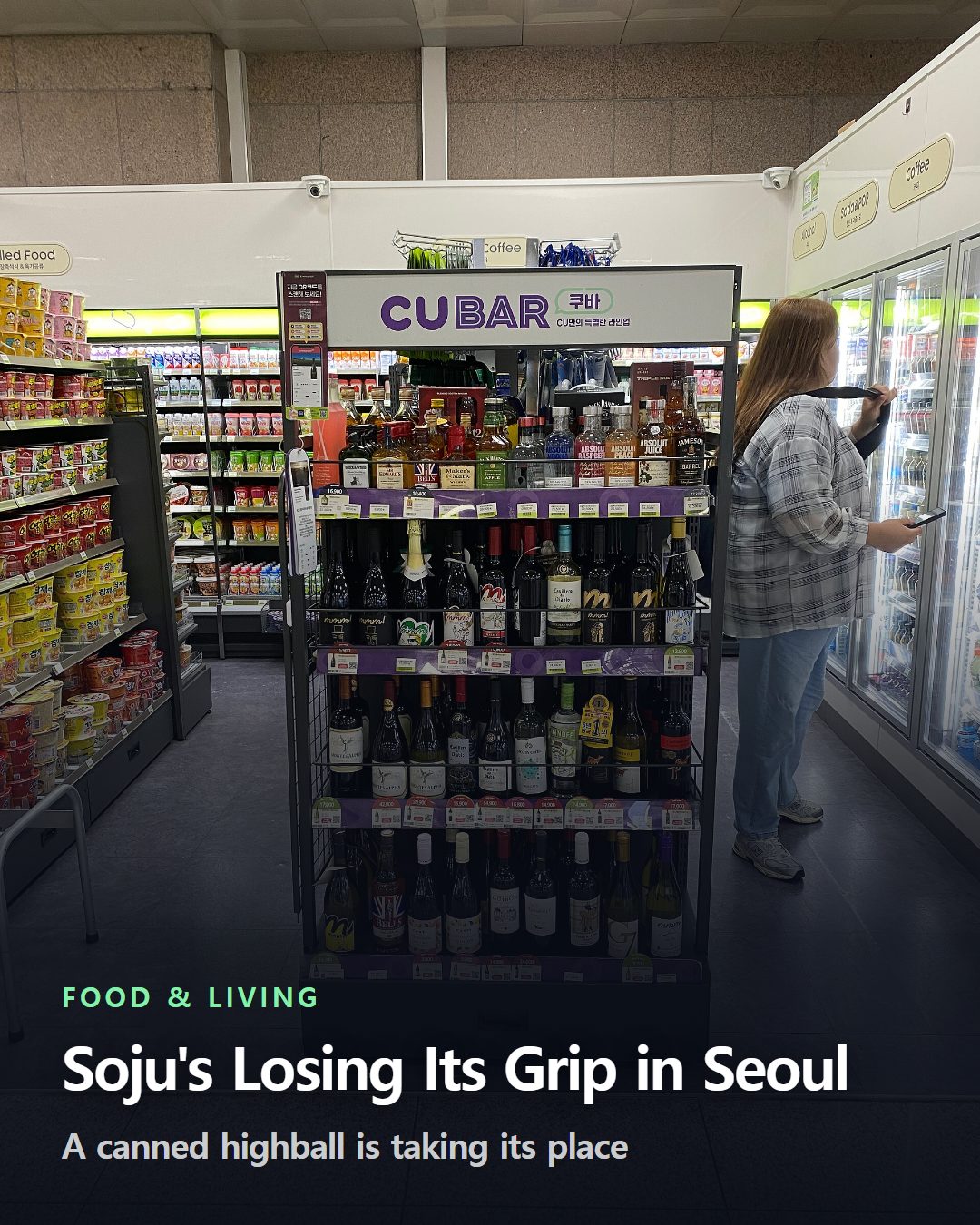
Order a drink in a Seoul bar in 2026, or grab one from a convenience-store fridge, and the odds are it isn't soju anymore. It's a highball — whisky (or another spirit) mixed with soda and poured over ice, usually sold pre-mixed in a can.
The short version
- CU's highball sales jumped 190.1% in one year, beating every other category.
- Canned highballs are 3-5% alcohol, far weaker than soju's 15-20%.
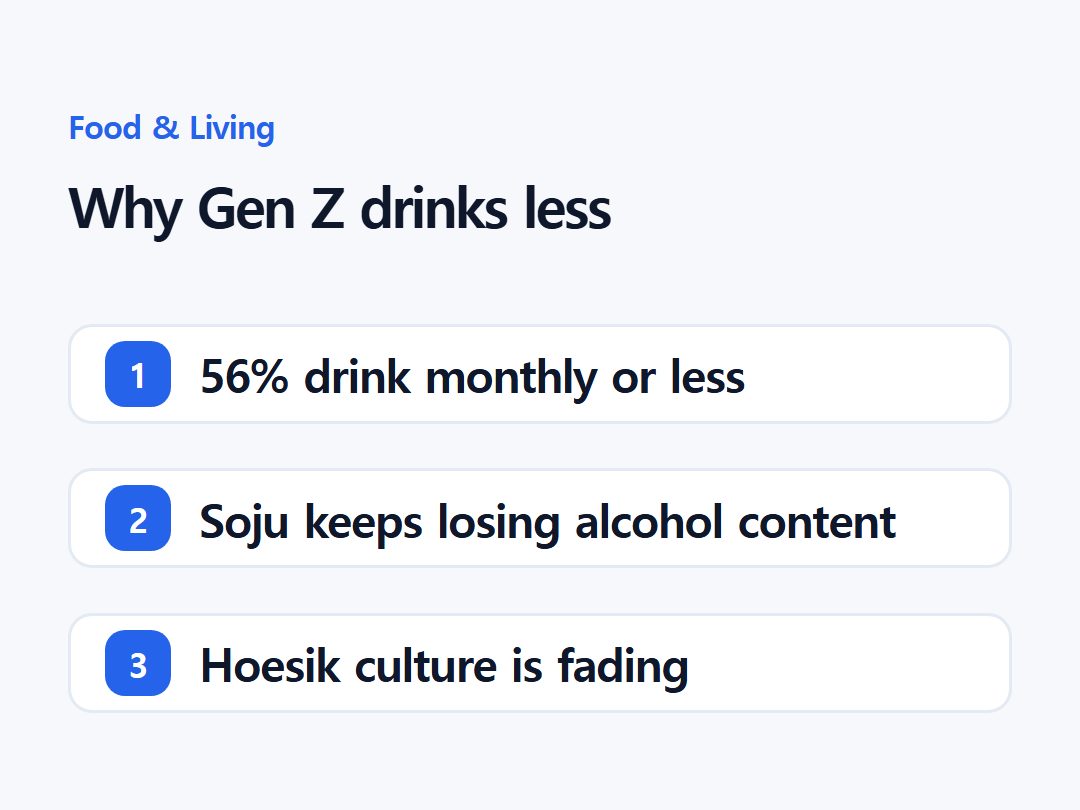
- 56% of Koreans in their 20s now drink rarely or not at all.
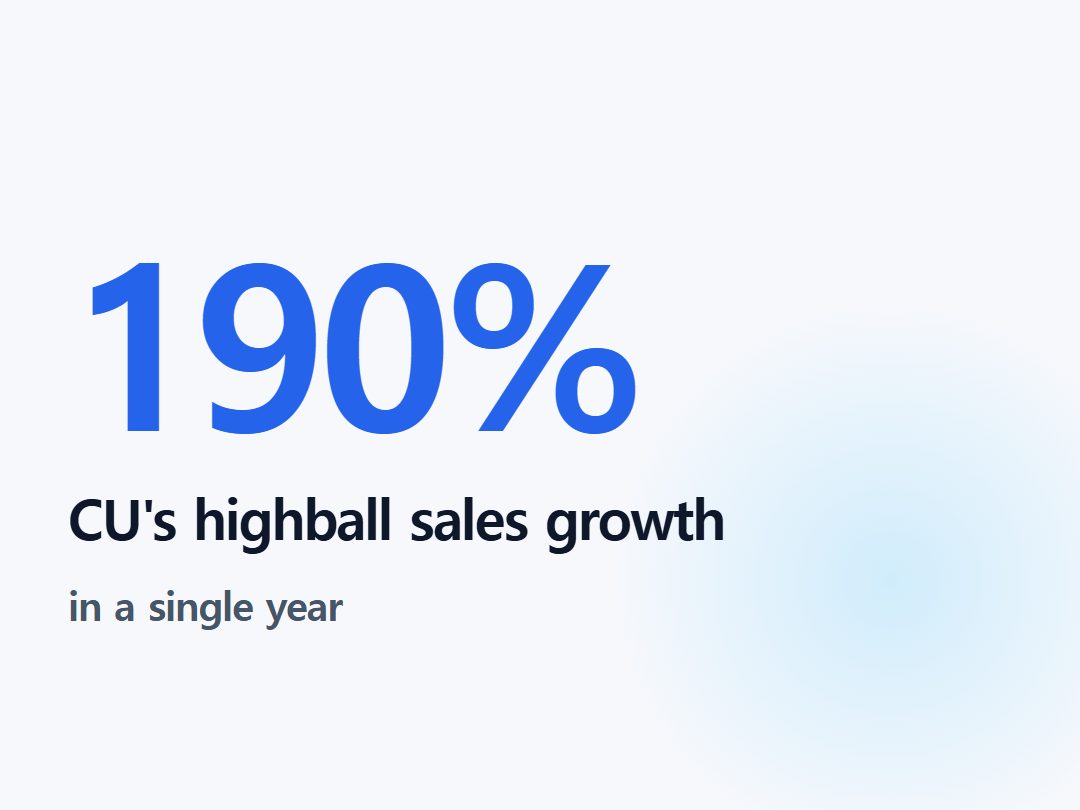
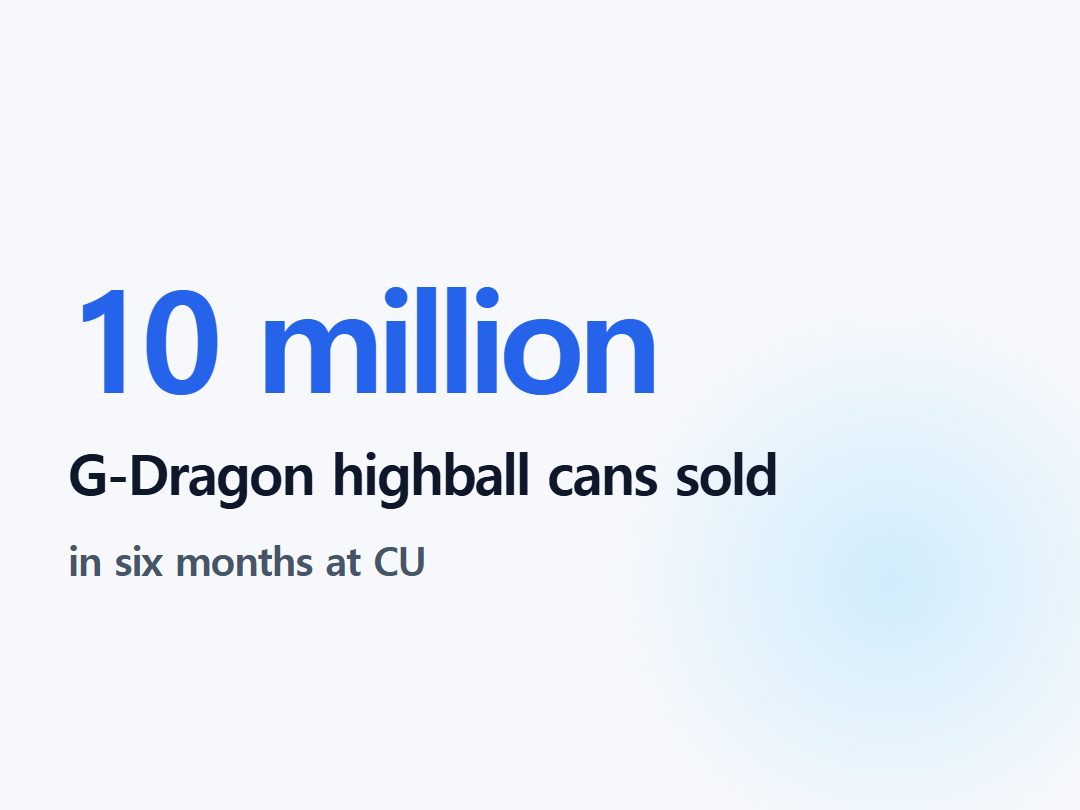
At CU, Korea's largest convenience store chain, highball sales grew 190.1% in a single year. At rival GS25, they rose 76%. A canned highball made in partnership with K-pop artist G-Dragon's fashion label sold more than 10 million units in six months at CU alone.
What a "highball" means when it's sold in a Korean convenience store
A highball is simply a spirit — usually whisky, sometimes vodka or gin — topped with a carbonated mixer and served over ice. It began as a Western bar order, then became a mainstream, mass-market category in Japan, where drinks maker Suntory built an entire marketing push around it.
Korea's version is mostly sold ready-made, in cans of 3 to 5 percent alcohol — closer to a light beer than to soju, which typically runs 15 to 20 percent. Flavors rotate fast:
- Peach
- Grapefruit
- Earl Grey tea
A 190% jump in one year, and a can that sold 10 million units
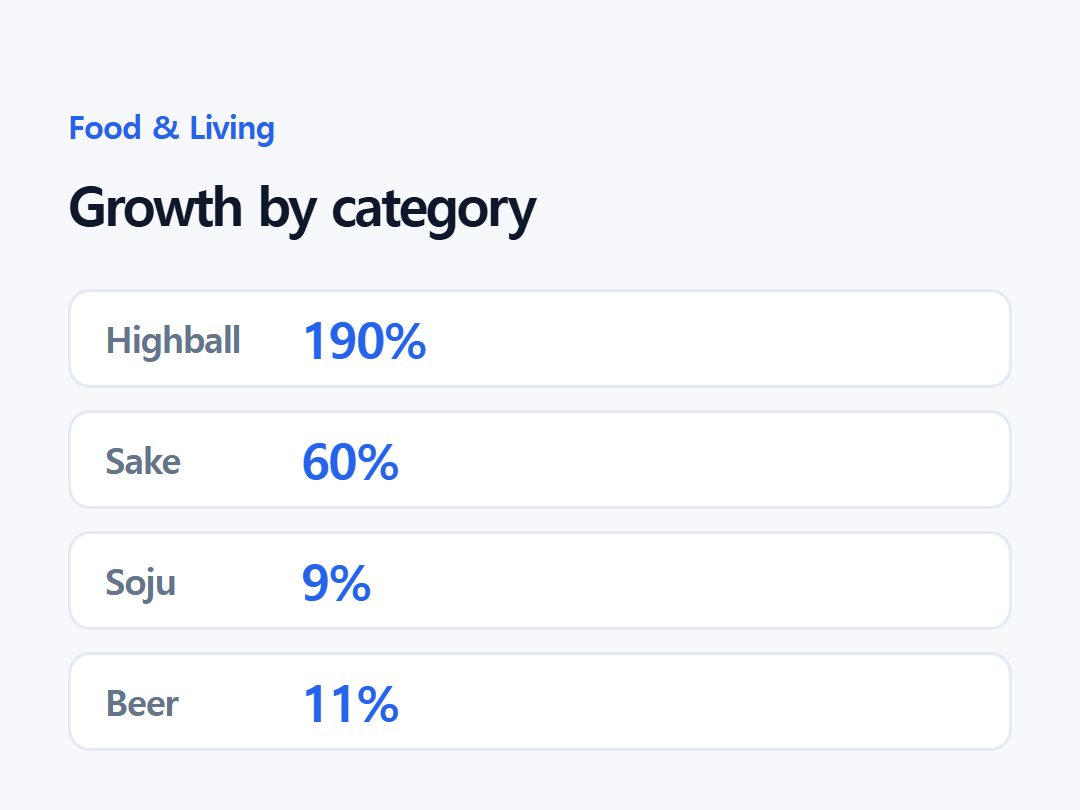
The category-level numbers hold up across retailers. Highballs went from 2.7% of all convenience-store liquor sales in 2023 to 9.2% in 2025 — more than a threefold jump in two years.
| Category | Sales growth, most recent year |
|---|---|
| Highball (CU) | 190.1% |
| Sake | 60.3% |
| Western spirits | 24.5% |
| Beer | 10.9% |
| Soju | 8.9% |
CU's own reservation and delivery service for alcohol, CU BAR, reported a 455% year-on-year jump in highball orders — a sign the drink is moving beyond impulse buys and into planned social drinking.
A table of four sharing one shot, not four rounds of soju
Reporting from a bar franchise near Seoul's Hongdae district, a nightlife area popular with university students, describes a now-familiar scene: a group orders zero-sugar cola and a single highball, then splits that one shot across four glasses. No one at the table asks for soju.
A bar worker there put the economics plainly: alcohol is usually where a venue's margins are, so a table that orders several rounds now stands out enough to feel like a VIP account rather than the norm it used to be.
Fewer people are drinking at all, not just switching drinks
The highball's rise sits inside a bigger shift: Korean twentysomethings are drinking less overall. Data from the Korea Disease Control and Prevention Agency shows 56% of people aged 19 to 29 either abstain entirely or drink no more than once a month — the highest share since the agency began tracking it in 2005, when the figure was 37.9%.
People in their 20s now report drinking less alcohol on an average drinking day than people in their 60s do. Health, not cost, is the stated reason: 44.3% of respondents in their 20s cited weight or blood-sugar management when asked why they cut back.
That context reframes the trend. The highball didn't beat soju in a taste contest — a generation redefined how much drinking counts as a normal night out, and a low-proof, canned option fit that redefinition better than a bottle of soju does.
Soju keeps getting weaker, and its price edge is gone too
Soju makers have themselves been cutting alcohol content for years, chasing the same lighter-drinking demand. Major brands have dropped from roughly 17–18% alcohol by volume toward 16%, and some regional bottlings now sit below 15%.
That has a side effect: soju no longer offers a meaningfully different drinking experience from wine or a canned highball, while losing the one advantage it always had. Large marts and convenience stores now stock 10,000-won whisky bottles and 4,900-won wine, undercutting soju's reputation as the cheapest way to get a buzz.
A single 10,000-won whisky bottle makes close to ten servings of a 10-degree highball — a cost per drink that rivals soju, without the higher alcohol content younger drinkers increasingly say they want less of.
Why the mandatory after-work round stopped being mandatory
Much of Korea's soju-and-beer culture was built around hoesik — company dinners, often followed by second and third rounds at different venues, where declining a drink from a superior could read as a breach of etiquette. Pandemic-era restrictions suspended large hoesik gatherings for an extended stretch.
When workplaces reopened, many employees questioned whether the old format needed to come back at full strength. Drinking capacity is increasingly described as unrelated to how a person's work is judged, which removed much of the social pressure to keep ordering rounds.
A highball, poured once and finished slowly, fits a hoesik that is shorter and smaller — one no longer organized around who can outlast the table.
The change in attitude goes beyond logistics. One 30-year-old office worker described the old boasting culture bluntly: bragging about how much or how long you drank the night before now reads as thoughtless rather than impressive.
Korea's highball is a Japanese import, adjusted for local taste
The format itself isn't Korean in origin. Japan popularized the modern canned highball decades earlier, with Suntory turning it into a mainstream category there before Korean retailers and drink makers adapted the idea for local shelves.
Industry accounts describe deliberately reworking the Japanese formula — using tonic water or ginger ale instead of plain soda for a sweeter profile suited to palates already used to fruit-flavored soju.
Global spirits companies followed the same script: Suntory brought Jim Beam–based canned drinks to Korean shelves, while Diageo tied Johnnie Walker to campaigns featuring Korean celebrities aimed at university-area bars.
The catch in the "lighter" drink
Highballs are marketed alongside Korea's broader wellness trend, sold as an indulgence that's also a more responsible choice. The lower alcohol content supports that framing, but it isn't the whole picture.
Many canned highballs carry real added sugar — a standard 500ml can averages 120 to 150 calories, similar to a light beer rather than a genuinely low-calorie drink. Drinkers switching for health reasons are getting less alcohol, not necessarily fewer calories.
Whisky imports are already cooling
Not every indicator points the same direction. South Korea's whisky import value peaked near $266.8 million in 2022, eased to $259.7 million in 2023, then fell 20.5% year-on-year in the first two months of the following year.
Taxation compounds the uncertainty: a roughly 72% liquor tax plus a 20% import duty keeps premium imported whisky expensive, pushing some highball drinkers toward cheaper spirits or store-brand alternatives rather than the name brands driving the marketing.
What is still unresolved
Korea's alcohol industry has been fooled by a "healthier drink" trend before. Craft ales launched by OB and Hite in 2014 generated similar buzz, then largely lost shelf space once the novelty wore off, as consumers drifted back to soju-and-beer combinations.
Whether highballs avoid that fate, or fade once convenience-store flavor rotations slow down, is a question the industry itself hasn't answered. What's measurable so far is narrower: a specific, low-proof, canned format has taken real share from soju within a two-year window, at the same time a broader shift in how much Koreans drink was already under way.
For now, retailers are treating the highball less like a passing flavor and more like a shelf category worth defending — rotating new fruit and tea variants every few months rather than betting on a single signature can the way earlier RTD launches did.
Convenience-store sales growth by category (CU, most recent year)
| Category | Sales growth |
|---|---|
| Highball | 190.1% |
| Sake | 60.3% |
| Western spirits | 24.5% |
| Beer | 10.9% |
| Soju | 8.9% |
Frequently asked
What is a Korean highball?
It's a canned drink of whisky or another spirit mixed with soda, usually 3 to 5 percent alcohol, sold pre-mixed in convenience stores across Korea.
Why are highballs replacing soju in Korea?
Highballs are lower in alcohol and cost about the same per drink as soju, fitting a broader trend of Korean twentysomethings drinking less overall.
Are canned highballs actually healthier than soju?
They have less alcohol, but many still carry 120 to 150 calories per can from added sugar, so they aren't necessarily lower-calorie.
Sources
Every factual claim above is traceable. We do not translate articles — we gather facts from multiple outlets and write them ourselves.
- 소주 도수 낮췄더니 '하이볼'로…고민 깊은 주류업계 — Bizwatch
- Drinking no longer default for Korea's Gen Z — The Korea Times
- How the highball serve has democratised spirits in South Korea — Global Drinks Intel
- [똑똑키워드] 소주·맥주 대신 하이볼…편의점 업계의 '픽' — Newswatch
- 소맥 자리 채우는 하이볼? 얼마나 잘 팔리길래… — Herald K


