A Korean lash lift is a lash-perming technique developed in South Korean salons that curls natural eyelashes from the root using a gentler, amino-acid-based solution instead of the stronger chemical most Western salons use.
The short version
- UK searches for Korean lash lifts rose 20,082% year-on-year in 2026.
- Cysteamine lets Korean lifts curl lashes root-to-tip, unlike harsher Western TGA formulas.
- Korea's cosmetics exports hit $11.4 billion in 2025, led by independent brands.
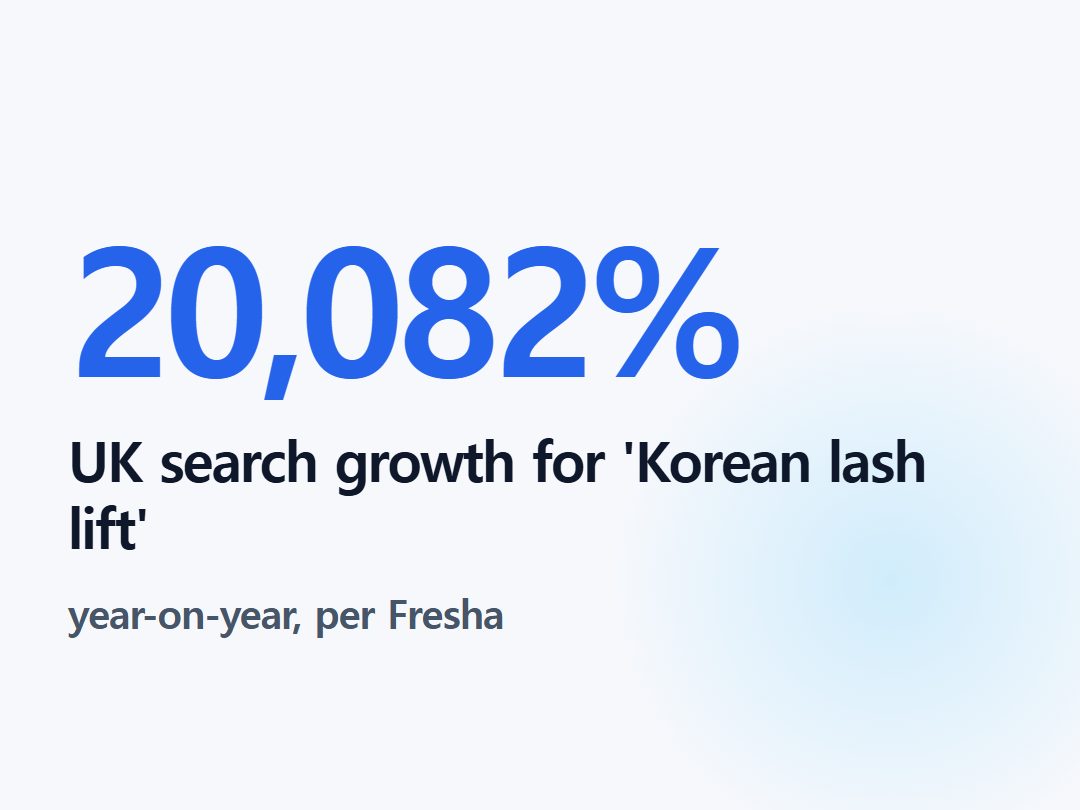
In 2026 it became one of the most-searched beauty treatments worldwide. UK searches for the term rose 20,082% year-on-year, according to booking platform Fresha, while U.S. searches climbed 3,695% over the same period.
A treatment global salons could not name a year ago
Before 2025, most lash technicians outside Korea had never heard the phrase "Korean lash lift." Perming natural lashes to curl upward, without extensions, has existed in Western salons for well over a decade.
What changed was demand. By early 2026, Fresha logged almost 10,000 UK searches a month for the term and roughly 5,400 in the U.S. — outpacing nearly every other beauty keyword the platform tracked.
Salons across the U.S., Canada, the UK, continental Europe and the Middle East now list it as its own menu item, typically priced 20–30% above a standard lash lift.
For salon owners, that premium comes with a repeat-business pattern: because results last six to eight weeks, close to double a standard lift, clients rebook on a predictable cycle rather than a one-off visit, and industry reporting notes they tend to refer friends once they see the results.
The chemistry Korean salons swapped in first
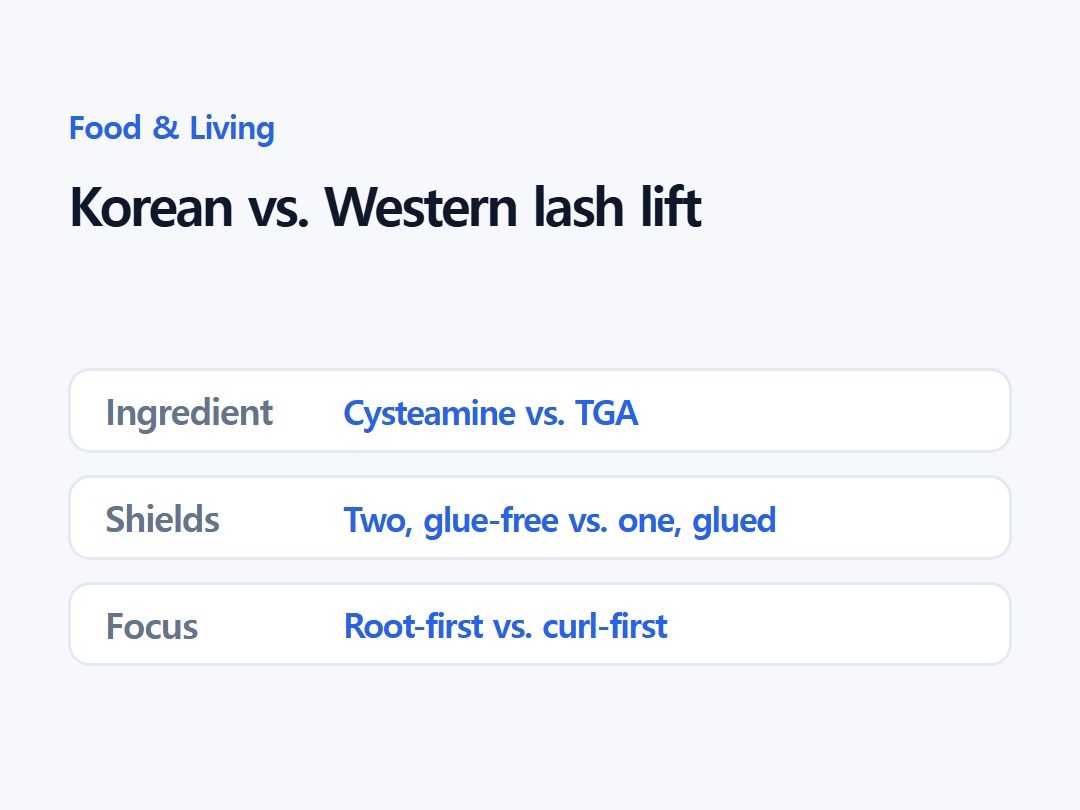
Most Western lash lifts use thioglycolic acid (TGA), which breaks down the lash's internal protein bonds quickly enough to reshape it in one step. It works, but it runs at a higher pH and is usually kept away from the root to limit irritation.
The Korean-associated method instead relies on cysteamine, an amino-acid-derived compound that softens the same bonds more slowly, closer to the hair's natural pH. That difference is why the Korean method can be applied root-to-tip, where TGA formulas typically cannot.
Cysteamine was not actually where the Korean technique started. It became popular in Korea for brow lamination first, and only moved to lashes afterward, once artists saw it produced a softer, more flexible curl than TGA-based systems.
Two shields instead of one, and no glue on the lash
The other defining difference is mechanical. Most Western lifts glue the lash to a single silicone rod, then apply the perming solution and shape the curl in one pass.
The Korean technique splits that into two stages: a flat shield first softens and relaxes the lash, then a second shield sets the final curl. Because nothing glues the lash down, artists can reposition it mid-service, which a single-rod method does not allow.
Built for lashes that grow straight down, not curled
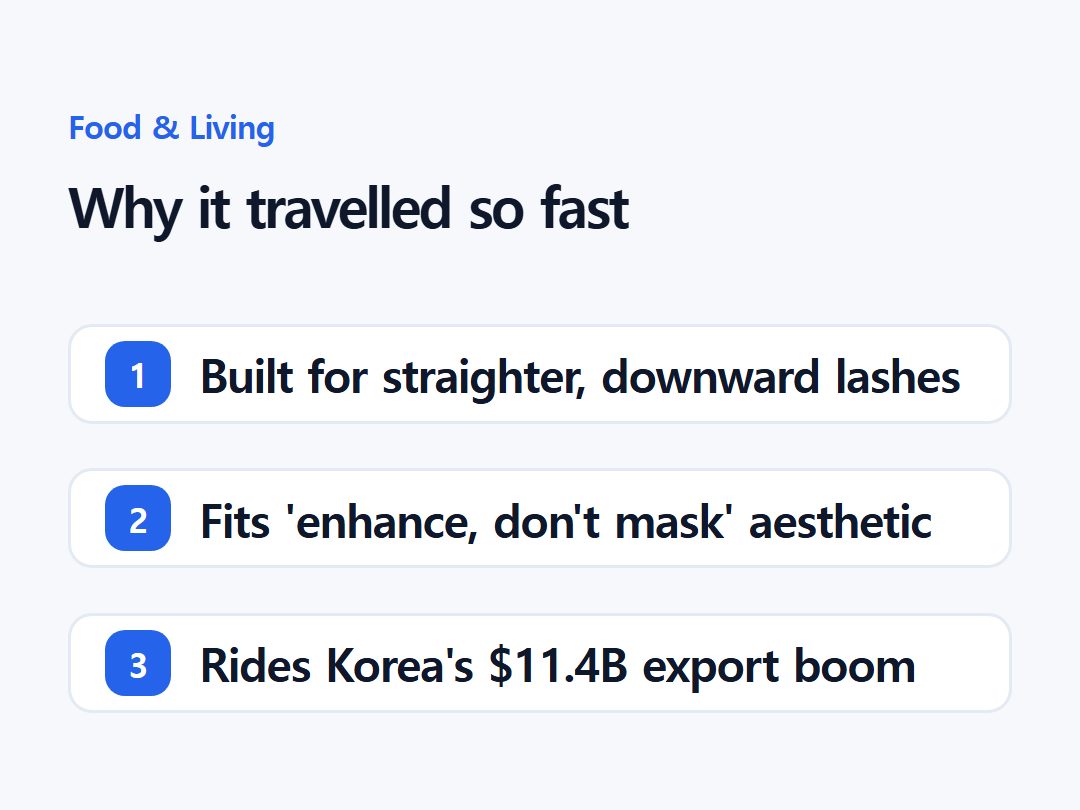
The technique was not designed as a marketing angle — it was built for a specific lash type. East Asian lashes tend, on average, to be straighter, coarser and more likely to grow downward than the lash types Western lift systems were originally built around.
Standard round rods struggled with that lash type, either over-curling the tip or missing the root, where the actual bend needs to happen. Korean salons responded with flat shields and root-first softening, rather than treating the full length equally.
Why "enhance, don't mask" beats a dramatic curl
The technical fix happened to line up with a broader preference in Korean beauty culture: subtle correction over visible transformation. A classic Western lift often aims for a bold, camera-ready curl; the Korean version aims for a curl that still reads as the person's own lashes.
The same logic shows up elsewhere in Korean makeup — in aegyo-sal, for instance, the soft ridge below the lower lash line that Korean makeup artists enhance rather than conceal, because it reads as warmth rather than tiredness. Korean beauty culture more broadly treats features like this as something to work with, not correct away.
Fresha's own beauty expert, Annabelle Taurua, tied the lash lift's pull directly to that shift, saying consumers are "increasingly drawn to treatments that enhance natural features rather than masking them."
The search numbers that got salons paying attention
Search volume is what moved this from a niche technique to a stocked service. Fresha's report placed "Korean lash lift" ahead of nearly every other treatment keyword it tracked heading into 2026, including established terms like lash extensions.
Trade outlets repeated the same figures within weeks of each other — Happi, NewBeauty and several salon-industry blogs all cited Fresha's numbers independently, which is one sign the spike was not a single company's marketing story.
A small piece of an $11.4 billion export story
The lash lift's rise abroad tracks a larger shift already underway in Korean beauty exports. South Korea's cosmetics exports hit a record $11.4 billion in 2025, making it the world's second-largest cosmetics exporter after France, according to the country's Ministry of Food and Drug Safety.
Exports kept climbing into 2026: the first quarter alone brought in $3.1 billion, up 19% year-on-year, with the United States overtaking China as Korea's single largest market for the first time.
A service technique does not show up in trade statistics the way a bottled serum does, but it travels the same route — through Korean-trained technicians, imported formulas, and salons marketing "authentic" Korean methods to stand out from competitors.
Independent brands, not conglomerates, are driving the export boom
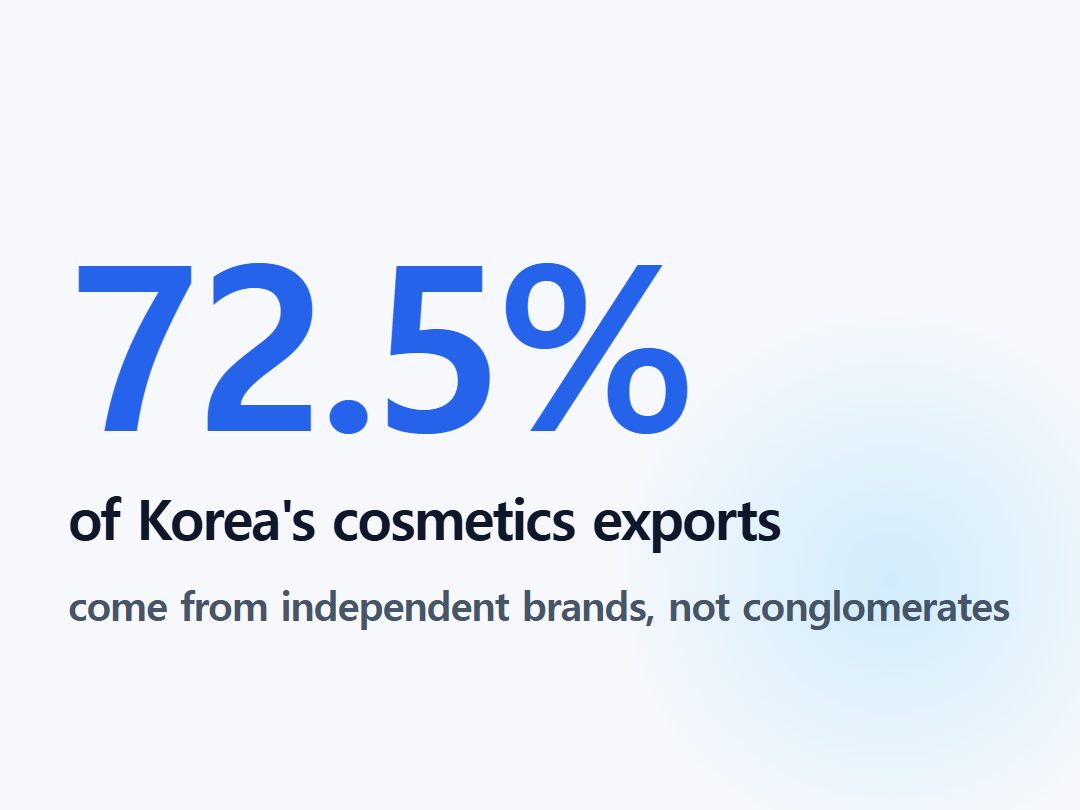
One detail international readers often miss: Korea's export wave is not led by its largest cosmetics conglomerates. Independent, small-to-mid-size Korean beauty brands now generate roughly 72.5% of the country's total cosmetics exports, per Korea Times reporting on the industry's 2025 results.
That same pattern shows up in how the lash lift technique has spread internationally:
- Korean-formulated cysteamine products sold directly to overseas salons
- Certification courses training non-Korean lash artists in the two-shield method
- Suppliers marketing "genuine Korean" formulas against imitations
Some suppliers now explicitly warn buyers that products pairing Korean-style application with non-Korean, harsher TGA formulas are not the same treatment, even when sold under the same name.
What overprocessing risk means in practice
The technique is generally low-risk when done by a trained artist, oculoplastic surgeon David Schlessinger has said — but low-risk is not risk-free. Overprocessing can still weaken lashes if the softening step is not matched to a client's lash health and treatment history.
The trend also has not stayed isolated. Fresha's 2026 data placed it alongside a broader "no-makeup makeup" movement, which posted its own year-on-year search increase of more than 300%.
That movement covers skin-first routines built around ingredients like azelaic acid and PDRN. Lash artists reading the pattern have started framing the Korean lash lift less as a standalone service and more as one entry point into that wider shift.
Why the "new innovation" framing is misleading
This is also where some marketing around the trend breaks down. Cysteamine-based lifting was already routine in Korean salons for brow and lash work years before it reached Western trade press, meaning what is being sold abroad in 2026 as cutting-edge was established professional practice in Korea well before that.
What is still unclear is how much of the current spike reflects genuine demand for Korean-formulated products, versus salons rebranding an existing service under a trending name — a distinction most clients booking the treatment currently have no easy way to check.
Western Lash Lift vs. Korean Lash Lift
| Western Lash Lift | Korean Lash Lift | |
|---|---|---|
| Chemical used | Thioglycolic acid (TGA) | Cysteamine (amino-acid-derived) |
| Where it's applied | Kept away from the root | Root-to-tip |
| Mechanism | Single silicone rod, lash glued down | Two shields, no glue, lash repositionable |
| Results last | Standard lift duration | Six to eight weeks |
| Price | Standard | 20–30% above a standard lift |
Frequently asked
What is a Korean lash lift?
It's a lash-perming technique from South Korean salons that curls natural lashes from the root using a gentler, amino-acid-based cysteamine solution instead of the stronger TGA chemical most Western salons use.
How long does a Korean lash lift last?
Results typically last six to eight weeks, close to double the length of a standard Western lash lift.
Why is the Korean lash lift trending right now?
UK searches rose 20,082% year-on-year and U.S. searches climbed 3,695%, driven by demand for a gentler, root-to-tip technique that fits Korea's 'enhance, don't mask' beauty philosophy.
Sources
Every factual claim above is traceable. We do not translate articles — we gather facts from multiple outlets and write them ourselves.
- Korean Lash Lift, Azelaic Acid Lead 2026's Most In-Demand Beauty Trends — Happi
- The Korean Lash Lift Difference, Explained — NewBeauty
- Master the Korean-Inspired Lash Lift with Cysteamine — Ellisons
- Korean Lash Lift vs. Traditional: What's the Difference? — Flawless Lashes by Loreta
- What is Aegyo Sal? Meaning, How To Get The Korean Eye Look — Mirai Skin
- Korean cosmetics, medical and bio sectors expect export growth — The Korea Herald
- K-Beauty exports reach record US$3.1 billion in Q1 — Global Cosmetics News
- Now ranked No. 2 worldwide, Korea's beauty industry eyes next surge — The Korea Times
- Korea rises to global No. 2 cosmetics exporter after France — UPI


