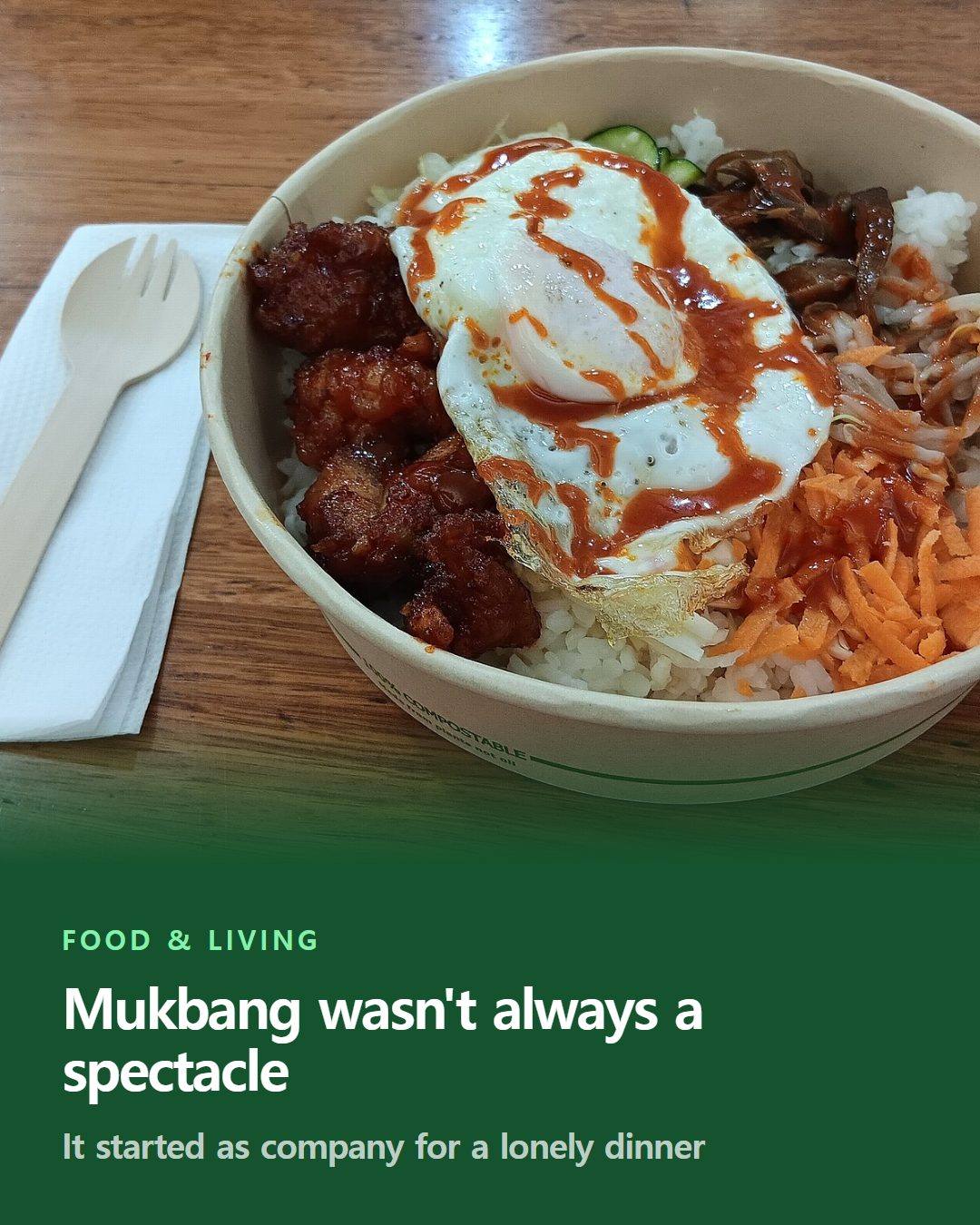
Type "mukbang" into YouTube today and the results are mostly spectacle: creators working through trays of fried chicken, gallon-sized noodle bowls, or entire tables of seafood, often for millions of views. Oxford English Dictionary added the word in 2021. Collins Dictionary shortlisted it for Word of the Year in 2020.
But the format international audiences know now looks very different from the one that started it, on a Korean livestreaming site, more than a decade ago, for a much quieter reason: a lot of Koreans were eating dinner by themselves and wanted company.
The short version
- Mukbang began in 2009 to give solo diners virtual company, not spectacle.
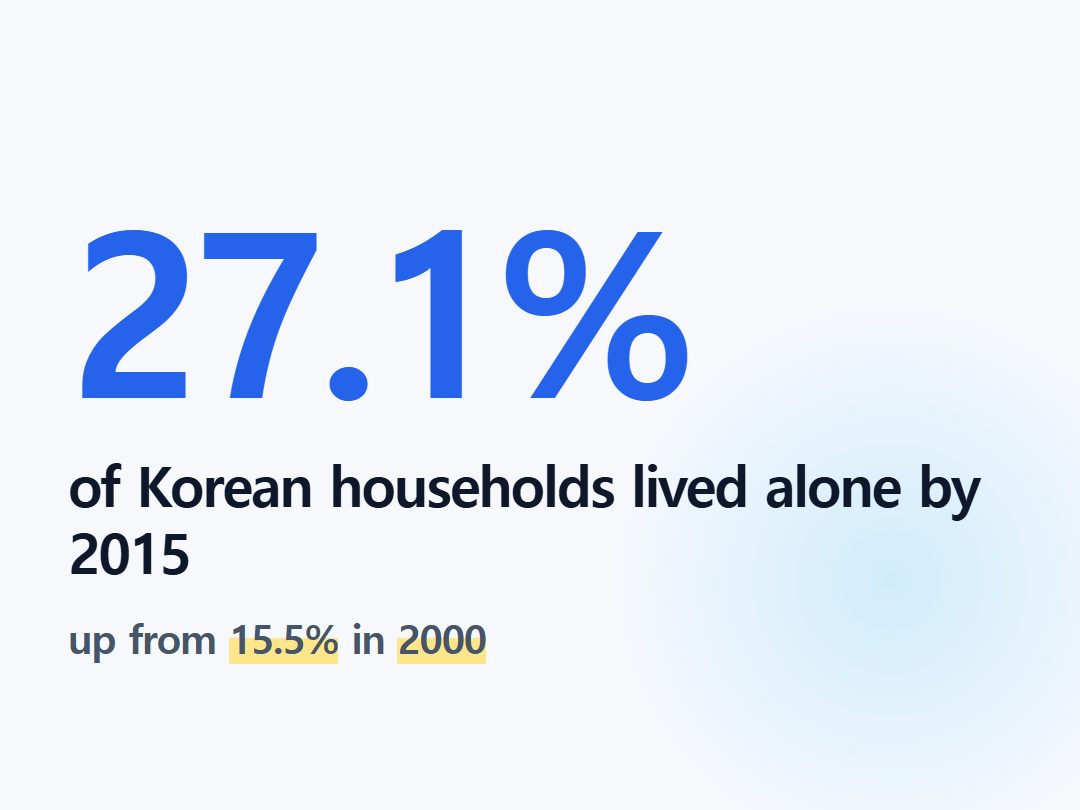
- Single-person households in Korea nearly doubled, from 15.5% to 27.1%, by 2015.
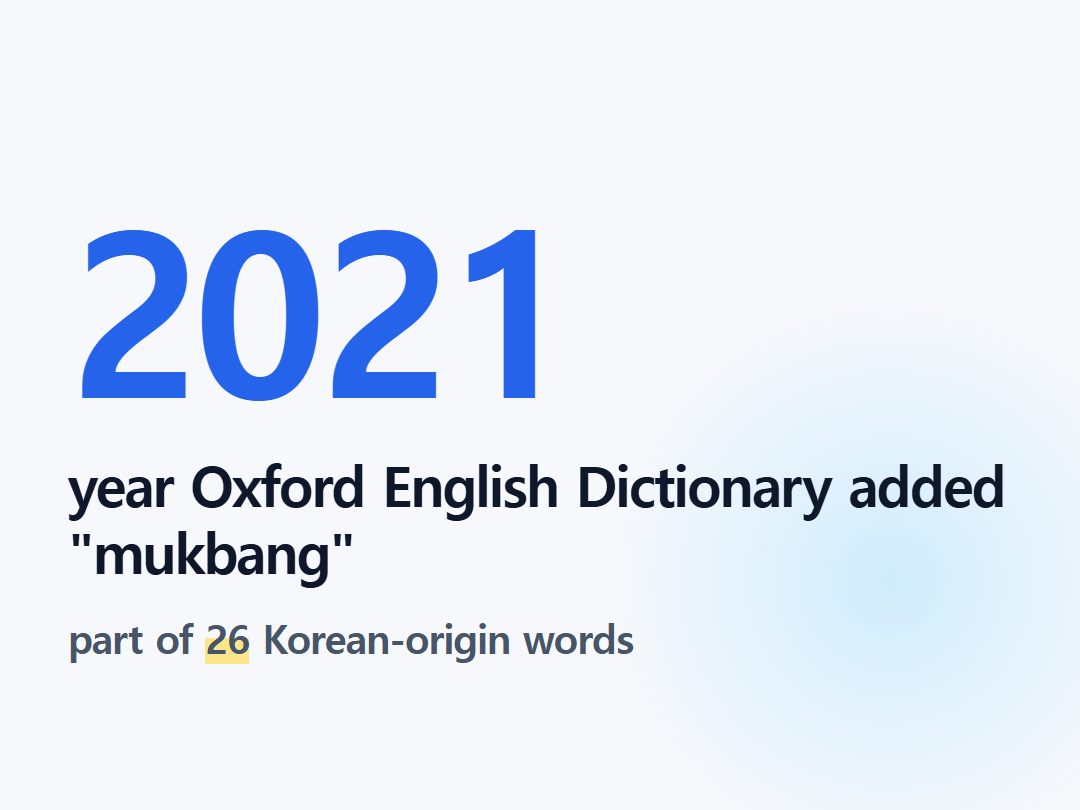
- Oxford added 'mukbang' in 2021, after Collins shortlisted it in 2020.
How did mukbang start on Korean livestreams?
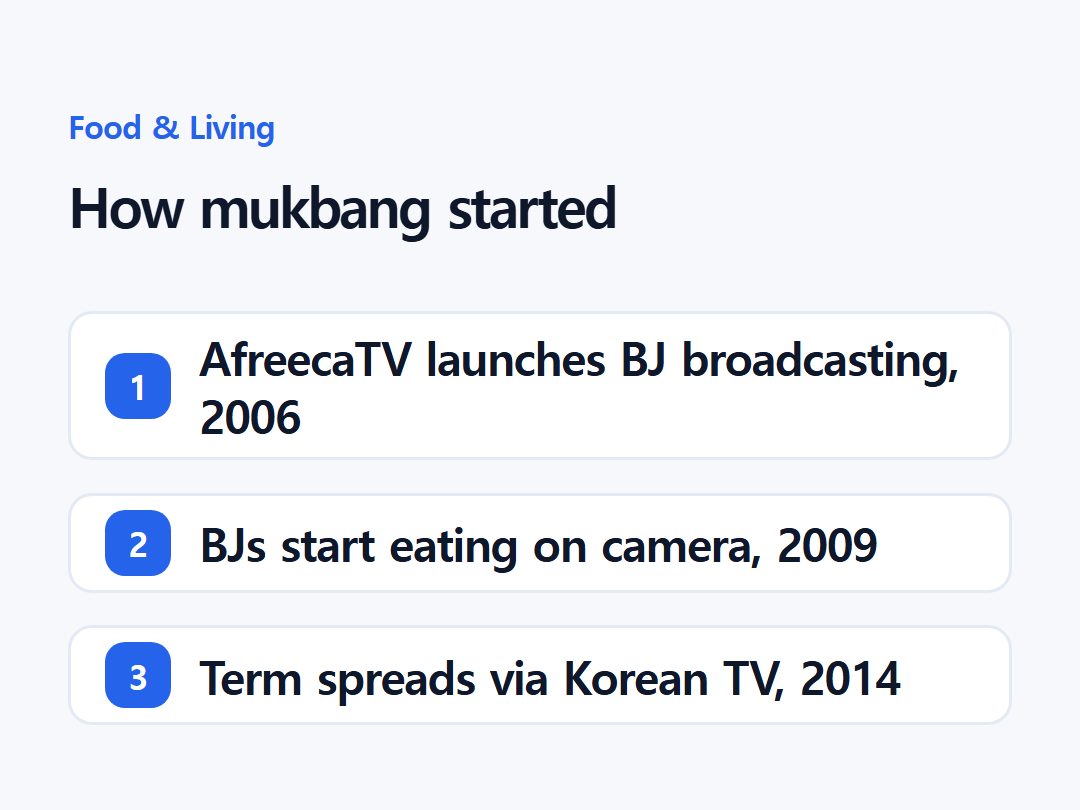
Mukbang (먹방) is a clipped compound of meongneun (먹는, "eating") and bangsong (방송, "broadcast") — literally, an eating broadcast. It emerged around 2009 on AfreecaTV, a Korean livestreaming platform that let ordinary people broadcast directly to viewers years before Twitch or YouTube Live existed.
No single creator invented it. A handful of AfreecaTV's amateur broadcasters, known as BJs ("broadcast jockeys," the platform's term for its streamers), independently found that simply eating on camera, while chatting with people watching in real time, kept an audience engaged.
By the early 2010s it had a name, a recognizable format, and its first breakout stars. By 2018 it was a recognized global genre. What changed in between is not just where mukbang was watched, but what it was for.
Mukbang filled a gap left by solo dining
The gap in how international audiences understand mukbang is this: outside Korea, it reads as a food-content genre, one variety of internet spectacle alongside ASMR or eating challenges. Inside Korea, its origin is inseparable from a specific social condition of the late 2000s and 2010s — the rise of honbap (혼밥), literally "alone" (혼자) plus "rice/meal" (밥), meaning eating by yourself.
For most of modern Korean food culture, eating was structurally communal. Restaurant menus were built around it: stews and hot pots often came with a minimum order of two servings, barbecue portions were priced and grilled for groups, and side dishes (banchan) were shared from the center of the table.
Eating alone in public, as recently as the early 2010s, carried a mild social stigma — it could read as a sign that someone had no friends, no family nearby, or was working through a meal alone because they had no other choice.
A ranking system that circulated on Korean social media at the time, 혼밥 난이도 ("the difficulty level of eating alone"), treated solo dining almost like a game with escalating dares, from grabbing a quick bap alone at a food-court stall (low difficulty) up to eating alone at a barbecue restaurant meant for groups (high difficulty) — a joke that only worked because doing it alone was genuinely uncomfortable.
At the same time, the number of people actually eating alone was rising fast, for demographic reasons that had nothing to do with food.
Single-person households in Korea grew from about 15.5% of all households in 2000 to 27.1% by 2015, driven by delayed marriage, rising divorce rates, long work hours, and young people moving to cities for university and jobs.
Surveys have found that more than 90% of people in single-person households eat most of their meals alone. Korean culture had a strong communal-eating norm and a fast-growing population of solo eaters, at the same time. Mukbang filled that gap.
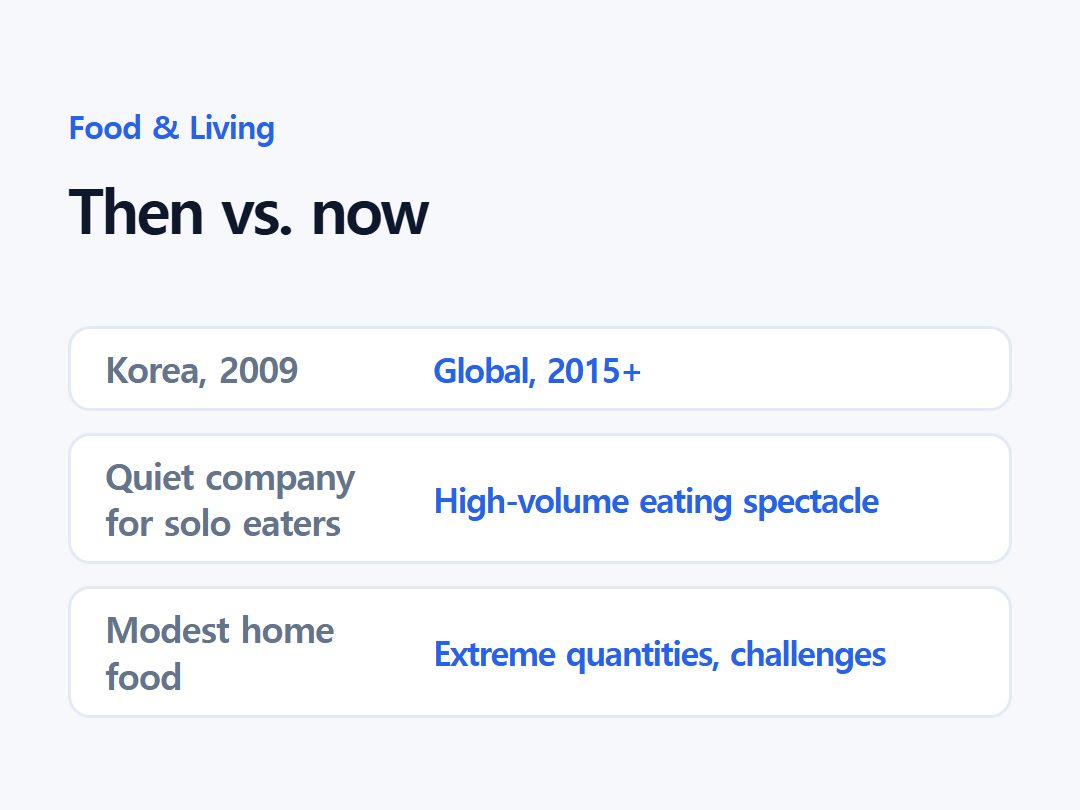
The format's original appeal was not performance-eating; it was company.
A BJ would order food, sit in front of a webcam, and eat while narrating and responding live to comments from viewers — not unlike a video call with someone eating dinner with you, except the other person was a stranger, and dozens or hundreds of other people were doing the same thing at the same time.
For a single-person household eating instant noodles alone on a Tuesday night, a mukbang stream offered the sound and rhythm of a shared meal without requiring anyone else to physically be there. Early broadcasts reflected this: modest, everyday food, minimal production, and conversation as the actual product. The eating itself was almost secondary.
This is the piece that tends to get lost when mukbang is described internationally as "the Korean eating-show trend." It wasn't designed as content about food. It was a technological patch for a social gap — eating together, at a moment when a rising share of the country was structurally eating alone.
How mukbang spread from Korean streams to global fame
AfreecaTV built the infrastructure that made this possible before mukbang existed as a named genre.
The platform introduced its BJ system and a virtual-gift economy in the mid-2000s: viewers buy "star balloons" (별풍선), a paid virtual currency, and send them to a BJ during a live broadcast as a tip; the BJ later cashes them out, with the platform taking a cut.
Before this system, Korean personal broadcasting was a hobby. After it, streaming eating could become a livelihood, which gave broadcasters a direct financial reason to keep audiences company night after night.
Against that backdrop, several AfreecaTV broadcasters began eating on stream around 2009, and the format caught on through the early 2010s.
Park Seo-yeon, known by her broadcast name “The Diva,” became one of its first breakout stars around 2013, drawing international press attention including a CNN feature in 2014, partly because her large appetite contrasted with her slight build.
By 2014, mainstream Korean media was covering mukbang as its own cultural phenomenon, and the format had migrated beyond AfreecaTV to cable and terrestrial Korean television.
Global crossover followed a different, more accidental path.
Mukbang was largely unknown in the West until 2015, when a reaction-video channel uploaded American YouTubers watching Korean eating broadcasts for the first time; the clip went viral and a wave of English-language creators started experimenting with the format soon after.
That same year, YouTube's own trend reporting noted mukbang-style videos emerging from creators worldwide, increasingly merged with another platform staple, ASMR (the crisp, close-mic sound of chewing and packaging).
One early adopter, Trisha Paytas, posted an unedited, real-time mukbang video in 2015 that drew millions of views and helped establish the format's Western template: longer run-times, less narration, more emphasis on sound and volume of food.
The word itself entered English print around the same period — the earliest documented English-language use traces to 2015 — and formal dictionary recognition followed once usage was established: Collins shortlisted "mukbang" for its 2020 Word of the Year (the year ultimately went to "lockdown"), and Oxford English Dictionary added it in 2021 as part of a larger batch of Korean-origin entries reflecting the broader spread of Hallyu, the Korean cultural wave, into English.
Mukbang keeps drifting further from its original format
The format keeps splitting further from its origin.
In Korea, honbap itself has lost most of its old stigma — solo-friendly restaurants with single-portion menus and individual booths are now common in Seoul, and reality shows like I Live Alone have normalized solo living generally, which has arguably reduced Korean viewers' original dependency on mukbang as substitute company.
Meanwhile the genre's international wing has drifted toward extremity: large-quantity eating, spice challenges, and in some cases creators built entire personas around competitive or excessive eating, a direction some Korean commentators and mukbangers view as a departure from the format's conversational roots.
There are also structural questions still open on the Korean platform side. AfreecaTV rebranded to SOOP in 2023–24 after years of losing streamers to Twitch, which then shut down its Korean operation entirely in February 2024 over network-fee disputes, consolidating SOOP's position.
Korean lawmakers have periodically raised concerns in National Assembly audits about the star-balloon donation system that funds BJs, including its use by minors and lack of a hard donation cap, though no binding cap has been enacted.
And the format keeps mutating in format terms too — interview shows and animated series have started borrowing the mukbang structure, well beyond its original one-person, one-camera, one-dinner setup.
Mukbang's timeline, from Korean livestream to global dictionary entry
| Year | Milestone |
|---|---|
| 2009 | Mukbang emerges on AfreecaTV livestreaming platform |
| 2013 | Park Seo-yeon ("The Diva") becomes first breakout star |
| 2014 | CNN features mukbang; mainstream Korean TV picks it up |
| 2015 | Viral reaction video introduces mukbang to Western YouTube |
| 2020 | Collins shortlists "mukbang" for Word of the Year |
| 2021 | Oxford English Dictionary adds "mukbang" |
Frequently asked
What does mukbang mean in Korean?
Mukbang is a compound of meongneun (eating) and bangsong (broadcast), literally meaning "eating broadcast."
Why did mukbang become popular in Korea?
It started around 2009 on AfreecaTV as a way for solo diners, a fast-growing group amid Korea's rise in single-person households, to feel company while eating alone.
When did mukbang become popular in the US?
Mukbang went viral in the West in 2015 after a reaction video showed American YouTubers watching Korean eating broadcasts, and creators like Trisha Paytas soon adapted the format.
Sources
Every factual claim above is traceable. We do not translate articles — we gather facts from multiple outlets and write them ourselves.
- Mukbang, n. — meanings, etymology and more — Oxford English Dictionary
- mukbang — Wordorigins.org — Wordorigins.org
- Table for One?: How Dining Culture Is Changing in South Korea — Korea Economic Institute of America
- Good Eats: The Evolution of Mukbangs on YouTube — YouTube Official Blog
- 'Lockdown' is Collins Dictionary's Word of the Year, trailed by 'TikToker,' 'mukbang' — PhilSTAR Life
- Oxford English Dictionary adds 26 Korean words to latest edition — Korea.net
- How much money do South Korean streamers earn? Afreeca TV star balloons — MEAWW
- Why are South Korean Twitch streamers flocking to AfreecaTV? — Creator Handbook