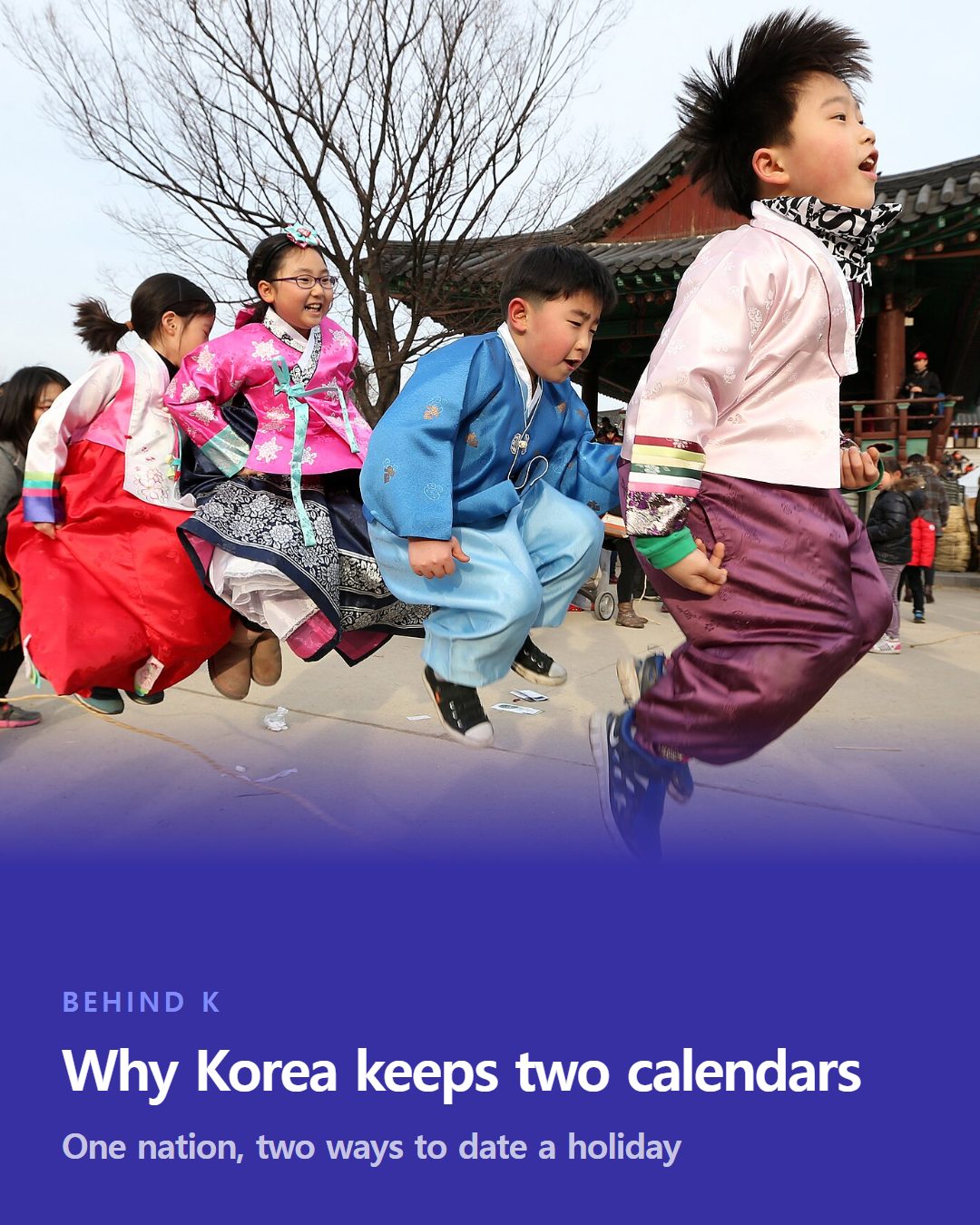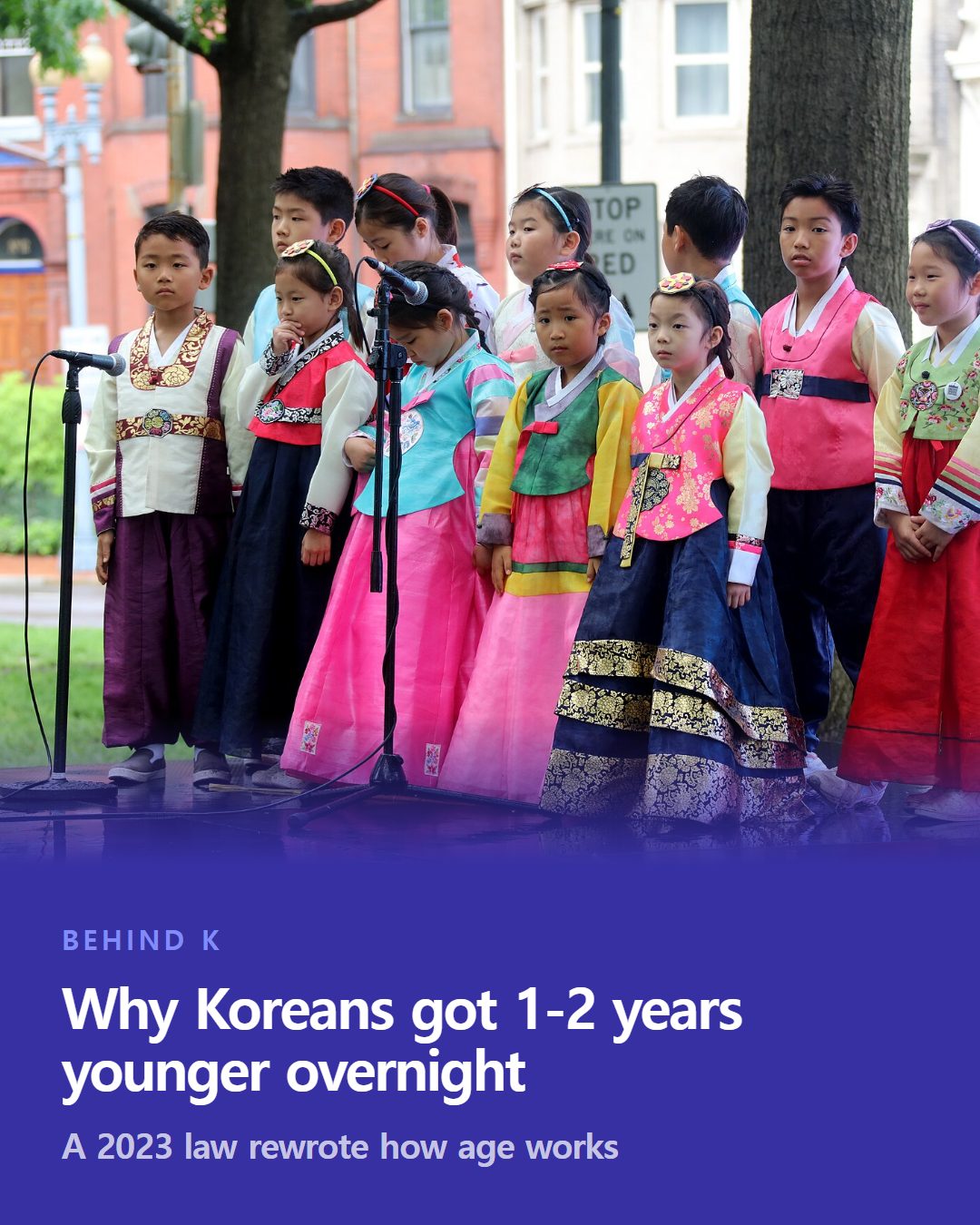
If you've ever seen a Korean celebrity's age listed differently on two websites, or watched a variety show where someone announces they've "become two years older overnight" on New Year's Day, you weren't imagining things. For most of modern Korean history, a person's age depended on which counting system was being used — and in June 2023, the government finally tried to fix that.
The short version
- South Korea made international age the legal default on June 28, 2023.
- Korean age added a year at birth, then again for everyone every January 1.
- School enrollment, the draft, and drinking age still use calendar-year age, not international age.
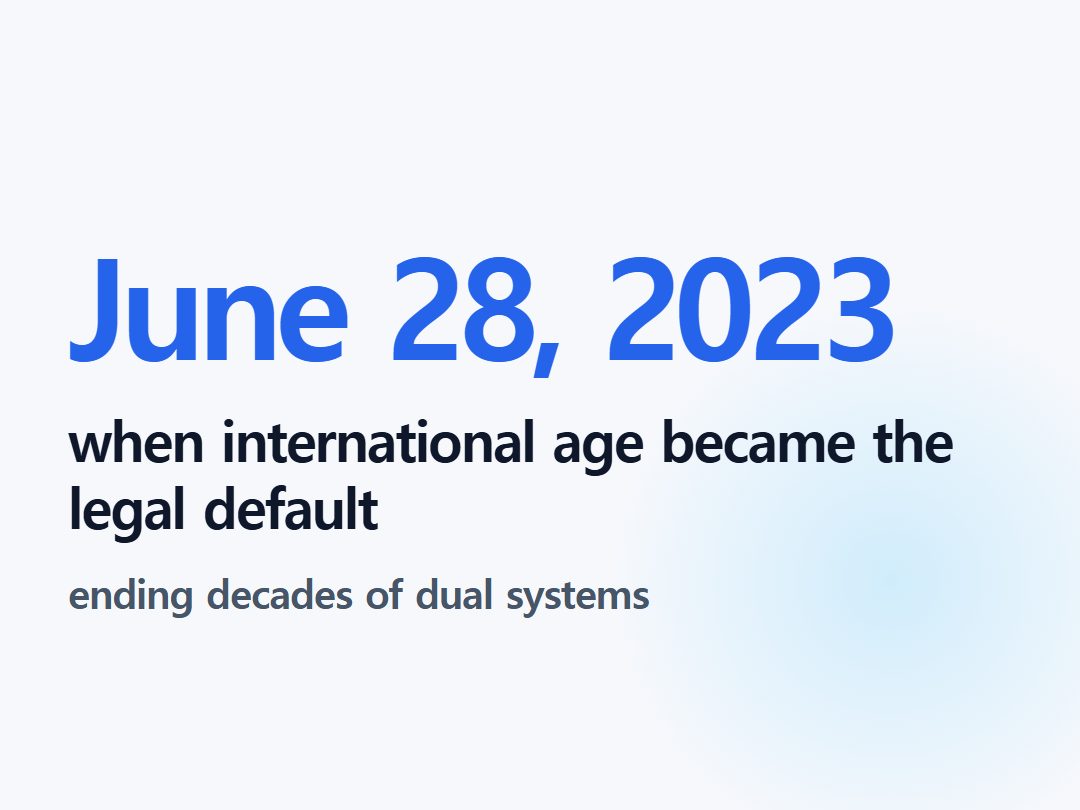
International age becomes Korea's legal default
On June 28, 2023, a law passed by South Korea's National Assembly took effect, making international age (만 나이, man nai) the legal default for all civil and administrative purposes nationwide. Under this system, a person is zero years old at birth and gains a year on each birthday — the same method used almost everywhere else in the world.
The law didn't invent a new system. International age had already been used in many Korean legal contexts since 1962. What changed was that it became the single default standard, formally retiring the traditional practice that had made people's stated age different from their international one.
Justice Ministry officials said at the time that they expected the change to reduce the legal disputes, complaints, and everyday confusion that arose from having competing definitions of "age" in circulation.
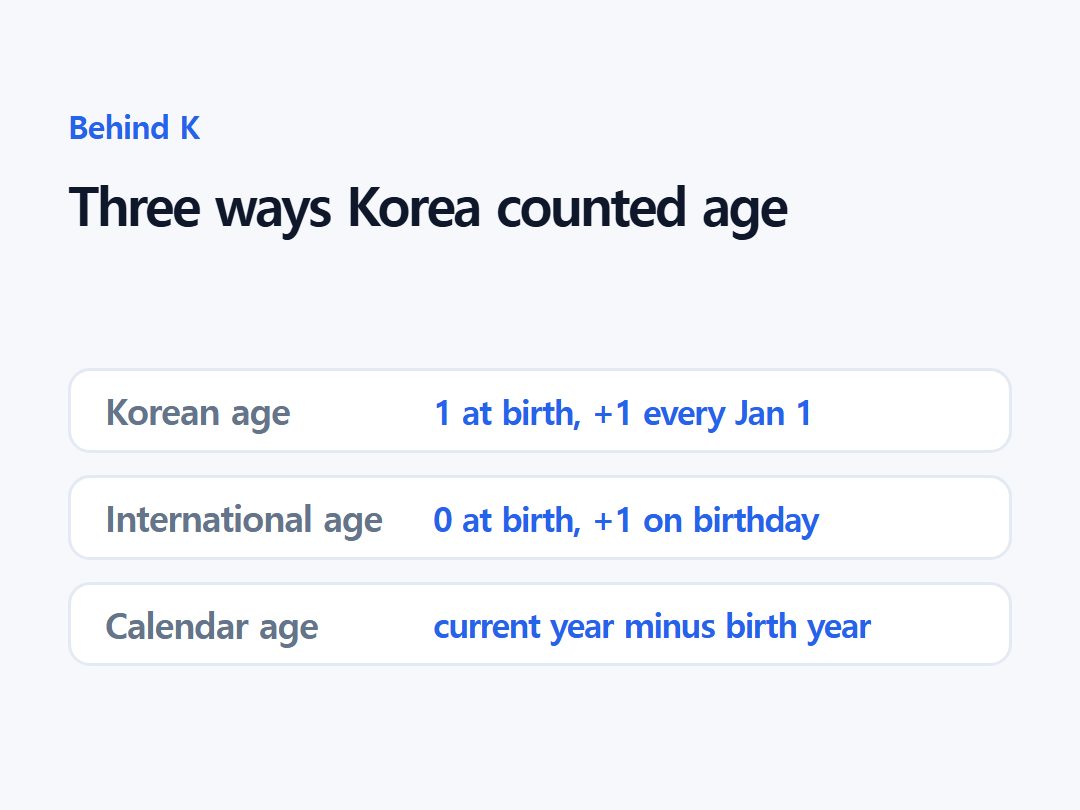
Why does a celebrity have two ages?
To understand why this needed a law at all, it helps to know that Korea was, until 2023, effectively running three different age systems at once — and international fans encountering Korean pop culture almost always run into at least one of them.
Korean age (세는나이, saeneun nai) is the one most visitors hear about first. Under this system, a baby is considered one year old at birth — the roughly nine months of pregnancy count as the first year of life — and then everyone in the country, regardless of their actual birthday, turns a year older together on January 1.
This means a baby born on December 30 could turn two years old just two days later, on New Year's Day, despite being only two days old in international terms. This is the system behind offhand lines in dramas or interviews where someone says they "turned 30" on January 1 even though their birthday isn't for months.
International age (만 나이) is the system familiar to most of the world: zero at birth, one year added on each birthday. This is now the default for contracts, medical records, ID cards, and most government interactions in Korea.
Year age, or calendar age (연나이, yeon nai), is a third, lesser-known method: it's simply the current year minus the birth year, with no regard to whether the birthday has passed. It doesn't map neatly onto either of the other two systems, and it's the one still used for a handful of specific legal purposes — including school enrollment cutoffs and military conscription — described below.
For English-language fans, this is precisely where the confusion enters fan wikis, forums, and casual conversation.
An idol's or actor's "Korean age" and "international age" can differ by one or two years depending on whether their birthday has already occurred that year, and both numbers may show up in different places without explanation.
A celebrity born in December, for instance, could be listed as one age on their agency's international-facing materials and a different, higher number in a Korean variety show caption or an older Korean-language wiki entry that hasn't updated its convention.
None of these numbers are wrong exactly — they're just answering different questions about what "age" means.
The 2023 law didn't erase this gap so much as narrow where it applies.
Korean age is no longer used in law, but it remains extremely common in casual speech, especially among older Koreans, because social hierarchy in Korean — how people address each other, whether they use honorifics — has traditionally been organized partly around relative age.
Changing a legal default doesn't automatically change a decades-old conversational habit, which is why the practical effect on everyday life has been more gradual than the legal effect.
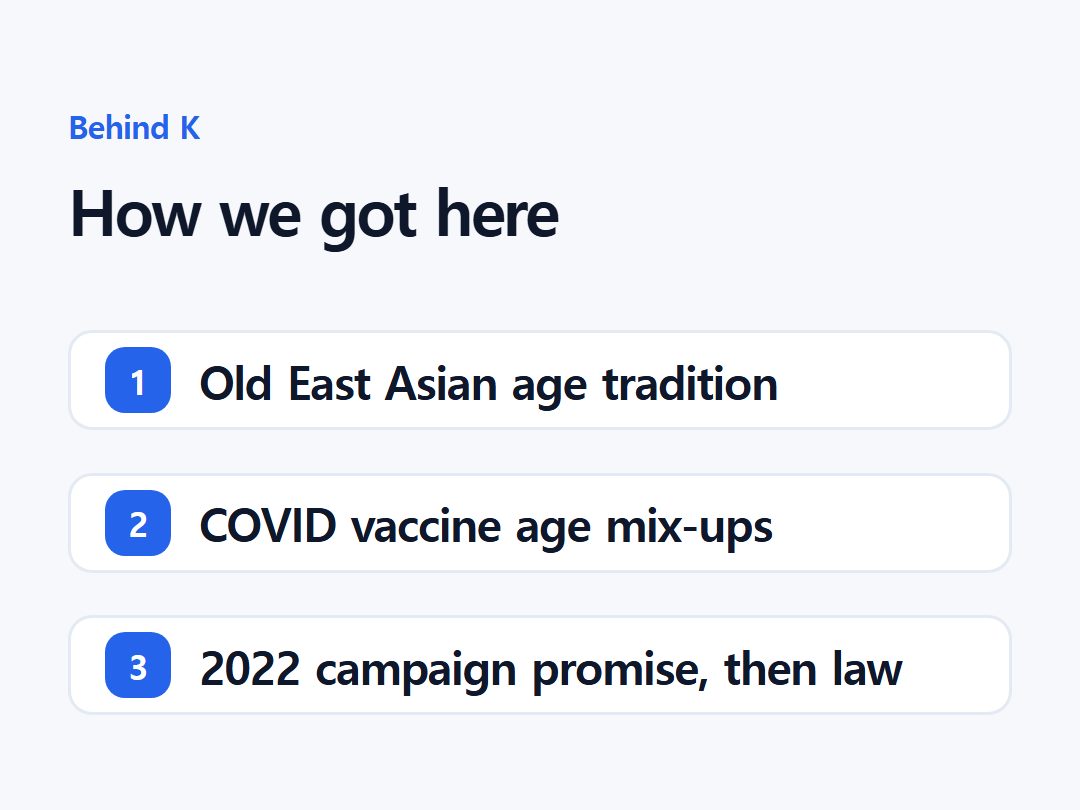
How a pandemic pushed Korea to standardize age
Korean age reckoning is not unique to Korea — it descends from a broader East Asian tradition, sometimes called "age reckoning," that was historically shared with China, Japan, and Vietnam, all of which phased it out of official use earlier in the 20th century.
Korea kept it in everyday use even as it adopted international age for many formal purposes starting in 1962, which is how the country ended up juggling multiple systems for six decades rather than one.
The immediate push for full standardization came from an unlikely source: the COVID-19 pandemic.
When health authorities set age cutoffs for vaccine eligibility and the “vaccine pass” mandate required to enter certain public venues, officials used Korean age and international age inconsistently across different announcements.
Vaccine labeling advice such as “not recommended for those under 30” left many people unsure which age system applied to them.
In one documented case, a child born in 2010 whose birthday hadn't yet arrived turned out not to be eligible for vaccination under one age standard, yet was still subject to the vaccine pass mandate under another — forcing the government to carve out an exception for children caught in the gap.
The resulting public frustration became a campaign issue, and then-candidate Yoon Suk Yeol pledged to abolish the Korean age system if elected. His government followed through: the National Assembly passed the standardization law on December 8, 2022, and it took effect the following June.
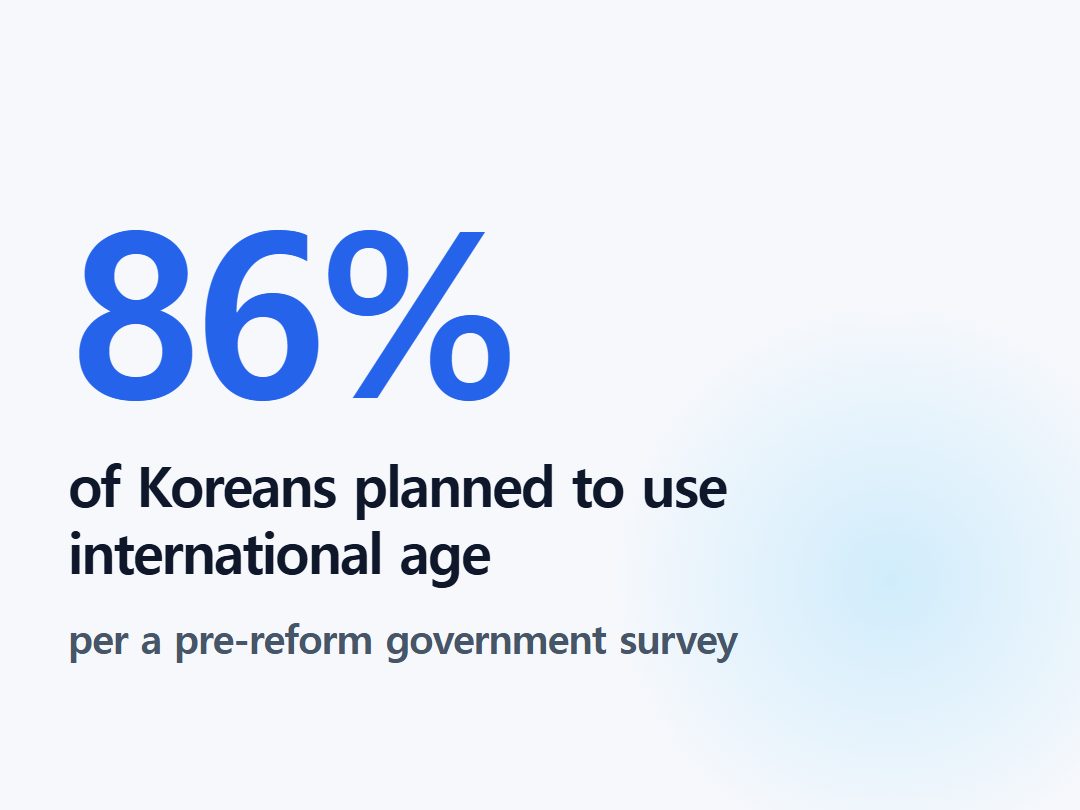
A government survey conducted before the change found that roughly 86% of South Koreans said they intended to use international age in daily life once the law took effect.
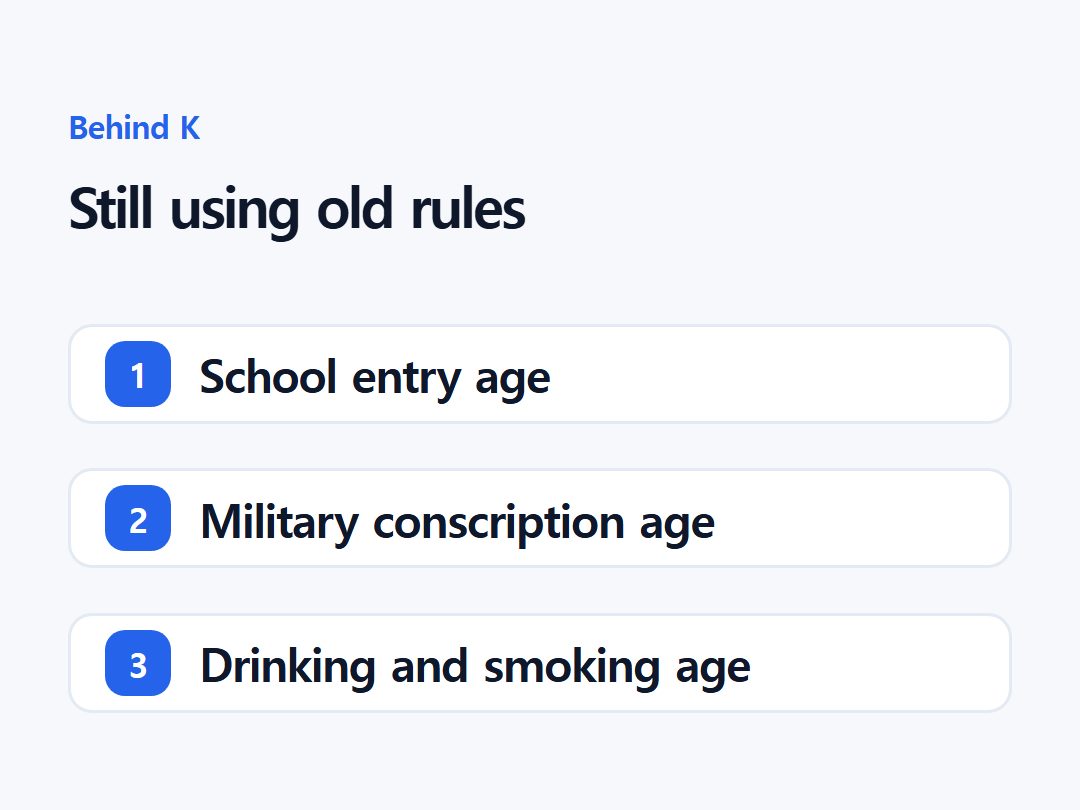
Where does the new age law not apply?
The reform is deliberately incomplete, and the government has been explicit that some exceptions will stay in place for the time being rather than disappear immediately. School entry age still follows a rule based on the calendar year a child turns six, not their exact birthday.
The Military Service Act, which governs South Korea's mandatory military service for men, continues to use calendar-year age (연 나이) for tracking draft eligibility and conscription timing rather than international age.
The Youth Protection Act, which sets the legal age for buying alcohol and tobacco, likewise still calculates eligibility by calendar year rather than by individual birthday — meaning the drinking and smoking age in Korea is not simply "19 international years old" the way outside observers might assume.
Beyond the remaining legal exceptions, the bigger open question is cultural rather than legislative: how quickly Korean age fades from casual conversation.
Age-based hierarchy is embedded deeply enough in the Korean language and social etiquette that the law changing the legal default doesn't automatically change how people talk to each other, especially across generations.
Nothing about the reform requires anyone to change how they speak at home, which is why the shift in daily habits has lagged well behind the shift in law.
For international readers following Korean celebrities, dramas, or variety shows, the practical takeaway is simpler — if you see two different ages listed for the same person, it's rarely an error. It's usually just two different questions being answered with the same word: one is asking how old that person is under the law since June 2023, and the other is asking how old they'd say they are at a family dinner.
Comparing Korea's three ways to count age
| System | Korean name | How it counts | Still used for |
|---|---|---|---|
| Korean age | 세는나이 (saeneun nai) | Age 1 at birth; everyone gains a year together on Jan. 1 | Casual speech, age-based social hierarchy |
| International age | 만 나이 | Age 0 at birth; +1 on each birthday | Legal default since June 2023 — contracts, IDs, medical records |
| Year/calendar age | 연나이 (yeon nai) | Current year minus birth year | School enrollment, military conscription, drinking/smoking age |
Frequently asked
Why do Koreans have two different ages?
Korea traditionally used "Korean age" (세는나이), which counts a baby as one year old at birth and adds a year to everyone on January 1, alongside "international age" (만 나이), which starts at zero and adds a year on each birthday.
Did South Korea abolish Korean age?
A law that took effect on June 28, 2023 made international age the legal default nationwide, but Korean age wasn't erased — it's still common in everyday, casual speech.
What age system does Korea still use for the military and drinking age?
The Military Service Act and the Youth Protection Act both still use "year age" (연 나이), which is simply the current year minus the birth year, rather than international age.
Sources
Every factual claim above is traceable. We do not translate articles — we gather facts from multiple outlets and write them ourselves.
- Millions become a year or two younger as South Korea scraps traditional way of counting age — NBC News
- South Koreans now a year or two younger as traditional way of counting age scrapped — CBC News
- Here's why a lot of South Koreans suddenly just found themselves a year or two younger — CBS News
- A National Law on Standardizing International Age Will Take Effect on June 28, 2023 — Seoul Metropolitan Government (Seoul Foreign Portal)
- Century-old 'Korean age' triggers confusion over antivirus measures — The Korea Herald
- Koreans Becoming Younger – Unification of Age-Counting Systems — Library of Congress, In Custodia Legis