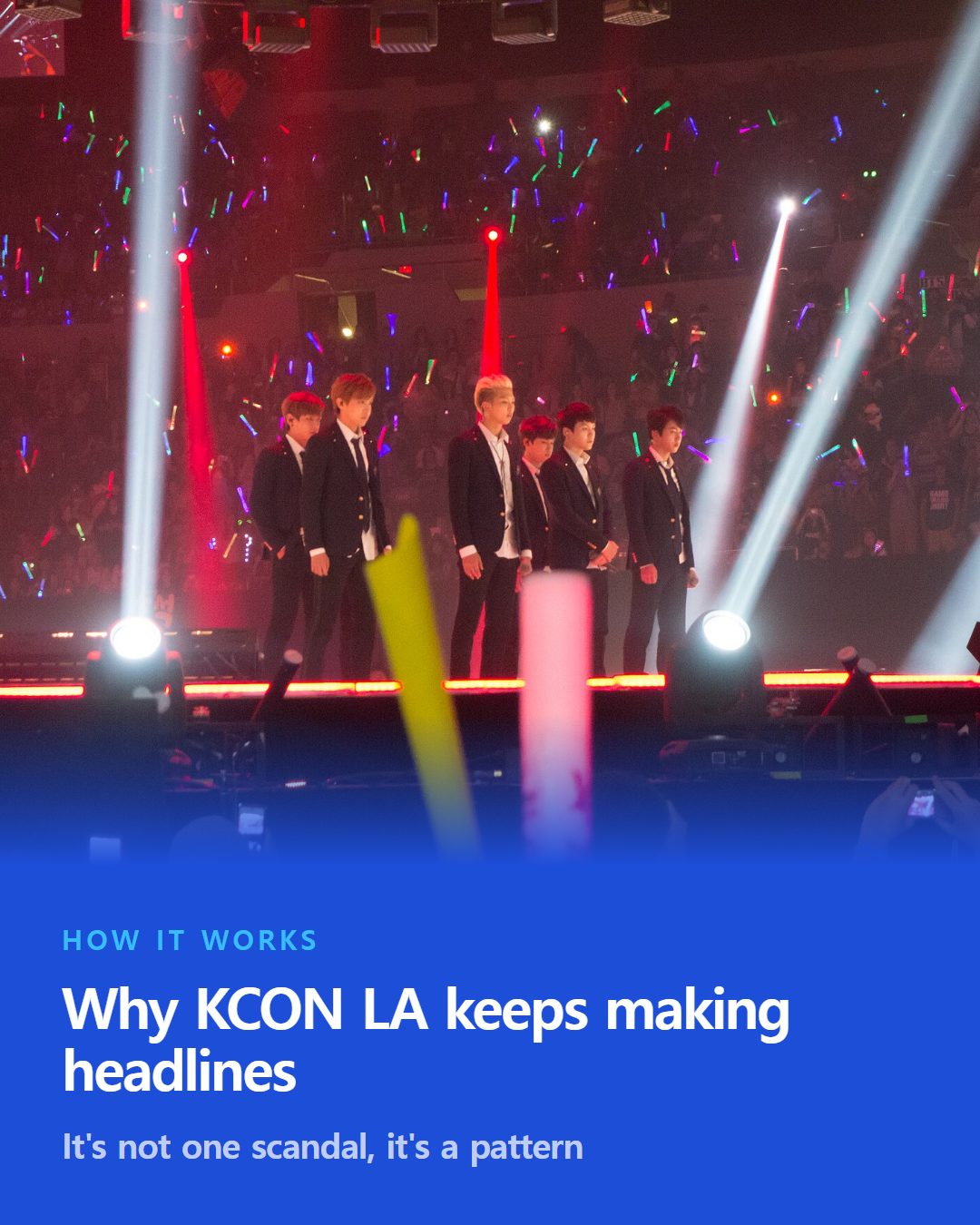
Korean law does not ban K-pop idols from dating. There is no statute, no ministry rule, and no line in the government's own standard contract that forbids a singer from having a partner.
The short version
- K-pop dating bans are contract clauses, not Korean law.
- Karina's 2024 dating news erased about $50 million in SM stock.
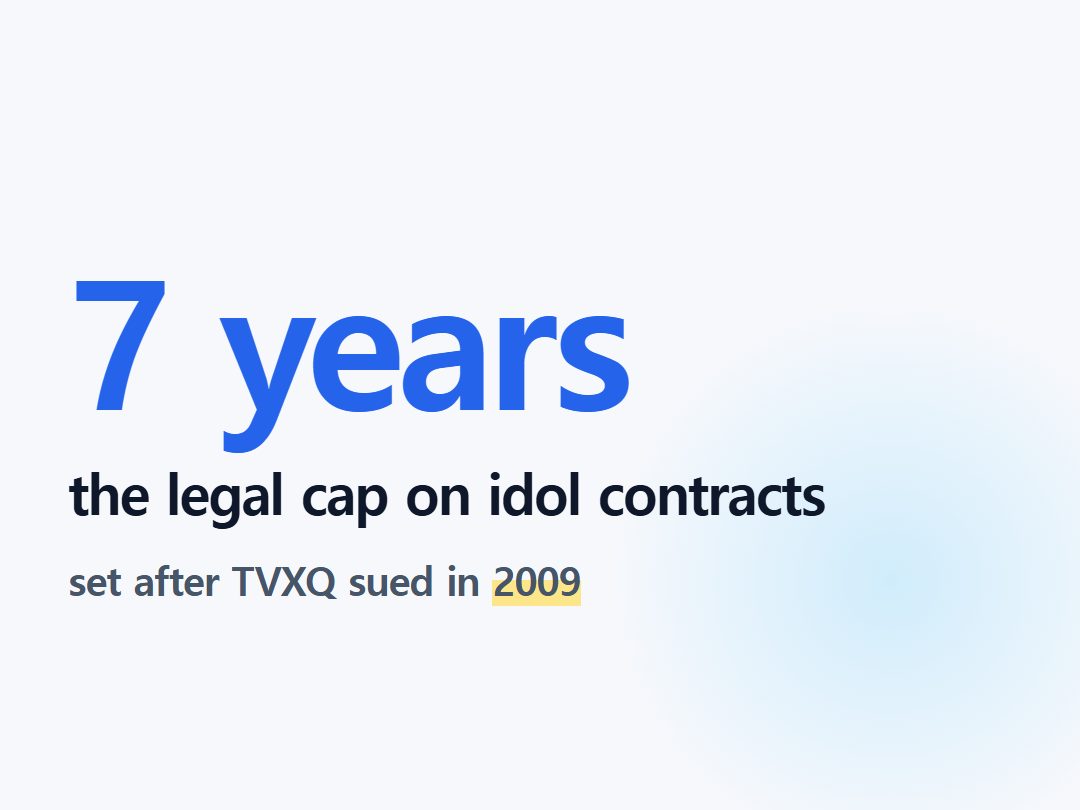
- Regulators capped agency contracts at seven years back in 2009.
What exists instead is private language — phrases like "conduct that damages the artist's image" — written into exclusive contracts by individual talent agencies, the companies that recruit, house, train, and manage idols. SM, YG, JYP, and HYBE are the largest; dozens of smaller labels run the same model. Enforcement is informal, backed only by the threat of losing the contract.
This is the agency system that shapes Korean pop culture: a company scouts a teenager, trains them for years, and in exchange holds broad control over their public life once they debut. A dating clause is one small piece of that much larger arrangement.
There is no dating law, only a private conduct clause
South Korea's Fair Trade Commission (FTC) publishes a standard exclusive contract that agencies are required to use as a baseline. It sets rules on contract length and profit splits. It says nothing about romance.
Agencies fill that silence with their own "morality" or "image management" clauses, broad enough to cover a relationship without ever using the word dating. The same contracts typically also govern an idol's schedule, appearance, and social media activity — dating is one item on a much longer list of decisions the agency, not the artist, makes.
Because the clause is contractual, not criminal, the only penalty is termination — which is exactly what has happened in the industry's most cited cases.
The fandom economy is built on the fantasy of being single
Stephanie Choi, a K-pop researcher at the University at Buffalo's Asia Research Institute, has described idol personas as built around "promotional emphasis on innocence and chastity" — an image that is hard for artists to shed once fans expect it.
Fandom in Korea runs on a parasocial bond: fans pay for the feeling of closeness to someone who appears emotionally available to them alone. Agencies cultivate that closeness deliberately, through daily selfies, live-streamed meals, and paid messaging apps that make an idol feel personally present in a fan's day.
A confirmed relationship breaks that illusion for the fans most invested in it — precisely the group agencies rely on to buy repeatedly.
Buying an album is also a lottery ticket for stage time
The mechanism is concrete, not just emotional. Physical albums typically include a random ticket for a fansign — a lottery-based meet-and-greet where winning fans get a few minutes face to face with an idol.
Because the odds scale with how many albums a fan buys, the same fan often purchases the identical release ten or twenty times. A single fansign slot can require dozens of copies bought under one name, since each copy carries its own one-time entry code.
Multiply that across a comeback — the industry term for a new single or album release cycle — and repeat sales rest on nothing but the odds of a few seconds face to face. That depends on fans believing the idol is, in some sense, still reachable.
A dating story can move a stock price within hours
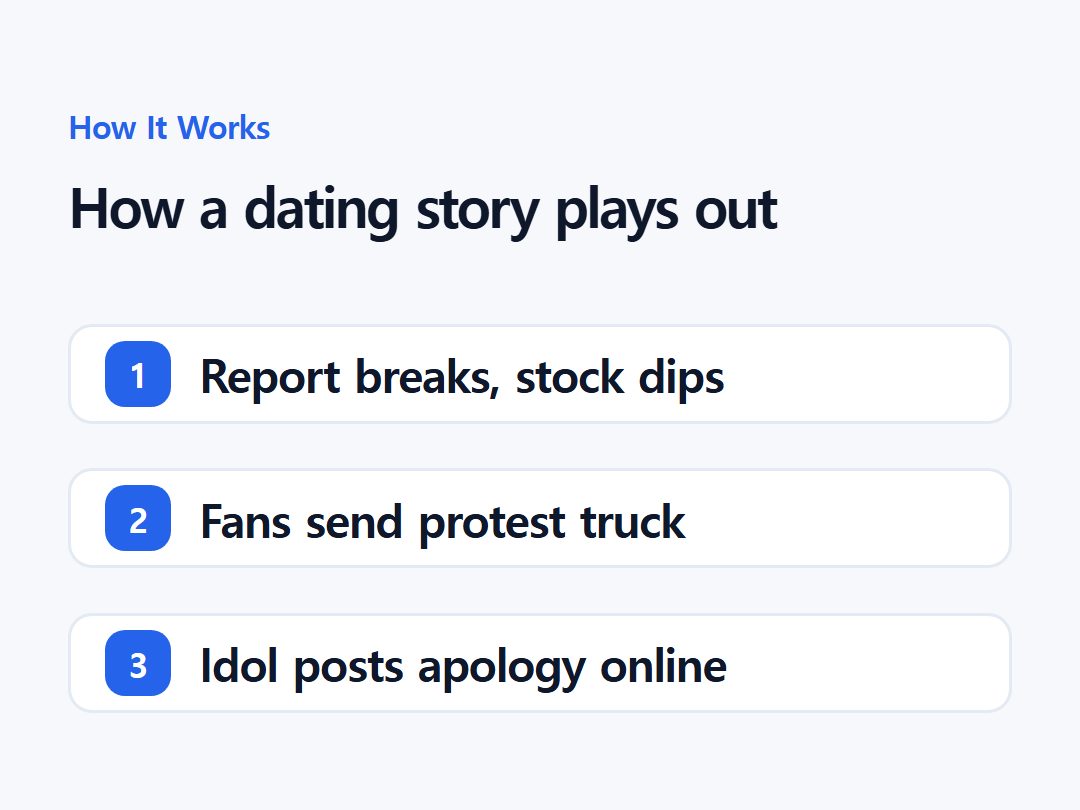
In February 2024, the entertainment outlet Dispatch reported that aespa's Karina was dating actor Lee Jae-wook. SM Entertainment's shares fell more than 3% that day, wiping out an estimated 66.8 billion won (about $50 million) in market value in a single session, according to Korea Exchange data cited by Korean entertainment press.
Fans sent a truck with an LED protest billboard to SM's Seoul headquarters. Karina posted a handwritten apology on Instagram. She and Lee Jae-wook broke up five weeks later, with his agency citing his wish to "concentrate on work."
When agencies acted on the clause, fans sometimes fought back
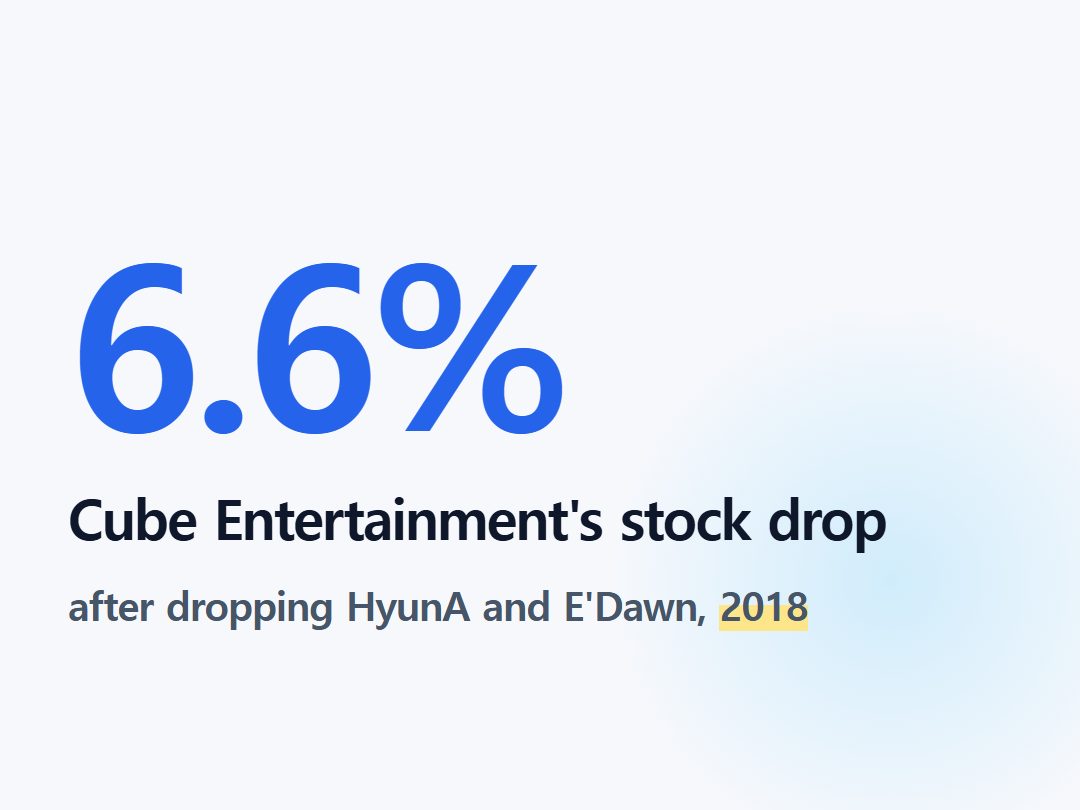
In September 2018, Cube Entertainment announced it was dropping HyunA and Pentagon's E'Dawn after the two confirmed a relationship. The backlash was immediate: Cube's stock fell roughly 6.6% in a single session, and the company reversed itself within hours.
The reversal did not hold. Cube terminated HyunA's contract by mutual agreement weeks later, and E'Dawn's contract ended that November. Both continued performing under a new label.
Fan revolt has also worked in an idol's favor. In 2001, agency SidusHQ removed group god's Park Joon-hyung after news broke that he was dating actress Han Go-eun. Fans quit the official fan club, returned merchandise, and threatened a boycott; the other members held their own press conference opposing the decision. SidusHQ reinstated him within months.
The case is still cited as the first time fans and members organized against an agency's decision to remove an idol over a relationship — a precedent invoked whenever a fandom debates whether to support or condemn a dating idol today.
A 13-year contract is why every deal now caps at seven years
The clause exists inside a longer history of contract disputes. In 2009, three members of TVXQ sued SM Entertainment to void what they called a 13-year "slave contract."
The members argued that despite years of touring and album sales, SM's revenue split left them with comparatively little direct income — the core complaint behind the "slave contract" label the case became known for.
A Seoul court sided with the members that year, and the dispute pushed the FTC to act: it set a seven-year cap on exclusive idol contracts, a limit the entire industry still uses today. The lawsuit itself was withdrawn by both sides in 2012, but the seven-year rule outlived the case.
A 2017 reform stopped arbitrary firing, not dating bans
In 2017, the FTC reviewed contracts at eight major agencies, including SM, YG, JYP, and Cube, and ordered corrections to six categories of unfair terms.
- Termination penalties capped at the amount actually invested in the trainee, not multiples of it
- A required notice period before an agency could cancel a contract
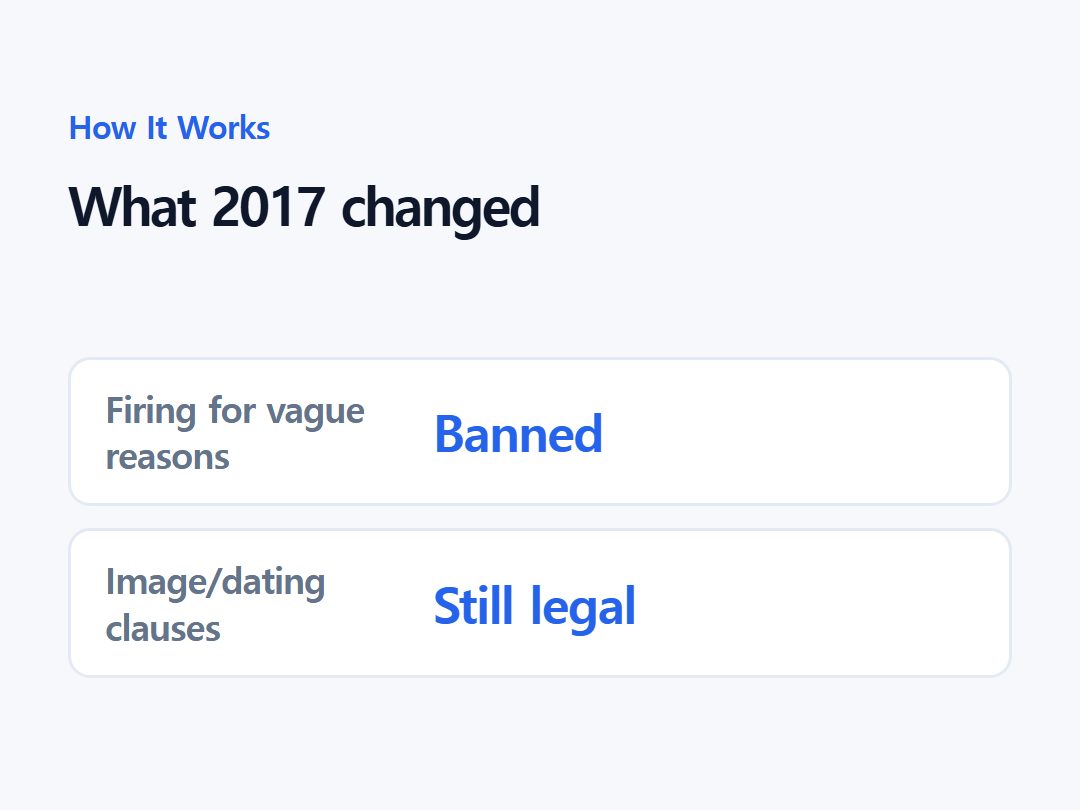
- Removal of "morality clauses" that let agencies fire artists for vague, unspecified reasons
- An end to pressuring trainees into signing exclusive deals with no room to negotiate
That third change mattered most for this topic: agencies could no longer terminate someone for an unexplained "morality" violation. It did not ban image-management or exclusivity clauses outright, which is why dating dismissals — Cube's decision on HyunA and E'Dawn came a year later — kept happening anyway.
A 2026 rewrite protects trainees, not their love lives
South Korea's Ministry of Culture, Sports and Tourism issued a new standard trainee contract effective January 1, 2026, following a law passed in August 2025. Trainees are aspiring idols who train — often for years — before an agency decides whether to debut them.
Trainees are typically unpaid during this period, with agencies covering housing, lessons, and living costs instead of a salary. That imbalance is one reason contract terms matter so much before an idol ever earns anything of their own.
The 2026 contract expands mental-health coverage, requires agencies to appoint a dedicated trainee-protection officer, and bars companies from forcing minors to skip school. It does not add or remove any language about dating, leaving that decision, as before, to each agency's individual contract.
Agencies now answer rumors with silence, not denial
The industry's current approach shows how unresolved this remains. When dating rumors about aespa's Winter and BTS's Jungkook circulated in late 2025, both agencies stayed silent for days rather than confirm or deny anything.
Korean music critic Lim Hee-yun told the Korea Herald that silence functions as "containment" — it keeps a rumor from becoming an official story that could trigger the fan backlash and stock movement seen in the Karina case. Fans, in turn, complained not about the dating itself but about being met with nothing at all.
Younger, more international fanbases have begun pushing back on the entire premise, arguing idols deserve the privacy any other adult gets. Whether that pressure changes contract language, or only how loudly the next story lands, is still an open question.
Dating-clause enforcement cases, in order
| Year | Idol(s) | Agency | Outcome |
|---|---|---|---|
| 2001 | Park Joon-hyung (god) | SidusHQ | Removed after dating news; reinstated within months after fan backlash |
| 2009 | TVXQ members | SM Entertainment | Sued over 13-year contract; court ruling helped push the 7-year cap |
| 2018 | HyunA & E'Dawn | Cube Entertainment | Dropped after confirming relationship; stock fell 6.6%, contracts still ended weeks later |
| 2024 | Karina (aespa) | SM Entertainment | Dating report cut ~$50M in market value; couple split five weeks later |
Frequently asked
Is it illegal for K-pop idols to date?
No — Korean law has no dating ban; agencies enforce private "image management" or morality clauses written into their own exclusive contracts.
Why did SM Entertainment stock drop over Karina's dating news?
A February 2024 Dispatch report that aespa's Karina was dating actor Lee Jae-wook sent SM shares down more than 3%, wiping out an estimated 66.8 billion won (about $50 million) in a single session.
How long can a K-pop idol's contract last?
Exclusive idol contracts are capped at seven years, a rule the FTC set after TVXQ's 2009 lawsuit over a 13-year "slave contract."
Sources
Every factual claim above is traceable. We do not translate articles — we gather facts from multiple outlets and write them ourselves.
- JYJ and S.M. Entertainment end three-year legal spat — The Korea Herald
- Korean Talent Agencies Ordered to End Slave Contracts — Variety
- Cube Entertainment retracts decision to expel K-pop couple HyunA and E'Dawn — AsiaOne
- aespa's Karina, actor Lee Jae-wook go separate ways — The Korea Herald
- SM Entertainment Stocks Drop Following aespa Karina's Dating News With Lee Jae Wook — Koreaboo
- Why K-pop dating rumours are a major headache for agencies — The Korea Herald
- South Korea Reforms K-pop Trainee Contracts for 2026 — Outlook
- South Korea's FTC Releases New Rules For K-Pop Companies And Subcontractors — CelebrityAccess
- g.o.d's Joon Park Opens Up About The Time He Was Almost Kicked Out Of The Group For Being In A Relationship — Koreaboo