Type the name of a recent Korean drama into a search engine along with the word "subs," and the results look different than they did a decade ago. Instead of forum threads and file-hosting links to a fan-translated video, most searches now return the show's page on Netflix, Viki or Disney+.
The volunteer subtitle groups that once did that work — commonly called fansubbers — have not disappeared by accident. Their decline is the result of two forces moving at once: Korean copyright enforcement expanding overseas, and licensed streaming platforms taking over the job fans used to do for free.
The short version
- Piracy sites and fansub hubs have shut down as Korean shows became licensed globally.
- Korea now works with Interpol and US agencies to shut down piracy sites abroad.
- Netflix, Viki and Disney+ now supply the subtitles fans used to make for free.
Why did fansub sites like Dramacool shut down?
Over the past several years, the piracy sites and fan-translation hubs that supplied English-subtitled Korean dramas and variety shows to international audiences have shut down one after another.
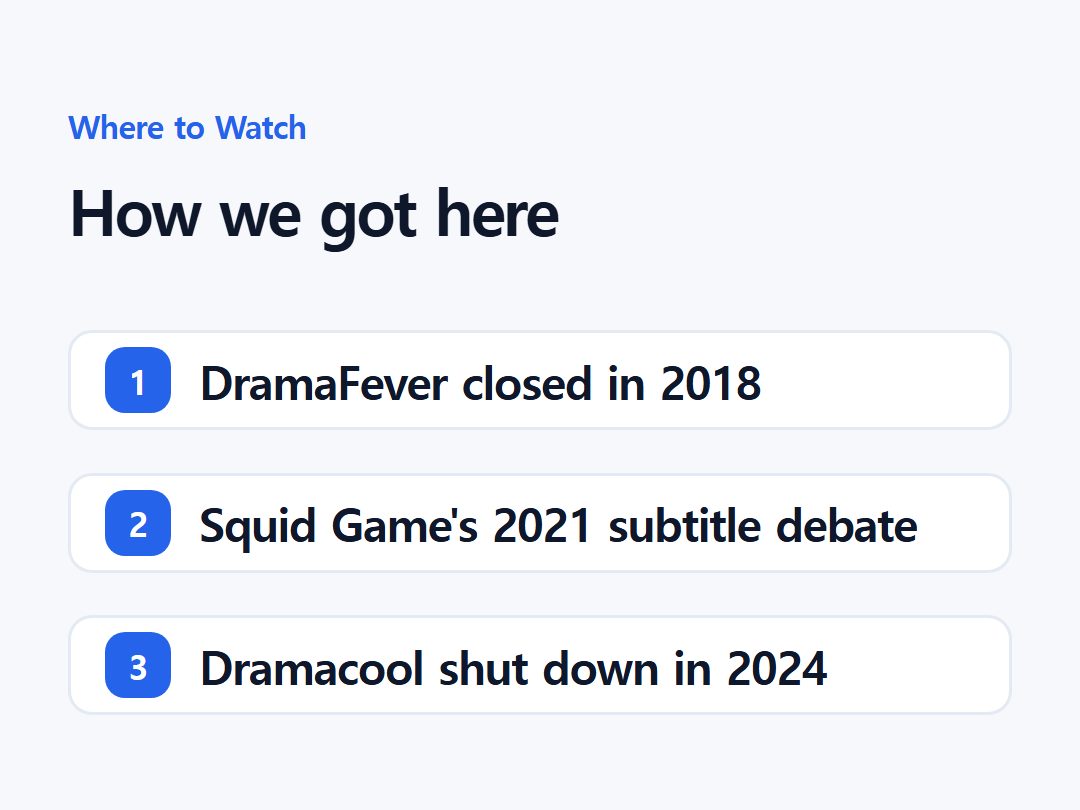
Dramacool, one of the best-known free streaming sites for Korean and other Asian content, announced its closure in November 2024, saying copyright issues made it impossible to keep operating; several sister sites went dark at the same time.
It was not the first casualty: Warner Bros.-owned DramaFever, a licensed streaming service that had also grown out of the fan-translation scene, closed abruptly in October 2018 after nine years online, with reports citing licensing costs that had climbed as Netflix and Amazon began bidding for the same Korean shows.
At the same time, the South Korean government has built an international enforcement network specifically aimed at sites hosting unlicensed Korean content abroad.
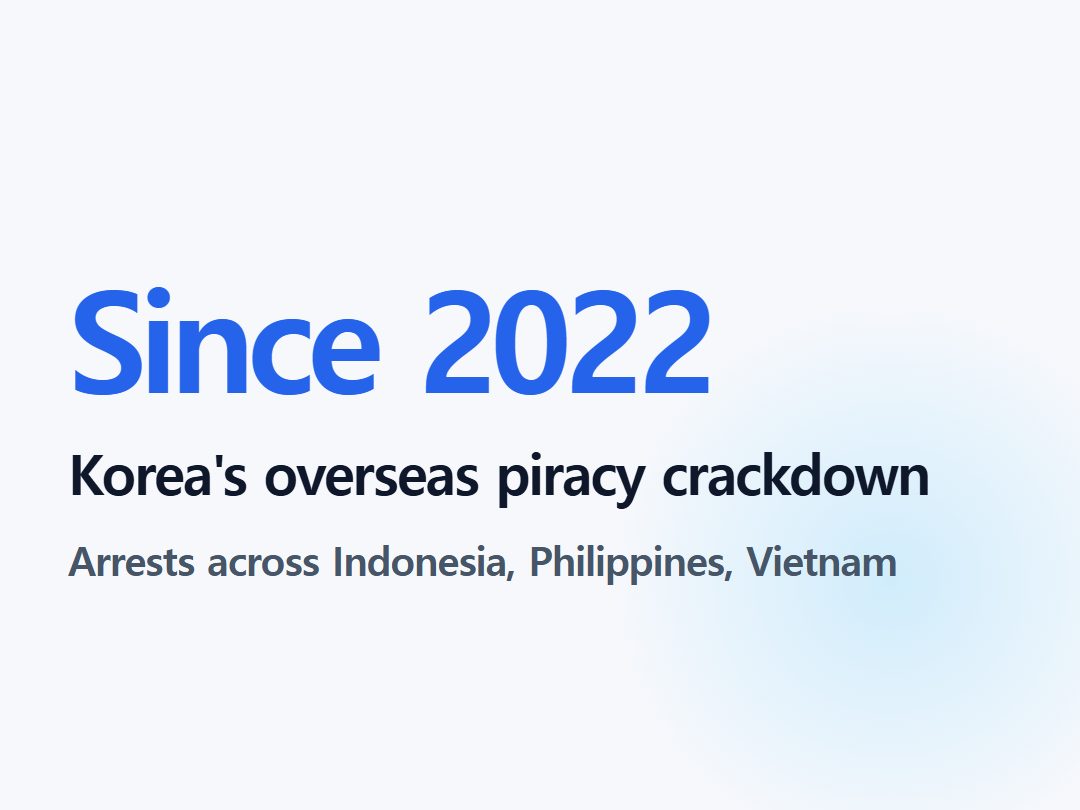
Since 2022, cooperation between the Ministry of Culture, Sports and Tourism, Interpol, the US Department of Homeland Security and police in Indonesia, the Philippines and Vietnam has led to a string of arrests connected to illegal streaming operations, including the operator of the piracy service Nunu TV in 2024.
In February 2024, a US federal court in Arizona ordered the shutdown of Kokoa TV, a site that used a name deliberately similar to the licensed platform Kocowa and drew 77 percent of its traffic from the US and Canada, after a lawsuit from Wavve Americas, a joint venture backed by Korea's three major broadcasters.
The practical result: a fan today usually cannot find a fan-made subtitle file for a new release, because the show is already streaming with official subtitles, and the sites that once hosted the unofficial version have been taken down.
How Korean dramas became too valuable to pirate
To understand why this shift happened, it helps to know what "fansubbing" actually was.
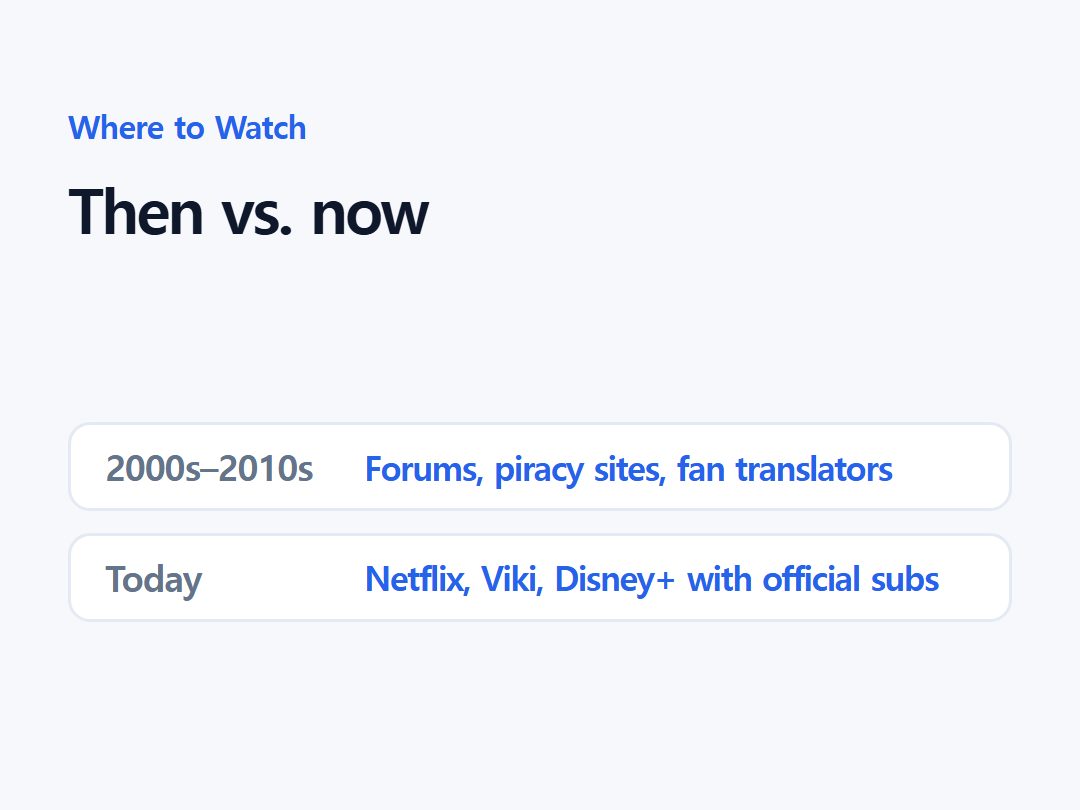
In the 2000s and early 2010s, international fans with Korean-language ability translated dialogue for dramas and variety shows that had no official release outside Korea, added the text to a video file, and distributed it through forums, peer-to-peer networks and, later, dedicated streaming sites.
Groups such as WITH S2, one of the earliest and most prominent K-drama fansub teams, operated for years under real legal exposure, occasionally pausing releases when unauthorized uploaders redistributed their subtitle files onto ad-supported video sites without permission.
This informal system existed because there was no legal alternative. Korean broadcasters had little reason to license their shows overseas when the international audience was small and scattered.
Fan translation filled that gap — and, over roughly two decades, helped build the very audience that Korean entertainment companies and global platforms now consider commercially valuable.
Viki is the clearest example of this pipeline: founded in 2007 by students connected to Stanford and Harvard as a language-learning experiment built on crowdsourced subtitles, it started as an amateur fansubbing hub before Japan's Rakuten acquired it in 2013 and turned volunteer subtitling into a formal, monetized part of a licensed streaming business.
What changed is the economics. Korean pop culture — often referred to using the government-promoted term Hallyu, or "Korean Wave" — became a recognized export industry rather than a niche fandom.
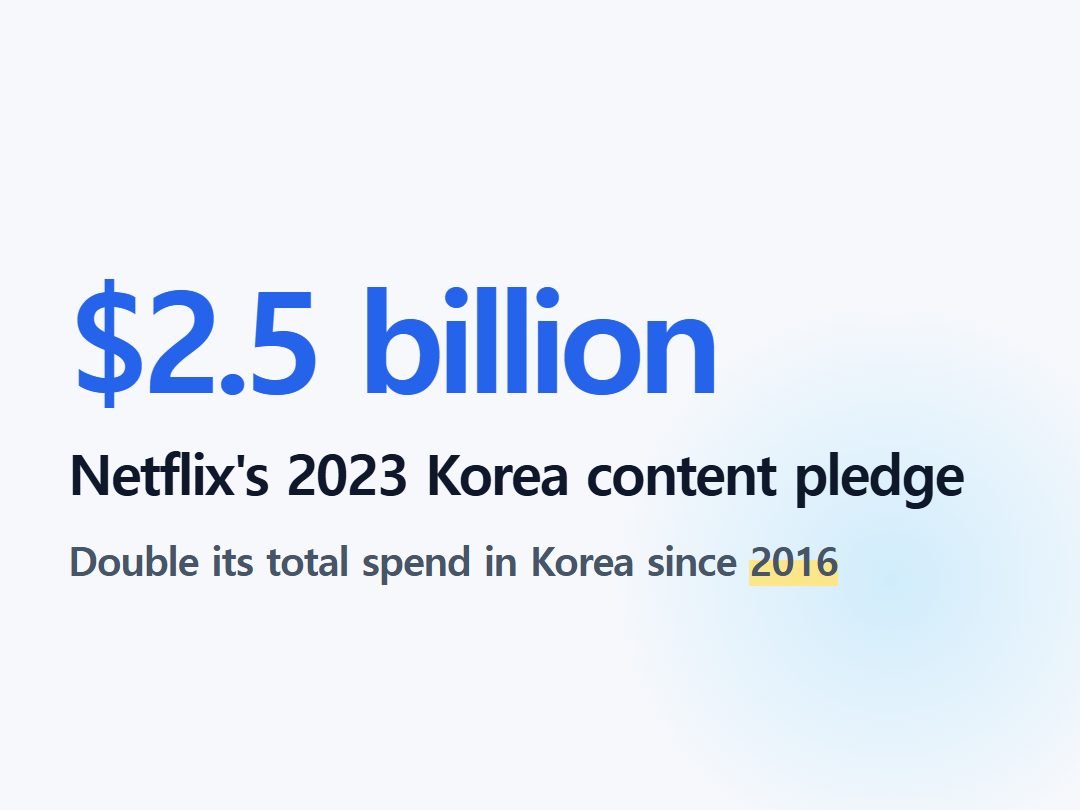
Netflix, which entered the Korean market in 2016 and released its first Korean original series, "Kingdom," in 2019, announced in April 2023 that it would invest $2.5 billion in Korean content over four years — double everything it had spent in the country since entering the market.
Once a show carries real commercial value abroad, a free unauthorized subtitle file is no longer a marketing favor to an underserved fandom; it is lost licensing revenue and, in cases like Kokoa TV, a trademark problem as well.
This is also why Korean authorities now pursue piracy operators outside the country's borders: most of the sites law enforcement has targeted host their servers overseas specifically to stay outside domestic jurisdiction, so the Ministry of Culture, Sports and Tourism now works directly with foreign police, Interpol and US Homeland Security Investigations rather than relying on domestic takedown notices alone.
Subtitle quality became a second pressure point.
When "Squid Game" became Netflix's biggest global launch in 2021, comedian Youngmi Mayer's viral criticism of its English closed captions — arguing that nuance in the dialogue had been lost — turned professional subtitling into a matter of public scrutiny for the first time.
Translators and linguists who weighed in were divided on how serious the errors actually were, but the controversy pushed platforms to treat localization as a core investment rather than an afterthought.
That professionalization further narrowed the space fan translators used to occupy: where a fansub group was once the only source of an English version at all, official platforms now compete on subtitle quality as a selling point.
None of this means copyright holders were indifferent to fansubbing in the past — distributing copyrighted video without a license was always technically illegal, in Korea and everywhere else. What changed is enforcement priority.
Chasing small fan communities translating shows nobody was paying to license made little business sense in the 2000s.
Once Korean dramas, films and variety shows became a multi-billion-dollar export product with licensed platforms competing for the same audience fansubbers used to serve for free, tolerating unlicensed distribution stopped being a low-priority nuisance and became a direct threat to licensing revenue.
The key dates behind fansubbing's disappearance
- 2007 — Viki begins as a student project using crowdsourced, fan-translated subtitles.
- 2013 — Rakuten acquires Viki, folding volunteer fan translation into a licensed commercial platform.
- 2016 — Netflix launches its service in South Korea.
- 2018 — DramaFever, a major legal K-drama streaming service, shuts down abruptly, with reports citing licensing costs driven up by competition from Netflix and Amazon.
- 2019 — Netflix releases "Kingdom," its first Korean original series.
- 2021 — "Squid Game" becomes Netflix's biggest launch ever; its English subtitles spark a widely reported public debate over translation quality.
- 2022 — South Korea's government establishes an international cooperation framework to pursue overseas piracy site operators.
- 2023 — Netflix announces a $2.5 billion, four-year investment in Korean content.
- 2024 — A US court orders the shutdown of Kokoa TV; Dramacool, one of the last major free streaming hubs for Korean and other Asian shows, closes citing copyright pressure.
Will fan translation make a comeback?
Enforcement is still expanding, not winding down.
As of mid-2026, the joint framework linking Korea's Ministry of Culture, Sports and Tourism, Interpol, US Homeland Security Investigations and police in Thailand, Indonesia, Vietnam and the Philippines continues to produce new arrests, with private companies including Naver Webtoon, Kakao Entertainment and the Motion Picture Association now participating directly in enforcement meetings. That points toward piracy targeting tightening further rather than easing off.
At the same time, gaps remain. Licensing is not global or simultaneous for every title — older library shows, regional cable dramas and some variety programs still lack official subtitles in every market, which is the one condition under which informal fan translation has historically persisted.
Whether platforms close that remaining gap, or small pockets of volunteer subtitling continue to exist around it, is still an open question.
So is the role of machine translation: as platforms lean more on AI-assisted subtitling and dubbing to scale localization quickly, it remains to be seen whether that closes the last opening for fan translators — or creates a new one, if automated subtitles turn out to still need the cultural judgment fan communities used to provide.
From a 2007 student project to 2024 shutdowns
| Year | Event |
|---|---|
| 2007 | Viki begins as a student project using crowdsourced, fan-translated subtitles |
| 2013 | Rakuten acquires Viki, folding volunteer fan translation into a licensed platform |
| 2016 | Netflix launches its service in South Korea |
| 2018 | DramaFever shuts down abruptly amid rising licensing costs |
| 2019 | Netflix releases "Kingdom," its first Korean original series |
| 2021 | "Squid Game" launch sparks a public debate over subtitle quality |
| 2022 | South Korea builds an international framework to pursue overseas piracy operators |
| 2023 | Netflix announces a $2.5 billion, four-year investment in Korean content |
| 2024 | A US court shuts down Kokoa TV; Dramacool closes citing copyright pressure |
Frequently asked
Why did Dramacool shut down?
Dramacool announced its closure in November 2024, saying copyright issues made it impossible to keep operating; several sister sites shut down at the same time.
What happened to fansub groups for Korean dramas?
Most fan-translation sites and forums have shut down as Korean copyright enforcement expanded overseas and licensed platforms like Netflix and Viki began supplying official subtitles instead.
Is Viki a fansub site?
Viki started in 2007 as a student-run fansubbing hub built on crowdsourced subtitles, but Rakuten acquired it in 2013 and turned it into a licensed, monetized streaming platform.
Sources
Every factual claim above is traceable. We do not translate articles — we gather facts from multiple outlets and write them ourselves.
- Warner Bros.' DramaFever Korean-Drama Streaming Service Is Shutting Down — Variety
- "Now where can I get these dramas" - Fans disappointed as popular K-drama site, Dramacool announces shut down — Sportskeeda
- Rakuten Viki — Wikipedia
- Netflix earmarks $2.5B for original content in South Korea — TechCrunch
- Translators, experts weigh in on 'Squid Game' subtitle debate — NBC News
- K-content illegal streaming site shut down after US court ruling — The Korea Herald
- Gov't expands moves to block resurfacing illegal streaming site — The Korea Times
- Gov't holds joint content copyright enforcement meeting in Seoul — The Korea Times