
On August 14, 2026, vendors at Moran Market in Seongnam served bosintang — dog meat stew — on what regulars called their last boknal (복날), one of the hottest days of the Korean summer. It was the third and final boknal of the year, and the last one before dog meat becomes illegal to farm, slaughter, or sell nationwide.
The short version
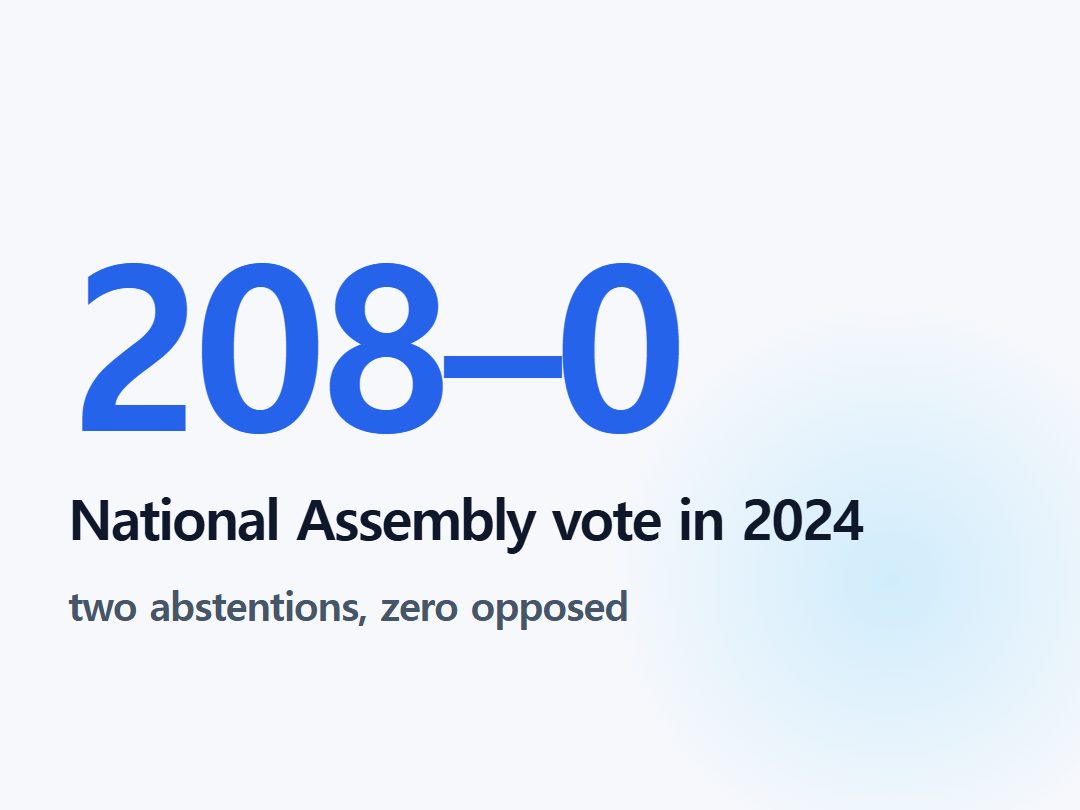
- South Korea's National Assembly passed the dog meat ban 208 to 0.
- The law bans farming and selling dog meat — not eating it.
- Only 8% of Koreans ate dog meat in 2022, down from 27%.
That deadline traces back to January 9, 2024, when South Korea's National Assembly passed the Special Act on the End of Breeding, Slaughtering, and Distribution of Dogs for Food Purposes by a vote of 208 to 0. Full enforcement begins in February 2027. The vote count looks decisive. The story behind it is slower and more generational than any single vote.
What the law bans — and the one thing it doesn't
The Special Act targets the supply chain, not the diner. It prohibits three specific activities:
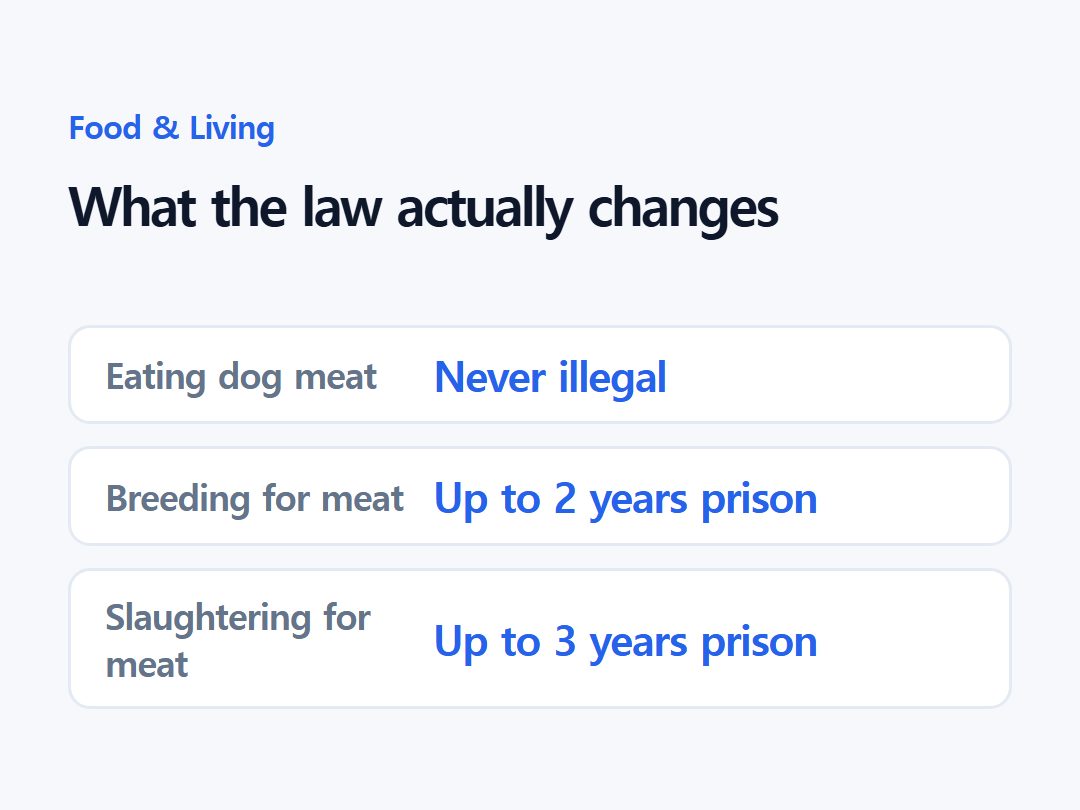
- Breeding dogs for meat, punishable by up to two years in prison or a fine of roughly $15,000
- Slaughtering dogs for food, punishable by up to three years or a fine of roughly $22,500
- Distributing or selling food made from dog meat
Eating dog meat itself was never criminalized and still isn't. The law closes the industry around the dish, not the act of ordering it — a distinction that matters because it means the ban ends the trade through attrition rather than arrests of customers.
A 1978 loophole nobody closed for 46 years
The contradiction the new law fixes is older than most of its supporters. In 1978, a revision to the Food Sanitation Act removed dogs from the official list of livestock approved for food, making dog meat sales technically outside food-safety regulation.
But the Livestock Industry Act kept classifying dogs as livestock for farming purposes, and no law ever set slaughter or hygiene standards for the trade. The result was a gray zone: illegal to regulate as food, legal to raise and sell anyway, and unpoliced either way for nearly five decades.
A 2018 court ruling in Bucheon added pressure from a different angle, finding that killing a dog by electrocution for meat counted as animal cruelty under the Animal Protection Act — without banning the trade outright. It took another six years for the legislature to close the gap directly.
Why generational change made the ban politically possible
The single biggest reason a unanimous vote was possible in 2024 is that dog meat had already stopped being an everyday food for most Koreans. Gallup Korea surveys tracked the collapse directly.
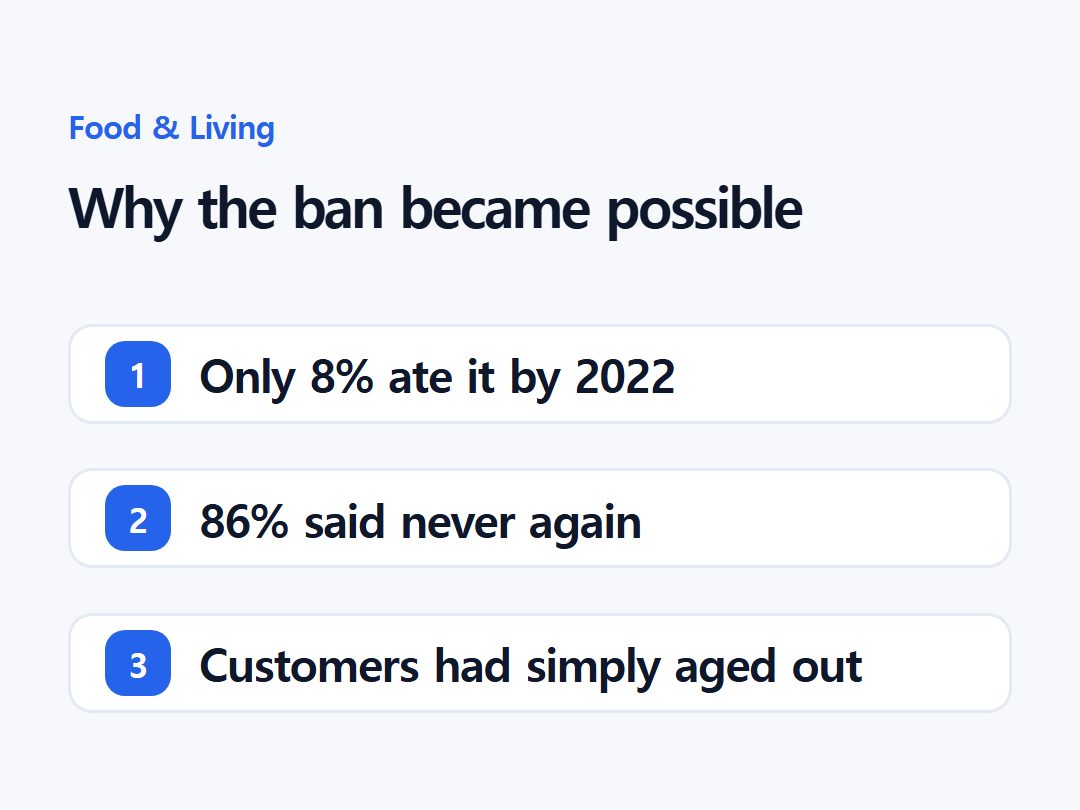
In 2015, 39% of Koreans in their 50s said they had eaten dog meat at least once that year, compared with just 17% of people in their 20s. By 2022, only 8% of all Koreans had eaten it in the past year, down from 27% in 2015 — and 64% said they now opposed the practice outright.
A separate Nielsen survey commissioned by Humane Society International found that 86% of respondents had no plans to ever eat dog meat, and a majority actively supported a ban. The customer base had simply aged out faster than the industry could replace it.
The clearest sign of the shift showed up in the group that used to be the industry's core: people in their 40s and 50s. In the same Nielsen/HSI polling, 73% of respondents in their 50s said all dogs — pets or farmed — deserved protection, and 64% named animal cruelty, not health beliefs, as their main reason for backing a ban. The traditional customer base had turned against its own tradition.
Boknal: the hot days the tradition was actually built around
Dog meat consumption was never spread evenly across the calendar. It clustered around sambok (삼복) — the three hottest stretches of summer, known individually as chobok, jungbok, and malbok, timed to a traditional sexagenary calendar rather than fixed dates.
The logic was iyeolchiyeol (이열치열), “fighting heat with heat” — the belief that eating a scalding stew on the hottest days balanced the body's internal temperature. Samgyetang, ginseng chicken soup, followed the same logic and remains the more common boknal dish today; bosintang was the harder-edged version aimed at restoring stamina for farm labor in pre-industrial Korea.
A food of scarcity more than a food of choice
Dog bones with cut marks appear in Korean archaeological sites dating to the Neolithic period, but consumption dropped sharply during the Buddhist Silla and Goryeo dynasties, when meat-eating in general was discouraged.
It resurfaced in the Joseon dynasty (1392–1897) largely for economic reasons: cattle and pigs were valuable for farm labor and were not casually slaughtered, while dogs carried no such agricultural role.
Some Joseon officials still argued for banning it on the grounds that dogs were companions, and one 1783 text described dog meat eaters as barred from approaching ginseng farms — evidence that squeamishness about the practice is not a modern import.
Kim Keon-hee's dogs and a vote nobody blocked
The 2024 law had an unusually direct political sponsor. Then-President Yoon Suk Yeol and First Lady Kim Keon-hee, who had adopted several rescue dogs and cats, made ending the dog meat trade a public priority, and the bill moved with backing from both the ruling and opposition parties.
Yoon was later impeached and removed from office in April 2025 over an unrelated martial law crisis. The dog meat ban did not share his fate — the incoming administration kept the phase-out on schedule, and enforcement has since moved faster than the original timeline required.
Moran Market's last boknal
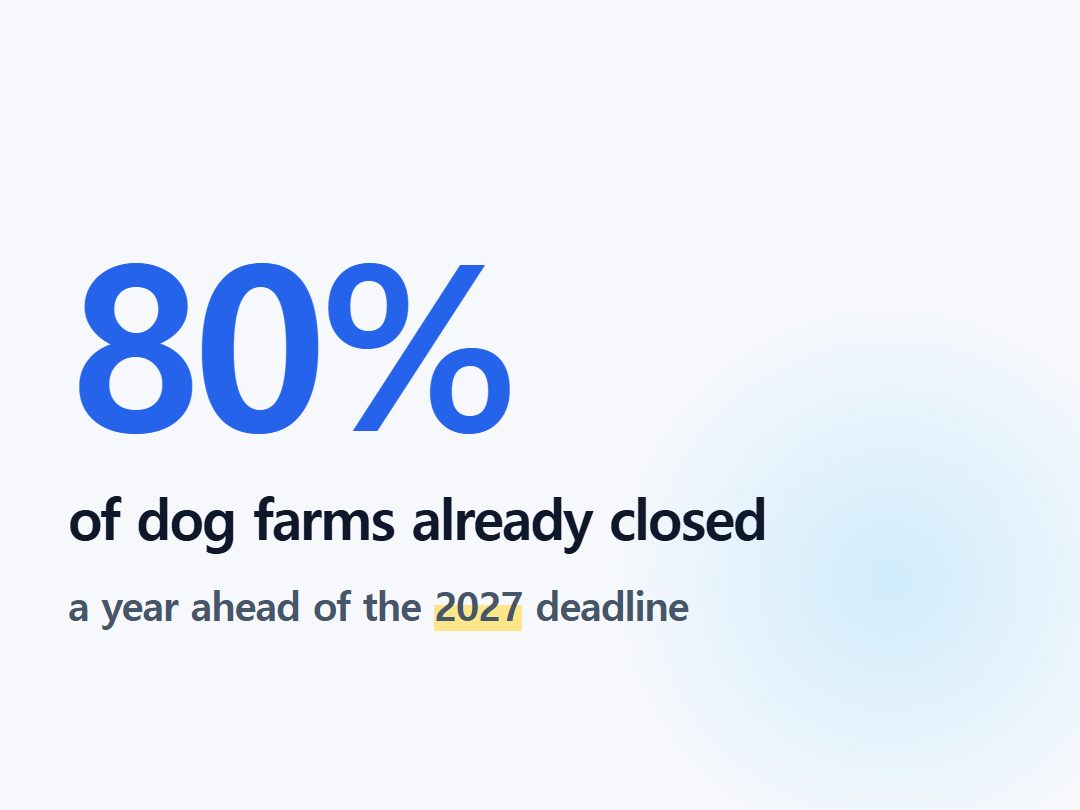
By July 2026, government figures showed roughly 80% of South Korea's estimated 1,100 registered dog farms had already shut down, a year ahead of the legal deadline. Restaurants have moved more slowly: of 4,154 businesses tracked under the phase-out program, only 336 had formally closed and 563 had switched their menus by the end of May — a 21.6% transition rate.
Supply tightening pushed prices up sharply, from around 10,000 won per 600 grams to the mid-20,000-won range. At Moran Market, many restaurants have pivoted to black goat stew, marketed as another traditional stamina food, though owners say it hasn't replaced the lost trade.
“It's really desolate now,” said Kim Yong-book, head of the Moran Market Merchants' Association, describing what was once a bustling trade hub as “a town of old people.”
Not every customer has made peace with the change. Yoo Jin-sam, 69, told reporters in August 2026 he accepted the government's decision but would still miss the dish: “I love dogs very much, but it's still unfortunate.”
What's still unresolved before February 2027
The farmers' association rejected the government's compensation offer — 225,000 to 600,000 won per dog for early closure — as too low, having asked for roughly 2 million won per dog. In June 2024 the association filed a constitutional appeal arguing the ban violates farmers' right to choose their own occupation.
Animal welfare groups have offered a separate route out for individual farmers willing to move early.
Humane World for Animals says it has worked directly with 18 dog farmers to permanently close their operations, retraining them into cruelty-free work such as growing chili peppers and parsley, or running water-delivery routes — a small-scale model the government's larger compensation scheme has struggled to match at speed.
Legal analysts consider the challenge unlikely to succeed, since restrictions on an already-informal industry rarely meet the bar for unconstitutionality, but the Constitutional Court has not issued a final ruling as of this writing. Until it does, and until the last farms and restaurants either close or convert, boknal 2026 remains the final season in which any part of the trade is still legal in South Korea.
Timeline: from loophole to ban
| Date | Event |
|---|---|
| 1978 | Food Sanitation Act revision removes dogs from the approved livestock list, but farming law still treats them as livestock |
| 2018 | Bucheon court rules that killing a dog by electrocution for meat counts as animal cruelty |
| Jan 9, 2024 | National Assembly passes the Special Act banning the dog meat trade, 208 to 0 |
| Aug 14, 2026 | Moran Market holds its last legal boknal before the ban takes effect |
| Feb 2027 | Full enforcement begins; breeding, slaughtering, and selling dog meat become illegal nationwide |
Frequently asked
Is it illegal to eat dog meat in South Korea now?
No — the 2024 Special Act bans breeding, slaughtering, and selling dog meat, but eating it was never criminalized and still isn't.
When does South Korea's dog meat ban take full effect?
The National Assembly passed the law in January 2024, but full enforcement doesn't begin until February 2027, giving farms and restaurants a phase-out period.
Why did South Korea ban dog meat now instead of decades ago?
Demand had already collapsed generationally — by 2022 only 8% of Koreans had eaten dog meat that year, down from 27% in 2015, which made a near-unanimous 208-0 vote politically possible.
Sources
Every factual claim above is traceable. We do not translate articles — we gather facts from multiple outlets and write them ourselves.
- South Korea: New Law to Ban Breeding, Butchering, and Selling Dogs for Food Promulgated — Library of Congress
- Korea bans age-old tradition of dog meat consumption — The Korea Times
- South Korea's outlaw of the dog meat industry — NPR
- South Korea publishes compensation plan for dog meat farmers ahead of 2027 ban — VOA News
- South Korea ends the dog meat industry: A model for change — Humane World for Animals
- 86% of South Koreans have no plans to eat dog meat and the majority support a ban — Humane World for Animals / Nielsen
- The Dog Days in Korea: An Attempt to Get the Facts Right About Bosin-tang — Gwangju News
- South Korean Court Ruling May Pave Way to Ban Eating Dog Meat — National Geographic
- In Korea, some savor last season of legal dog meat — The Korea Times
- Empty streets and shuttered restaurants signal end of dog meat era at Moran Market — South Korea Network


