In Train to Busan, the zombies move fast, but the scene international viewers tend to remember differently than Korean ones is a television announcer calmly telling passengers to stay calm and trust the government, while soldiers behind him are already being overrun.
The short version
- Korean disaster films target officials and corporations, not the disaster itself.
- The Host and Train to Busan sold over 13 million and 11.5 million tickets.
- The 2014 Sewol ferry sinking directly shaped Train to Busan and Pandora's plots.
Outside Korea, films like this usually get filed as monster movies or pandemic thrillers. Inside Korea, they read closer to political satire, because the genre's actual target has never been the disaster itself.
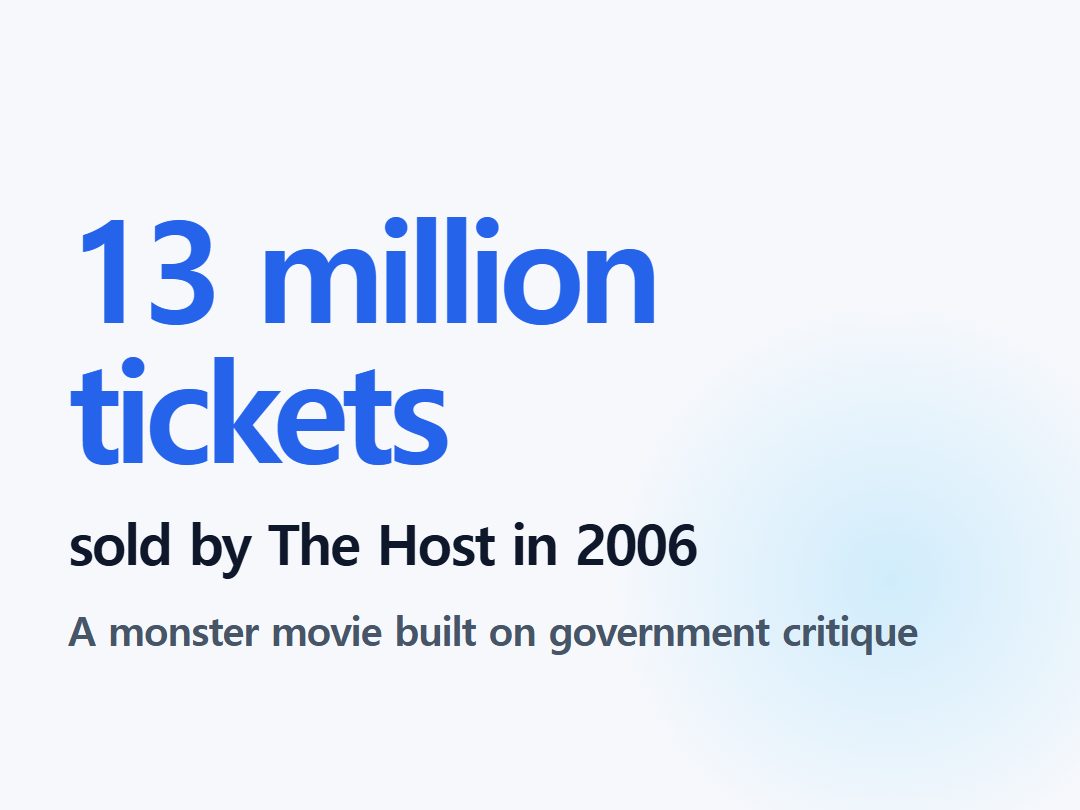
This is not a niche art-house habit. The Host sold more than 13 million tickets in 2006, and Train to Busan sold over 11.5 million a decade later, both ranking among the best-attended films in Korean box-office history. Institutional critique here is a mainstream commercial formula, not a festival exception.
The disaster is the trigger, not the plot
A virus, a monster, or an earthquake usually shows up in the first act of a Korean disaster film. What fills the rest of the runtime is how officials respond, and how badly.
The trigger changes from film to film, but the target does not:
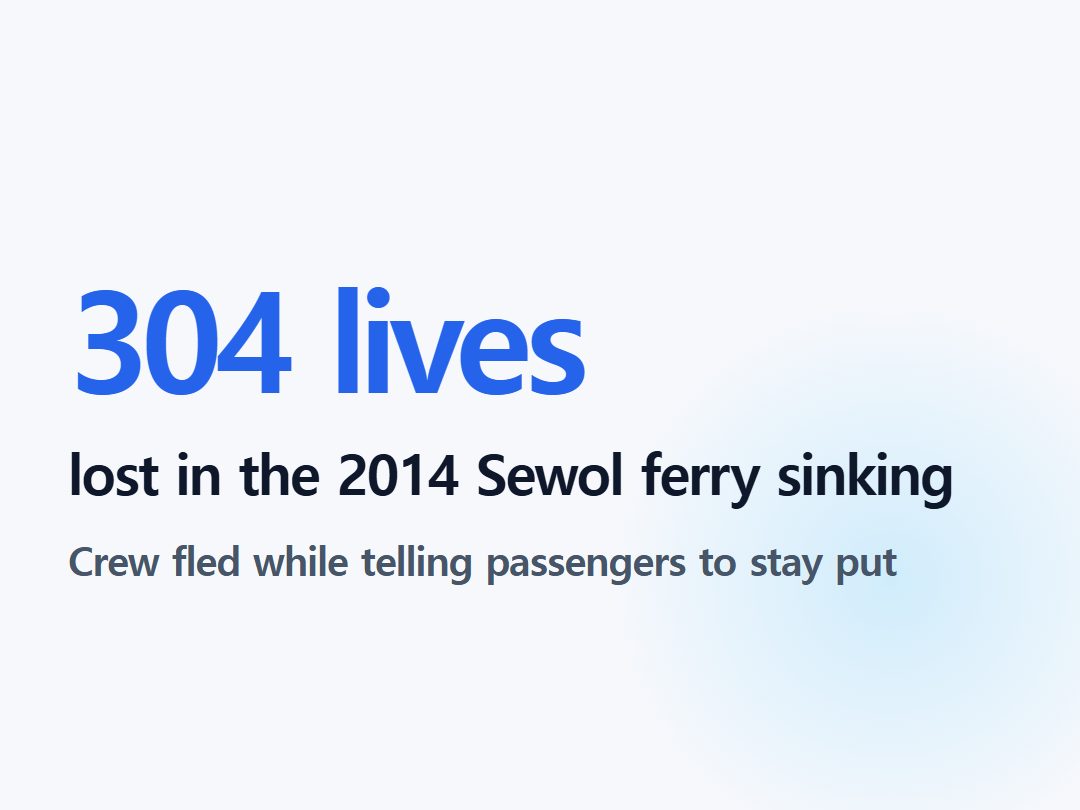
- A zombie virus in Train to Busan (2016)
- A nuclear meltdown in Pandora (2016)
- An earthquake in Concrete Utopia (2023)
Genre scholarship on Korean disaster cinema notes that it resists straightforward Hollywood-style spectacle, building in parody and open satire of the state as a standard ingredient rather than an occasional twist.
Officials lying on screen is a recurring scene, not a metaphor
In Train to Busan, government broadcasts describe a nationwide outbreak as vague "violent unrest." A supposedly secure military checkpoint at Daejeon Station turns out to already be overrun by the time the train arrives.
In Pandora, a 2016 nuclear-disaster thriller, cabinet officials debate covering up a radiation leak entirely, telling each other "let's not make this a bigger deal than it has to be" rather than ordering an evacuation.
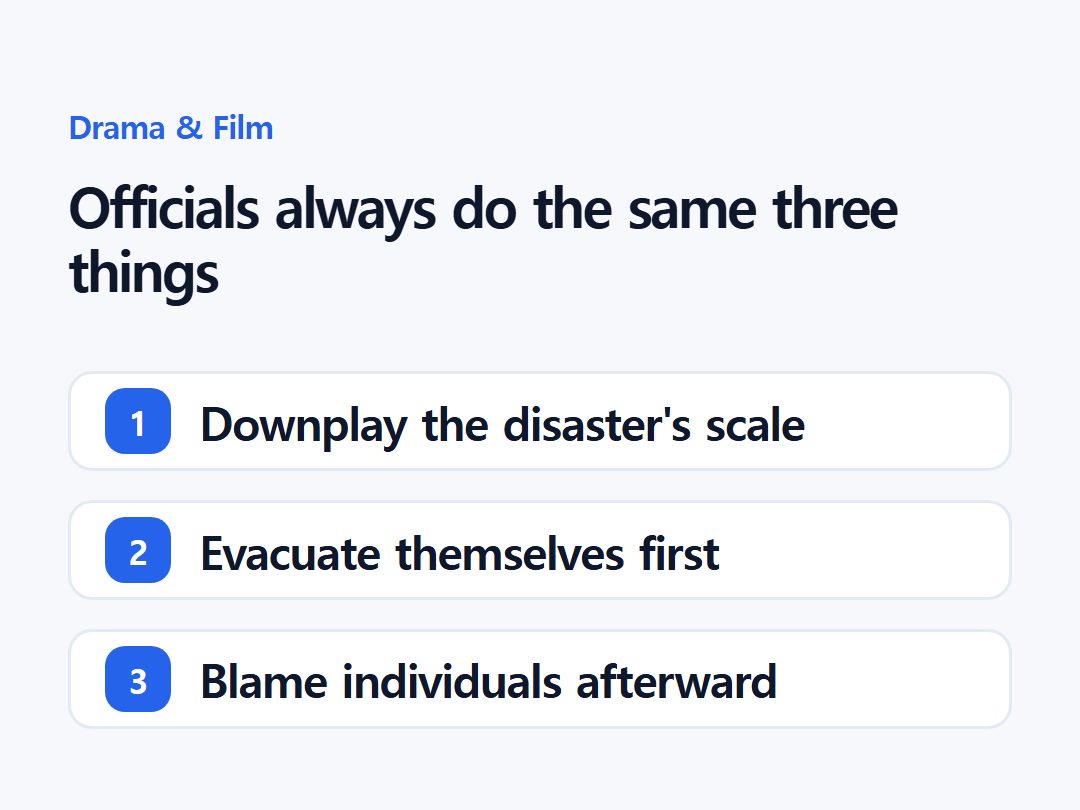
Across the genre, the same three official responses repeat often enough to count as convention: downplaying the scale of a disaster to the public, evacuating officials and soldiers before ordinary citizens, and blaming individuals once a cover-up collapses.
The Sewol ferry sinking gave the genre a real script
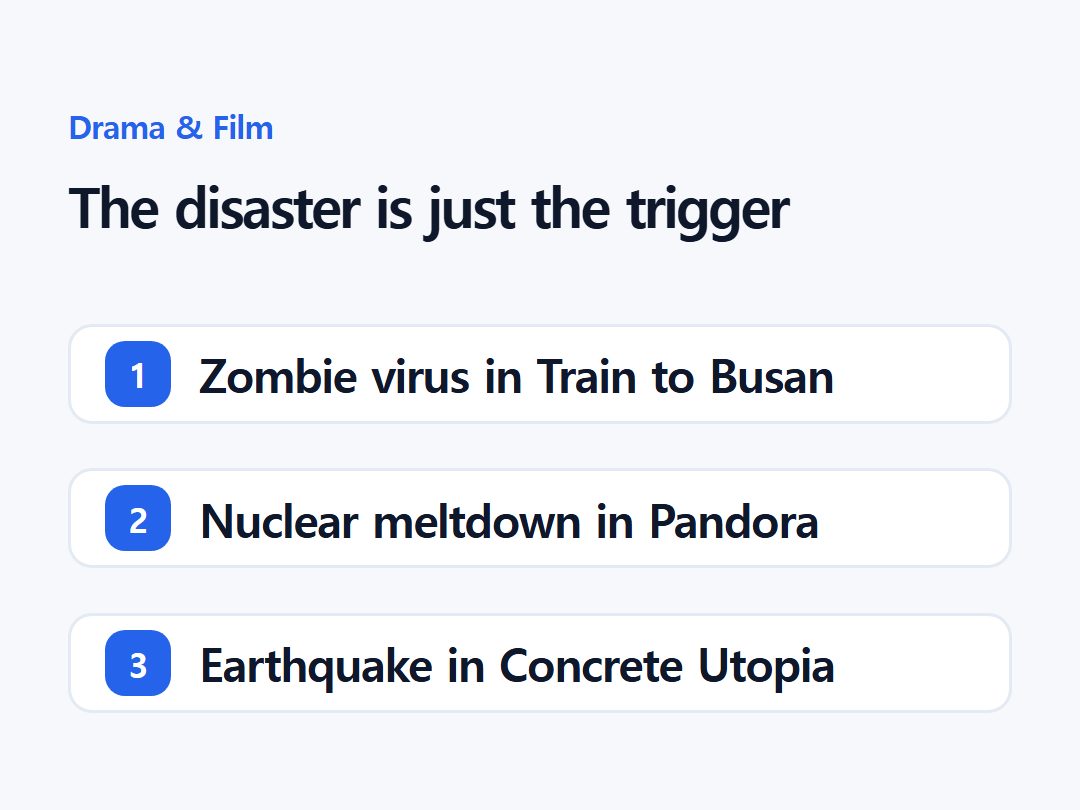
On April 16, 2014, the ferry MV Sewol sank off South Korea's southern coast, killing 304 people, most of them high school students on a school trip.
Investigations later found the ship had been carrying more than double its legal cargo limit and had been structurally altered in ways that made it unstable. But the death toll was driven largely by what happened after the ship started listing.
The captain and crew escaped early while telling passengers over the intercom to stay in their cabins. The Korea Coast Guard, later found to have made no real rescue attempt, was outperformed at the scene by nearby fishing boats, and more than 150 officials, inspectors, and crew members were eventually indicted.
A 2017 academic study of the Coast Guard's response found only one small patrol vessel with 13 crew members at the scene for roughly 500 passengers, and concluded the agency had prioritized hierarchical and political accountability over professional judgment, meaning officers waited for orders instead of acting.
Then-President Park Geun-hye drew heavy criticism for staying out of contact for roughly seven hours after being first briefed on the sinking, a detail that fed directly into public anger that later contributed to her impeachment.
Corporations get blamed as often as the government
Bong Joon-ho's 2006 monster film The Host opens with a U.S. military mortician ordering toxic chemicals dumped into Seoul's Han River. The scene is drawn almost directly from a real 2000 incident, in which a U.S. military employee ordered formaldehyde poured into the sewage system that fed the river supplying Seoul's drinking water.
In the film, a monster grows from that contamination, and both the American military and Korean authorities respond by spreading a fake virus story rather than admitting what actually happened.
Bong has downplayed a purely anti-American reading of his own film, but critics have consistently read it as a double critique: a foreign military acting with impunity, and a domestic government too weak, or too complicit, to stop it.
Ordinary people carry the story because no institutional hero is coming
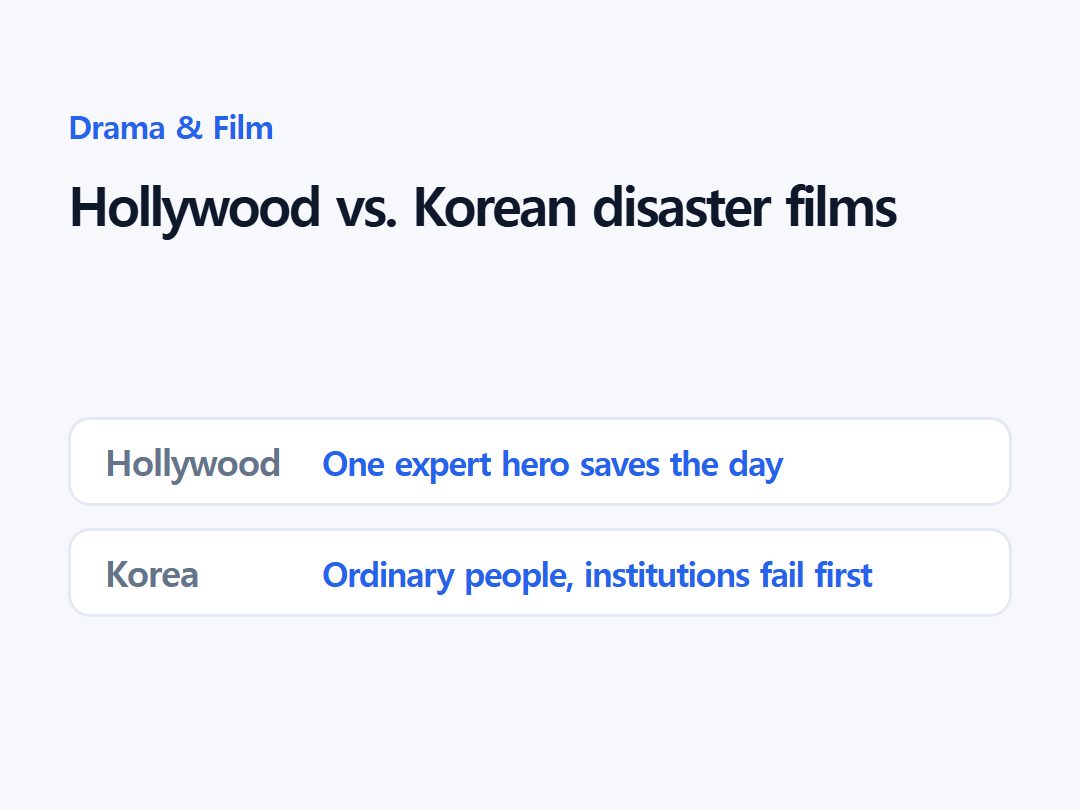
Korean disaster films rarely center on a single expert who saves the day, the way American disaster films often do. Casts are instead built around ordinary people: a father, a train conductor, a pregnant passenger.
Industry figures, including Concrete Utopia director Um Tae-hwa, have described this directly as a structural choice, framing Korean genre cinema as building "individuals, not heroes" because the story's premise is that no institutional rescue is coming.
The genre also tends to kill off major characters rather than reward survival with clean triumph, reinforcing that whatever success occurs comes from ordinary sacrifice, not institutional competence.
Concrete Utopia turned an apartment building into a miniature state
The 2023 film Concrete Utopia pushes the same logic to its endpoint. After an earthquake levels Seoul, one apartment complex remains standing, and the survivors inside form their own government to decide who counts as a resident and who gets locked outside in the cold.
Reviewers connected the premise to a real 2021 scandal involving Korea's state housing corporation, in which officials were accused of using inside information about future developments for personal gain, making an apartment block a natural stand-in for institutional self-interest.
Rather than critiquing a distant, faceless government, the film asks whether ordinary residents simply recreate the same failures once they are the ones holding power.
Why 2009, 2014, and 2015 became the genre's default setting
The convention predates its real-world proof. In Tidal Wave (2009), Korea's first modern disaster film, a geologist repeatedly warns authorities that a tsunami is forming, and is ignored until the wave is minutes away. Beach warning sirens only activate after a neighboring country's alarm triggers them, not from any domestic scientific channel.
Sewol was not the only crisis behind this wave of filmmaking. In 2015, a MERS outbreak in South Korea killed more than 30 people and was likewise marked by delayed, unclear public information from health authorities.
Train to Busan and Pandora were both released in 2016, within two years of Sewol and one year of the MERS outbreak. Critics and academic analyses have connected both films' plots directly to those events, treating the disaster-genre boom as a response to specific failures rather than a coincidence of timing.
Do these films ever show institutions succeeding?
Rarely, and even when they do, the credit usually goes to individuals working around official channels rather than to the institutions themselves. In 2019's Ashfall, the military eventually organizes a working response to a volcanic eruption, but only after early scenes establish that no one was prepared for it.
The convention is consistent enough that a genuinely competent, functioning institution in a Korean disaster film would itself count as a departure from what audiences expect.
What critics say the genre still hasn't resolved
Not every review treats the pattern as a strength. Sight and Sound's assessment of Concrete Utopia called it a "moralising disaster movie," a warning that institutional critique can tip into simple didacticism once a genre repeats it often enough.
Real-world accountability remains incomplete too. More than a decade after Sewol, investigators still cannot fully account for what South Korea's National Intelligence Service or presidential office did on the day of the disaster, an unresolved gap that keeps handing the genre new material rather than closure.
Korean disaster films and the real-world failures they echo
| Film (Year) | Disaster Trigger | Real-World Event Behind It |
|---|---|---|
| The Host (2006) | Chemical dumping creates a monster in the Han River | 2000 U.S. military formaldehyde dumping into Seoul's water supply |
| Tidal Wave (2009) | Tsunami ignored by authorities | Predates Sewol and MERS; warnings dismissed until the wave was minutes away |
| Train to Busan (2016) | Zombie virus outbreak | 2014 Sewol ferry sinking |
| Pandora (2016) | Nuclear meltdown cover-up | 2014 Sewol sinking / 2015 MERS outbreak |
| Concrete Utopia (2023) | Earthquake destroys Seoul | 2021 state housing corporation scandal |
| Ashfall (2019) | Volcanic eruption | Military caught unprepared until late in the crisis |
Frequently asked
Is Train to Busan based on a true story?
Not directly, but critics and academic analyses link its plot to the 2014 Sewol ferry disaster and the 2015 MERS outbreak, both marked by delayed, unclear official information.
What real event inspired The Host monster movie?
Its opening scene is drawn from a real 2000 incident in which a U.S. military employee ordered formaldehyde dumped into the sewage system feeding Seoul's drinking water supply.
How many people died in the Sewol ferry sinking?
The MV Sewol sank on April 16, 2014, killing 304 people, most of them high school students on a school trip.
Sources
Every factual claim above is traceable. We do not translate articles — we gather facts from multiple outlets and write them ourselves.
- S. Korea's Hit Zombie Film Is Also A Searing Critique Of Korean Society — NPR
- Train to Busan ten years on: zombie thriller that propelled the rise of Korean cinema — The Conversation
- 2014 Sewol ferry tragedy caused by structural failures, state agency concludes — The Korea Herald
- Bureaucratic Accountability and Disaster Response: Why Did the Korea Coast Guard Fail in Its Rescue Mission During the Sewol Ferry Accident? — Risk, Hazards & Crisis in Public Policy (PMC)
- The Han River Horror Show: Interview with Bong Joon-ho — Cineaste Magazine
- Film Review: 'Pandora' — Variety
- [Herald Review] All-too-familiar disaster strikes in 'Pandora' — The Korea Herald
- Concrete Utopia review: a moralising disaster movie — Sight and Sound (BFI)
- 'Concrete Utopia' Review: A South Korean Disaster Film Is Like 'Earthquake' Meets 'Lord of the Flies' — Variety
- How Korean, Hollywood Content Differs: Not Heroes But Individuals — The Hollywood Reporter
- Modern Korean Cinema: Tidal Wave (Haeundae) 2009 — Modern Korean Cinema