A hit Korean drama airs twice a week, and a single episode can run past ninety minutes. Watch a US network drama the same week and the episode, once the opening and closing ads are stripped away, runs closer to forty-two minutes.
The short version
- Korea banned mid-show ads from 1973 to 2021, so networks stretched runtime instead.
- Longer episodes helped hold viewers against rival dramas airing the same time slot.
- Streaming freed episode length from regulation, so runtime now follows story, not law.
The gap looks like a difference in taste, as if Korean viewers simply want longer stories. It is actually a difference in how each country's television industry was legally allowed to sell advertising — and that rule shaped Korean drama production for decades.
International viewers who binge Korean dramas on Netflix rarely see this history, because streaming removed the very constraint that produced it. The long episode arrived first as a workaround, and only later started to look like a genre trait.

The math behind a Korean drama night
Korean terrestrial dramas built their identity on hour-long, sometimes ninety-minute episodes airing twice a week, typically Monday-Tuesday or Wednesday-Thursday, over 16 to 20 total episodes. Cable channel tvN has gone further, allocating up to ninety minutes of drama to a single night.
A US network drama, by contrast, is built around a fixed sixty-minute broadcast hour that has shrunk to about forty-two minutes of actual story since the 1960s, when the same hour held roughly fifty-one minutes of content. The missing minutes went to advertising.
Daily Korean dramas, aired five nights a week rather than two, run even longer in total but keep individual episodes closer to thirty minutes. The hour-plus format belongs specifically to the primetime miniseries, the genre most exported internationally.
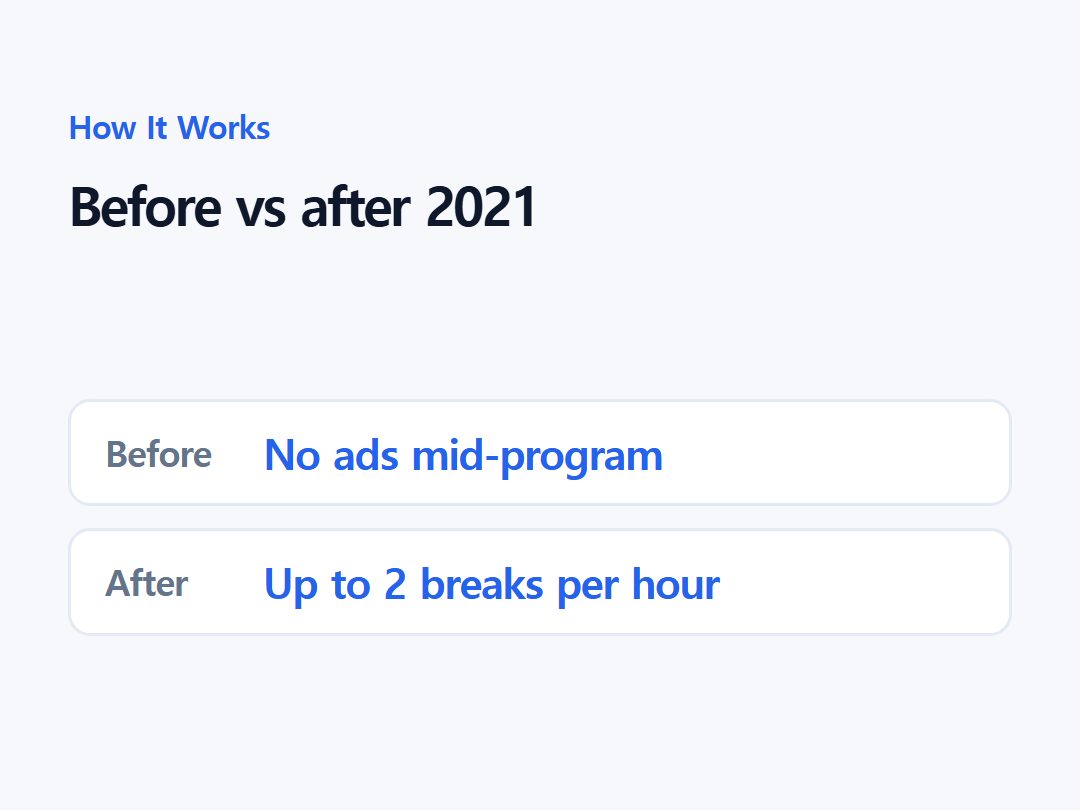
Advertising was banned inside Korean programs for 48 years
The reason Korean episodes were never built around internal ad breaks is simple: for decades, broadcasters legally could not include them. Starting in 1973, Korea's terrestrial networks were barred from airing commercials in the middle of a program, a restriction framed around protecting viewers from interrupted broadcasts.
Cable channels launched later, including tvN, were never bound by that restriction. That is one reason cable dramas could experiment with longer, uninterrupted blocks while KBS, MBC, and SBS spent decades working around a rule that predated cable television entirely.
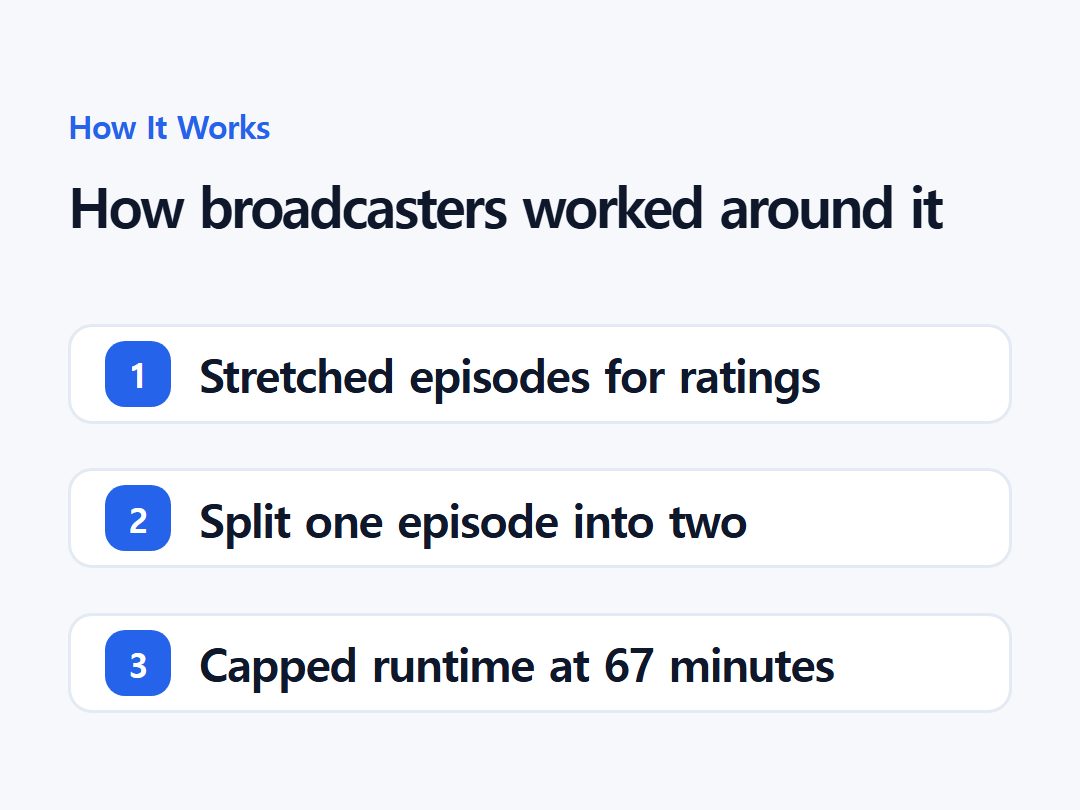
A ban on mid-show ads made length the only lever
Without the option to sell advertising time inside a program, terrestrial broadcasters could only sell it before and after. That left them one competitive lever: make the program block itself as long and as attractive to advertisers as possible.
Korean networks also air competing dramas in the identical nightly time slot. A shorter or slower episode risked losing viewers mid-story to a rival channel's cliffhanger airing at the same hour, so runtime became a direct ratings tool rather than a storytelling decision.
US networks never faced that particular pressure in the same way, because their programs already competed through scheduled ad breaks rather than through raw runtime. A longer American episode does not automatically hold a channel-surfing viewer through someone else's commercial.

Runtime became a ratings weapon
Because a longer episode could out-hold a rival network's drama in the same slot, broadcasters kept stretching runtimes for competitive advantage. KBS, MBC, and SBS eventually agreed to self-regulate the practice:
- 2009: a 72-minute runtime cap adopted by the three networks
- 2013: tightened further to a 67-minute cap
- 2017: a 60-minute cap proposed for miniseries, 30 minutes for daily dramas
The 2017 proposal was as much about cost as competition. Broadcasters estimated that trimming five minutes per episode across a 20-episode series could save roughly 1 billion won, about $880,000, in production costs.
One episode was quietly cut into two
Terrestrial networks also found a separate workaround for the no-mid-show-ads rule. Starting in 2017, a single seventy-minute drama episode was split into two roughly 35-minute segments, aired back-to-back on the same night, with a commercial break placed between the two segments instead of inside one.
MBC's 2019 drama One Spring Night illustrates the result: it is officially catalogued as 32 episodes of about 35 minutes each, effectively two episodes a night rather than one long one, which let the network insert a real ad break without breaking the letter of the 1973 rule.
Seoul finally allowed a commercial break in 2021
The workaround era ended when the Korea Communications Commission revised the Broadcasting Act's enforcement rules, effective June 2021, to permit mid-program commercials directly for the first time in 48 years.
| Before June 2021 | After June 2021 |
|---|---|
| No commercials allowed inside a program | One break allowed for programs over 45 minutes |
| Ads sold only before and after a show | Two breaks allowed for programs over 60 minutes |
| Episodes split in two to fake a break | Up to six breaks for programs over 90 minutes |
Regulators framed the change as financial relief. Terrestrial ad revenue had fallen roughly 9 percent year over year as cable and streaming platforms, both unrestricted by the old rule, pulled advertisers away.
US networks cut minutes instead of raising them
American commercial television solved the identical problem from the opposite direction. As ad loads grew from around nine minutes per hour in the 1960s to fourteen to eighteen minutes today, networks steadily shortened the story to protect a fixed one-hour or half-hour broadcast slot.
That is why a US network drama settled near forty-two minutes and a sitcom near twenty-two: the commercial break was fixed first, and the script was cut to fit around it, rather than the length growing to fit the story.
Cable and premium networks, which sell fewer or no ads, sit closer to the Korean pattern: an hour on HBO can mean fifty-five to sixty-five minutes of actual story, because nothing forces it back to forty-two.
A one-hour slot writes the show, not the story
The nightly hour-long Korean slot also shaped how dramas got made. A broadcaster would confirm a time slot and greenlight a drama, and only then would writers finish scripts, often just four episodes ahead of air date, because nothing could be locked until scheduling was final.
The industry nicknamed the result jjok-daebon, or 'piece script': a live-shoot system where an episode is filmed and edited the same week it airs, with scenes sometimes rewritten hours before shooting based on how the previous episode performed in the ratings.
Streaming platforms don't need a slot at all
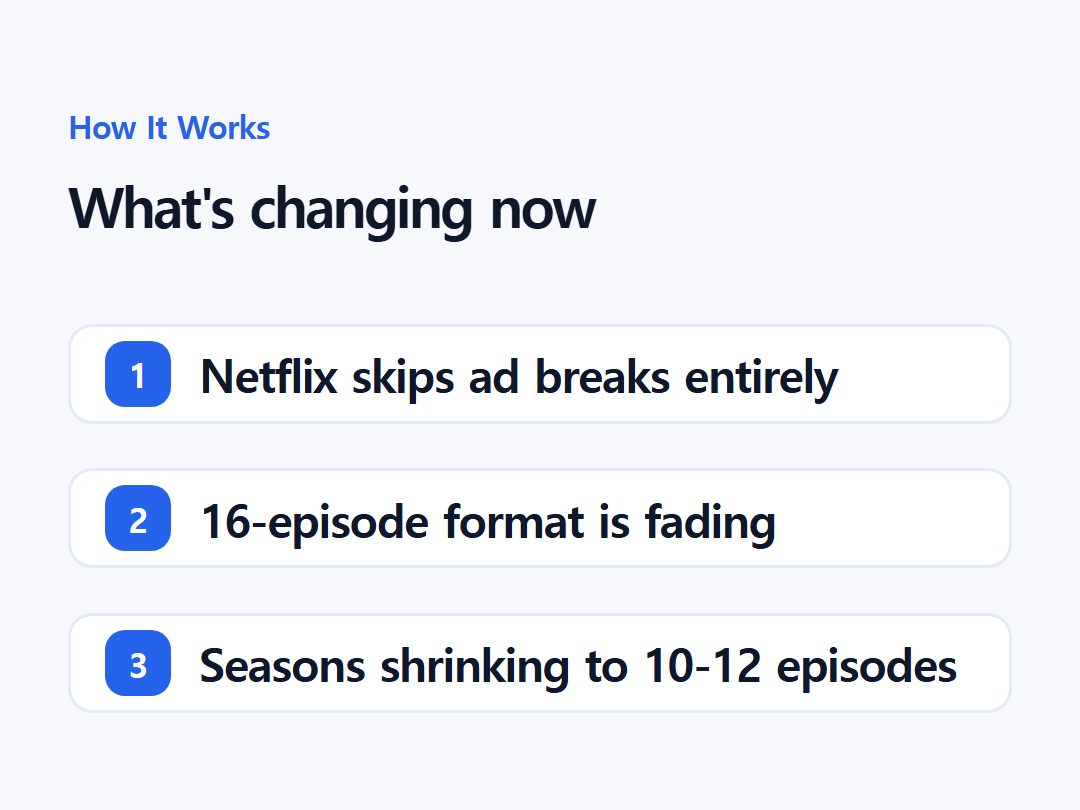
Netflix Korea's original dramas never sold advertising inside an episode, so they were never bound by the ban or the workarounds built around it. Episode length became a storytelling choice instead of a regulatory one.
Squid Game's first season ranged from 32 to 63 minutes across nine episodes, with the shortest one simply ending where the story reached a natural pause. Crash Landing on You, made for tvN and later distributed globally by Netflix, kept its original broadcast-era episodes, each 80 to 110 minutes, unchanged for streaming.
The 16-episode format is fading, and nothing fixed has replaced it
By the mid-2020s, the traditional 16-to-20-episode, hour-plus format was already losing ground to shorter, 10-to-12 episode seasons closer to international norms. Netflix's The Trauma Code was restructured mid-production, from ten 60-minute episodes into eight 45-minute ones, specifically to improve pacing.
What hasn't settled is whether Korea's terrestrial networks, still competing head-to-head for the same nightly slot even after the 2021 ad reform, will fully abandon the hour-long block, or whether the live-shoot production system built around it can survive a shift toward shorter, pre-produced streaming seasons.
For now, the two systems run in parallel: a viewer can watch a hundred-minute terrestrial episode on Monday and a forty-five-minute streaming one on Friday, both labeled the same genre, shaped by two entirely different sets of broadcasting rules.
Korean broadcasters' self-imposed runtime caps before the 2021 reform
| Year | Runtime cap |
|---|---|
| 2009 | 72-minute cap adopted by KBS, MBC, SBS |
| 2013 | Tightened to a 67-minute cap |
| 2017 | 60-minute cap proposed for miniseries, 30 minutes for daily dramas |
Frequently asked
Why are Korean drama episodes so long?
For 48 years Korean law banned commercials inside a program, so broadcasters made episodes longer and more attractive instead of selling ad breaks mid-show.
When did Korea allow commercials in the middle of TV shows?
The Korea Communications Commission permitted mid-program commercials starting in June 2021, ending a restriction that had been in place since 1973.
Why do some Korean dramas air two episodes back to back?
Starting in 2017, terrestrial networks split one roughly 70-minute episode into two 35-minute segments with a commercial break between them, working around the ban on ads inside a single program.
Sources
Every factual claim above is traceable. We do not translate articles — we gather facts from multiple outlets and write them ourselves.
- Commercial breaks to be allowed for terrestrial TV networks — The Korea Herald
- 3 Major Public Broadcasters Considering A '60-Minute Rule' For Dramas — Soompi
- One Spring Night — Wikipedia
- K-dramas shift to shorter seasons as 16-episode format fades — The Korea Times
- Broadcasters experiment with drama release dates, schedules — The Korea Herald
- TV advertisements by country — Wikipedia
- Why Squid Game Episode 8 Is So Much Shorter Than The Others — Screen Rant
- Will Korean dramas break away from 'live-shoot' system? — The Korea Herald