Watch enough Korean dramas and you will eventually see it: a character in a short-sleeved shirt, sweating through a supposed heatwave, while a faint cloud of breath escapes every time they speak. The air is clearly freezing. The story insists it is summer.
The short version
- Broadcast slots get locked before scripts, so shoots often ignore the real season.
- "Jjok-daebon" — script pages torn off overnight — left actors sleep-deprived on set.
- Even full pre-production, like "Descendants of the Sun," can still air off-season.
This is not a costume mistake. It is a visible symptom of how Korean television dramas actually get made — on a production calendar built around the broadcast date, not around the season the script describes.
Actors are freezing in scenes written as summer
Actor Wi Ha-joon described this directly while promoting the 2026 tvN drama "Seiren," whose story spans all four seasons. Production started in the middle of summer and wrapped in the middle of winter, so the cast filmed warm-weather scenes and cold-weather scenes almost back to back, regardless of what the calendar outside actually showed.
English-language recap site Dramabeans has tracked this as a recurring viewer complaint for over a decade: fans routinely spot visible breath in scenes meant to read as sweltering, or bare arms in scenes meant to read as freezing. It happens often enough that it has become a genre in-joke rather than a rare gaffe.
The 2011 series "Dream High" is a commonly cited example: fans have long pointed out that its supposedly warm campus scenes show students visibly stiff and bundled, a tell that the actual shoot fell in a different season entirely.
The shoot calendar follows the air date, not the story
A Korean drama's broadcast slot is usually locked in by the network months ahead of time, based on scheduling strategy and what rival channels are airing — not on which season the script is set in. Filming then has to fit whatever window sits before that date.
If a story's summer beach episode lands in a shooting window that falls in December, the beach episode still gets shot in December. The Korea Herald has reported that Korean producers routinely hold off on major production decisions until the last possible moment, juggling actors' schedules, writers, and crew availability — which leaves little room to also wait for the right weather.
Scripts are also usually greenlit long before a network locks in an exact air date. A writer sets a story in summer or winter on the page, months before anyone knows what the real calendar will look like once a slot is finally confirmed. By then, rewriting the season is rarely worth the delay.
What 'jjok-daebon' means, and why it crushed the schedule
Korean industry insiders have a specific term for the root cause: jjok-daebon (쪽대본), literally a "piece script" — pages torn off the full manuscript and handed to actors scene by scene, sometimes the night before filming. It describes a production so compressed that the script is still being written as the drama airs.
The practice grew common enough that critics coined a related label, saengbangsong deurama (생방송 드라마), or "live broadcast drama" — series where filming, editing, and airing happen so close together that an episode can be delivered to the network the same day it broadcasts.
Under this live-shoot system, a weekday miniseries would often have only a handful of episodes filmed before its premiere, then spend the rest of the run racing to stay ahead of the broadcast. The human cost has been well documented:
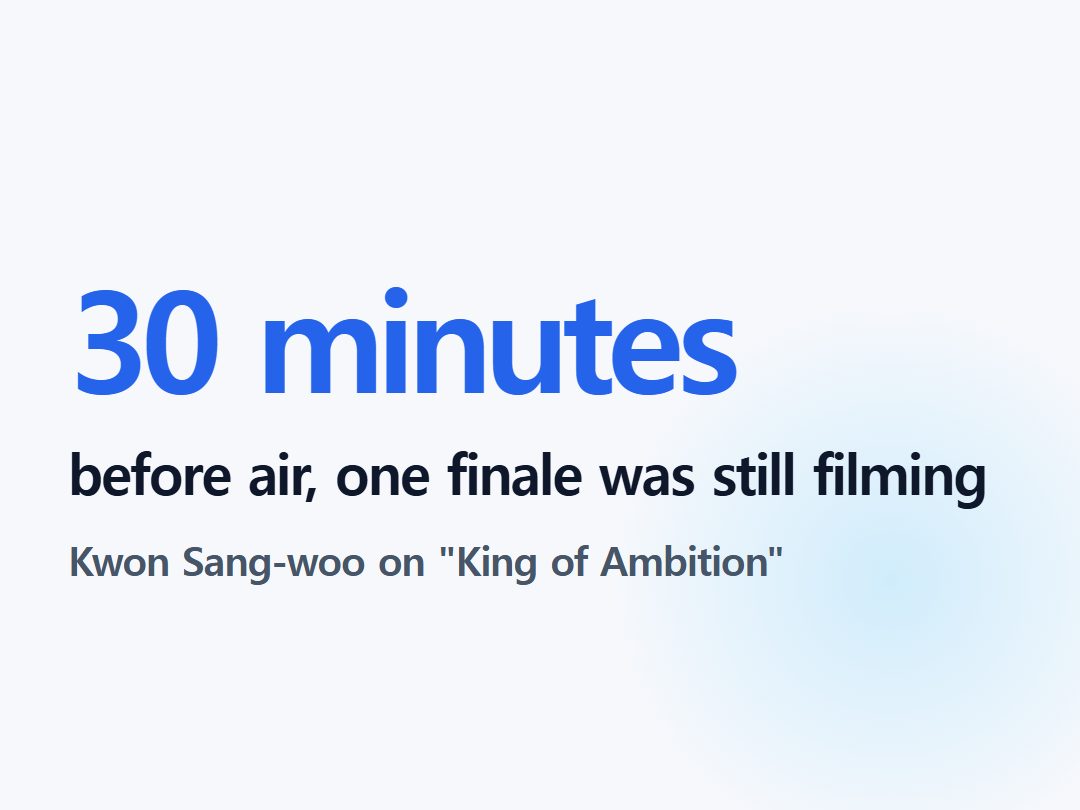
- Actor Kwon Sang-woo said he was still filming the finale of "King of Ambition" thirty minutes before it aired.
- Actor Joo-won described filming "Yong-pal" for six days without sleep, taking IV drips between takes to keep going.
- Weather, by comparison, was simply not a variable the schedule had room to accommodate.
One drama tried to escape the crunch — and rewrote the rules
The 2016 hit "Descendants of the Sun" broke from this pattern on purpose. Every episode was filmed and locked before broadcast began — a method Korean outlets call sajeon-jejak, or pre-production. Filming ran from June to December 2015, including a month on location in Greece, and the finished series then aired on KBS from February to April 2016.
The Korea Herald reported that the real driver wasn't creative preference but Chinese broadcasting rules: dramas needed two to three months of government content review before airing in China, so a drama chasing a simultaneous China release had no choice but to finish filming well in advance.
"Descendants of the Sun" went on to post the highest single-episode rating of its run, and the method spread to other big-budget titles that followed, including "Moon Lovers: Scarlet Heart Ryeo" and "Saimdang: Light's Diary." For the first time, a hit drama had proven that finishing early did not cost it an audience.
Full pre-production still doesn't guarantee matching weather
Pre-production solves the sleep-deprivation problem. It does not automatically solve the season problem, because the finished episodes still have to sit and wait for a broadcast slot chosen for competitive reasons, not climate reasons.
"Uncontrollably Fond," made by the same team the following year, is the clearest case. It was filmed almost entirely pre-production, from late November 2015 to mid-April 2016 — autumn into spring. It then aired on KBS from July to September 2016, in the middle of Korean summer. Viewers noted the drama's visual mood read as distinctly autumnal despite airing at the height of the hot season.
| Live-shoot system | Pre-production |
|---|---|
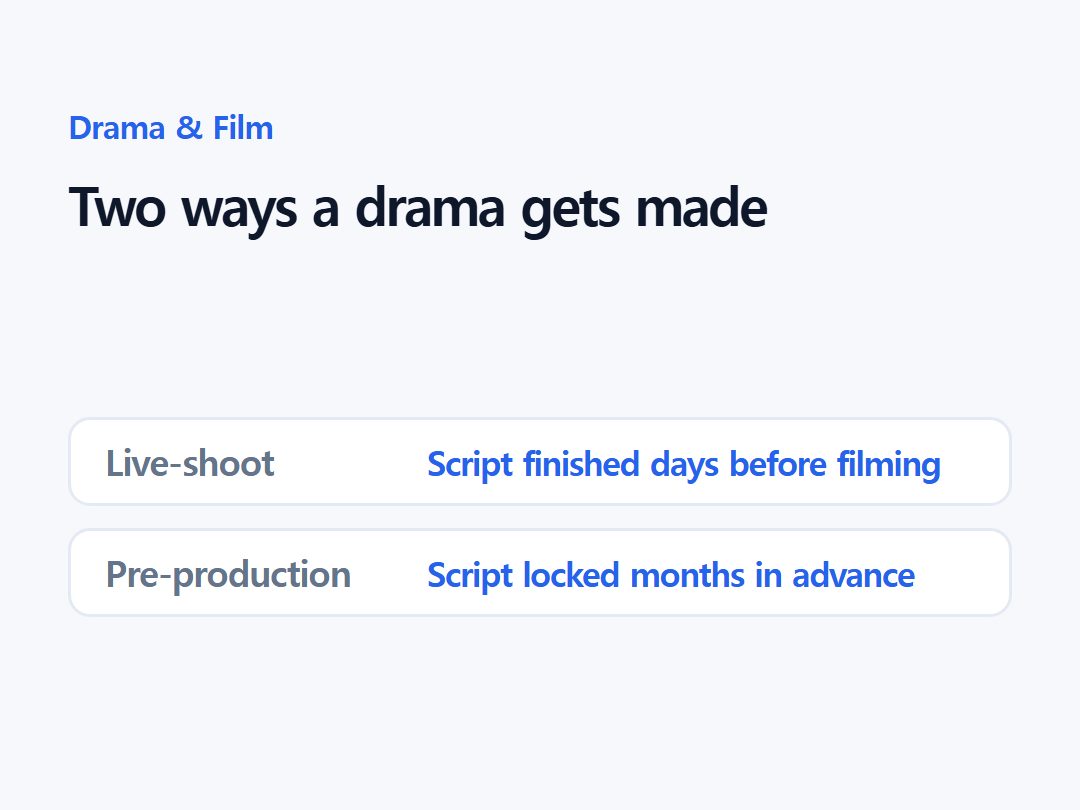
| Script often finished days before filming | Full script locked before filming starts |
| Filming and broadcast run almost simultaneously | Filming ends months before broadcast begins |
| Season mismatch caused by rushing to catch the air date | Season mismatch caused by finishing early for a fixed slot |
How a crew fakes a heatwave in December
Because rescheduling around weather is rarely an option, Korean crews rely on a set of practical workarounds instead:
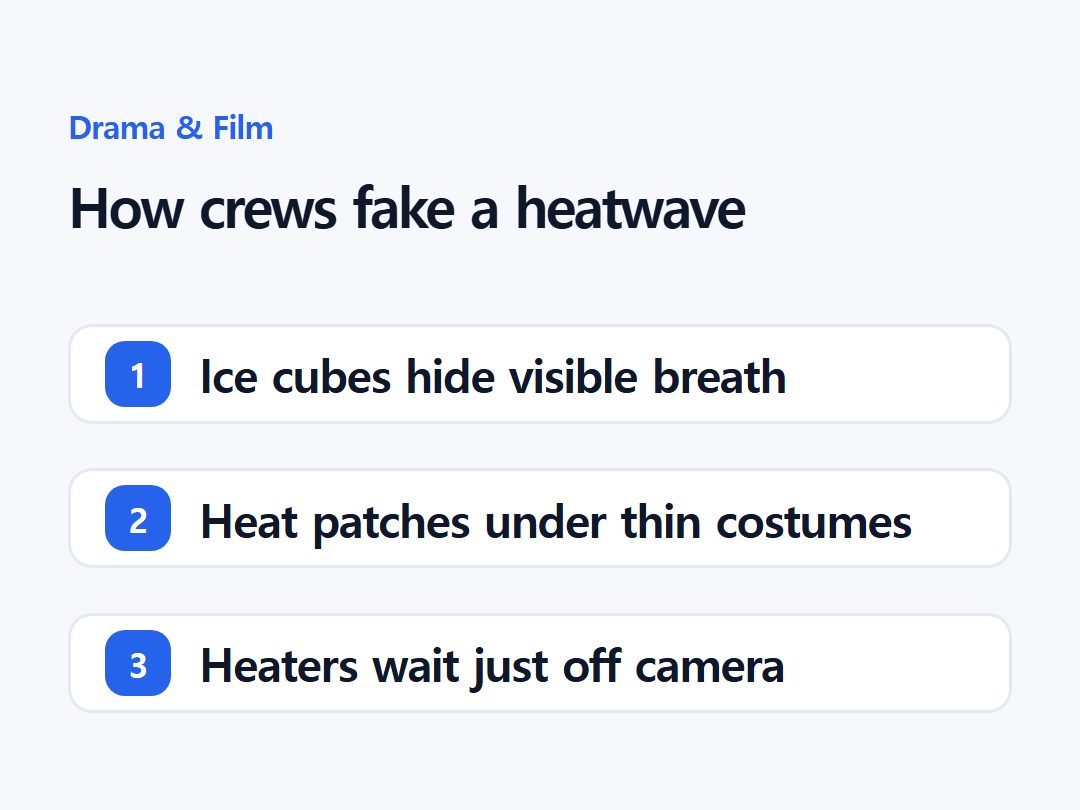
- Actors hold ice cubes in their mouths just before a "summer" take, to keep visible breath from fogging on camera.
- Thin chemical heat patches and thermal layers are hidden under short-sleeved costumes for scenes shot in the cold.
- Portable heaters, hot drinks, and blankets wait just off camera between takes, then disappear the moment filming resumes.
None of this is secret on set — it is standard practice, closer to a stage-management routine than an emergency fix.
Fewer dramas, same seasonal squeeze
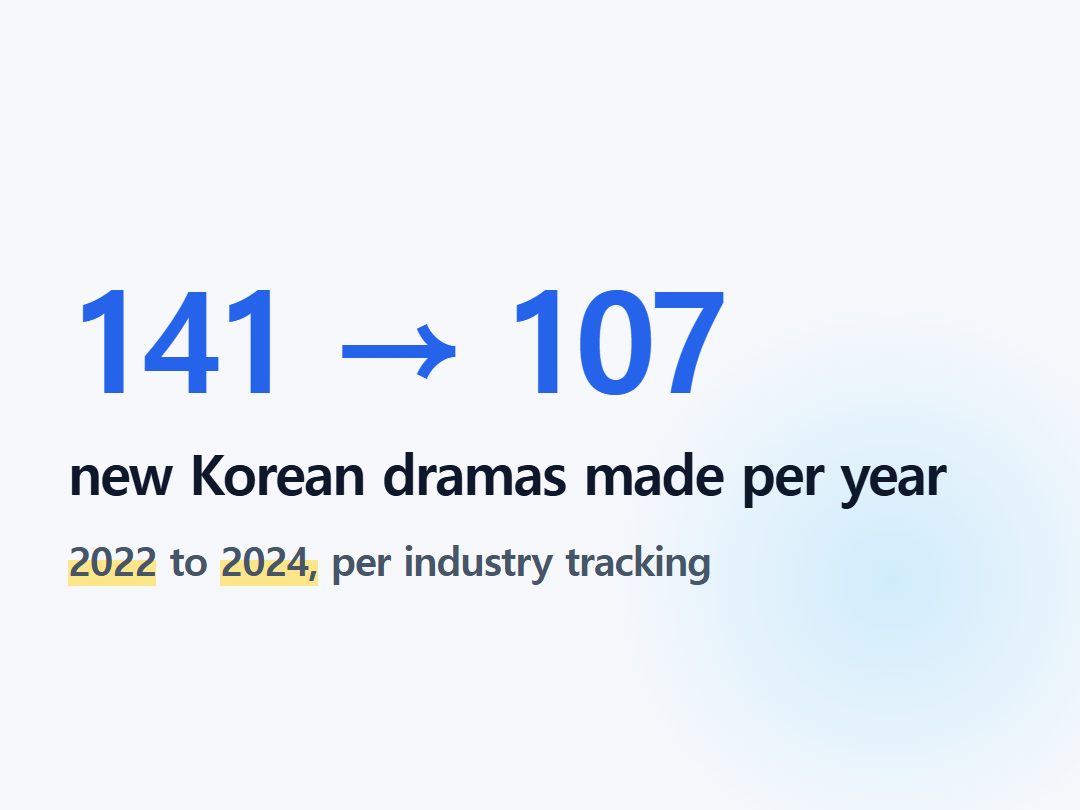
The volume of Korean dramas being made has actually been shrinking. Industry tracking cited by The Diplomat shows new drama production falling from 141 titles in 2022 to 123 in 2023 and roughly 107 in 2024, as rising production costs and Netflix's dominant bargaining position squeeze out smaller projects.
Smaller slates have not loosened the calendar, though. Budgets are tighter, so productions still schedule filming as close to the air date as costs allow, and a story's fictional season remains whatever the script happened to specify when it was greenlit — not whatever the weather is doing outside.
A shrinking market has not made the calendar more forgiving; it has mostly made each remaining production more expensive to run late.
Will pre-production ever become the industry default?
Pre-production has grown for big-budget, Netflix-backed tentpole series, where a finished product lets platforms plan global release dates with certainty. But the live-shoot instinct persists for network dramas, partly because producers value the ability to rewrite storylines mid-run in response to ratings and viewer reaction — something a fully locked script can't do.
Until that trade-off changes, the short-sleeved shirt in a snowstorm will likely keep showing up on Korean screens — a small, visible seam where a drama's shooting calendar and its fictional season simply never lined up.
Live-shoot vs. pre-production Korean drama filming
| Live-shoot system | Pre-production |
|---|---|
| Script often finished days before filming | Full script locked before filming starts |
| Filming and broadcast run almost simultaneously | Filming ends months before broadcast begins |
| Season mismatch caused by rushing to catch the air date | Season mismatch caused by finishing early for a fixed slot |
Frequently asked
Why do Korean dramas film out of season?
Broadcast dates are locked by the network months ahead based on scheduling strategy, so filming has to fit whatever calendar window is available regardless of the season the script describes.
What does jjok-daebon mean?
It's Korean for "piece script" — pages torn off the full manuscript and handed to actors scene by scene, sometimes the night before filming, describing a production so compressed the script is still being written as the drama airs.
Why did Descendants of the Sun film everything before it aired?
It needed a simultaneous China release, and Chinese broadcasting rules required two to three months of government content review, so the whole series had to be filmed and locked well in advance.
Sources
Every factual claim above is traceable. We do not translate articles — we gather facts from multiple outlets and write them ourselves.
- Will Korean dramas break away from 'live-shoot' system? — The Korea Herald
- Making Korean Dramas: Live Shoots and Unpaid B-List Actors — Facts and Details
- The perils of the live-shoot drama system — Dramabeans
- [Drama chat] In season, or out of season? — Dramabeans
- Descendants of the Sun — Wikipedia
- Uncontrollably Fond — Wikipedia
- Wi Ha-joon full interview on "Seiren" — STARNEWS
- How Netflix Both Supercharges and Risks Derailing South Korea's Content Industry — The Diplomat