Ask a Korean acquaintance how they are doing, and there is a good chance the exchange includes some version of “밥 먹었어요?” (bap meogeosseoyo), literally “Have you eaten?” It turns up in text messages, phone calls, and hallway small talk, usually with no real interest in the answer. For most Koreans it functions exactly like “How are you?” in English. For newcomers, it can be baffling.
The short version
- "Have you eaten?" is Korean small talk, not a real question about food.
- Mid-1900s Korea faced real famine, including the yearly "barley hump" hunger gap.
- The greeting stuck around as habit long after hunger disappeared in Korea.
Sakura's confusion versus a warmer Finnish view
The confusion this greeting causes for people new to Korean culture is well documented, including among K-pop idols working in Seoul. LE SSERAFIM member Sakura, who is Japanese, described on a 2023 YouTube interview being genuinely puzzled the first time someone asked if she had eaten.
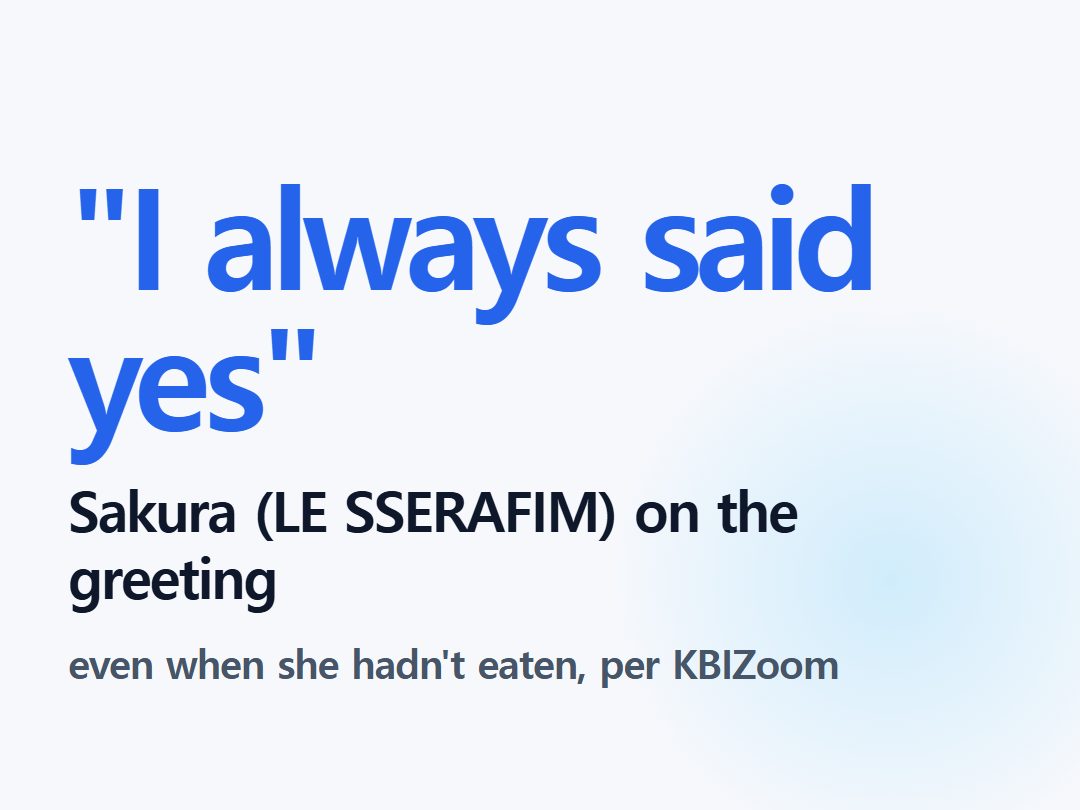
She said she could not tell whether answering “no” would obligate her to go get a meal with the person, so she began defaulting to “yes” even on days she had not eaten, according to the Korean entertainment outlet KBIZoom, which covered the interview.
Korea JoongAng Daily's own reporting on the phrase corroborates the pattern and contrasts it with the experience of Maja Elisabeth von Bruun, a Finnish resident of Korea who said she found the food-centered check-ins endearing compared with more neutral European greetings like “How have you been?” Both accounts describe the same basic gap: international readers and residents tend to hear the words literally, as a question about food, when Koreans are using them as a social reflex that has little to do with anyone's actual meal plans.
Why do Koreans really ask if you've eaten?
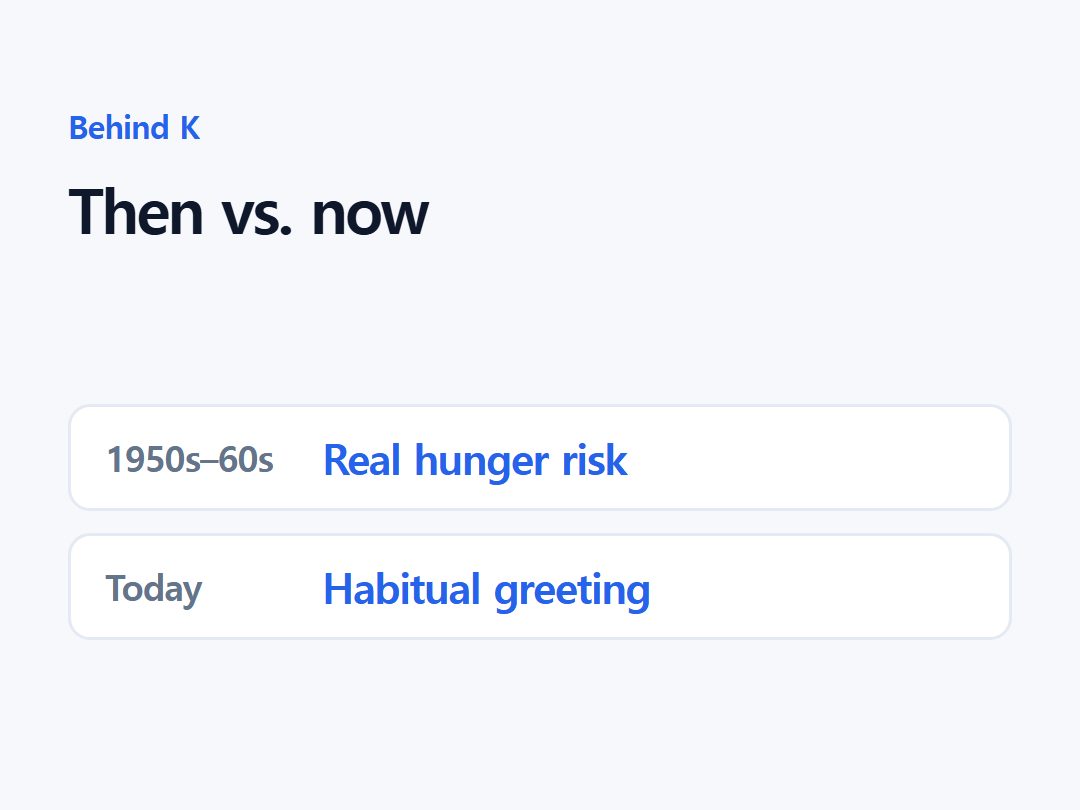
The confusion is understandable, because the phrase reads as a literal question about food. But for the generations of Koreans who cemented it as an everyday greeting, the question was never really about food preferences — it was about survival, asked at a time when going hungry was a real, immediate possibility rather than a hypothetical.
Korea in the mid-20th century was a country repeatedly stripped of its own food supply. Japanese colonial rule (1910–1945) reorganized Korean agriculture largely around exporting rice to Japan, leaving many Koreans on the peninsula short of the grain they grew themselves.
The Korean War (1950–1953) then devastated farmland, housing, and infrastructure across the peninsula and displaced millions of people.
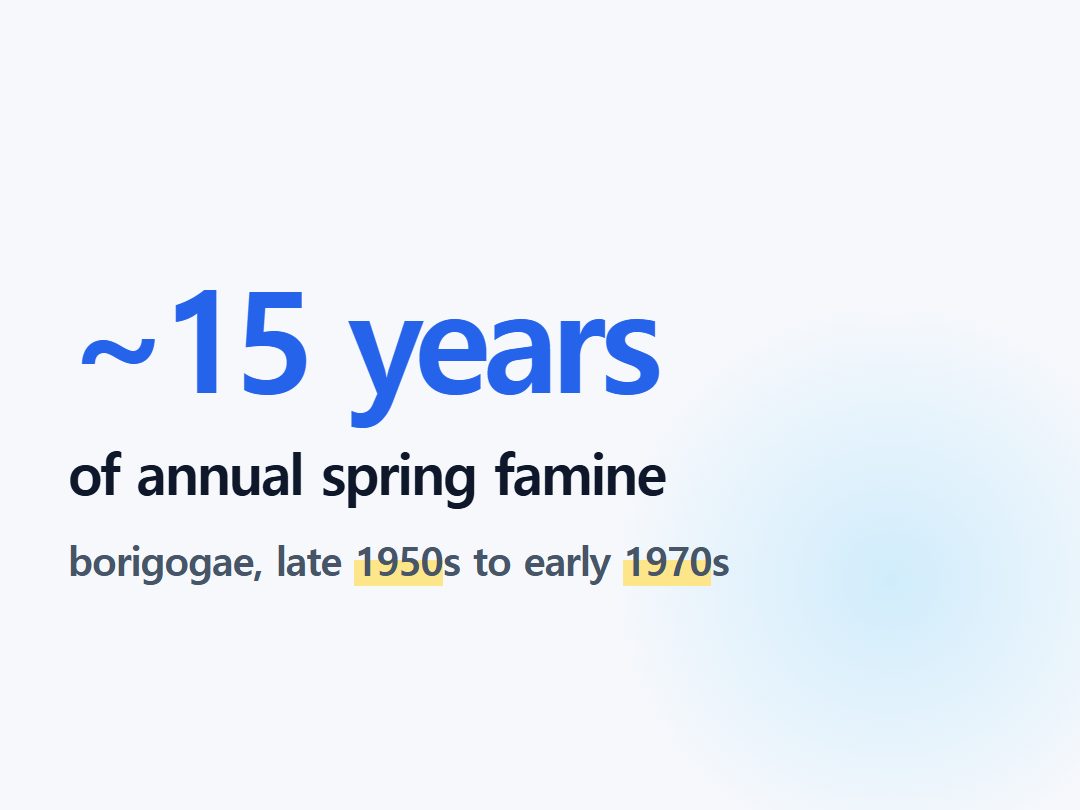
What followed, through the late 1950s and into the early 1970s, was a recurring annual food shortage Koreans called 보리고개 (borigogae), or “barley hump” — the lean weeks each spring after the previous autumn's rice ran out and before the barley harvest came in.
The Korea Times has documented how families during this period stretched meals with barley, mixed grains, and foraged wild plants such as mugwort and shepherd's purse to fill children's stomachs until the new harvest arrived.
A National Bureau of Economic Research working paper on South Korea's postwar economy notes that the crisis did not end quickly: a barley crop failure in the spring of 1963, compounding a poor rice harvest the year before, pushed the country to the brink of famine — a decade after the war itself had ended.
In that context, asking someone whether they had eaten was not small talk. It was one of the most direct ways to check whether a neighbor, relative, or child had actually gotten through the day without going hungry, and a “no” typically triggered concrete action — feeding the person — rather than sympathy alone.
That practical, action-oriented root is why the phrase differs from something like the English “How are you?”, which invites a mood update rather than a response to an urgent need.
As South Korea industrialized rapidly from the 1960s onward and chronic food shortages became a thing of the past — the country is now one of the world's largest economies — the literal need behind the question disappeared. The phrase itself did not.
It calcified into an idiom, in much the way English speakers still say “break a leg” without thinking about theater superstition.
Older Koreans, particularly those born during or shortly after the war, tend to use the greeting with more of its original sincerity and may genuinely expect an answer; for younger generations it functions closer to reflexive small talk, though it still carries an implicit note of care that a flatter greeting would not.
Not every account traces the phrase to scarcity alone.
Some Korean cultural commentary argues that wartime poverty is only part of the explanation, and that the deeper root lies in how central rice (밥, bap) is to the Korean language and self-concept more broadly — bap doubles as a general word for “meal,” and expressions built around it extend into ideas of livelihood and worth that predate the 20th century's famines.
Korea JoongAng Daily's reporting cites a scholar noting that rice functioned as something close to a form of currency during the Joseon era (1392–1910), when property was sometimes measured in rice and land rather than gold or silver.
Under that reading, “have you eaten” is less a war-scarred artifact on its own and more the surface expression of a much older food-centered worldview that the postwar famines reinforced rather than created.
Either way, the practical takeaway for an international reader is the same: when a Korean asks whether you've eaten, they are not usually angling for a meal invitation, and they are not making idle conversation in the Western sense either. It is a small, habitual gesture inherited from a generation for whom looking after someone's next meal was one of the most concrete forms of care available.
How a century of hunger led to Hallyu
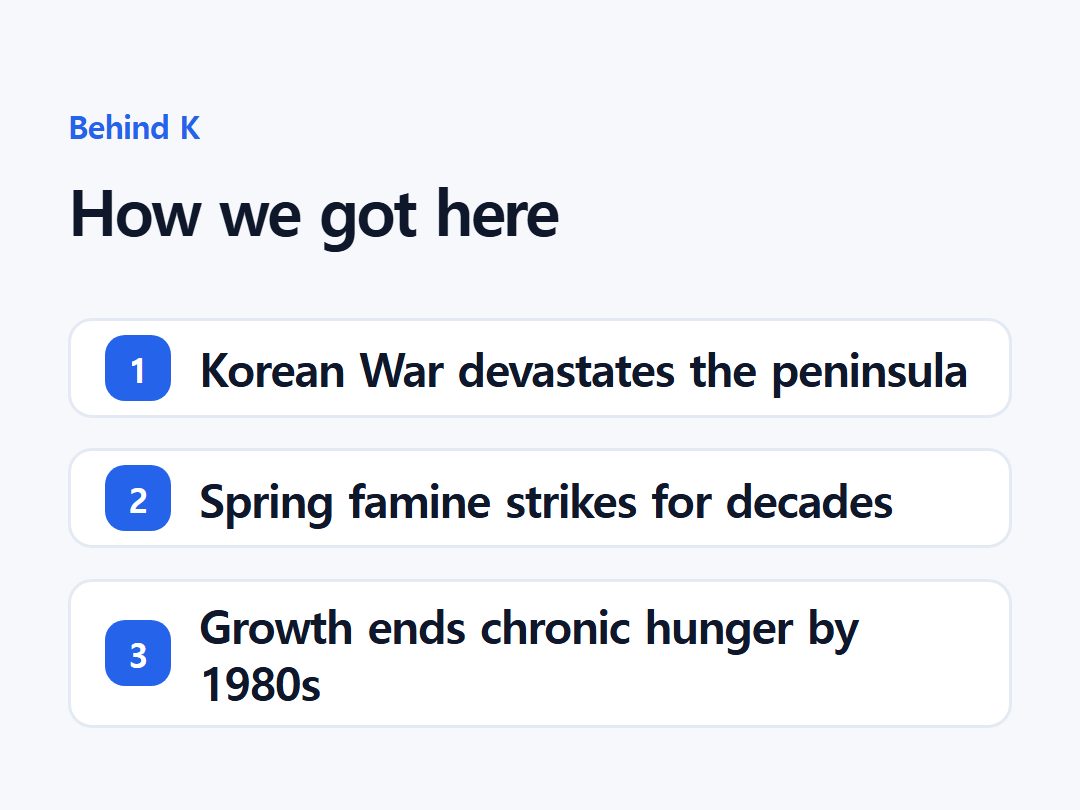
The background that makes the greeting make sense unfolds over roughly a century.
- 1910–1945: Japanese colonial rule reorganizes Korean rice production largely for export, leaving many Koreans with chronic shortages of the grain they farmed.
- 1950–1953: The Korean War devastates farmland and infrastructure across the peninsula and displaces millions of people.
- Late 1950s–early 1970s: The annual spring famine known as borigogae becomes a defining feature of daily life, with families relying on barley, mixed grains, and foraged plants to get through each lean season.
- 1960s–1980s: Rapid industrialization drives South Korea's economic transformation, and chronic hunger recedes even as the habit of asking about meals persists as a greeting.
- 2000s–present: Hallyu, the global spread of Korean pop culture, exports the Korean language and its customs to new audiences — through K-dramas, variety shows, and idols themselves — producing moments like Sakura's on-camera confusion when she encountered the greeting without its historical context.
Will this greeting survive the next generation?
Two things remain genuinely unsettled.
First, whether the greeting keeps its current frequency as Korea moves further from the generation that lived through borigogae: younger Koreans already use it more as reflex than as literal inquiry, and it is an open question whether that drift continues toward the phrase fading the way older idioms eventually do, or whether it stays fixed as a fossilized but permanent fixture of Korean small talk.
Second, the scholarly disagreement over origin — postwar scarcity versus a longer-standing, rice-centered worldview — has not been resolved, and it shapes how the custom gets explained to outsiders.
As more non-Korean K-pop idols, foreign residents, and international fans encounter the phrase through Korean media, that explanation is likely to keep circulating in interviews and explainer coverage, much as it did for Sakura in 2023.
How Korea's food-scarcity history shaped a modern greeting
| Period | What Happened |
|---|---|
| 1910–1945 | Japanese colonial rule reorganizes Korean rice production largely for export, leaving many Koreans with chronic shortages of the grain they farmed. |
| 1950–1953 | The Korean War devastates farmland and infrastructure across the peninsula and displaces millions of people. |
| Late 1950s–early 1970s | The annual spring famine known as borigogae becomes a defining feature of daily life, with families relying on barley, mixed grains, and foraged plants to get through each lean season. |
| 1960s–1980s | Rapid industrialization drives South Korea's economic transformation, and chronic hunger recedes even as the habit of asking about meals persists as a greeting. |
| 2000s–present | Hallyu exports the Korean language and its customs to new audiences, producing moments like Sakura's on-camera confusion when she encountered the greeting without its historical context. |
Frequently asked
What does 'have you eaten' mean in Korean culture?
It functions as a greeting equivalent to "How are you?" and usually doesn't invite a real answer about food.
Why do Koreans ask if you've eaten as a greeting?
The habit traces back to famine, especially the annual spring food shortage called borigogae, when checking on someone's next meal was a concrete act of care.
What is borigogae (barley hump)?
It was the recurring spring food shortage in Korea from the late 1950s to early 1970s, the lean weeks between the previous year's rice running out and the new barley harvest.
Sources
Every factual claim above is traceable. We do not translate articles — we gather facts from multiple outlets and write them ourselves.
- [WHY] 'Have you eaten?' Inside Korea's gastronomic love language — Korea JoongAng Daily
- "Answering was scary" Korean-style greeting that was difficult for LE SSERAFIM Sakura to understand — KBIZoom
- Remembering 'barley height' — The Korea Times
- Korea's Path from Poverty to Philanthropy — Brookings Institution
- Policy Decisions That Transformed South Korea (NBER Working Paper 29299) — National Bureau of Economic Research