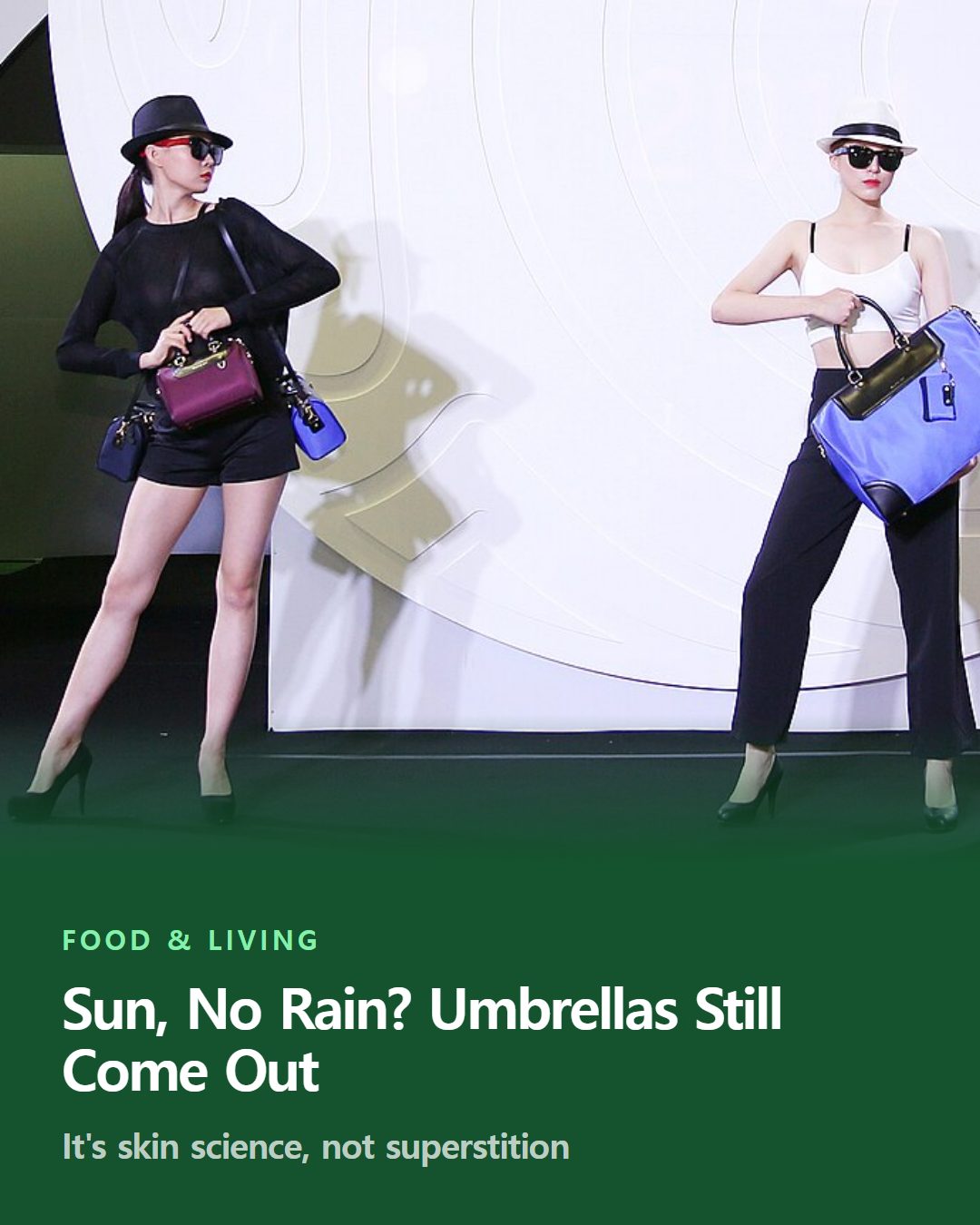
On a clear, dry afternoon in Seoul, it is common to see pedestrians walking under open umbrellas with not a cloud in sight. Many also wear tight fabric sleeves that cover their forearms from wrist to elbow, even in the middle of summer. To a visitor, it can look like a fear of good weather. It is not.
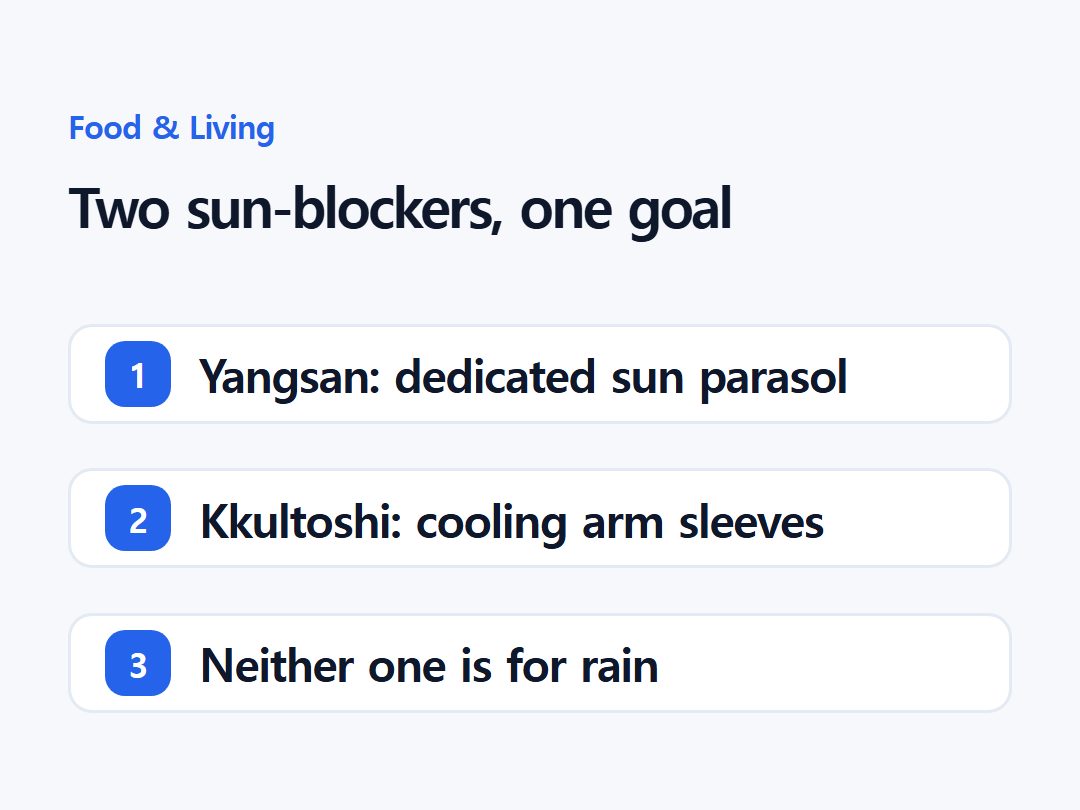
The umbrella is a yangsan (양산), a sun parasol distinct from the rain umbrella (usan, 우산), and the sleeves are kkultoshi (쿨토시), literally "cool sleeves." Both exist for one purpose: keeping direct sunlight off the skin.
The short version
- Yangsan parasols and kkultoshi sleeves block UV, not rain — that's the point.
- Parasol sales jumped 415% to 904% in 2024–2025 as men adopted them too.
- UV light, not just vanity, causes most visible skin aging and heat stress.

Parasol sales jumped over 400% since 2024
The habit is most visible from late spring through the hottest weeks of summer, when Korea's UV index and heat both climb sharply. Retail data tracks the pattern closely.
Sales of parasols jumped 415% in one week in early August 2024 compared with the previous month, according to Korea Herald reporting on retailer figures, and in July 2025 the country's three major department store chains logged double-digit growth in parasol sales, with Lotte up 60%, Hyundai up 47%, and Shinsegae up 44.3% year over year.
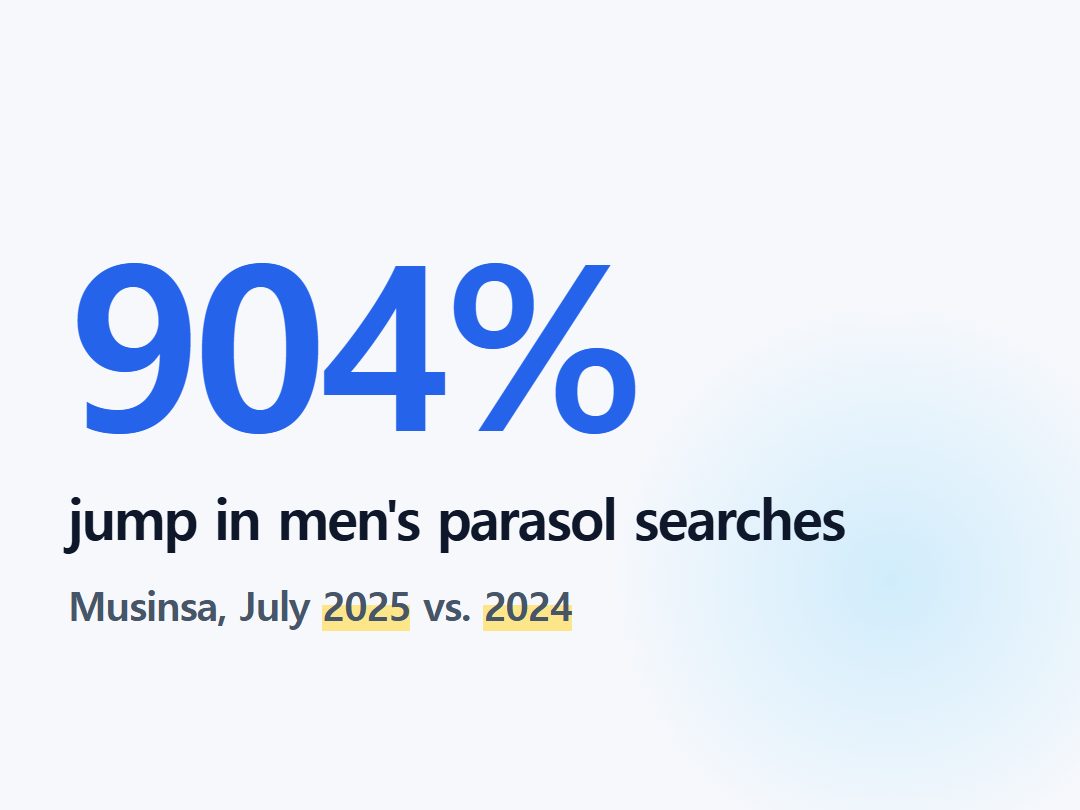
Online marketplace Musinsa recorded a 904% jump in parasol searches by male customers in the first ten days of July 2025 compared with the same period a year earlier.
Kkultoshi sleeves, sold everywhere from convenience stores to sporting goods shops, see a similar seasonal spike, marketed to drivers, delivery workers, golfers, and anyone walking to the subway station.
None of this is about avoiding rain. It is a seasonal, nationwide, and increasingly gender-neutral routine built around blocking ultraviolet light.
It's UV damage and status history, not vanity
For international readers, the instinct is often to read this as an extension of Korea's well-documented preference for pale skin, and assume it is purely cosmetic. That is only half the picture, and treating it as vanity alone misses two things Korean readers already understand: the dermatological reasoning behind it, and the class history that produced the beauty standard in the first place.
The skin-damage argument
Dermatologists widely attribute the large majority of visible skin aging, including wrinkles, dark spots, sagging, and uneven tone, to cumulative UV exposure rather than chronological age alone.
UVA radiation, which makes up the vast majority of the UV light reaching the ground, stays roughly constant in intensity throughout the day and across seasons, penetrates window glass, and reaches deep into the skin's structural layer where collagen breaks down.
This is why Korean sunscreens and cosmetics regulations use a PA rating system (PA+ to PA++++) to measure UVA protection specifically, on top of the SPF rating that Western products typically rely on alone.
A parasol or sleeve is, in effect, a piece of reusable, zero-maintenance sun protection that does not wear off with sweat the way sunscreen does.
This is also why the practice is not exclusively about complexion.
A 2021 experiment by Korean newspaper Dong-a Ilbo measured scalp temperature in direct sun with and without a parasol, and found a drop of nearly 8 degrees Celsius, from 45.4°C to 37.6°C. Seoul Institute research separately found that parasol shade can lower perceived outdoor temperature by up to 10 degrees Celsius, and Japan's Ministry of the Environment, which has run its own parasol-promotion campaigns, cites a roughly 20% reduction in heat stress under a parasol's shade.
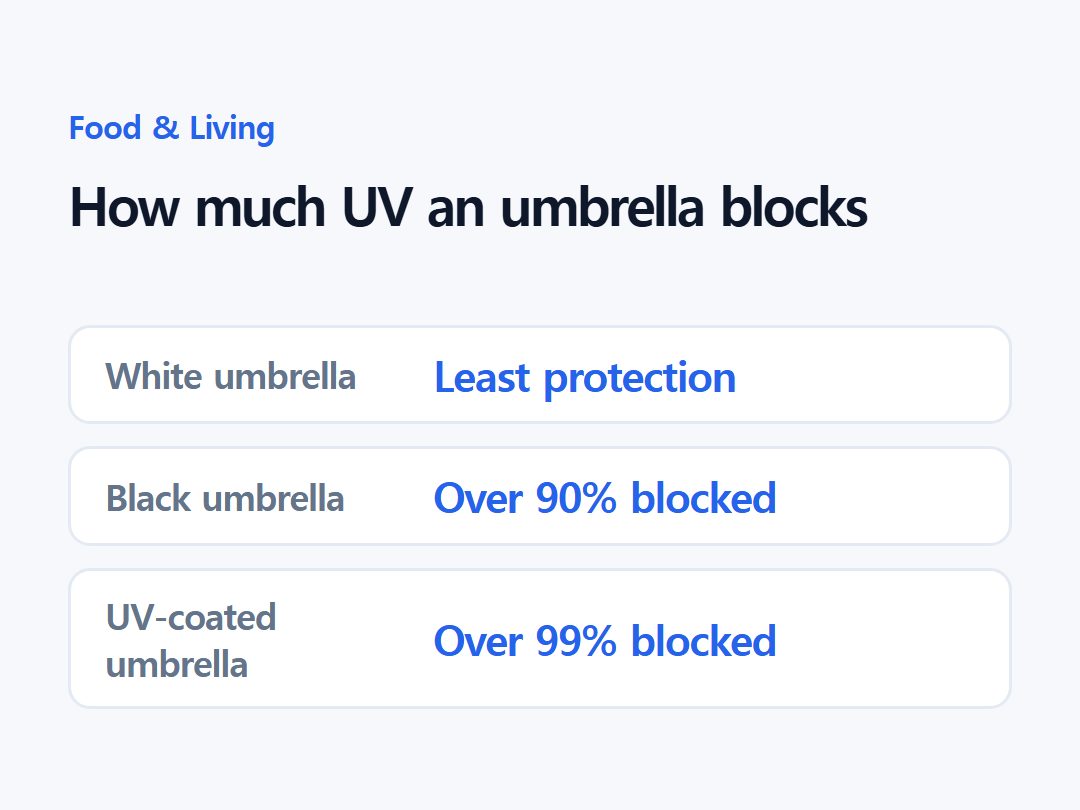
Not every umbrella performs equally: reporting on UV-blocking tests found standard dark umbrellas filter 70 to 90% of UV rays, black umbrellas over 90%, and umbrellas with a dedicated UV coating more than 99%, while white umbrellas offer the least protection.
In a country where 2024 alone brought 18.9 official heat wave days, 24 heat-related deaths, and nearly 2,900 people treated for heat illness, per Korea Herald's coverage of government figures, a parasol functions as personal shade infrastructure, not just a skincare accessory.
The beauty-standard argument, and where it actually comes from
The preference for fair, even skin in Korea is real and old, but its origin is social class rather than a modern aesthetic trend. During the Joseon Dynasty (1392–1897), pale, unblemished skin signaled that a person did not have to labor outdoors.
Nobles and scholars could remain indoors; farmers and laborers worked exposed to the sun and were visibly tanned as a result.
Joseon-era beauty ideals codified this into a standard sometimes described as "three whites, three blacks, three reds" (sambaek, samheuk, samhong), which prized fair skin alongside dark hair and brows and a rosy mouth and cheeks, and was tied to Confucian ideas linking outward appearance to inner virtue.
That class-coded association between pale skin and status persisted through the twentieth century and still shapes contemporary Korean beauty culture, even as the practical health argument around UV damage has become the more commonly cited justification, particularly among men.
Why the arm sleeves specifically
Kkultoshi are a modern adaptation of a much older garment.
Tosi (토시), worn with traditional hanbok clothing, were cylindrical sleeve covers with two seasonal versions: a padded winter version for warmth, and a lighter summer version, woven from materials like bamboo or horsehair, designed to let air circulate against the skin while still covering it.
The modern cooling arm sleeve, made from stretchy, moisture-wicking, UV-blocking fabric, is a direct functional descendant of that summer tosi, repurposed for drivers, hikers, and outdoor workers who need their forearms covered without overheating.
Parasols shed their stigma as men embrace them
The two habits, parasols and arm sleeves, developed along separate tracks that converged into the same seasonal ritual.
The tosi has centuries of continuous use in various forms, moving from hanbok accessory to a practical cover for painters, cartoonists, and office workers protecting their sleeves, and eventually to the UV-blocking sportswear item sold today.
Sun parasols followed the broader arc of pale-skin preference described above, but the framing shifted noticeably over the past decade from purely cosmetic to explicitly medical, as dermatologists in Korean media increasingly cite sunspots, premature wrinkling, and even hair thinning at the part line as reasons to shade the scalp and face.
The clearest evidence of that reframing is the recent shift toward men using parasols, a category once carrying enough stigma that a 2019 Career survey found 46% of men cited social discomfort as a reason not to use one.
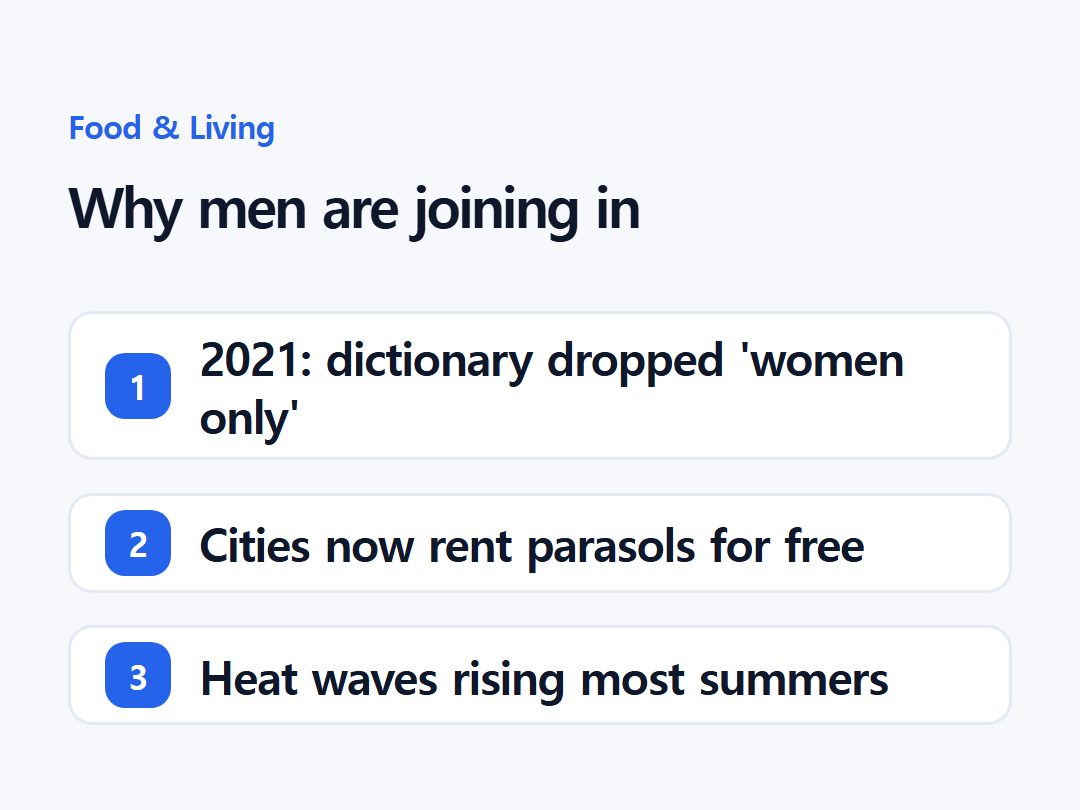
South Korea's National Institute of the Korean Language revised its official dictionary definition of "parasol" in 2021, removing the phrase "mainly used by women." Naver search-trend data shows men's interest in parasols consistently scoring 85 to 100 out of 100 in June through August for three consecutive years, and one retailer found roughly 48,000 distinct products listed under "men's parasol" as fashion brands moved away from traditionally feminine, frilled designs toward plain, UV-coated ones.
Local governments have backed the shift with infrastructure: Daegu began installing free parasol rental stations in 2020 and had expanded to more than 160 locations by 2025, with Busan and Daejeon launching comparable programs.
Japan moved earlier along the same path, with its Ministry of the Environment running a men's parasol campaign, including a Father's Day gifting push, from 2019 onward.
The gender shift isn't settled, and critics disagree
Two things remain unsettled. First, whether men's parasol use becomes fully normalized or stays a seasonal heat-wave behavior that recedes once temperatures drop; search and sales data through 2025 point toward continued growth, but some surveyed men still describe feeling self-conscious carrying one.
Second, the practice has drawn international criticism from a different angle: a 2025 viral video argued that widespread sun-avoidance in Asian countries reflects internalized "white supremacy" and colorism, a claim that drew pushback from commenters and dermatologists pointing to the sunburn, skin cancer, and heatstroke risks that parasols and sleeves are documented to reduce.
As South Korea's summers grow hotter, with heat wave days rising in recent years, the practical, safety-driven argument for both accessories is likely to keep gaining ground over the purely cosmetic one, even as the historical association with fair-skin beauty standards remains part of the picture.
How much UV do umbrellas actually block?
| Umbrella type | UV rays blocked |
|---|---|
| Standard dark umbrella | 70–90% |
| Black umbrella | Over 90% |
| UV-coated umbrella | More than 99% |
| White umbrella | Least protection |
Frequently asked
Why do Koreans use umbrellas when it's sunny?
They're using a yangsan, a sun parasol distinct from the rain umbrella (usan), to block UV rays that cause skin aging and heat stress, not to block rain.
What are kkultoshi sleeves?
Kkultoshi are stretchy, moisture-wicking, UV-blocking arm sleeves worn from wrist to elbow, a modern descendant of the summer tosi sleeve covers worn with hanbok.
Do parasols actually block UV rays?
Yes — standard dark umbrellas block 70 to 90% of UV rays, black umbrellas over 90%, and umbrellas with a UV coating more than 99%, though white umbrellas offer the least protection.
Sources
Every factual claim above is traceable. We do not translate articles — we gather facts from multiple outlets and write them ourselves.
- Breaking tradition: Korean men embrace parasols to beat summer heat — The Korea Times
- Is using a sun umbrella linked to racial bias? — The Korea Herald
- Umbrellas on hot, sunny days make perfect sense — The Korea Herald
- Parasols jump in popularity amid S. Korean heatwave — The Korea Herald
- Heat Wave Follows Monsoon's End: A Parasol Can Cut Perceived Temperature by 10 Degrees — Seoul Economic Daily
- 토시 (Tosi) — Encyclopedia of Korean Culture (AKS)
- Why Do Koreans Want White Skin? — Korean Girl Explains


