In January, Seoul temperatures can drop to minus 17 degrees Celsius. Coffee shops still sell more iced Americano than hot. Starbucks Korea's own sales data show iced drinks outselling hot ones even at the coldest point of winter.
The short version
- Korea now has 100,729 cafes — more than double all convenience stores combined.
- Koreans drink 405 cups of coffee yearly, over double the global average.
- Cafes need tables to turn over in about 91 minutes just to break even.
Koreans have a name for this: eoljukah (얼죽아), short for "eoreo jugeodo aiseu amerikano" — "even if I freeze to death, iced Americano." It sounds like a joke about taste. It is closer to a description of how Korean cafes, offices, and coffee suppliers actually operate.
A phrase born to defy a Seoul cold snap
The term went viral during a winter cold snap around 2018, when people began posting photos of their iced coffee orders in sub-zero weather almost as a badge of honor. By 2023 it had traveled far enough that the wire service AFP was interviewing Seoul office workers about it.
One of them, office worker Lee Ju-eun, said she drinks iced Americano year-round because "it's easier to drink and also tastier." An accountant, Lee Dae-hee, described the appeal as a fast, efficient caffeine hit rather than flavor — an explanation that keeps surfacing whenever Koreans are asked about the habit.
Korea now has more cafes than convenience stores
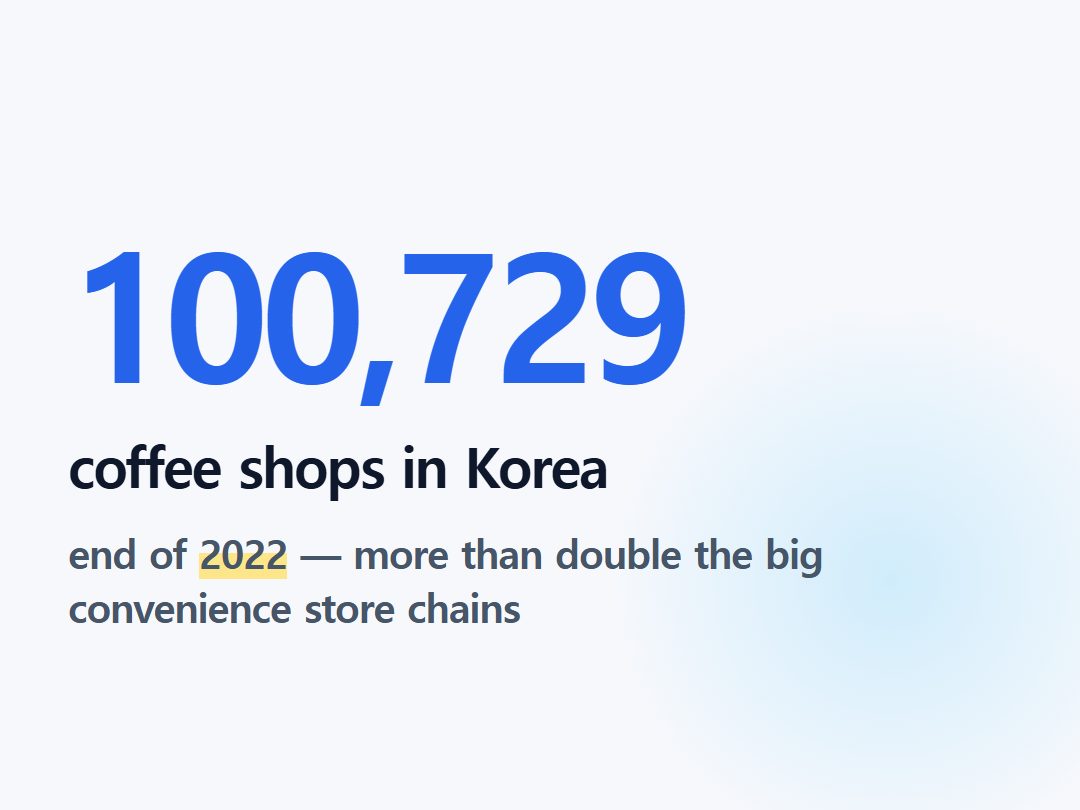
By the end of 2022, Statistics Korea counted 100,729 coffee shops nationwide — the first time the figure passed 100,000. That is nearly double the roughly 55,000 stores run by the country's four largest convenience store chains combined.
The sector had roughly doubled in six years, up from about 51,000 shops in 2016. It now generates close to 15.5 trillion won in annual sales and employs an estimated 270,000 people.
Individual consumption is just as high: Koreans drank an average of 405 cups per person in 2023, according to Euromonitor data — more than double the global average of 152, and higher than the 318 cups consumed per person in the United States.
Why a table has to turn within 90 minutes to break even
That many cafes packed into one country means brutal competition on thin margins. Industry surveys of dining and cafe operators have tried to calculate exactly how long a customer can occupy a table before a shop starts losing money on the visit.
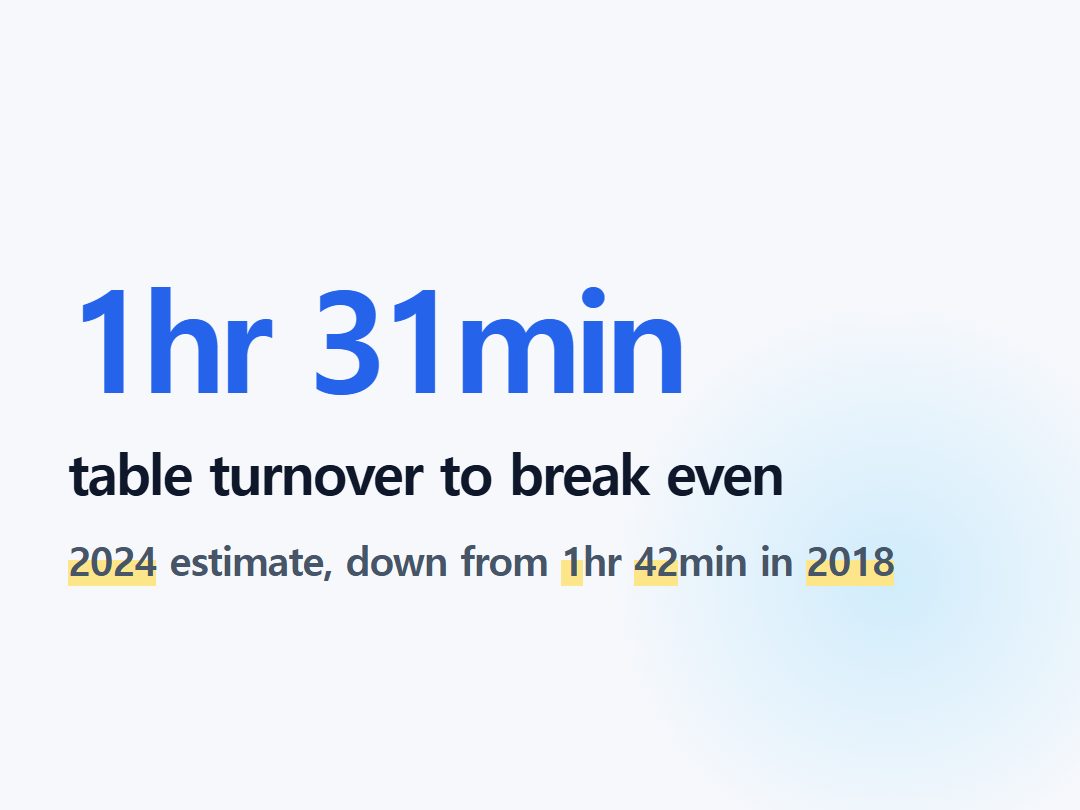
A 2018 industry survey estimated that a small cafe with eight tables, selling a 4,134-won coffee, needed each table to turn over within about 1 hour and 42 minutes to break even. By 2024, rising rents and costs had pushed that threshold down to roughly 1 hour and 31 minutes.
This math is also why "cafe squatters" — customers who work or study for hours on a single drink — have become a public argument rather than a private annoyance. A survey of 1,000 people found 73.2% consider the practice a problem, and nearly half named reduced table turnover as the reason.
Takeout, not seating, is where the low-price chains make money
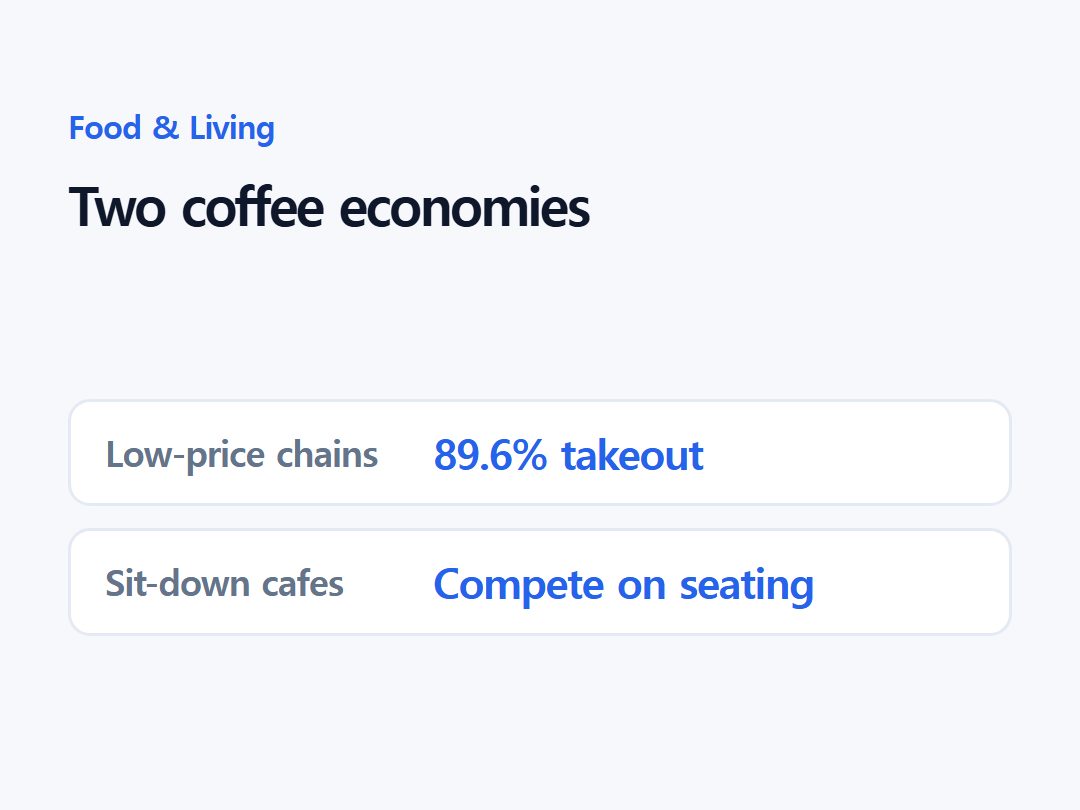
Korea's coffee market has effectively split into two business models. Sit-down chains compete on space and dessert menus to raise how much each customer spends per visit. Low-price chains such as Mega Coffee, Compose Coffee, and Paik's Coffee compete on volume instead.
Consumer surveys show 89.6% of purchases at these low-price chains are takeout, concentrated around two windows: lunch or break time (35.4%) and the morning commute (26.3%). For a business built on that rhythm, a drink has to survive being carried, not sipped at a table.
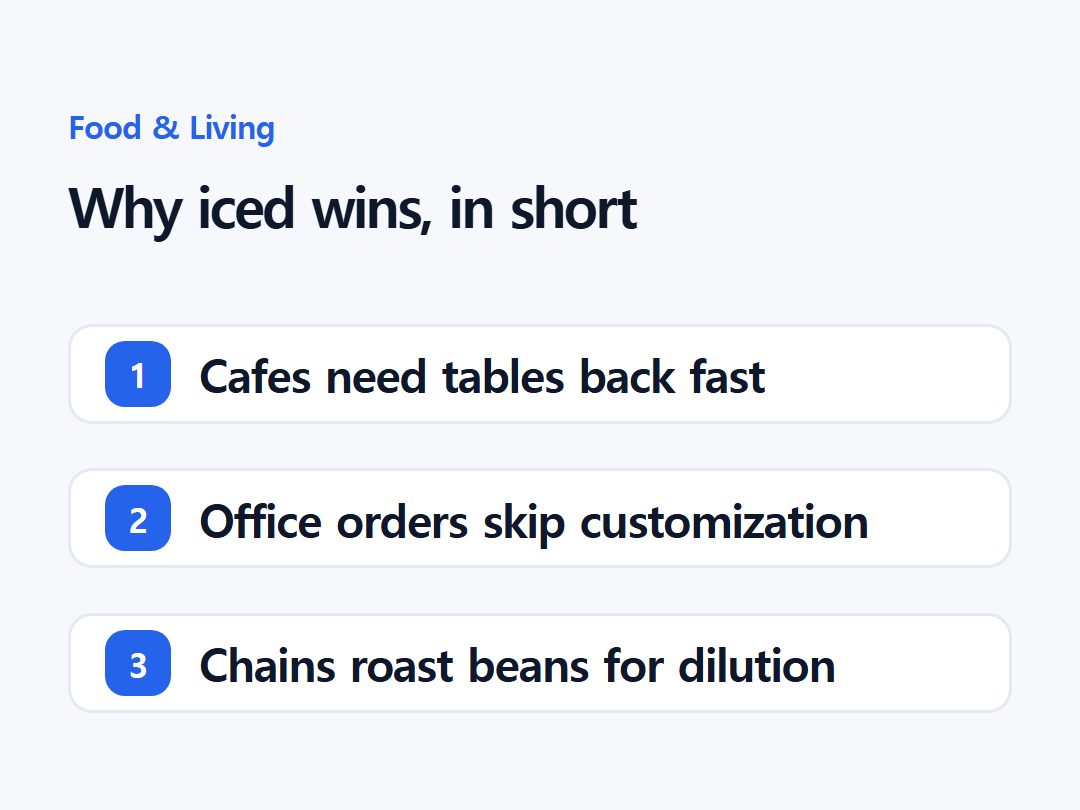
- Iced Americano needs no time to cool before it can be drunk
- It travels without steam fogging a lid or a bag
- It can be finished walking, rather than lingering over a seat
Seen this way, the drink is not a lifestyle choice so much as the format that fits how these cafes are built to sell coffee. A shop with a 90-minute turnover target cannot design its bestseller around someone lingering over a cooling cup.
The office coffee run has no room for customization
Korean office culture has long assigned a junior employee the job of collecting a coffee order for an entire team, sometimes a dozen or more colleagues, before a meeting. A round of drinks with individual sugar, milk, and temperature requests is slow to take down and easy to get wrong.
Iced Americano avoids that problem. There is no cream-versus-milk decision, no risk of a hot drink going lukewarm by the time it reaches a desk on another floor, and nothing to mishear across a noisy office.
Because almost everyone already drinks it, ordering it also signals nothing unusual about a person's taste. It has become the default precisely because defaults are what a large, fast group order needs.
Overheated interiors made a cold drink the comfortable choice
Korean buildings inherit a heating culture shaped by ondol, the traditional underfloor system that warms rooms through radiant heat from below rather than heated air. Modern offices and cafes often carry that same instinct into central heating, keeping interiors warm enough in winter that removing a coat indoors is normal.
Starbucks Korea's Park Han-jo told AFP that the broader pattern is people consuming what they want "regardless of the weather" — a shift he described as a genuinely new consumption trend, not simply poor judgment in the cold.
Franchises roast for dilution, not for the cup
Korea's franchise cafes built their menus around the Americano because it is the simplest drink to standardize across thousands of locations: one espresso shot topped with water, identical whether made by a first-week hire or a ten-year barista.
That standardization shaped how the beans behind it are roasted. Ice mutes acidity and aroma, so a light-roast bean served over ice tastes thin. Medium-to-dark roasts keep their body and bitterness even after the ice dilutes them, which is why Korean chains converge on darker roast profiles built specifically for the iced format.
That is also why the comparison to other coffee-drinking countries is so stark: Italy, Brazil, and Japan remain largely hot-coffee markets even in their own summers. Korea's roast and recipe standard is not a universal preference among coffee drinkers — it is a supply chain built around one drink format.
A global news wire turned a habit into an export
The term stayed a domestic in-joke until a cold snap in January 2023 pushed Seoul temperatures to minus 17 degrees Celsius. AFP interviewed office workers still ordering iced coffee through the freeze and ran the story that February, introducing "eoljukah" to international readers for the first time.
The wire story was picked up by outlets across Asia and Europe, and the phenomenon has since surfaced in coverage of K-pop stars photographed carrying iced Americanos and in Korean dramas, where the drink now functions as visual shorthand for a busy professional.
Researchers still disagree on which explanation matters most
What is not settled is which factor actually drives the habit rather than simply reinforcing it. Some researchers frame the preference as a form of social collectivism — ordering what the group orders — inherited from older norms around shared behavior.
Others treat that as secondary to the structural pressures above: a market with too many cafes chasing too little table time, an office culture that rewards a fast and uncomplicated order, and a franchise supply chain roasted for ice rather than for a cup meant to be sipped hot. None of these explanations rules out the others, and no single study has isolated which one carries the most weight.
What is measurable is that the pressure has not eased. The 2024 revision of the break-even survey moved the turnover threshold down, not up, meaning cafes now need tables to empty faster than they did in 2018. As long as that keeps happening, a drink built for speed has little reason to lose ground to one built for lingering, whatever the temperature outside.
Break-even table turnover time for a small cafe
| Year | Turnover needed to break even |
|---|---|
| 2018 | 1 hour 42 minutes |
| 2024 | 1 hour 31 minutes |
Frequently asked
What does eoljukah mean in Korean?
Eoljukah (얼죽아) is short for "eoreo jugeodo aiseu amerikano," meaning "even if I freeze to death, iced Americano" — Koreans' habit of drinking iced coffee year-round.
Why do Koreans drink iced Americano even in winter?
It fits how the market actually works: overheated indoor spaces, a cafe scene too crowded for slow lingering, and an office culture that needs a fast, uncomplicated group order.
How many coffee shops are there in South Korea?
Statistics Korea counted 100,729 coffee shops by the end of 2022, nearly double the roughly 55,000 stores run by the country's four largest convenience store chains combined.
Sources
Every factual claim above is traceable. We do not translate articles — we gather facts from multiple outlets and write them ourselves.
- Coffee so cold it's hot: South Korea's love of iced Americano — The Korea Times
- 전국 커피전문점 수 처음으로 10만 개 돌파‥편의점보다 많아 — MBC News
- 카공족 논란, 카페 회전율 실태 조사 — News Space
- 점포 수는 저가, 매출은 체류형…커피 시장 '이중 구조' — Datanews
- 대한민국 커피 시장, 왜 '저가 커피'에 열광할까? — Pickply
- '연간 1인당 405잔' 커피 소비대국 한국 — The Stock
- 집에서 만든 아이스 아메리카노가 카페 맛 안 나는 이유 — Beanoners
- 한국인은 왜 '아아'를 좋아할까 — Kakaopay Contents


