Walk into a Seoul subway car during evening rush hour and the color range narrows fast: black coats, black backpacks, black flats, with white and gray filling in most of what black leaves out. It is not a first impression that fades once you look closer. Korean pollsters, a logistics company, and university researchers have all measured the same pattern using different data.
The short version
- Black is Korea's top clothing color, picked by 34% of men.
- Danjeong, meaning neat and proper, drives the choice, not aesthetics.
- SPA brands like Uniqlo and SPAO built basics around that preference.
The short version: black reads as "neat" in Korea, a specific social signal rather than a style preference. That signal then meets a fashion industry that has spent two decades building its bestselling basics around exactly that color.
The polling numbers behind the black wardrobe
Gallup Korea's most recent color-preference survey polled 1,777 people aged 13 and up. Among men, 34% picked black as their favorite clothing color, versus 17% of women. Among people in their teens through thirties, close to 40% chose black regardless of gender.
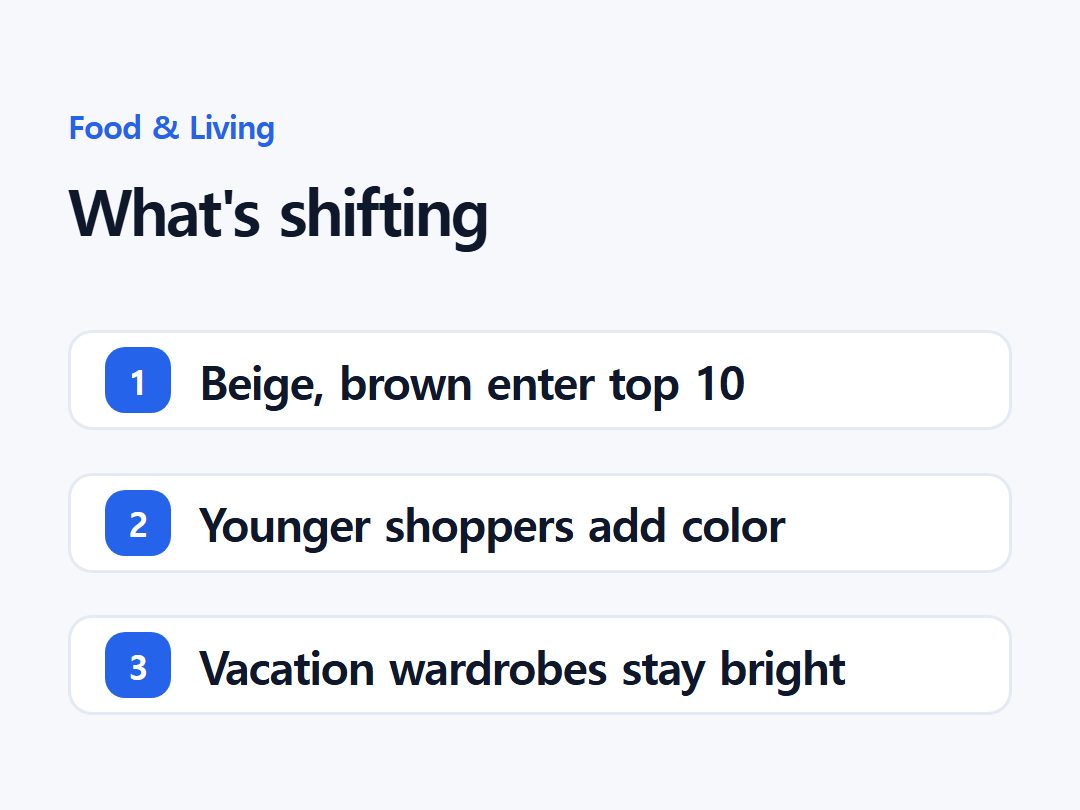
Black and white have held the top two spots in that survey for 20 straight years. This year's edition had one new detail: beige and brown broke into the top 10 for the first time, while pink and red slipped.
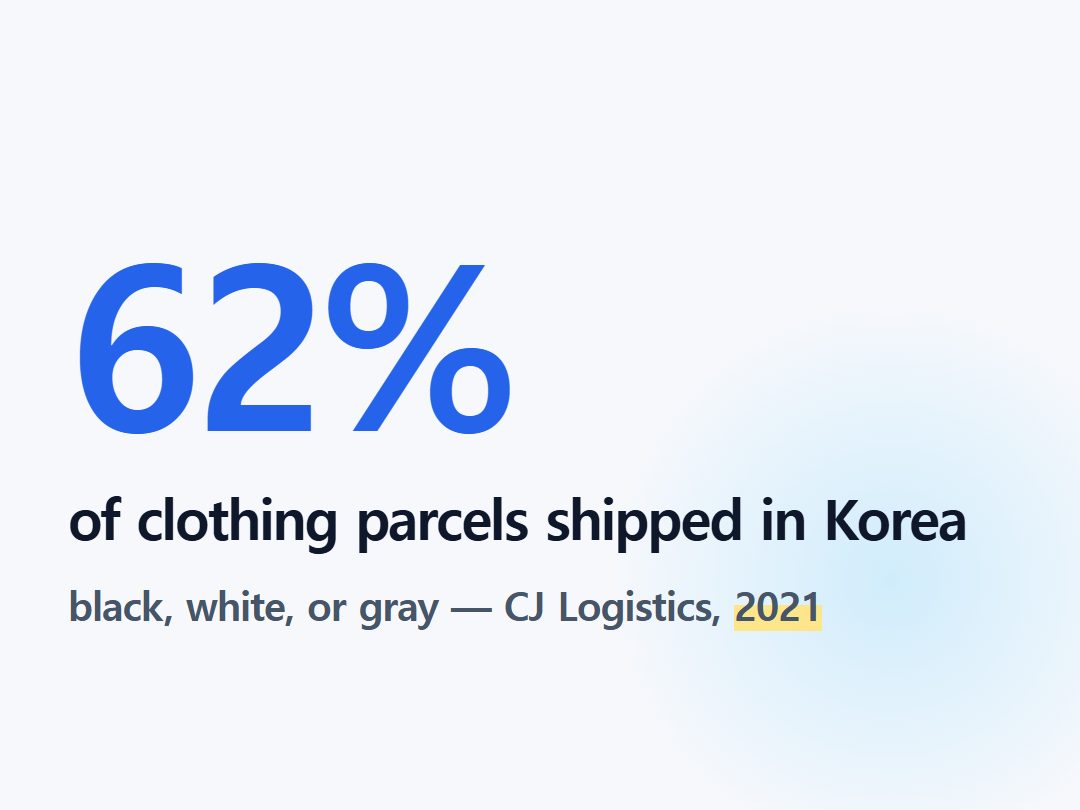
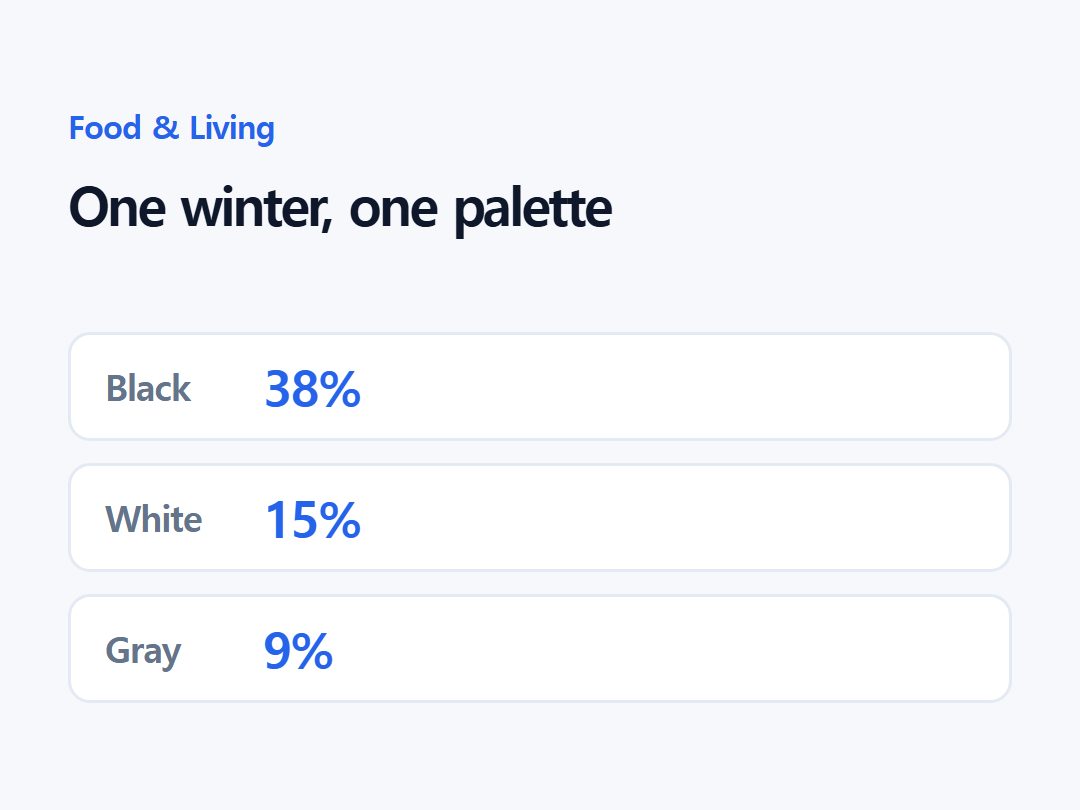
Delivery data tells a similar story from another angle. CJ Logistics analyzed 1.32 billion parcels for its 2021 "Everyday Life Report" and broke down clothing shipments by color:
| Color | Share of clothing parcels |
|---|---|
| Black | 38% |
| White | 15% |
| Gray | 9% |
That puts well over six in ten clothing parcels sent within Korea at some shade of black, white, or gray.
"Neat" is a specific word here, not a vibe
Korean has a term doing a lot of work in this story: danjeong (단정), meaning tidy, proper, and put-together in a way that signals self-control. It appears in job-interview guides, school handbooks, and office dress-code memos. English-language guides to Korean workplace culture describe the standard goal as a "danjeonghae boi-i-neun look" — a look that reads as neat.
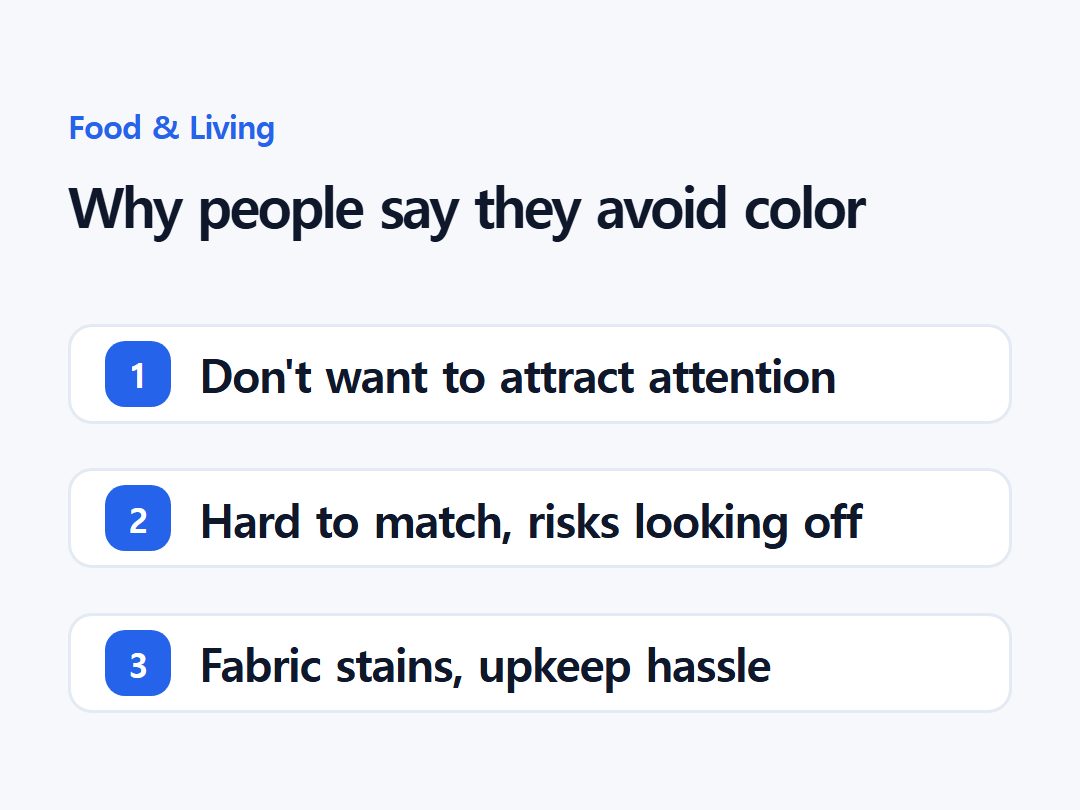
Lee Ji-kyung, a professor at Kyungsung University, surveyed 176 Korean university students about their color choices. Three reasons dominated:
- 41.5% avoided bright colors because they didn't want to attract attention
- 33.5% said colorful clothes were harder to match or risked looking unflattering
- A smaller group cited staining, upkeep, or simply not finding colorful options in stores
Why standing out costs more than it saves
A separate, smaller survey of 30 Koreans found a similar pattern: 60% said other people's perceptions shaped their color choices, and 53.3% pointed to current trends. Lee frames this as cultural rather than accidental. Neutral colors, she has said, "convey humility and social harmony," values she ties directly to how Korean society treats conformity.
A Korean proverb captures the same logic outside of fashion: a stone that sticks out gets struck with the chisel. Wearing red to class or the office breaks no rule, but multiple Korean sources describe it as inviting exactly the kind of attention that danjeong is built to avoid.
The office set the rule, and everyday wear followed it
Korean workplace dress codes remain conservative by international standards, and commentary on colleagues' style or appearance is common enough that it shapes choices even outside work hours.
A magazine editor interviewed by Vogue Korea described being quietly criticized for wearing red stockings to the office, and said the experience pushed her toward safer, muted choices afterward.
Guides to Korean office norms give the same advice to women specifically: business suits and dresses are fine, but bold colors and loud patterns are best avoided in favor of blending in with coworkers.
Black carries extra weight at the most formal end of Korean life, too. Funeral etiquette calls for black suits and dark, simple clothing as a mark of respect, a practice rooted in Confucian tradition — the ethical framework, originally from China, that has shaped Korean ideas about hierarchy and propriety for centuries. That association with seriousness carries over, at lower intensity, into ordinary business attire.
Fashion brands didn't invent the preference — they packaged it
Korea's SPA brands, the same fast-fashion format as Uniqlo or Zara (the acronym stands for "Specialty store retailer of Private label Apparel"), leaned into monochrome basics rather than working against the trend.
SPAO, launched by E-Land Group in 2009, built its identity on simplicity, and its basic padded jacket has ranked first in its category on Musinsa, Korea's largest online fashion marketplace, every year since 2021.
Uniqlo's Korean stores follow the same logic, with racks organized by material rather than color and a core lineup that barely changes from year to year. Store layouts built around basics make the neutral choice the easiest one for shoppers who might otherwise reach for something brighter.
The broader numbers explain why brands bother. Since 2008, Korea's overall fashion market has grown roughly 3.9% a year, while SPA brands alone grew by around 58% a year over the same stretch. Industry coverage puts black at roughly 40% of basic-line sales for several major SPA brands, a figure that tracks closely with the Gallup and CJ Logistics data above.
A preference for undyed cloth predates K-pop by centuries
Korea's association with pale, unsaturated clothing is old enough to appear in foreign records from the third century, when a Chinese chronicle noted that people in the region favored white clothing.
That habit gave rise to the term baegui minjok, or "white-clad people," now used to describe Koreans historically — though the phrase itself was popularized more recently, in the 1920s, by nationalists resisting Japanese colonial rule.
Joseon-dynasty kings tried, repeatedly, to ban white clothing on cosmological grounds and repeatedly failed; the custom simply persisted through every ban. That centuries-long habit of avoiding saturated dye, once expressed through white hanbok (Korea's traditional dress), is the deep root beneath today's black, white, and gray streets, even though the dominant shade has shifted from white to black.
Winter turns the whole peninsula into one palette
The pattern is strongest in colder months. Seoul's winter sky is frequently overcast, daylight hours are short, and heavy padded coats — expensive items people don't replace often — get worn on repeat for months.
Black hides stains and travel wear better than lighter colors, which matters when one coat has to survive a full season of commuting. It is also why the black puffer jacket, rather than any single K-pop trend, is the closest thing Korea has to a winter uniform.
Vogue Korea's analysis adds an environmental note: the city's mid-latitude setting and air pollution mute the natural color palette visible outdoors for much of the year, which the magazine argues has shaped Seoul's aesthetic sense more broadly, not just its clothing.
The palette isn't frozen
None of this describes every Korean or every season. Multiple sources note that Koreans dress more colorfully on vacation, in spring and autumn, and increasingly among younger, fashion-forward shoppers experimenting with brighter pieces. The Gallup gender gap — 34% of men naming black as a favorite versus 17% of women — also suggests the preference is not uniform even now.
This year's beige-and-brown entry into Gallup's top 10, the first shift in two decades of nearly identical rankings, is the clearest sign yet that the palette is moving, even if slowly.
What the surveys still can't separate
No single study isolates which factor actually drives the choice. The leading candidates all reinforce each other:
- Social pressure to avoid standing out
- Practicality — colors that mix and match without effort
- Conservative workplace dress codes
- A fast-fashion industry that keeps stocking what already sells
Brands stock black because it sells; it sells because it reads as safe and neat; it reads as neat partly because it's already everywhere. Whether a younger generation's growing appetite for color breaks that loop, or simply adds a few new neutral shades to the rotation, is something only the next round of polling will show.
Share of clothing parcels by color (CJ Logistics, 1.32 billion parcels, 2021)
| Color | Share of clothing parcels |
|---|---|
| Black | 38% |
| White | 15% |
| Gray | 9% |
Frequently asked
Why do Koreans wear so much black?
Black signals danjeong, a Korean value meaning tidy and self-controlled, which is reinforced by conservative office dress codes and a fashion industry built around monochrome basics.
What percentage of Koreans prefer black clothing?
Gallup Korea found 34% of men and 17% of women name black as their favorite clothing color, rising to close to 40% among people in their teens through thirties.
Did Koreans always wear black, or is this a recent trend?
No, Korea was historically known for white clothing, giving rise to the term baegui minjok ('white-clad people'); the shift toward black is a more recent layer on top of that centuries-old preference for undyed cloth.
Sources
Every factual claim above is traceable. We do not translate articles — we gather facts from multiple outlets and write them ourselves.
- Black's unchallenged reign in Korean wardrobes confirmed in poll — The Korea Herald
- 한국 거리에서 유독 많이 보인다…외국인이 신기해하는 '무채색 패션' — Wikitree
- 백의민족 대한민국, '검은색'으로 물들다 — Fashion Insight
- Black, white and grey: Why monochromes dominate the South Korean fashion scene — The Star (Malaysia)
- 흑의의 민족, 한국인에게 고함 — Vogue Korea
- 백의민족의 유래와 의미 — Uri History Net (National Institute of Korean History)
- Korean Office Attire — Punch Korea


