Sit in a Korean Baseball Organization (KBO) stadium for one inning and the differences from an MLB park are immediate. A cheermaster stands on a platform with a microphone. Five or six cheerleaders dance in formation. A pop song blares for the batter walking up — and thousands of fans sing along, word for word.
The short version
- KBO games run on paid cheer squads, not spontaneous fan noise.
- A VIP seat in Seoul costs about $58, cheaper than MLB's average.
- Women aged 20 to 40 make up 57% of KBO attendees.
None of this is spontaneous. It is a paid, choreographed, decades-old system, and it is the reason KBO games are often described less as sporting events than as three-hour concerts that happen to include baseball.
The stadium runs on two soundtracks, and only one plays at a time
Every KBO club fields its own professional cheer squad: one cheermaster plus four to six cheerleaders, positioned on a raised stage facing the stands. They perform only while their own team is batting.
The moment the opposing team comes up, that half of the stadium goes almost silent, and the other side takes over the noise. It is an organized call-and-response system, not two crowds cheering at once — closer to a stadium-sized round of antiphonal singing than to the constant background roar of an American ballpark.
The cheer squad is a full-time job, not a game-day volunteer role
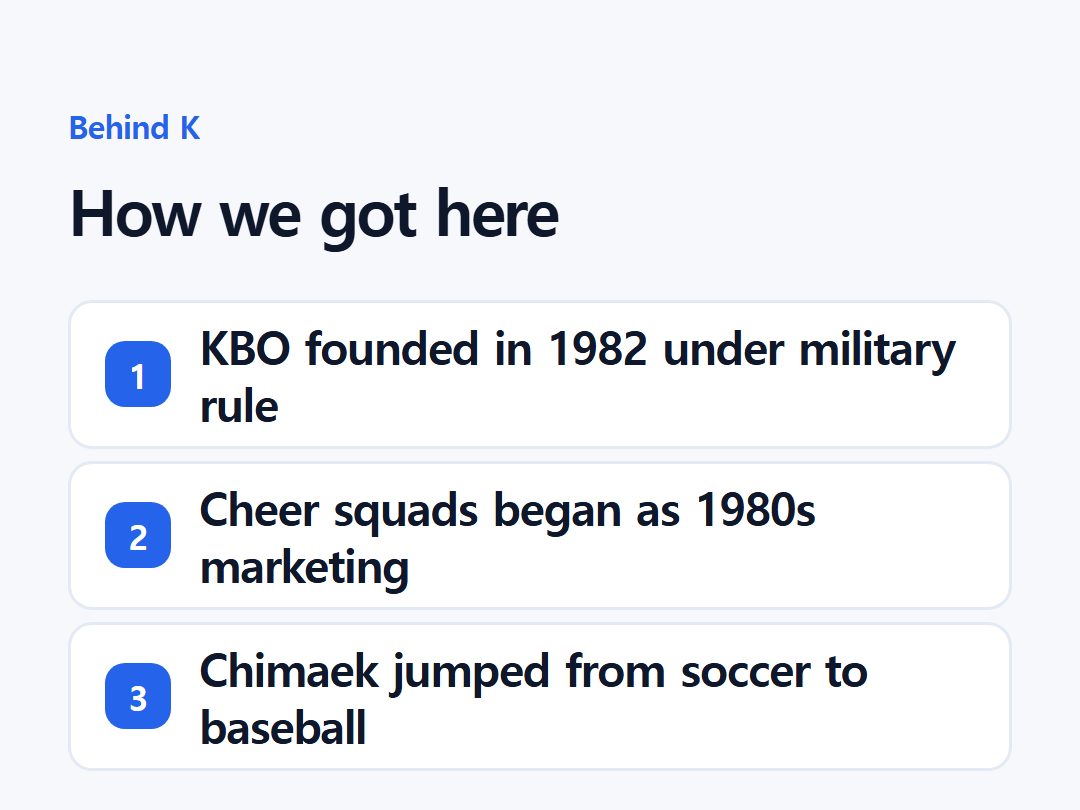
Cheerleading in the KBO began in the 1980s as what the Korea Cheerleading Association has called an “active audience marketing strategy” — a deliberate tool to pull fans into empty new stadiums, not a spontaneous fan tradition.
It has since become a career track with its own visibility. Cheerleaders greet fans at the gates before first pitch, run promotions between innings, and stay after the final out for photos and high-fives. Some clubs add themed postgame shows — dance sets on Friday nights, fireworks on Saturdays.
One veteran cheerleader compared the physical demands directly to K-pop training, saying the routines require “a massive amount of practice before getting on stage,” while another described the emotional role plainly: “Our cheerleading helps players focus more at bat and on the mound. We unite the fans.”
Every batter owns a walk-up anthem, and the crowd never forgets the words
Each KBO player has a personalized cheer song, usually a mainstream pop melody rearranged with lyrics built around his name, chosen and produced by the team. The cheermaster leads the crowd through it every time that player bats — for an entire season, for the length of his career with the club.
An MLB writer who visited a KBO cheer squad for FanGraphs summed up the contrast in one line: MLB is “like an opera,” where the crowd mostly watches, while KBO is “rock ’n’ roll,” where the crowd performs alongside the team every single at-bat.
A VIP seat in Seoul costs less than an average MLB ticket
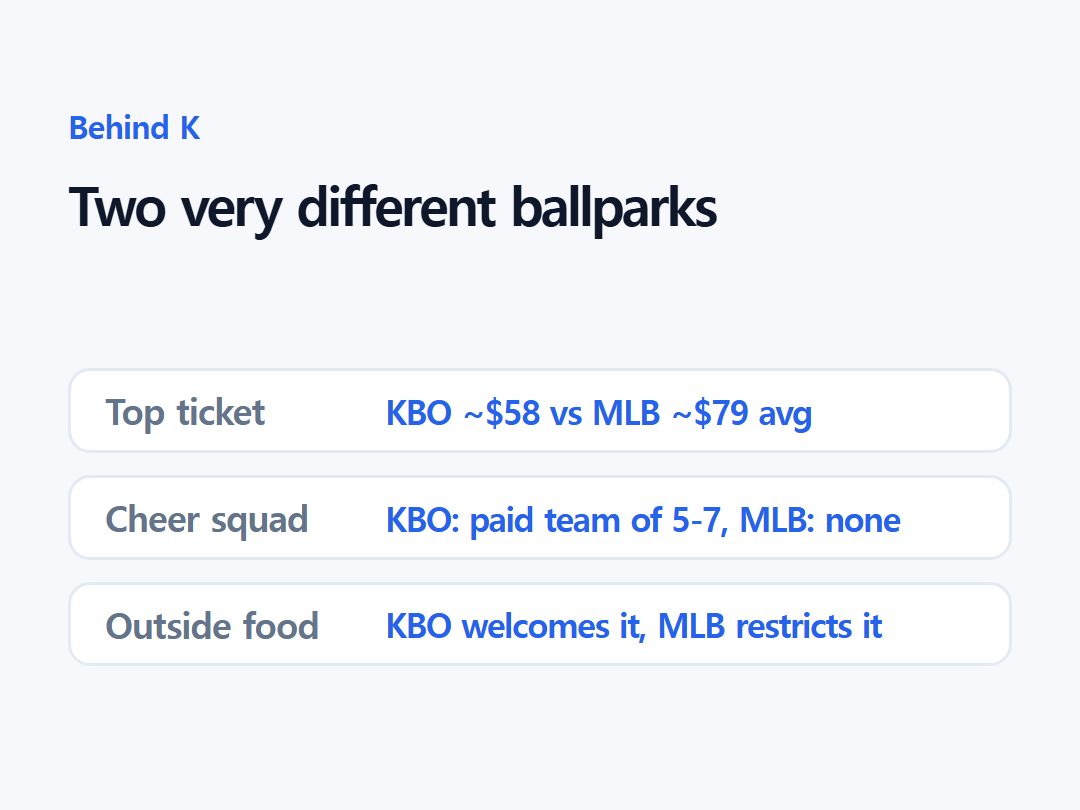
The economics reinforce the different atmosphere. A center VIP seat at a KBO game in Seoul runs around 80,000 won, or roughly $58 — the top of the market, not the entry price.
| Category | KBO (Korea) | MLB (United States) |
|---|---|---|
| Top-tier ticket | ~$58 (VIP center seat) | ~$79 league average; $200+ resale for top teams |
| Cheer squad | Paid team of 5–7 per club | None — organ music and scoreboard prompts |
| Outside food policy | Fried chicken and delivery welcomed | Restricted at most stadiums |
Lower ticket prices, combined with a culture that treats the stands as a stage, change who shows up and why — a family outing or a group of coworkers, not just committed fans willing to pay premium prices.
Why the crowd skews young and female
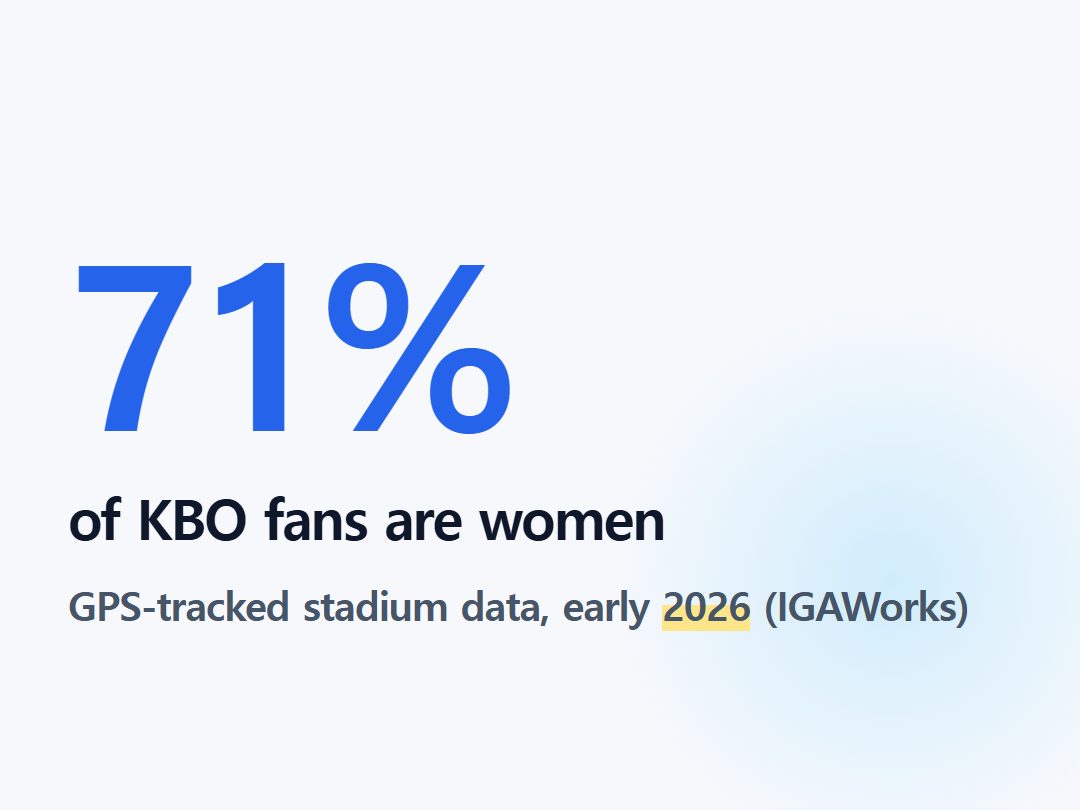
GPS-based stadium tracking by the mobile data firm IGAWorks found that women made up roughly 71% of people physically attending KBO games in early 2026, with women aged 20 to 40 alone accounting for 57% of all attendees.
Merchandise spending follows the same pattern: seasonal goods spending averaged about 237,000 won for women in their twenties and 273,000 won for those in their thirties. The shift tracks the same fandom habits — photocards, choreography, following individual “bias” players — that K-pop concerts trained a generation of young Korean women to expect from live entertainment.
Chicken and beer became a stadium ritual by way of soccer, not baseball
Chimaek — a portmanteau of chikin (chicken) and maekju (beer) — did not start in baseball stadiums. The pairing became a national fixture during the massed street gatherings of the 2002 FIFA World Cup, when Korean fans in red shirts ate fried chicken and drank beer while watching soccer on outdoor screens.
The habit carried directly into baseball afterward, helped by a policy most American parks don't share: KBO stadiums generally allow fans to bring in outside food, including full boxes of fried chicken bought from vendors right outside the gates.
A league a military government built to keep the public occupied
The KBO traces back to a January 1982 founding meeting of six original clubs, launched under President Chun Doo-hwan less than two years after the 1980 Gwangju democratization crackdown. Historians commonly link the league's creation to Chun's broader “3S” strategy — sports, screen, and sex — used to channel public attention away from politics during an authoritarian period.
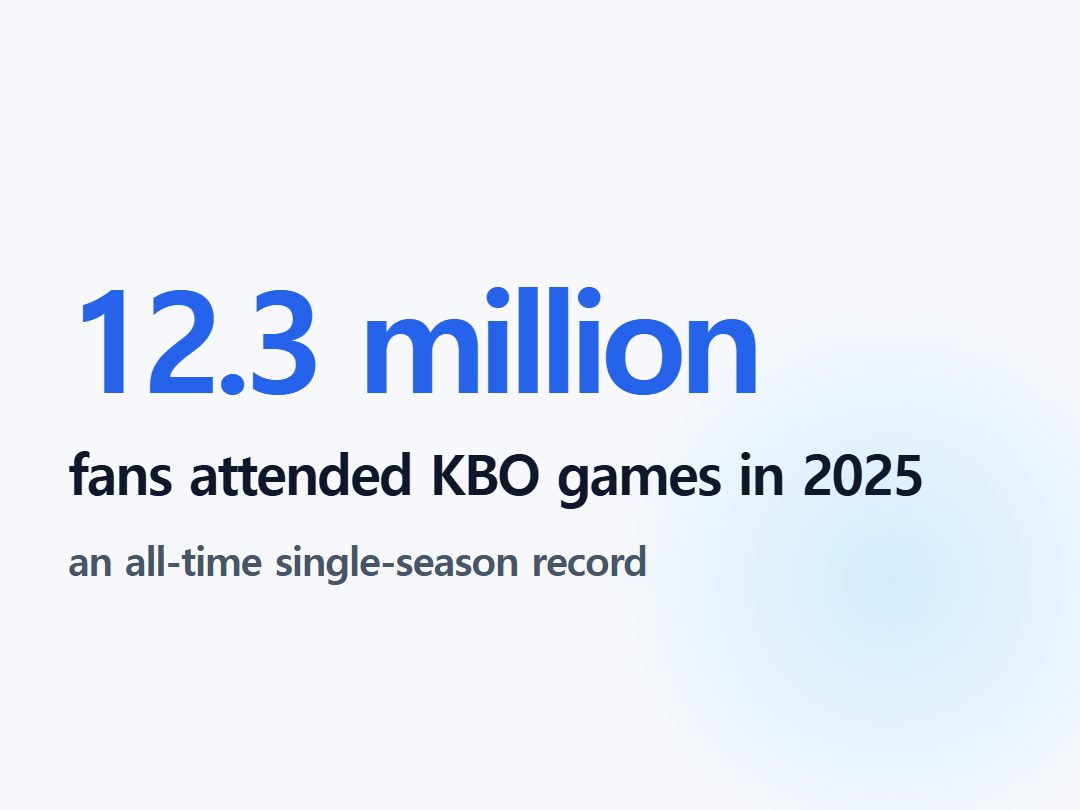
The first official game was played on March 27, 1982, at Dongdaemun Baseball Stadium, with Chun himself throwing the ceremonial first pitch. What began as a state project has since outgrown its original purpose by any measure: the league expanded to today's ten teams and drew a record 12,312,492 fans across the 2025 season, average attendance of 17,101 per game.
What Dave Roberts saw that organ music never gave him
The gap became visible to American baseball itself during the 2024 MLB Seoul Series, when the Los Angeles Dodgers played an exhibition game against the Kiwoom Heroes at Gocheok Sky Dome. Organizers at CHEERKINGKOREA recorded personalized cheer songs for the entire Dodgers roster within 48 hours, adapting existing KBO melodies with Dodgers players' names swapped in.
Dodgers manager Dave Roberts called the atmosphere “very refreshing,” adding: “We're not used to having cheerleaders during games. So that was exciting for everyone.” Cheermaster Oh Myung-sip framed the moment more ambitiously, comparing the culture's growing global profile to K-pop's and noting it had already reshaped cheering styles in Taiwan.
Korea's cheer choreography is now a Taiwanese import
In June 2024, a 19-second clip of Kia Tigers cheerleader Lee Ju-eun performing a strikeout routine — later nicknamed the “Pikki Pikki” dance — went viral on YouTube, then TikTok and Instagram, eventually passing 90 million views and drawing coverage from The New York Times.
The attention translated into a career move: Lee signed with Taiwan's Fubon Angels for the 2026 season, part of a wider pattern of Taiwanese and Japanese clubs actively recruiting from the KBO cheerleading talent pool.
What still doesn't cross the ocean
Whether any of this could take root in MLB long-term remains an open question. The Seoul Series cheer songs were a one-off novelty built for a single exhibition, not a permanent fixture American teams have adopted.
The KBO model also depends on conditions MLB doesn't share: cheaper tickets that bring in casual, repeat crowds; an outside-food culture built around a specific national dish; and a decades-old cheer squad profession with its own training pipeline. Exporting the choreography, as Taiwan has done, is easier than exporting the economics underneath it.
KBO vs. MLB gameday differences
| Category | KBO (Korea) | MLB (United States) |
|---|---|---|
| Top-tier ticket | ~$58 (VIP center seat) | ~$79 league average; $200+ resale for top teams |
| Cheer squad | Paid team of 5–7 per club | None — organ music and scoreboard prompts |
| Outside food policy | Fried chicken and delivery welcomed | Restricted at most stadiums |
Frequently asked
Why are there cheerleaders at Korean baseball games?
KBO cheerleading began in the 1980s as a marketing strategy to fill new stadiums, and it's now a full-time profession with squads performing only while their own team bats.
How much does a KBO baseball ticket cost?
A center VIP seat in Seoul runs about 80,000 won, or roughly $58, which is the top of the market rather than the entry price.
Why do KBO fans skew young and female?
GPS tracking data found women made up about 71% of KBO attendees in early 2026, with fandom habits similar to K-pop concertgoing driving merchandise spending.
Sources
Every factual claim above is traceable. We do not translate articles — we gather facts from multiple outlets and write them ourselves.
- Root, Root, Root for the Home Team: Tales from a KBO Cheer Squad — FanGraphs
- Going to game in Korea isn't complete without cheer squads, players' songs — MLB.com
- K-pop cheerleaders: the 'flowers' of South Korean baseball — France 24
- Korea Baseball Fandom: Why 71% of KBO Fans Are Women — Seoulz
- KBO League — Wikipedia
- 2025 KBO League season — Wikipedia
- Nvidia CEO Jensen Huang Throws First Pitch at Jamsil, Says Nvidia Grew Alongside Korea's Tech Industry — Seoul Economic Daily
- 'Pikki Pikki' dance cheerleader joins Taiwan's Fubon Angels — The Korea Herald
- MLB: The Average Cost Of Tickets To See A Game In 2025 — DrRoto
- Ultimate No.1 KBO League 2025 Guide — Sports Event Korea