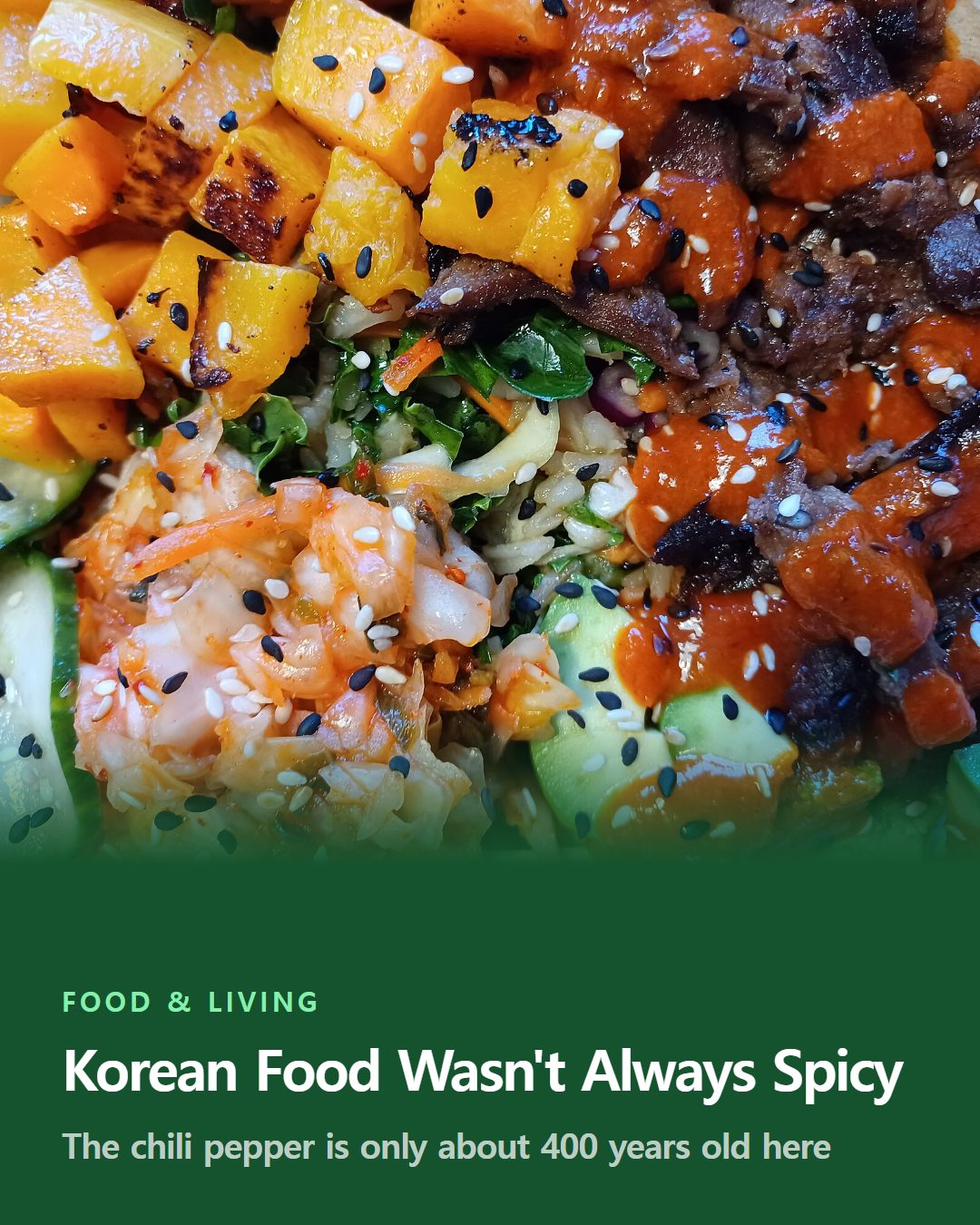
Korean food has a reputation for heat, from the vinegar-red glow of kimchi to the slow burn of a bowl of tteokbokki. Visitors often assume that heat has always been the point.
The short version
- Chili peppers reached Korea in the 1590s, long after kimchi itself existed.
- A 1670 cookbook with 146 recipes contains zero chili dishes.
- Salt prices, not taste, pushed chili into kimchi during the 1700s.
It hasn't. The chili pepper that defines modern Korean cooking is a relative newcomer to the peninsula, arriving centuries after the dishes it now seasons already existed.
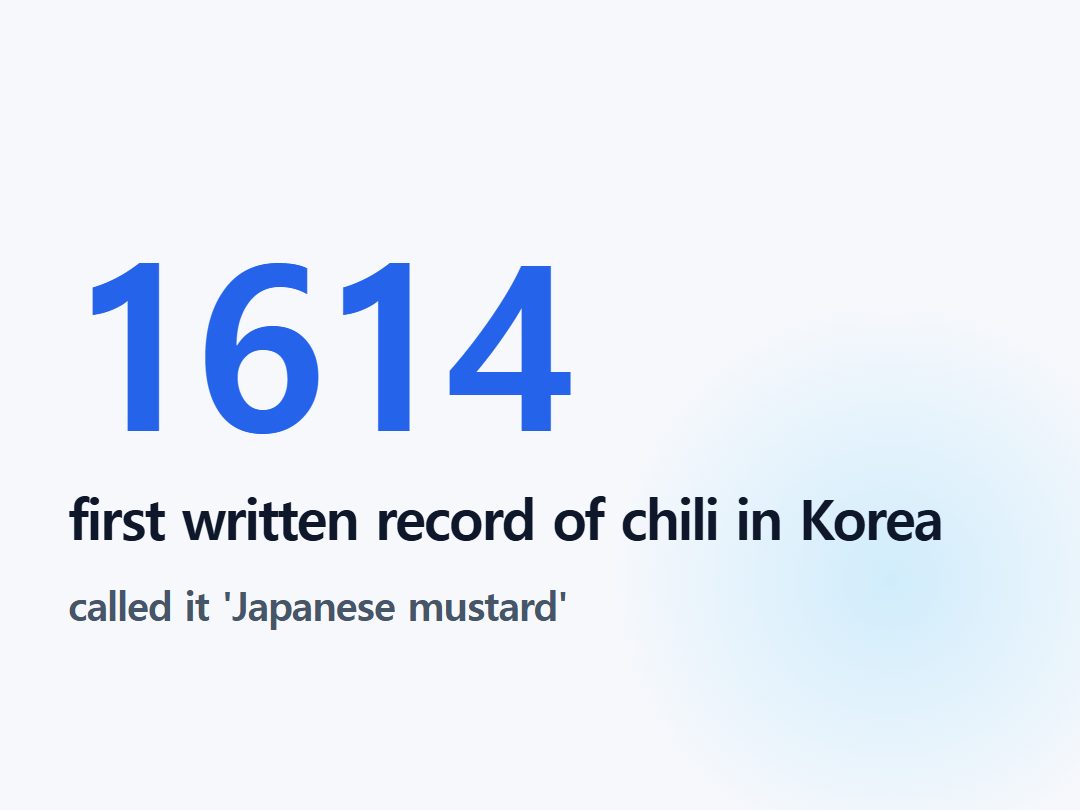
Chili peppers reached Korea only in the 1590s
Capsicum peppers are native to the Americas. They spread to Asia through Portuguese trade networks in the 1500s, reaching the Korean peninsula in the late 16th century — most likely by way of Japan, around the time of the 1592–1598 Japanese invasions of Joseon (the Imjin War).
The earliest surviving Korean reference to the plant appears in Jibong yuseol, an encyclopedia written by the scholar Yi Su-gwang in 1614. He called it wae gaeja (왜개자), literally "Japanese mustard," because it had come by way of Japan (Waeguk). A farming manual from around 1700 describes how to grow it — evidence the plant was still novel enough a century later to need instructions.
The route matters for one reason: it means chili pepper is not indigenous to the peninsula. Every dish built around it — kimchi, gochujang, tteokbokki, buldak — is seasoning a much older food tradition with an ingredient that arrived after Shakespeare was already writing plays.
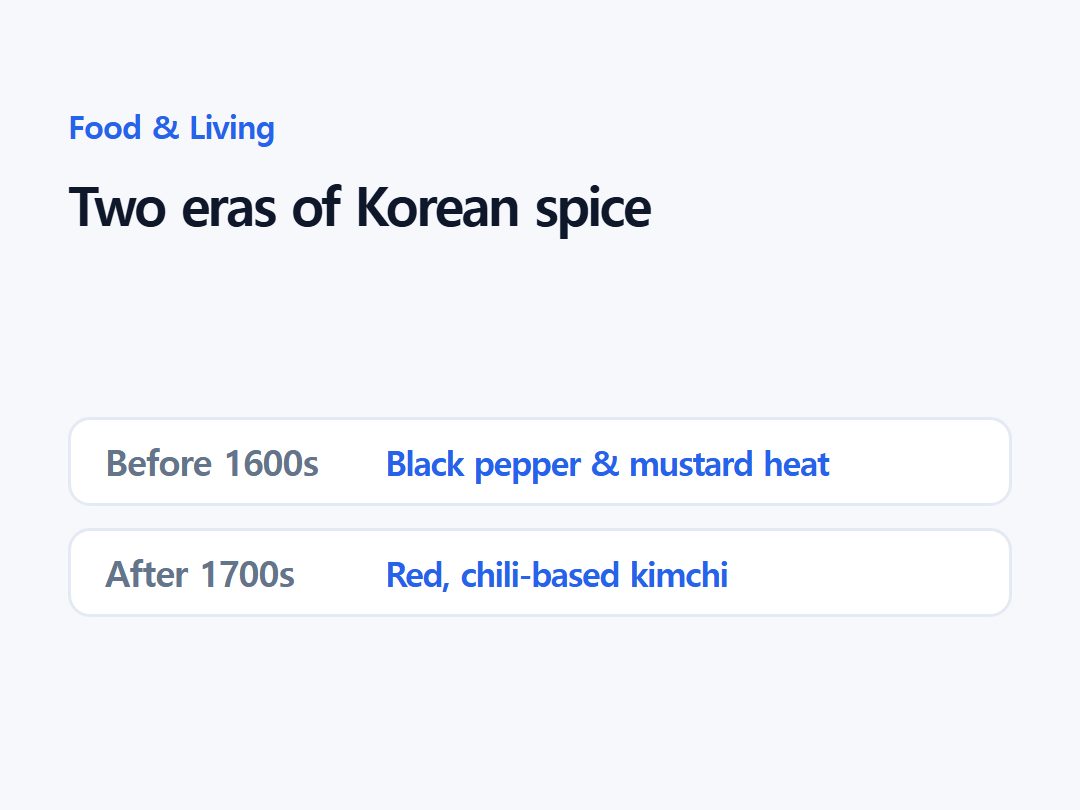
Before the chili, Korean food already had heat — just a different kind
Korean cooking wasn't bland before the 1590s. Cooks already had several ways to build pungency and heat, long before the word "gochu" meant chili pepper.
- Black pepper (huchu), an imported spice reserved mostly for the elite
- Sancho, the Korean name for Sichuan pepper (Zanthoxylum), which produces a tingling heat
- Mustard and mustard seed
- Garlic and ginger
Some food historians even trace a pepper-paste-like condiment back to the 9th century, made with black peppercorns or chopi rather than chili. What it wasn't was red. Early kimchi, then usually called chimchae, was a salted vegetable preserved with brine and fermented seafood (jeotgal) — closer to today's non-spicy dongchimi or baek-kimchi than to the red cabbage kimchi most people picture now.
So the honest answer to why Korean food is spicy starts with a correction: Korean food was already pungent, sour, and fermented. What chili added was a specific, sharp heat layered on top of flavors that already existed.
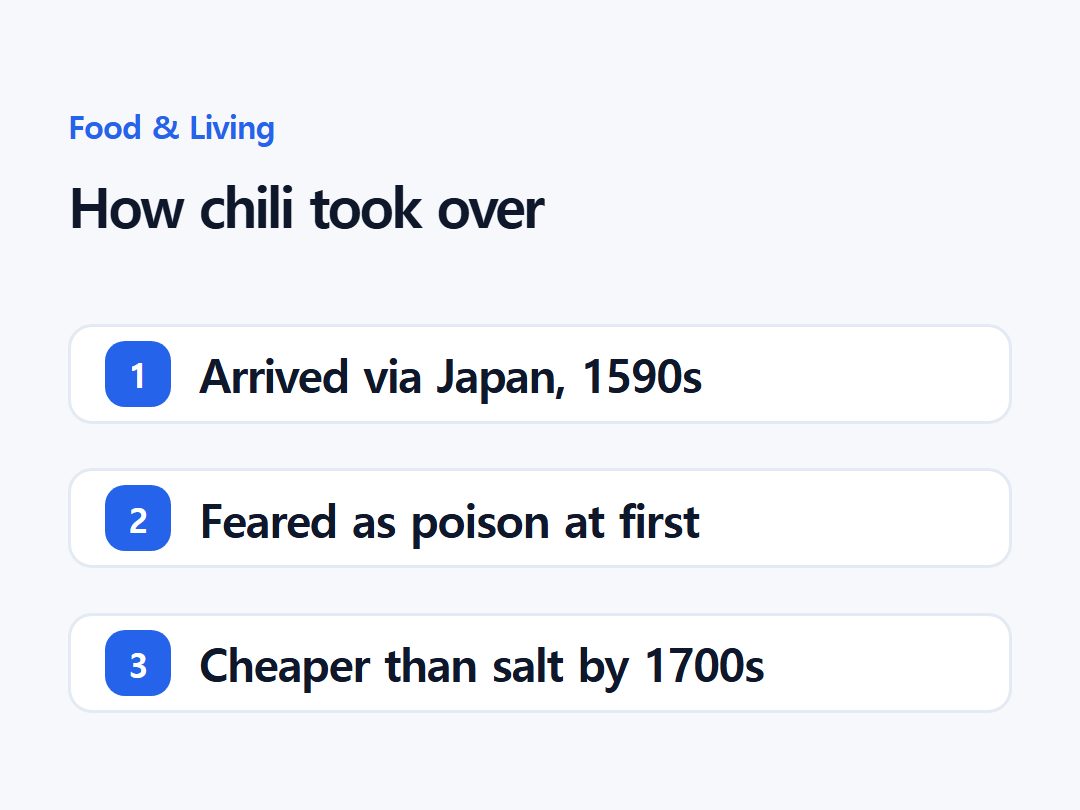
The first Koreans who tried it thought it was poison
Chili peppers were not an instant hit. Their sharp smell and taste struck 16th- and 17th-century Koreans as alarming rather than appetizing.
Contemporary records describe people treating the new plant with suspicion, sometimes using it as medicine rather than food, and blaming it for illness. The derogatory name "Japanese mustard" itself signals how foreign and unwelcome it initially seemed — not the proud national ingredient it is today.
That reaction is not unusual by itself. Most cuisines treated genuinely new imported foods — tomatoes in Europe, chocolate outside the Americas — with the same wariness for a generation or two before accepting them.
A 1670 cookbook with 146 recipes and zero mentions of chili
Eumsik dimibang, compiled around 1670 by the noblewoman Jang Gyehyang, is the oldest surviving Korean cookbook written in the Korean script. It contains roughly 146 recipes.
None of them call for chili pepper. Nearly eighty years after the pepper's arrival, it still had not made it into the kitchen of a well-documented aristocratic household — a useful marker of just how slowly the plant moved from curiosity to staple ingredient.
The book is significant beyond its ingredient list: it is one of the earliest Korean cookbooks written in hangul rather than Chinese characters, meant to pass household recipes down through women in the family. Its silence on chili is, in effect, a dated snapshot of ordinary Korean cooking with the pepper still absent.
Why salt prices, not taste, pushed chili into kimchi
The turning point in the 1700s wasn't culinary fashion. It was economics. Rising demand for preserved food — driven partly by more elaborate ancestral ceremonies — collided with a period of expensive salt.
Chili powder, once Koreans had learned to grow and dry it domestically, offered a cheaper way to help preserve fermented vegetables alongside or instead of salt. That practical advantage, more than a sudden love of heat, is what pulled gochugaru into everyday kimchi-making.
Supply mattered too. Black pepper and other imported spices depended on trade routes Korea did not control. Chili, once seeds were established, could be grown domestically in ordinary garden plots, dried, and ground at home — a structural reason it eventually out-competed the older spices it had once been mistaken for.
Gochujang reached the royal court within a few generations
By the early 18th century, a compendium of palace meals already records a red pepper paste close to the gochujang eaten today — rice, fermented soybean, chili, and salt, aged in earthenware jars.
Records from King Yeongjo's long reign (1724–1776) describe gochujang helping the aging king's appetite in his later years, and separate palace records from the same decades credit the paste with aiding his recovery from illness. In roughly 150 years, chili had gone from a suspicious foreign plant to a fixture at the royal table.
That is a fast rise for any imported ingredient — from being treated as a suspected poison to being served to the king in under two centuries.
Red kimchi is younger than most people assume
Spicy, chili-red kimchi did not become the default until the late 18th or 19th century — meaning it has existed for a few hundred years, not the thousands of years often assumed by outsiders.
A war diary from the 1894 Donghak Peasant Revolution lists gochujang and kimchi among military supplies, showing both were already everyday staples by then. Older, non-spicy styles never disappeared entirely: dongchimi, baek-kimchi, and nabak-kimchi are all direct descendants of the pre-chili version still eaten today.
Global fame is even more recent than the recipe itself
If the chili pepper took roughly two centuries to become a Korean staple, its international reputation is younger still. For most of the 20th century, Korean food's heat was known mainly to Koreans and their immediate neighbors.
| Period | Status of spicy Korean food |
|---|---|
| Before 1600s | Not yet part of the cuisine |
| 1700s–1800s | National staple within Korea |
| 2010s–2020s | Global export via instant noodles and social media |
That changed largely through instant noodles. Extra-spicy ramyeon brands built a following abroad through viral eating challenges, and gochujang itself has become a pantry item stocked well beyond Korea — reportedly carried home by a large share of Korean travelers as a gift or personal staple. The flavor is old; the export is not.
Did the pepper come from Portugal, Japan, or Korea itself?
The mainstream account — Americas to Portuguese traders to Japan to Korea — is well supported, but it isn't the only version in circulation.
Some Japanese historical records claim the opposite direction: that the general Kato Kiyomasa carried chili peppers from Korea to Japan during the same 1590s war. Records on Tsushima Island separately describe an introduction from Joseon around 1604.
Because Japan was not a single unified political entity at the time, different regions preserved different, conflicting accounts. No single surviving document settles which way the plant actually first crossed the strait.
What historians still don't agree on
A small number of Korean food-science researchers have gone further, arguing that gochu is not an Americas import at all. In their view, the plant reached the peninsula naturally over a much longer timescale, spread by migratory birds well before the 1590s.
This view is not accepted by the mainstream botanical and historical consensus, which places all capsicum peppers as native to the Americas and absent from Asia before the Columbian Exchange.
What both camps agree on is narrower but still notable: whichever direction it traveled, the chili pepper needed roughly 150 to 200 years to move from suspected poison to the base of Korea's signature flavor — a short history for an ingredient that now feels inseparable from the cuisine itself.
Timeline: how chili pepper entered Korean cuisine
| Year | Milestone |
|---|---|
| 1614 | First written Korean reference to chili pepper, in Jibong yuseol |
| ~1670 | Eumsik dimibang cookbook (146 recipes) still contains zero chili recipes |
| Early 1700s | Rising salt prices push chili powder into everyday kimchi-making |
| 1724–1776 | Gochujang recorded at the royal court under King Yeongjo |
| 1894 | Donghak Peasant Revolution diary lists gochujang and kimchi as military staples |
Frequently asked
When did chili peppers arrive in Korea?
Chili peppers reached the Korean peninsula in the late 1590s, most likely via Japan during the Imjin War, and were first documented in writing in 1614.
Was kimchi originally spicy?
No. Early kimchi (chimchae) was a salted, fermented vegetable dish without chili, closer to today's non-spicy dongchimi or baek-kimchi than to red cabbage kimchi.
Why did Koreans start adding chili pepper to kimchi?
Rising salt prices in the 1700s made chili powder a cheaper way to help preserve fermented vegetables, not a sudden taste for heat.
Sources
Every factual claim above is traceable. We do not translate articles — we gather facts from multiple outlets and write them ourselves.
- Korean Pepper (Gochu) — Carving A Journey
- The Story of Gochugaru (Korean Chili Powder) — La Seoulite
- Gochujang's Long History In Korea — Tasting Table
- Korea's Spicy Food History — Buldak
- History of Korean gochu, gochujang, and kimchi — Journal of Ethnic Foods (ScienceDirect)


